Table Acropora Care Guide
Acropora hyacinthus · Saltwater SPS Coral
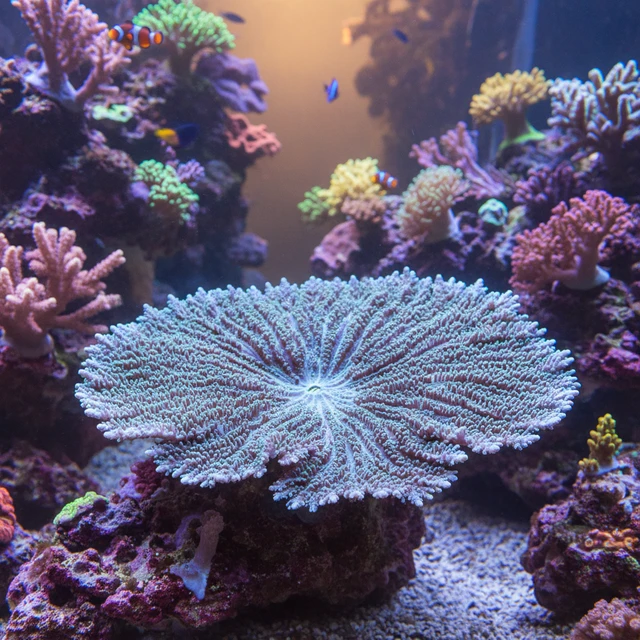
What Table Acropora look like
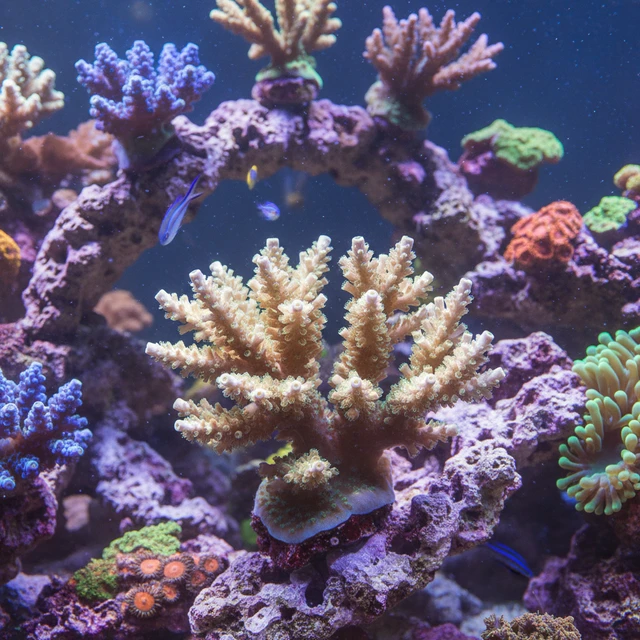
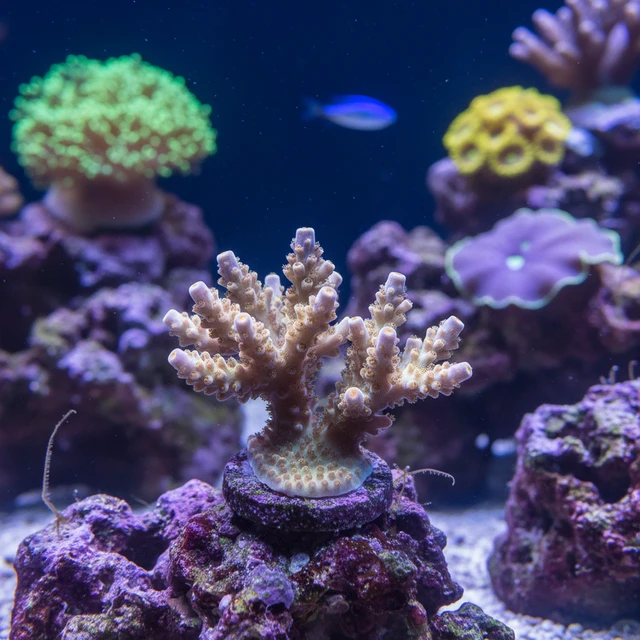
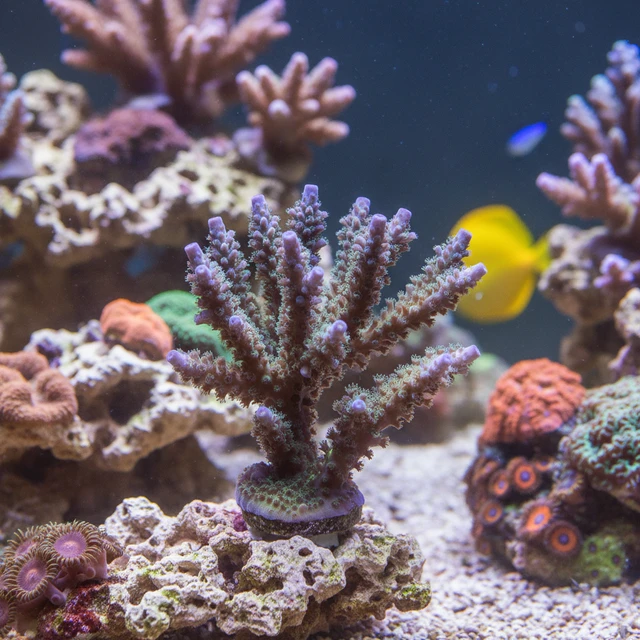
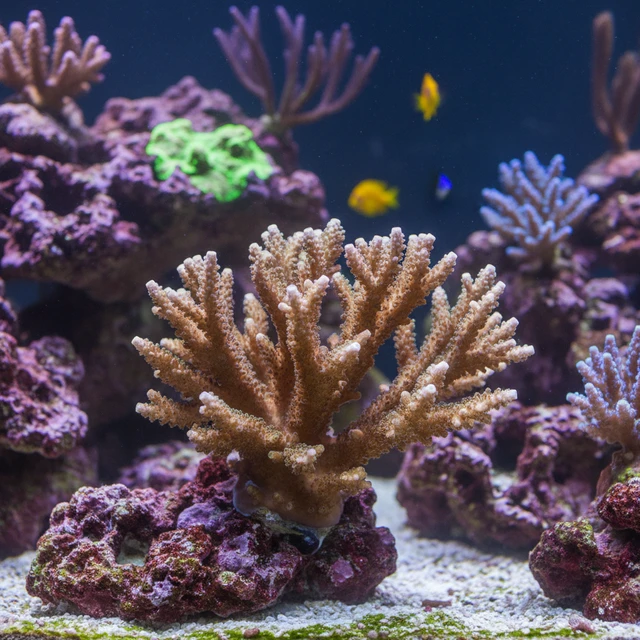
Acropora hyacinthus, commonly known as Table Acropora, exhibits a distinctive morphology characterized by its flattened, table-like structure, which can reach a maximum diameter of up to 1 meter in optimal conditions. The coral forms extensive, branching colonies with horizontal growth patterns, featuring thick, robust branches that are often densely packed. The polyps are small, typically measuring 1-2 mm in diameter, and are extended during the night for feeding, displaying a vibrant coloration that can range from green to blue, yellow, or brown, depending on the symbiotic zooxanthellae present. Sexual dimorphism is not pronounced in this species; however, variations in coloration and growth form may occur based on environmental factors. Defensive adaptations include the production of calcareous spines and the ability to engage in aggressive interactions with neighboring corals through the use of sweeper tentacles, which possess nematocysts capable of stinging potential intruders.
Behavior & temperament
Table Acropora is primarily a sessile organism that exhibits a symbiotic relationship with zooxanthellae, utilizing photosynthesis as a primary energy source. It is known for its rapid growth rate and ability to occupy space efficiently in reef environments. The coral extends its polyps at night to capture plankton and other particulate matter, showcasing a feeding behavior that is opportunistic. While it does not exhibit traditional social hierarchies, it can engage in aggressive interactions with other coral species, particularly during competition for space and light. Its overall temperament is generally non-aggressive towards similar species, but it can be territorial, especially when competing for resources.
Diet & feeding
Acropora hyacinthus is primarily a photosynthetic coral, relying on its symbiotic zooxanthellae for energy, supplemented by capturing zooplankton and phytoplankton from the water column. In captivity, it requires high-quality marine foods such as finely powdered coral foods, and regular dosing of phytoplankton to ensure optimal health and growth.
Behind the name
The scientific name 'Acropora hyacinthus' derives from the Greek words 'akros' meaning 'high' or 'topmost', and 'pora' meaning 'to bear', combined with 'hyacinthus', which refers to the color of the flowers of the hyacinth plant, reflecting the coral's vibrant hues.
Plan your tank
Check the numbers before you buy: tank volume, salinity, salt mix, water changes, and your ongoing care routine. Keeping reef? Start from the Saltwater & Reef hub.
Keep reading
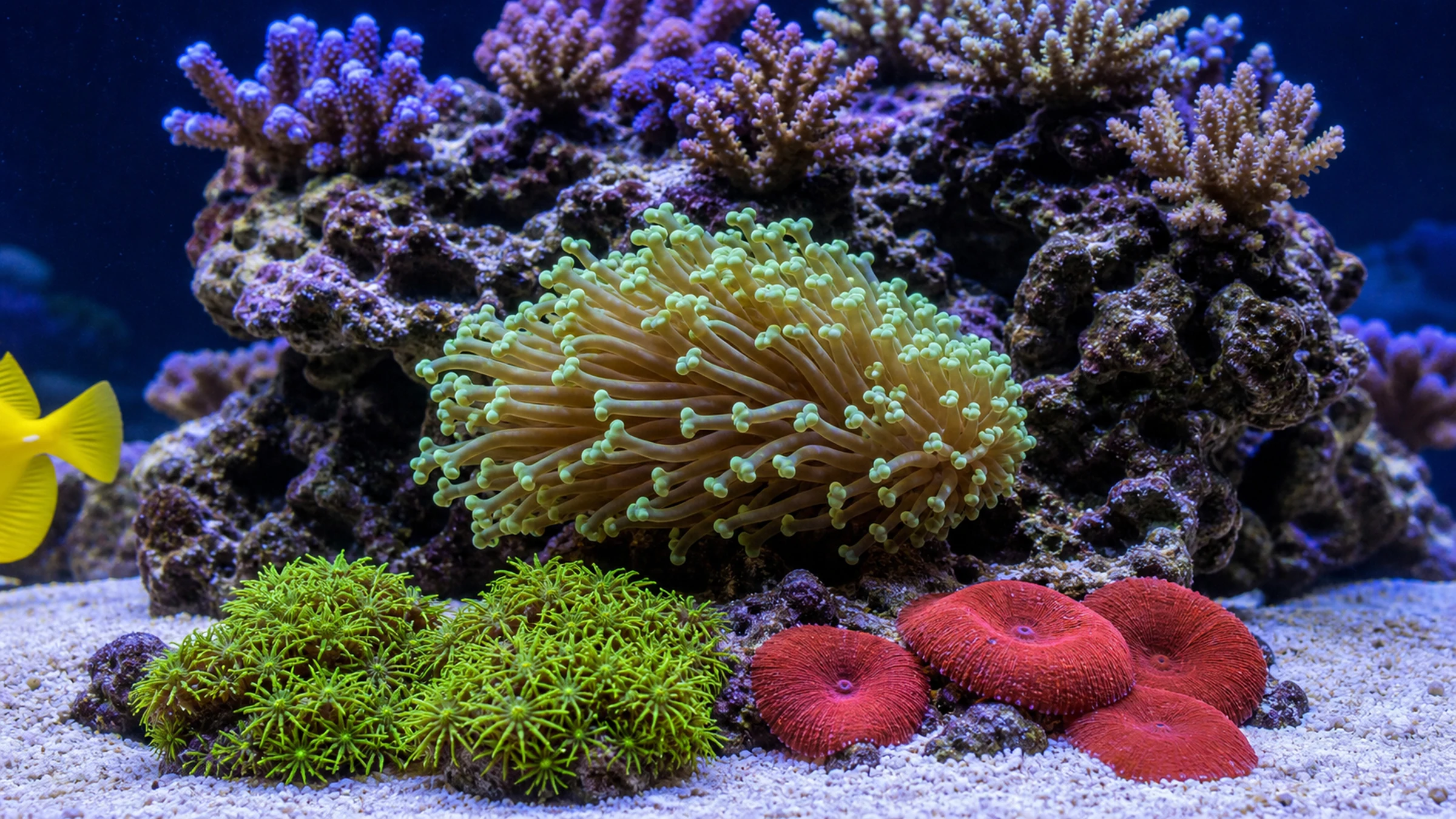
How to place corals by light and flow, PAR targets for softies, LPS, and SPS, dipping new corals for pests, and acclimating them without bleaching.
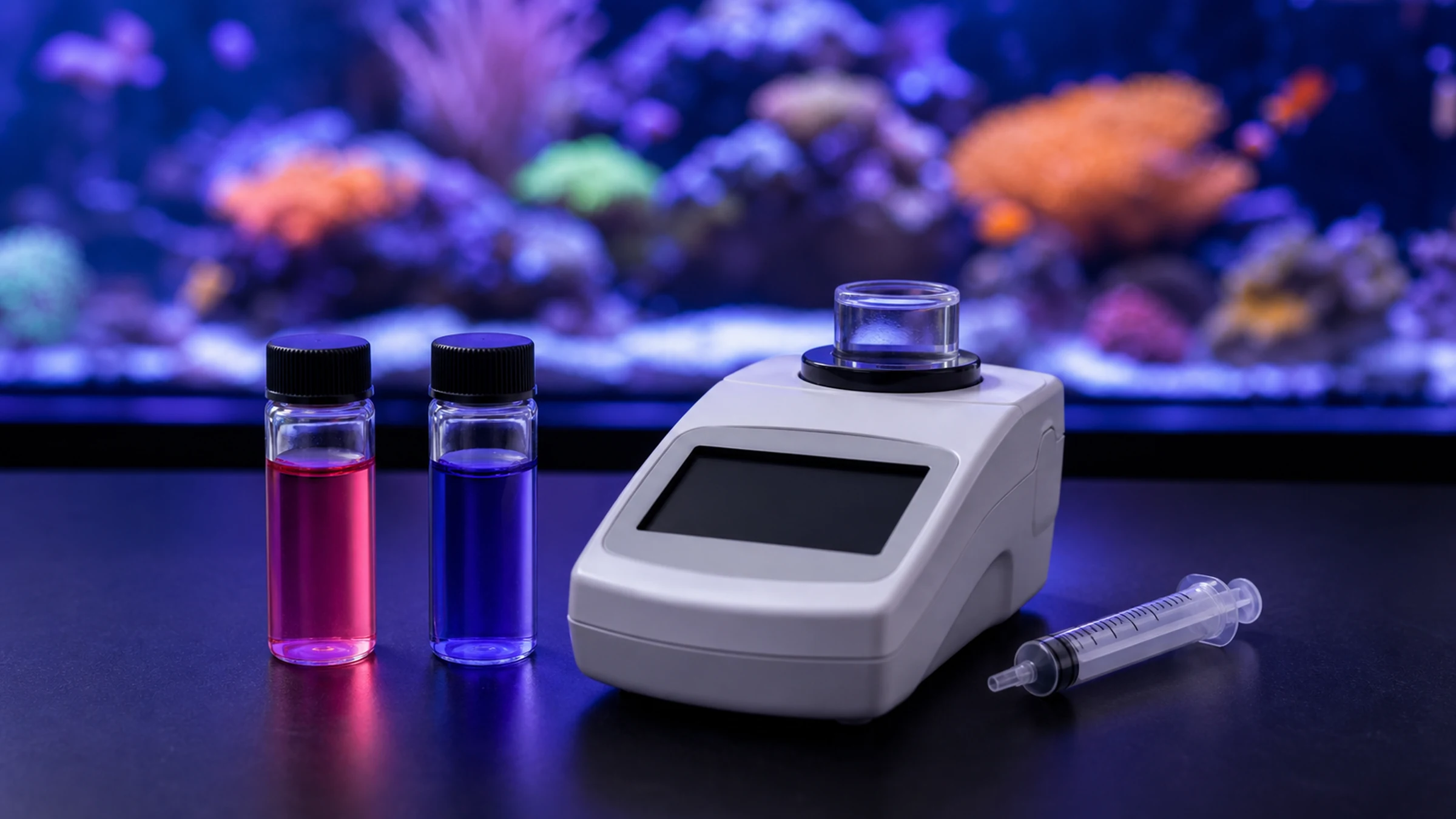
What every reef parameter means and where to keep it: salinity, temperature, pH, alkalinity, calcium, magnesium, nitrate, and phosphate.
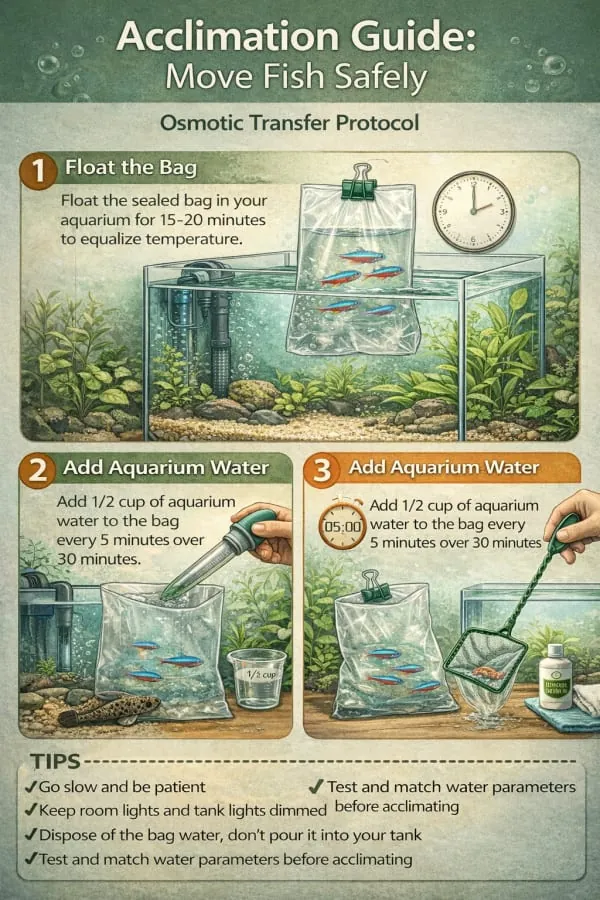
Acclimate new fish, shrimp, and coral safely: temperature floating, drip acclimation, plop-and-drop for shipped livestock, and the first 24 hours.
Keeping Table Acropora?
AquaLens identifies your fish and plants from a photo, tracks water chemistry, and flags health issues early — free on iOS and Android.