Emperor Loach Care Guide
Botia udomritthiruji · Freshwater Fish
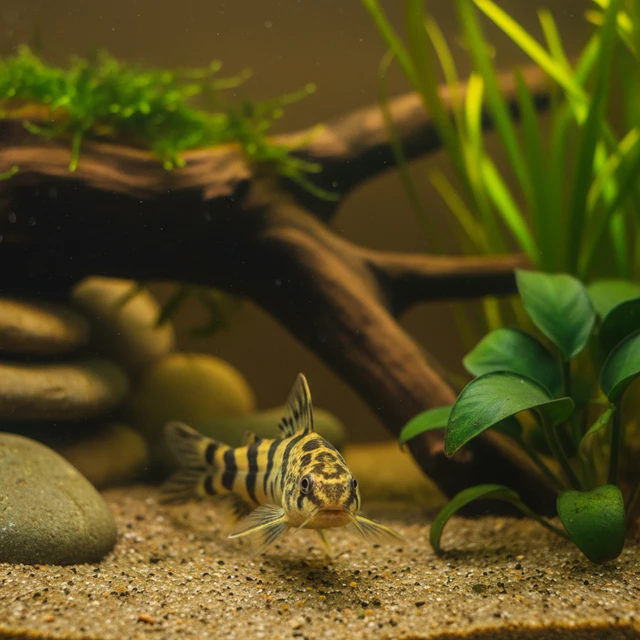
What Emperor Loach look like
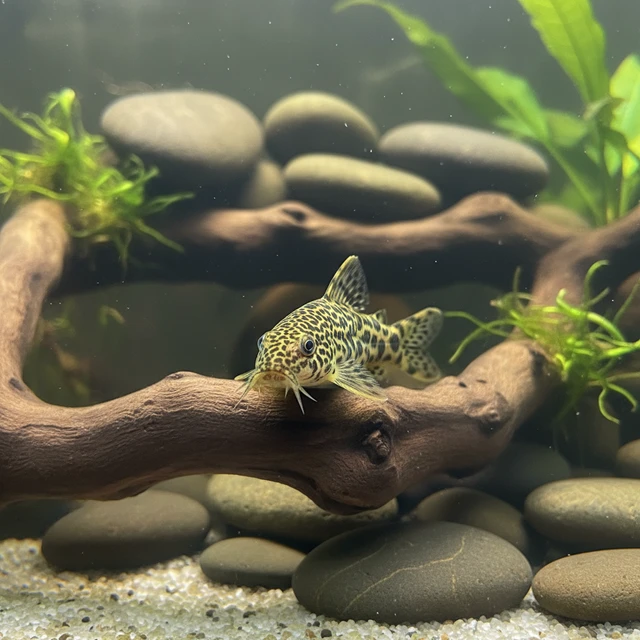
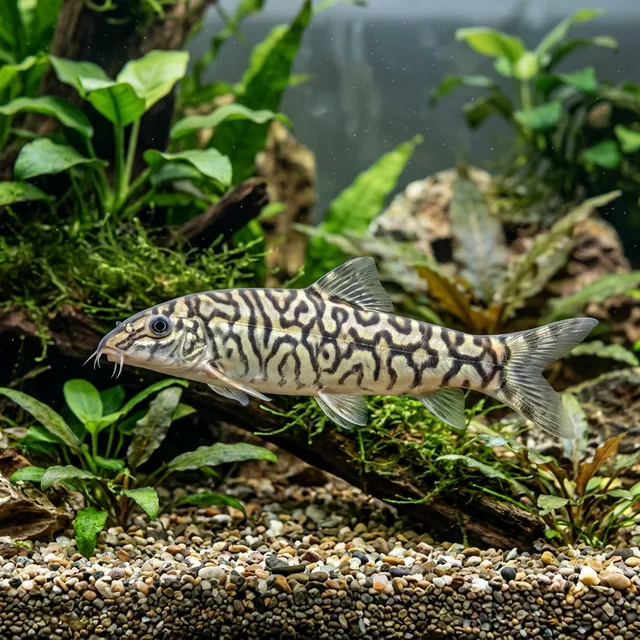
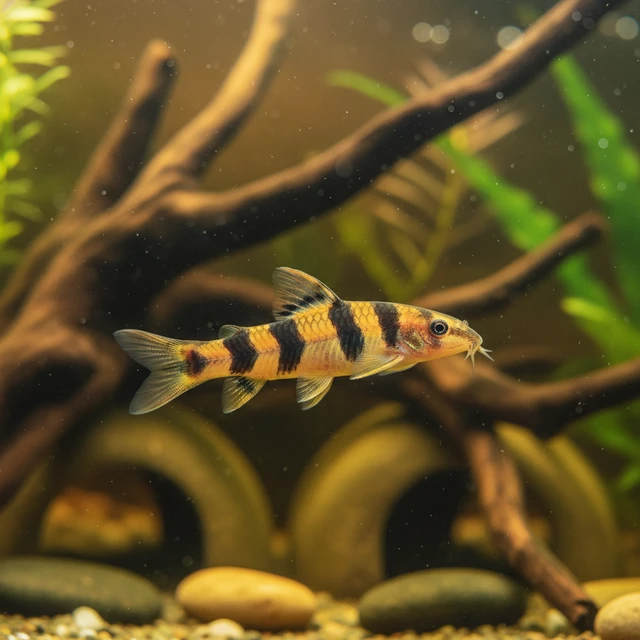
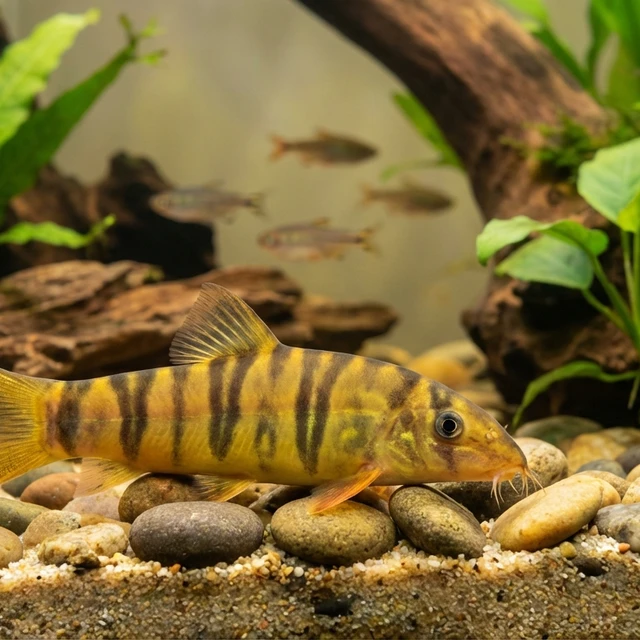
The Emperor Loach (Botia udomritthiruji) exhibits a robust, laterally compressed body that typically reaches a maximum adult size of 4-5 inches. This species displays sexual dimorphism, with males generally being smaller and more slender than females, especially during the breeding season when females become more rounded due to egg development. The body is adorned with a striking golden-cream background, intricately patterned with dark brown reticulated or lattice-like markings that extend across the entire surface, including the fins, enhancing its ornamental appeal. Notable morphological adaptations include the presence of sensory barbels around the mouth, which aid in foraging, and a well-defined lateral line system that assists in detecting vibrations in the water. The dorsal fin is elongated and slightly pointed, contributing to its agile swimming capabilities, while the pectoral and pelvic fins are well-developed, allowing for precise maneuvering in its natural habitat.
Behavior & temperament
The Emperor Loach is primarily a benthic species, often found dwelling near the substrate in rivers and streams of Southeast Asia. It exhibits a social hierarchy, typically preferring to inhabit small groups, although it can also be observed as solitary. This species is known for its playful and inquisitive nature, often engaging in social interactions with tank mates. During breeding, the Emperor Loach is an egg scatterer, with females releasing eggs over substrate where males fertilize them externally. The temperament of this species is generally peaceful, but it may display territorial behavior during breeding or when kept in confined spaces, necessitating adequate tank volume and hiding spots to mitigate aggression.
Diet & feeding
In the wild, the Emperor Loach is an omnivore, feeding on a varied diet that includes detritus, small invertebrates, and plant matter. In captivity, it requires a balanced diet consisting of high-quality sinking pellets, live or frozen foods such as bloodworms and brine shrimp, and occasional vegetable matter to ensure optimal health.
Behind the name
Botia (from the Hindi word 'boti', meaning 'fish'); udomritthiruji (named in honor of a Thai ichthyologist, reflecting its regional significance).
Plan your tank
Check the numbers before you buy: tank volume, a stocking plan, cycle progress, water changes, and your ongoing care routine.
Keep reading
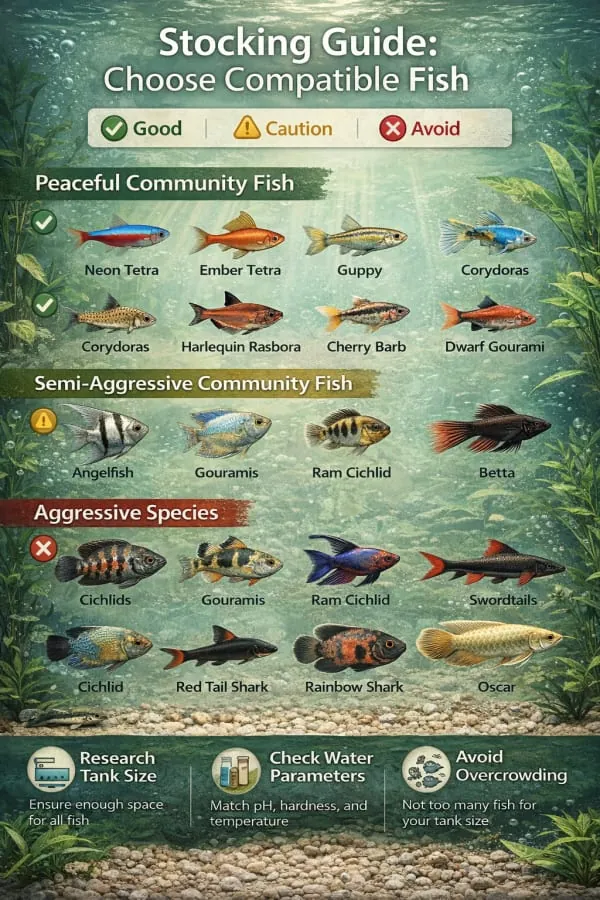
Choose compatible fish: school sizes, swimming zones, aggression, temperature and hardness matching, and honest bioload math for a peaceful community.
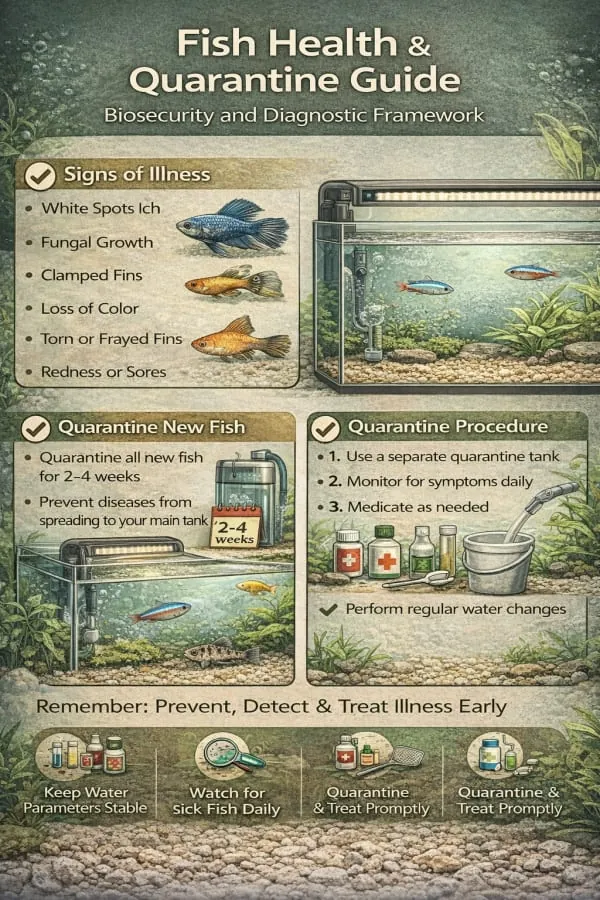
Quarantine new fish, spot the early warning signs, and treat disease without wrecking your tank. A practical freshwater fish health guide.
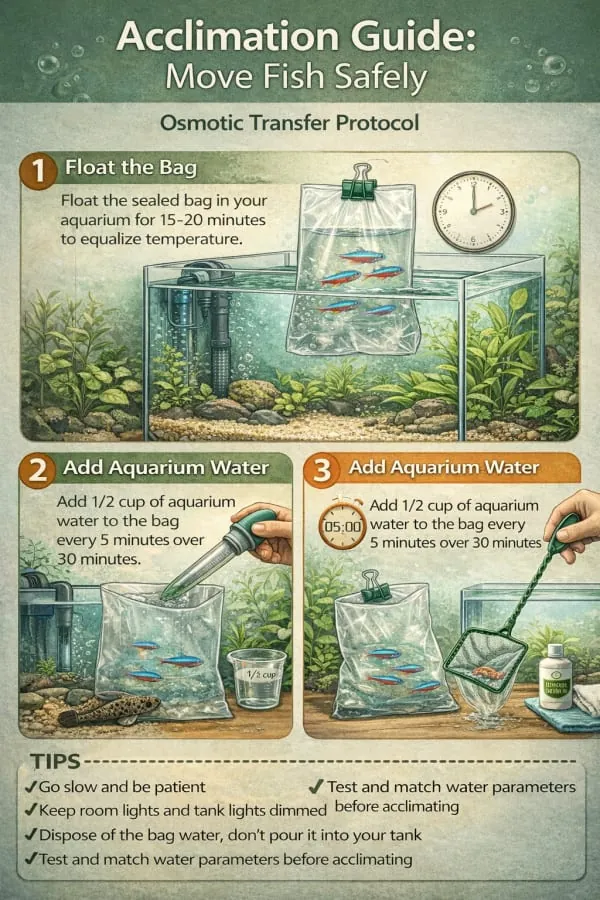
Acclimate new fish, shrimp, and coral safely: temperature floating, drip acclimation, plop-and-drop for shipped livestock, and the first 24 hours.
Keeping Emperor Loach?
AquaLens identifies your fish and plants from a photo, tracks water chemistry, and flags health issues early — free on iOS and Android.