Yoyo Loach Care Guide
Botia almorhae · Freshwater Fish
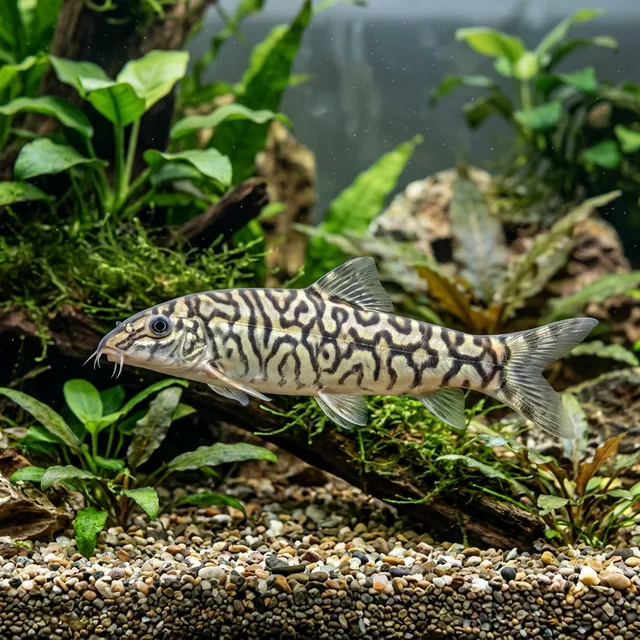
What Yoyo Loach look like
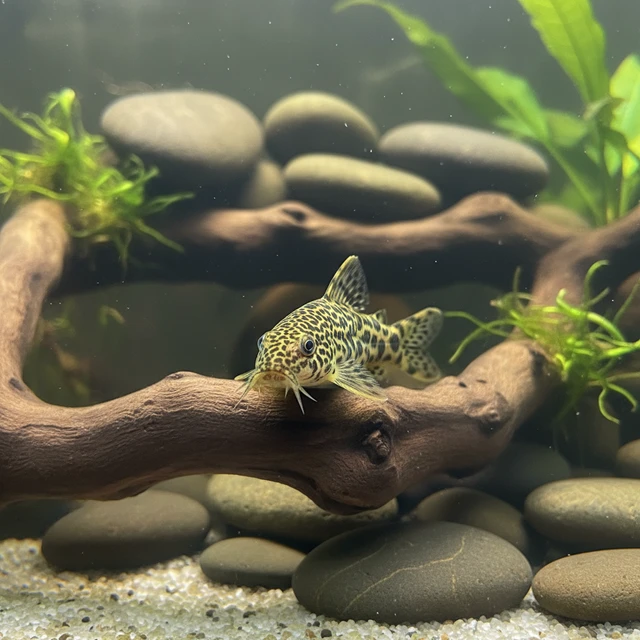
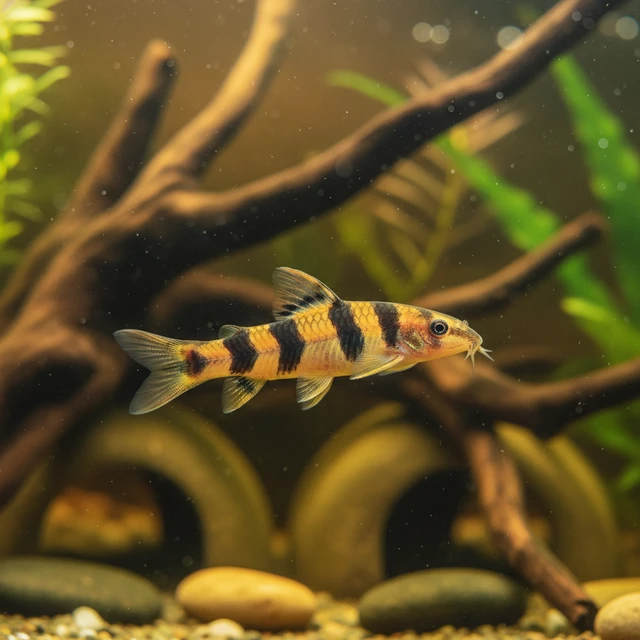
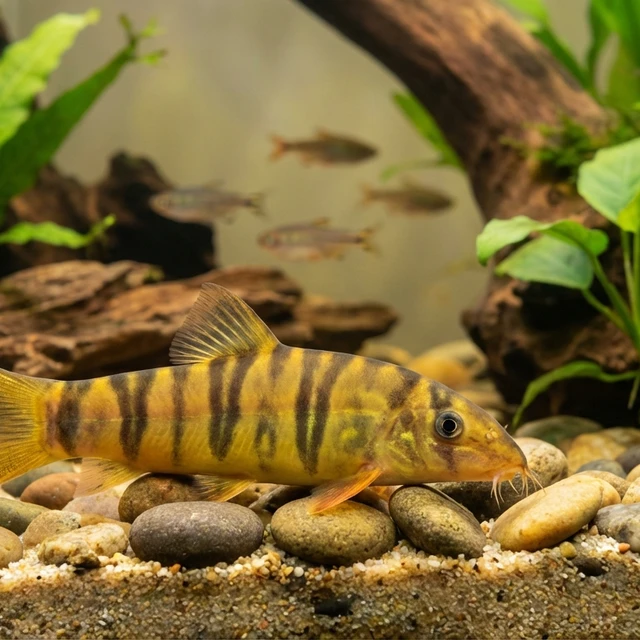
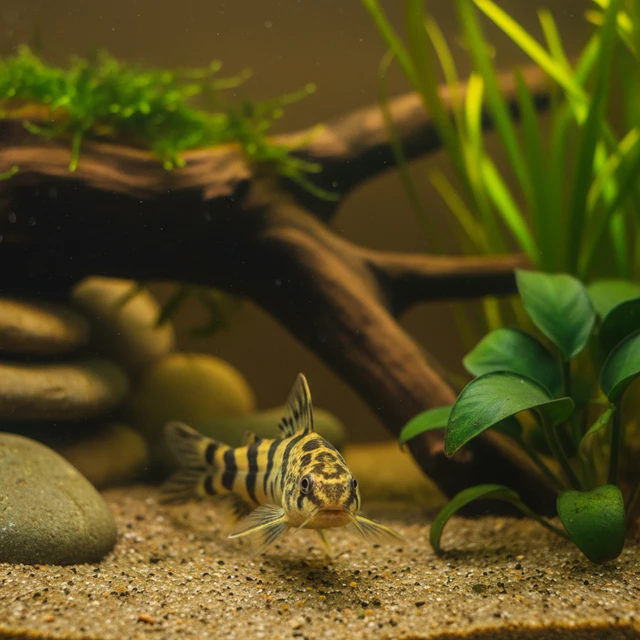
The Yoyo Loach (Botia almorhae) exhibits a fusiform body shape that can reach a maximum adult size of approximately 5 to 15 cm (2 to 6 inches). This species is characterized by its striking coloration, featuring a base of golden-brown to olive-green with distinctive dark, wavy patterns resembling the letter 'Y', which contribute to its common name. Sexual dimorphism is subtle; males tend to be slightly smaller and more slender than females, particularly during the breeding season when females become more rounded due to egg retention. Defensive adaptations include the presence of spines on the pectoral and dorsal fins, which can be erected when threatened. Unique morphological features include a well-developed lateral line system, which aids in detecting vibrations in the water, and a small, fleshy adipose fin that enhances maneuverability in its native riverine habitats.
Behavior & temperament
Yoyo Loaches are generally social and exhibit a semi-aggressive temperament, often forming loose schools in the wild, especially in the presence of ample hiding spots among rocks and vegetation. They typically inhabit the bottom to mid-water column, displaying a benthic lifestyle where they forage for food. Breeding behavior is characterized by egg scattering, with females laying eggs on flat surfaces, which are then fertilized by males. These loaches are known for their playful and curious nature, often engaging in social interactions with tank mates, although they can exhibit territorial behavior, particularly during breeding or when confined in smaller spaces.
Diet & feeding
In their natural habitat, Yoyo Loaches are omnivorous, feeding on a varied diet that includes small invertebrates, detritus, and plant matter. In captivity, they require a balanced diet consisting of high-quality flake foods, sinking pellets, and occasional live or frozen foods such as bloodworms and brine shrimp to ensure optimal health.
Behind the name
Botia (from the local Indian name for loach); almorhae (referring to Almora, a region in India where this species is commonly found).
Plan your tank
Check the numbers before you buy: tank volume, a stocking plan, cycle progress, water changes, and your ongoing care routine.
Keep reading
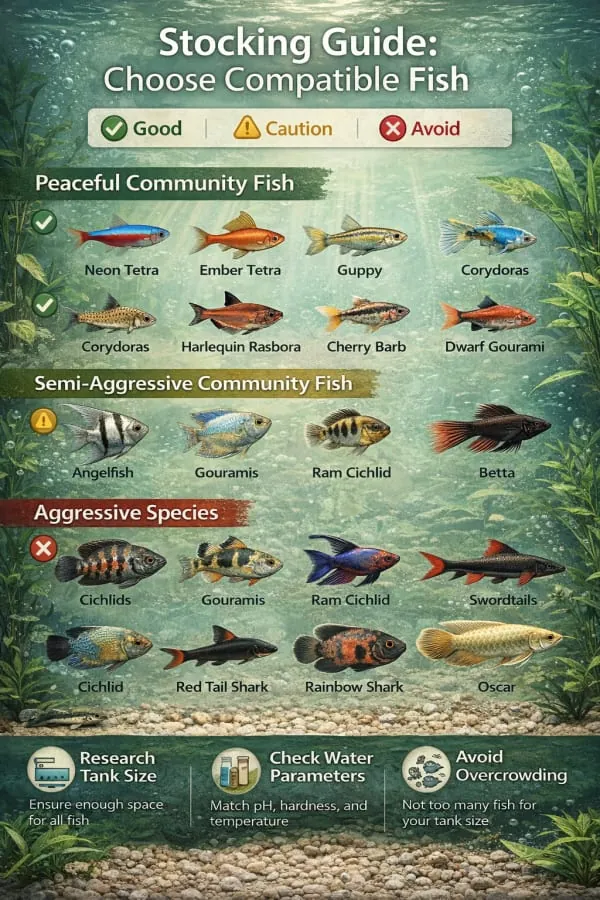
Choose compatible fish: school sizes, swimming zones, aggression, temperature and hardness matching, and honest bioload math for a peaceful community.
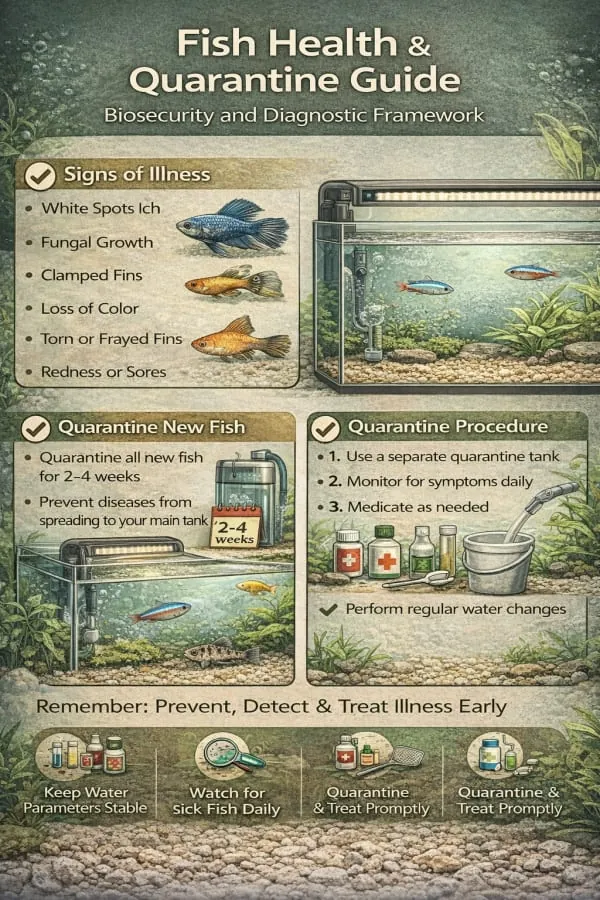
Quarantine new fish, spot the early warning signs, and treat disease without wrecking your tank. A practical freshwater fish health guide.
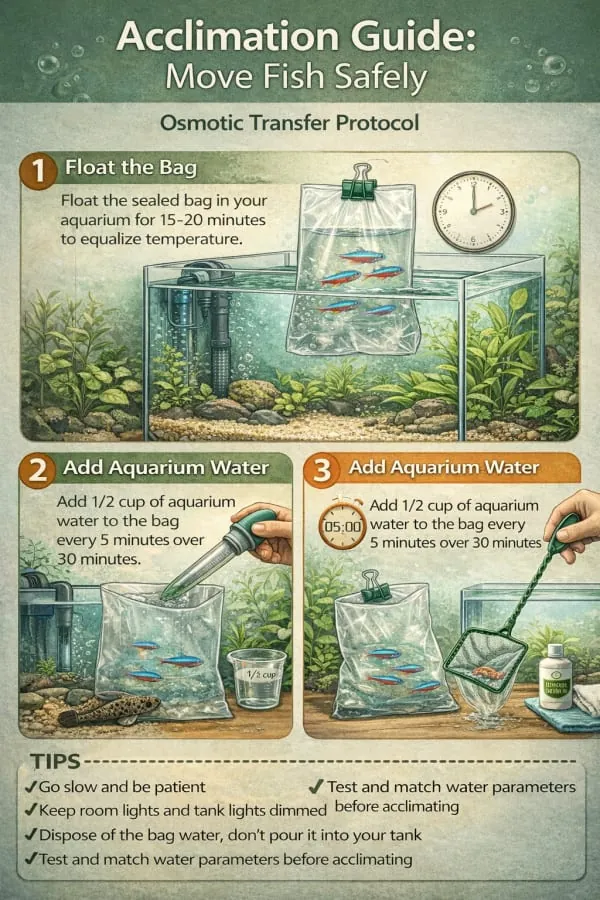
Acclimate new fish, shrimp, and coral safely: temperature floating, drip acclimation, plop-and-drop for shipped livestock, and the first 24 hours.
Keeping Yoyo Loach?
AquaLens identifies your fish and plants from a photo, tracks water chemistry, and flags health issues early — free on iOS and Android.