Figure 8 Puffer Care Guide
Tetraodon biocellatus · Freshwater Fish
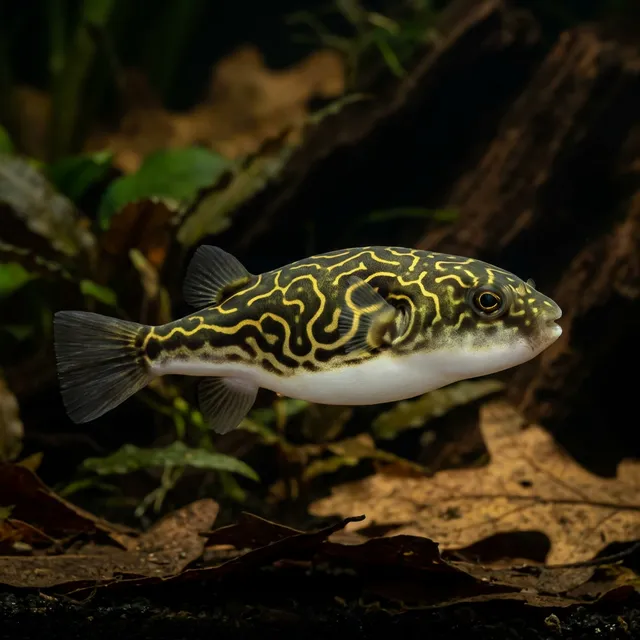
What Figure 8 Puffer look like
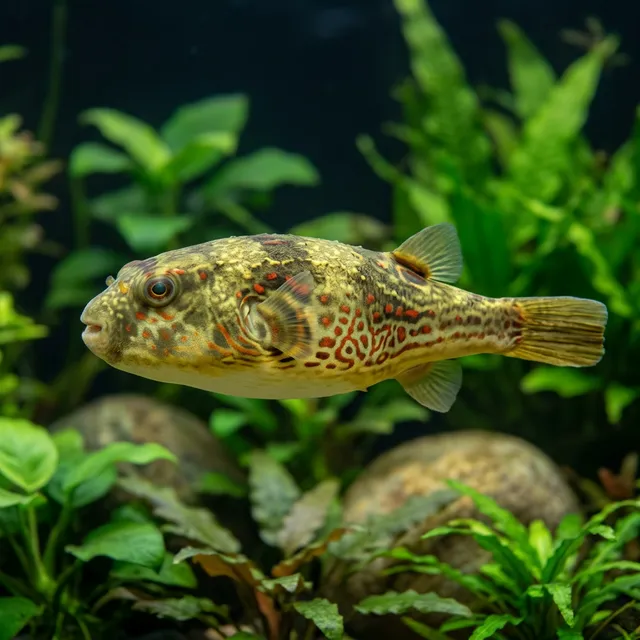
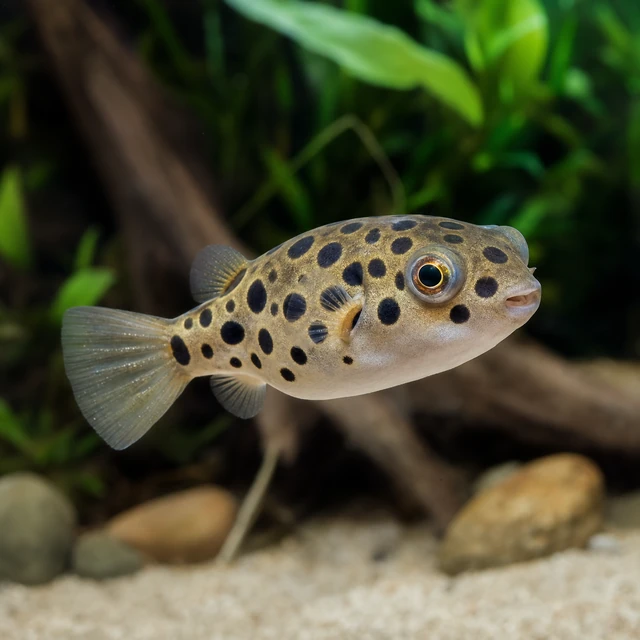
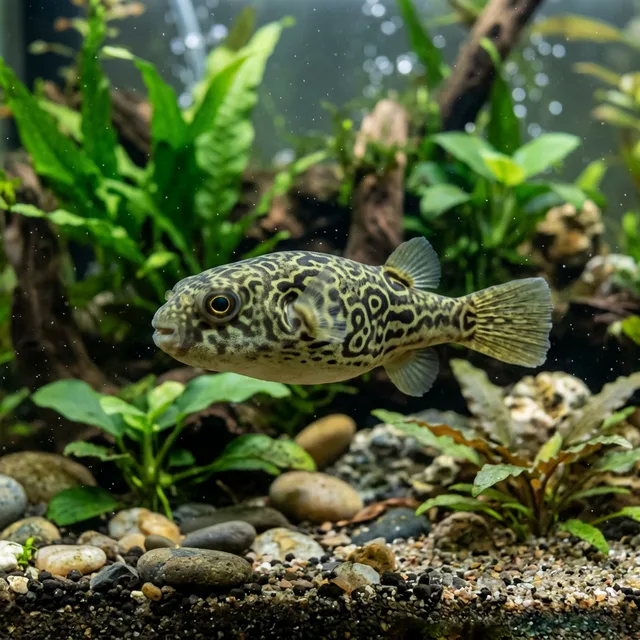
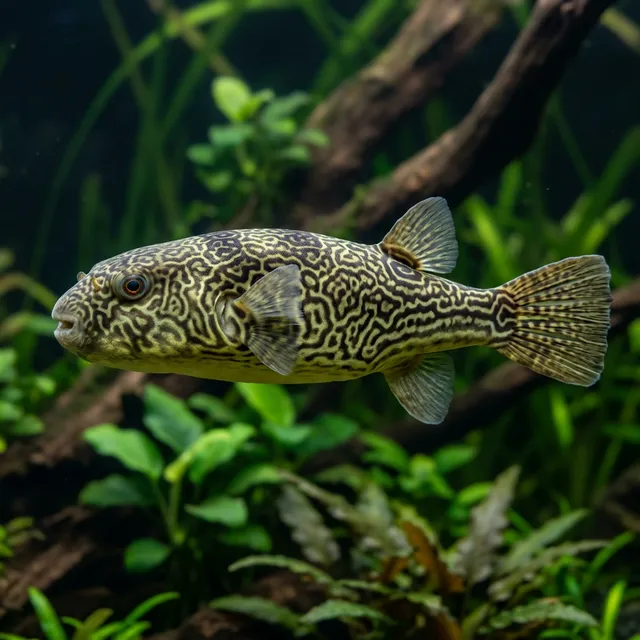
The Figure 8 Puffer (Tetraodon biocellatus) exhibits a robust, stout body that is characteristic of the Tetraodontidae family, reaching a maximum adult size of approximately 10-20 cm. Its morphology is defined by a deep olive-green to brown dorsal coloration, which is intricately patterned with bright, golden-yellow maze-like lines that resemble the number 8, providing effective camouflage against predators. The body is laterally compressed, and it possesses a distinctive beak-like dentition adapted for crushing hard-shelled prey. The pectoral fins are rounded and relatively small, while the dorsal and anal fins are positioned towards the rear, contributing to its agile swimming capabilities. Notably, the Figure 8 Puffer has a well-developed lateral line system, which aids in detecting vibrations in the water, and it can inflate its body as a defensive adaptation against threats, making it a formidable presence in its habitat.
Behavior & temperament
In terms of behavior, the Figure 8 Puffer is known to be a solitary and territorial species, often establishing a hierarchy when kept in groups, although it is not an obligate schooler. It primarily inhabits the brackish waters of Southeast Asia, dwelling in the mid to lower water column, where it forages for food. During breeding, this species exhibits egg-scattering behavior, with females laying eggs in sheltered areas. The temperament of the Figure 8 Puffer can range from mildly aggressive to territorial, particularly when defending its space or during mating rituals, necessitating careful consideration of tank mates in captivity.
Diet & feeding
In the wild, the Figure 8 Puffer is a carnivore that primarily consumes crustaceans, mollusks, and other small invertebrates. In captivity, it requires a diet rich in protein, including high-quality pellets, live or frozen foods such as shrimp and snails, to meet its nutritional needs.
Behind the name
Tetraodon (four teeth); biocellatus (two spots).
Plan your tank
Check the numbers before you buy: tank volume, a stocking plan, cycle progress, water changes, and your ongoing care routine.
Keep reading

Choose compatible fish: school sizes, swimming zones, aggression, temperature and hardness matching, and honest bioload math for a peaceful community.
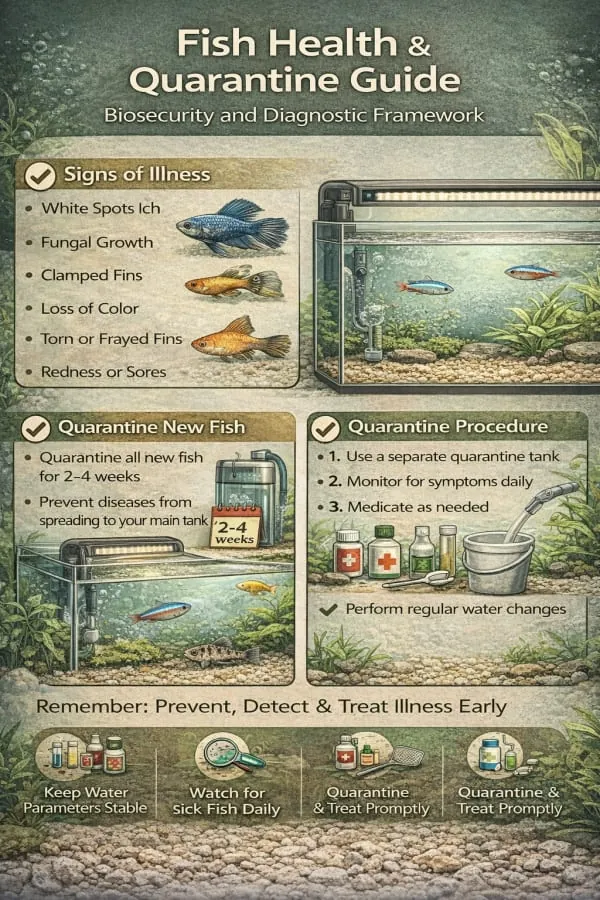
Quarantine new fish, spot the early warning signs, and treat disease without wrecking your tank. A practical freshwater fish health guide.
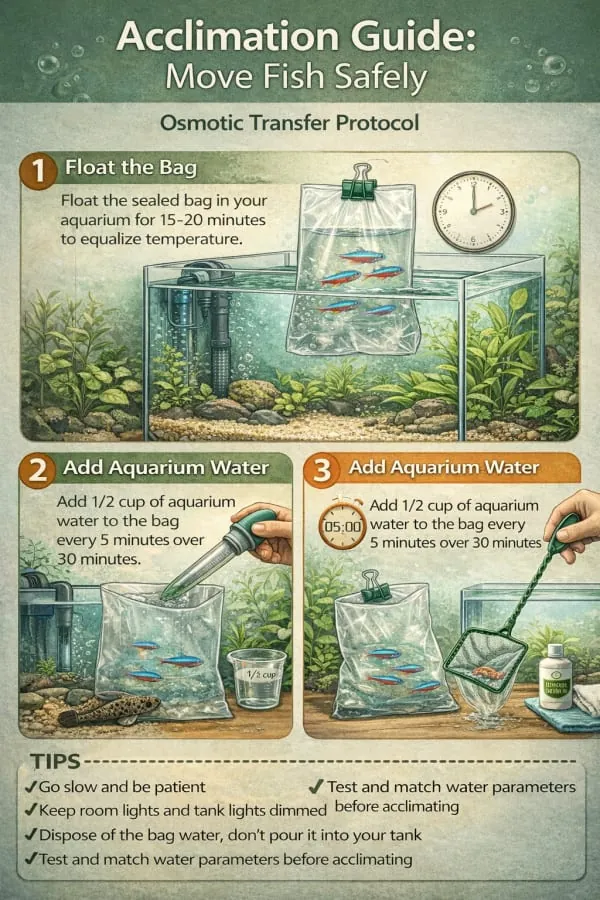
Acclimate new fish, shrimp, and coral safely: temperature floating, drip acclimation, plop-and-drop for shipped livestock, and the first 24 hours.
Keeping Figure 8 Puffer?
AquaLens identifies your fish and plants from a photo, tracks water chemistry, and flags health issues early — free on iOS and Android.