Figure-8 Puffer Care Guide
Tetraodon biocellatus · Freshwater Fish
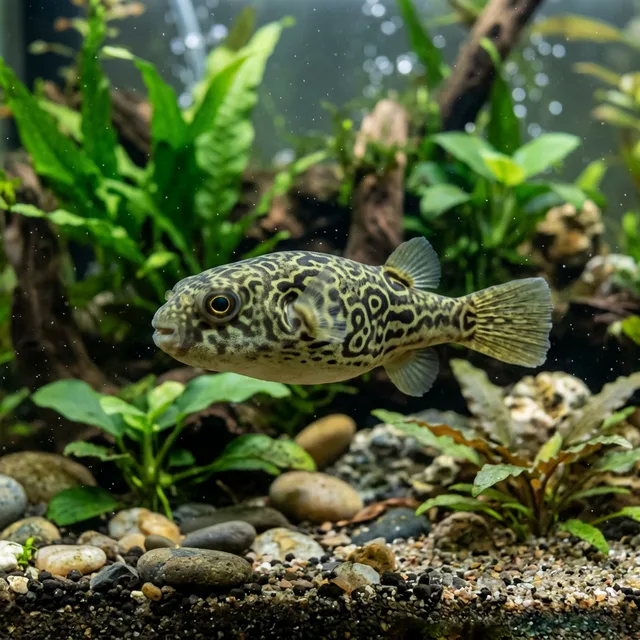
What Figure-8 Puffer look like
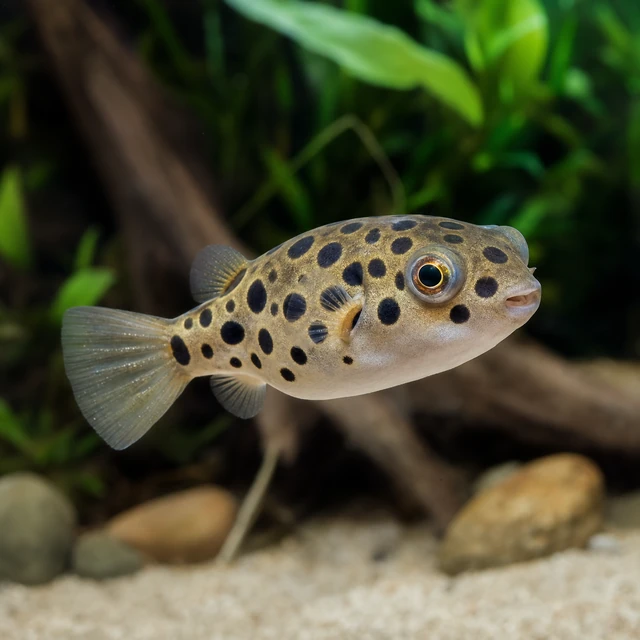
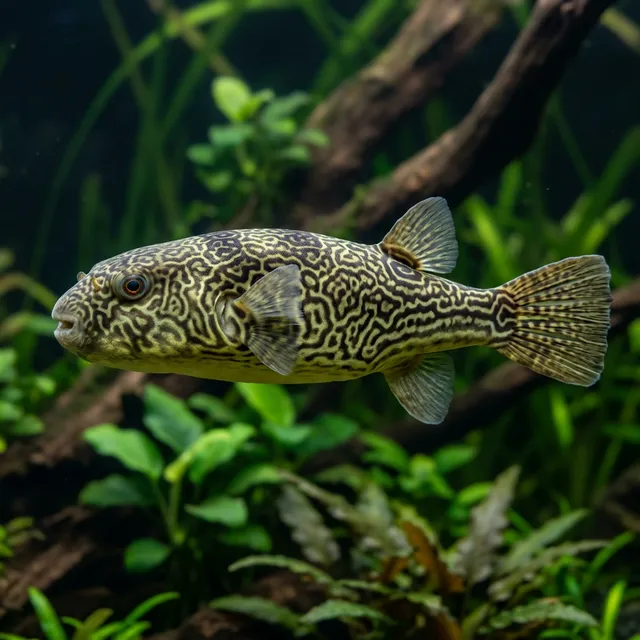
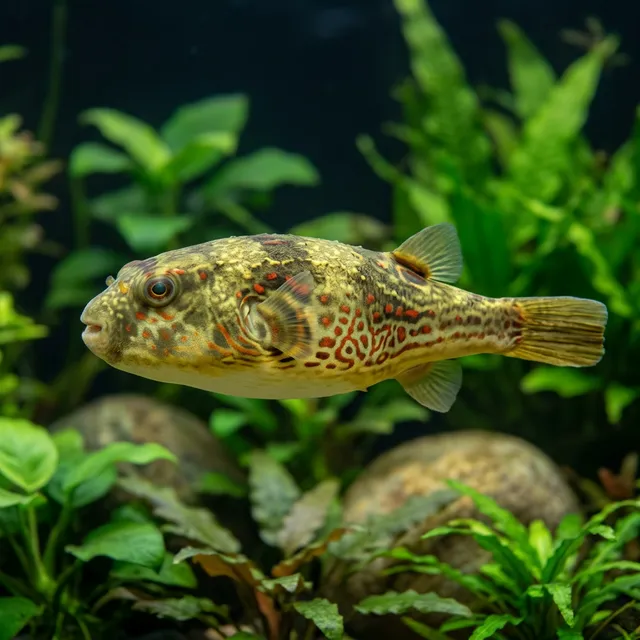
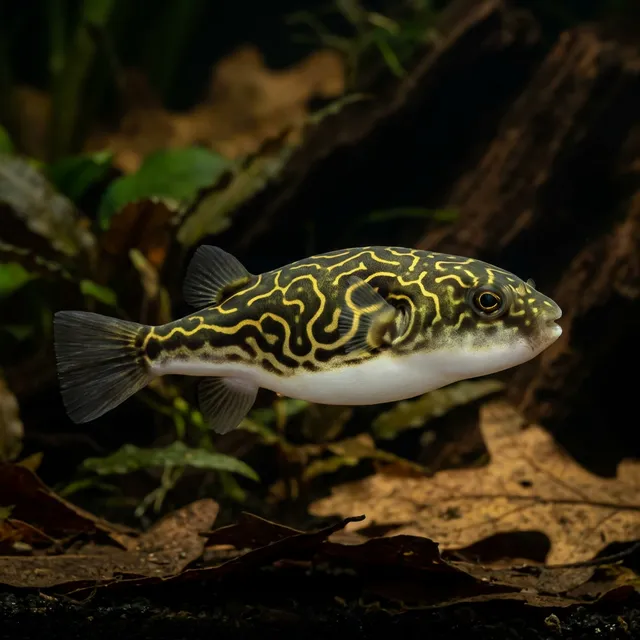
The Figure-8 Puffer (Tetraodon biocellatus) exhibits a compact, laterally compressed body that can reach a maximum adult size of approximately 10-18 cm. This species is characterized by its striking coloration, featuring a dark brown to green-black dorsal surface adorned with intricate golden-yellow lines and swirls, forming a distinctive figure-8 pattern. The ventral surface is pure white, providing a stark contrast to the darker hues above. Sexual dimorphism is subtle, with males typically displaying slightly more vibrant coloration and larger, more pronounced patterns than females. Defensive adaptations include the ability to inflate its body significantly, which deters potential predators. Unique morphological features include large, coppery eyes capable of independent movement, and a beak-like dentition that is well-adapted for crushing hard-shelled prey. The presence of an adipose fin, along with a well-defined lateral line, enhances its sensory perception in brackish environments.
Behavior & temperament
The Figure-8 Puffer is primarily a solitary species, although it can exhibit social behavior in larger aquaria. It tends to occupy the mid to lower water column, often found near structures where it can hide and ambush prey. Breeding behavior in captivity has not been extensively documented, but it is believed to be an egg scatterer, with potential parental care observed in some instances. This species can display territorial aggression, particularly during feeding or when establishing a territory, making it essential to provide ample space and hiding spots in a community tank to mitigate conflicts.
Diet & feeding
In the wild, the Figure-8 Puffer is a carnivore, primarily feeding on crustaceans, mollusks, and other small invertebrates. In captivity, it requires a varied diet that includes high-quality pellets, frozen or live foods such as shrimp, snails, and other meaty offerings to ensure optimal health and coloration.
Behind the name
Tetraodon (four teeth); biocellatus (two spots).
Plan your tank
Check the numbers before you buy: tank volume, a stocking plan, cycle progress, water changes, and your ongoing care routine.
Keep reading

Choose compatible fish: school sizes, swimming zones, aggression, temperature and hardness matching, and honest bioload math for a peaceful community.
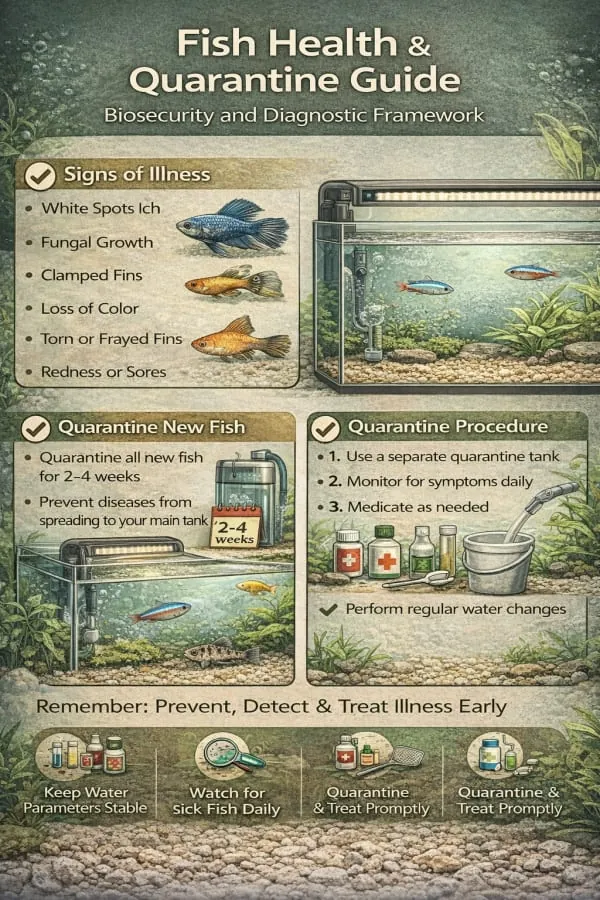
Quarantine new fish, spot the early warning signs, and treat disease without wrecking your tank. A practical freshwater fish health guide.

Acclimate new fish, shrimp, and coral safely: temperature floating, drip acclimation, plop-and-drop for shipped livestock, and the first 24 hours.
Keeping Figure-8 Puffer?
AquaLens identifies your fish and plants from a photo, tracks water chemistry, and flags health issues early — free on iOS and Android.