Fire Red Licorice Gourami Care Guide
Parosphromenus sumatranus · Freshwater Fish
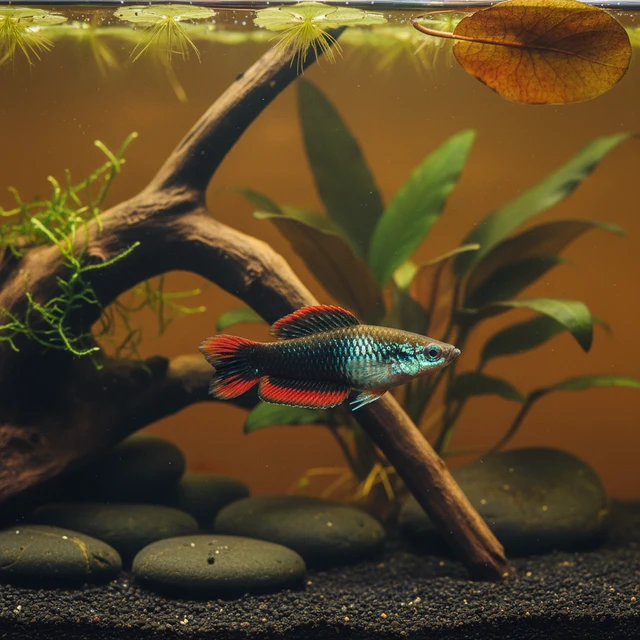
What Fire Red Licorice Gourami look like
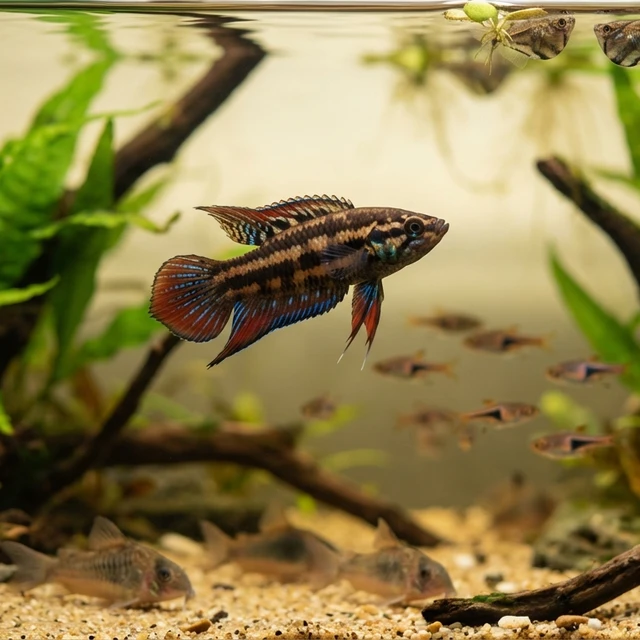
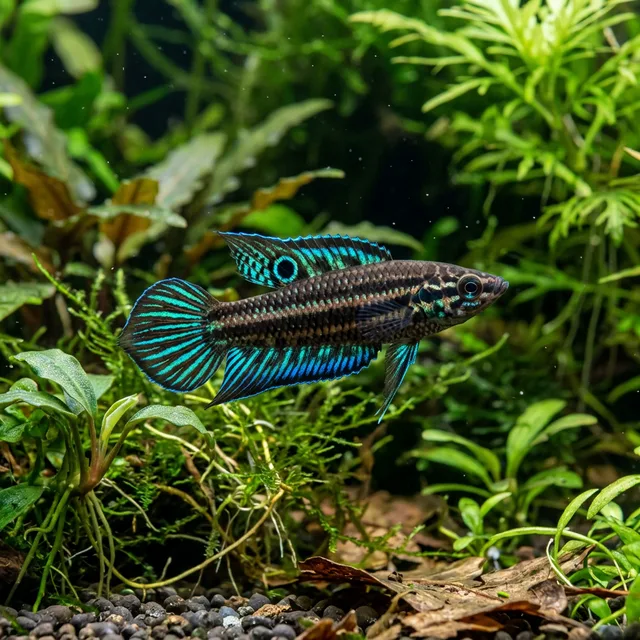
Parosphromenus sumatranus, commonly known as the Fire Red Licorice Gourami, exhibits a diminutive size, typically reaching a maximum adult length of 1 to 1.5 inches. This species is characterized by a laterally compressed, fusiform body shape, which is adorned with a dark brown base coloration that serves as a canvas for the strikingly vivid red hues displayed in the unpaired fins of males during courtship. Sexual dimorphism is evident, with males showcasing more intense red coloration compared to the more subdued tones of females. The fish possesses a well-developed labyrinth organ, allowing it to extract oxygen from the air, which is crucial for its survival in low-oxygen environments. Additionally, the presence of a small adipose fin and a series of delicate, filamentous rays in the dorsal and anal fins contribute to its unique morphological features. Defensive adaptations include its ability to blend into the leaf-littered substrates of its native habitat, providing camouflage against potential predators.
Behavior & temperament
The Fire Red Licorice Gourami is primarily a solitary and territorial species, often found dwelling in the densely vegetated, shallow waters of its native Sumatra. It exhibits a preference for the lower strata of the water column, where it can navigate among submerged plants and leaf litter. This species is known for its relatively peaceful temperament, although males may display aggressive behaviors during breeding displays or territorial disputes. Breeding occurs via egg scattering, with females laying eggs among the vegetation, which are then fertilized by males. Parosphromenus sumatranus tends to be shy and reclusive, often seeking refuge in dense cover, making it less likely to be observed in open water.
Diet & feeding
In the wild, the Fire Red Licorice Gourami primarily feeds on small invertebrates and zooplankton, reflecting its carnivorous nature. In captivity, it requires a diet rich in high-quality live or frozen foods such as brine shrimp, daphnia, and finely crushed flakes to ensure optimal health and coloration.
Behind the name
Parosphromenus (from Greek 'para' meaning 'beside' and 'osphromenus' referring to 'smelling'); sumatranus (from Latin, meaning 'from Sumatra').
Plan your tank
Check the numbers before you buy: tank volume, a stocking plan, cycle progress, water changes, and your ongoing care routine.
Keep reading

Choose compatible fish: school sizes, swimming zones, aggression, temperature and hardness matching, and honest bioload math for a peaceful community.
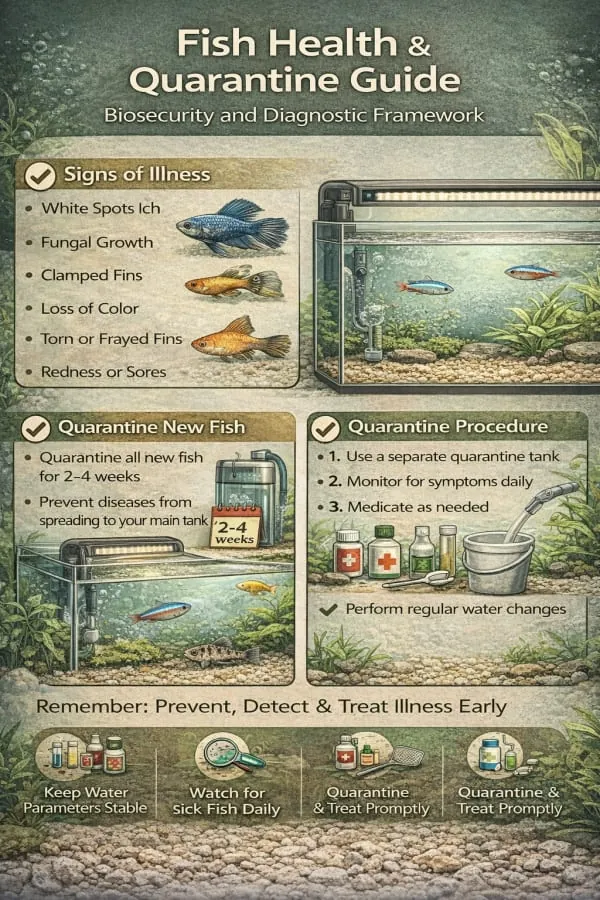
Quarantine new fish, spot the early warning signs, and treat disease without wrecking your tank. A practical freshwater fish health guide.
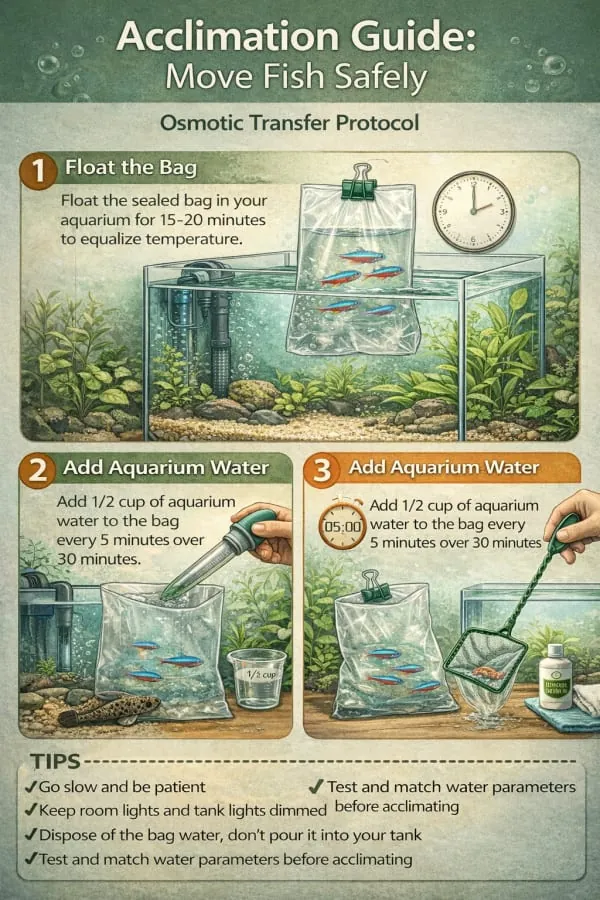
Acclimate new fish, shrimp, and coral safely: temperature floating, drip acclimation, plop-and-drop for shipped livestock, and the first 24 hours.
Keeping Fire Red Licorice Gourami?
AquaLens identifies your fish and plants from a photo, tracks water chemistry, and flags health issues early — free on iOS and Android.