Four-banded Tigerfish Care Guide
Datnioides polota · Freshwater Fish
What Four-banded Tigerfish look like
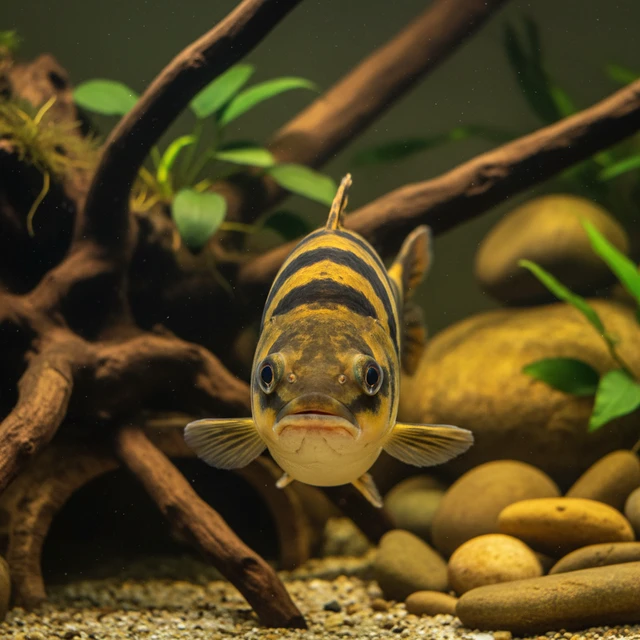
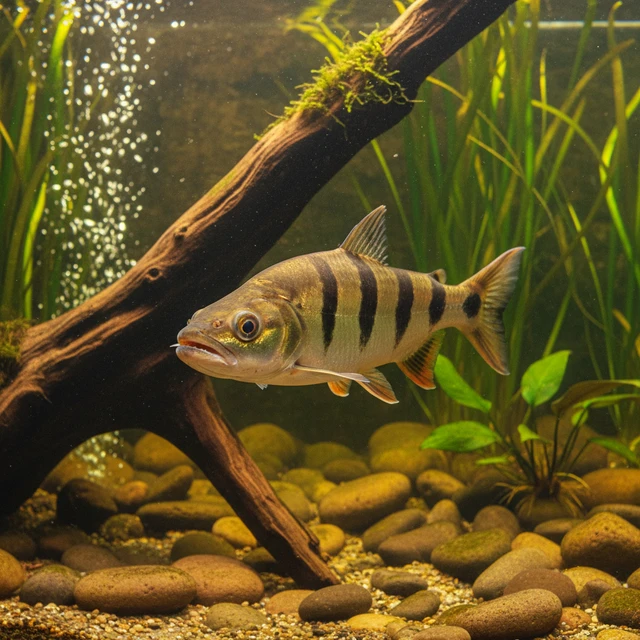
The Four-banded Tigerfish (Datnioides polota) exhibits a laterally compressed, fusiform body shape that can reach a maximum adult size of approximately 12 inches (30 cm). Its striking coloration features a deep golden base adorned with four bold, vertical black bands that are broader and fewer compared to its close relative, the Siamese Tigerfish. This dramatic coloration serves as a form of aposematic signaling, warning potential predators of its predatory nature. The species possesses a large, robust mouth equipped with sharp, conical teeth adapted for grasping and tearing prey. Notable morphological features include a pronounced lateral line system that aids in detecting movement in the water, as well as a well-developed adipose fin, which contributes to its streamlined swimming efficiency. Sexual dimorphism is subtle, with males typically exhibiting slightly more vibrant coloration and larger fins during the breeding season.
Behavior & temperament
The Four-banded Tigerfish is primarily a solitary and territorial species, often found dwelling in the mid to upper water column of freshwater habitats. It exhibits aggressive behavior, particularly when defending its territory or during feeding. This species is known for its predatory instincts, often ambushing smaller fish and invertebrates. Breeding behavior involves egg scattering, where females release eggs into the water column, allowing for external fertilization. The species does not exhibit parental care post-spawning. Its temperament can be described as highly aggressive, making it unsuitable for community tanks unless housed with similarly sized or larger fish.
Diet & feeding
In the wild, the Four-banded Tigerfish is a carnivore, preying on smaller fish and aquatic invertebrates. In captivity, it requires a diet rich in high-quality protein sources, including live or frozen foods such as fish, shrimp, and other meaty offerings to meet its nutritional needs.
Behind the name
Datnioides (from Greek 'datnia' meaning 'tooth' and 'oides' meaning 'like'); polota (from a local term referring to this species).
Plan your tank
Check the numbers before you buy: tank volume, a stocking plan, cycle progress, water changes, and your ongoing care routine.
Keep reading

Choose compatible fish: school sizes, swimming zones, aggression, temperature and hardness matching, and honest bioload math for a peaceful community.

Quarantine new fish, spot the early warning signs, and treat disease without wrecking your tank. A practical freshwater fish health guide.

Acclimate new fish, shrimp, and coral safely: temperature floating, drip acclimation, plop-and-drop for shipped livestock, and the first 24 hours.
Keeping Four-banded Tigerfish?
AquaLens identifies your fish and plants from a photo, tracks water chemistry, and flags health issues early — free on iOS and Android.