Siamese Tigerfish Care Guide
Datnioides microlepis · Freshwater Fish
What Siamese Tigerfish look like
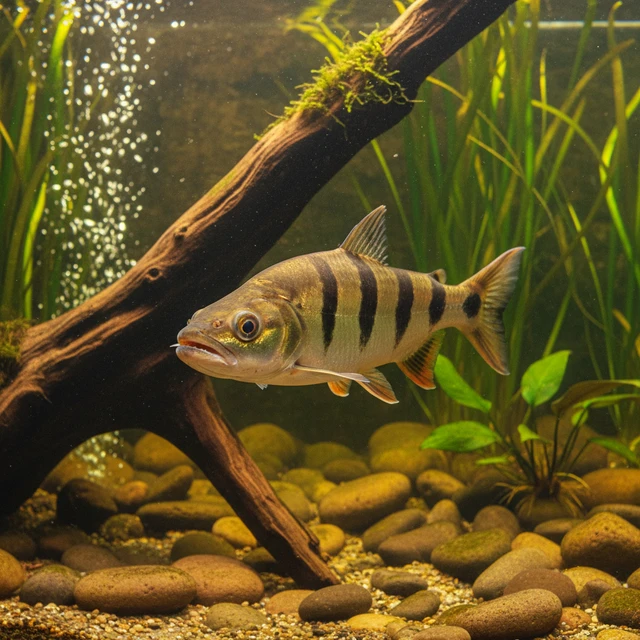
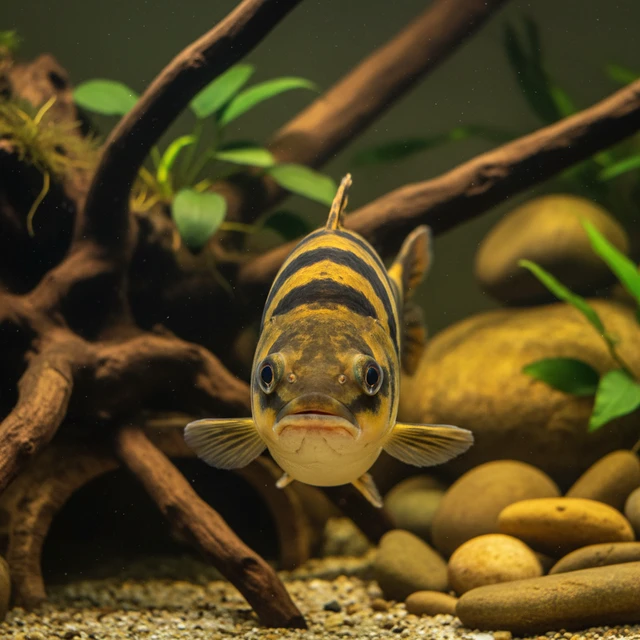
The Siamese Tigerfish (Datnioides microlepis) exhibits a strikingly bold morphology characterized by a deep, laterally compressed body that can reach a maximum adult size of 12 to 18 inches. Its coloration features a vibrant golden-yellow base adorned with 5 to 6 prominent jet-black vertical bars, creating a visually stunning tiger-like pattern that serves as a form of disruptive coloration in its natural habitat. The species possesses a large, wide mouth equipped with sharp, conical teeth, adapted for a carnivorous diet, allowing it to effectively capture and consume prey. Notably, the dorsal fin is elongated and set far back on the body, contributing to its streamlined shape, while the anal fin is similarly elongated, aiding in maneuverability. The presence of a lateral line system enhances its ability to detect vibrations in the water, a crucial adaptation for a predatory lifestyle. Sexual dimorphism is subtle, with males generally exhibiting slightly more vibrant coloration during breeding periods, although overall differences are minimal.
Behavior & temperament
Siamese Tigerfish are primarily solitary or may form loose aggregations, particularly during breeding seasons. They inhabit the mid to lower water column, often dwelling near submerged structures or vegetation where they can ambush prey. Their behavior is characterized by a high level of aggression, particularly towards conspecifics and smaller fish, making them unsuitable for community tanks unless carefully managed. Breeding behavior involves egg scattering, where females release eggs over substrate, and males fertilize them externally. This species exhibits territorial tendencies, especially males during the breeding season, and displays a predatory temperament, actively hunting smaller fish and invertebrates in their environment.
Diet & feeding
In the wild, the Siamese Tigerfish is a carnivore, primarily feeding on smaller fish and aquatic invertebrates. In captivity, it requires a diet rich in high-quality protein sources, such as live or frozen foods like shrimp, fish fillets, and specialized carnivore pellets to maintain optimal health.
Behind the name
Datnioides (from Greek 'datnion', meaning 'to divide' or 'to separate', referring to the fish's distinct body shape); microlepis (from Greek 'mikros', meaning 'small', and 'lepis', meaning 'scale', indicating the small scales of the species).
Plan your tank
Check the numbers before you buy: tank volume, a stocking plan, cycle progress, water changes, and your ongoing care routine.
Keep reading

Choose compatible fish: school sizes, swimming zones, aggression, temperature and hardness matching, and honest bioload math for a peaceful community.

Quarantine new fish, spot the early warning signs, and treat disease without wrecking your tank. A practical freshwater fish health guide.

Acclimate new fish, shrimp, and coral safely: temperature floating, drip acclimation, plop-and-drop for shipped livestock, and the first 24 hours.
Keeping Siamese Tigerfish?
AquaLens identifies your fish and plants from a photo, tracks water chemistry, and flags health issues early — free on iOS and Android.