Frontosa Cichlid Care Guide
Cyphotilapia frontosa · Freshwater Fish
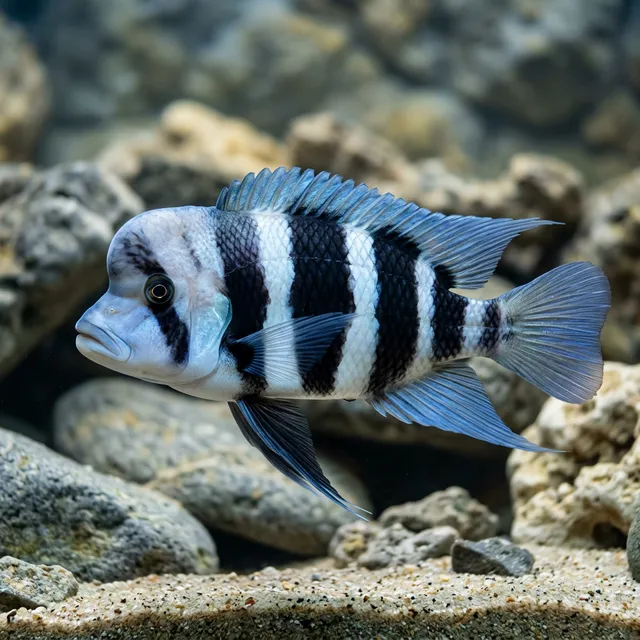
What Frontosa Cichlid look like
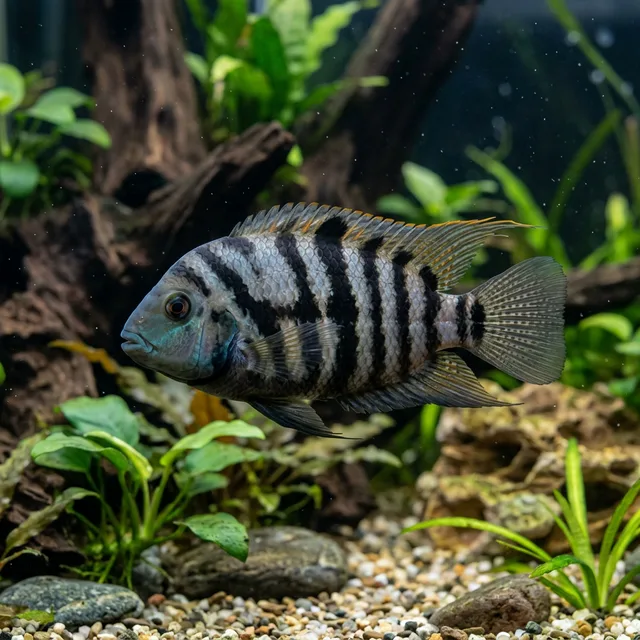
The Frontosa Cichlid (Cyphotilapia frontosa) is a robust, laterally compressed cichlid characterized by its strikingly pale, icy metallic blue-white base adorned with six distinct, thick vertical black bands that run down its body. This species exhibits sexual dimorphism, with males typically reaching a maximum adult size of 12-15 inches, while females are slightly smaller, averaging around 10-12 inches. A prominent morphological feature is the pronounced nuchal hump found in mature males, which serves as a secondary sexual characteristic. The dorsal fin is elongated and pointed, extending along the length of the body, while the anal fin is similarly elongated, contributing to its streamlined appearance. The Frontosa possesses a well-developed lateral line system, aiding in sensory perception in its deep-water habitat, and exhibits a unique dentition adapted for its carnivorous diet, featuring robust, conical teeth suitable for grasping and consuming prey.
Behavior & temperament
Cyphotilapia frontosa is a predominantly solitary species that exhibits territorial behavior, particularly during breeding. They are typically found in the benthic zone of deep freshwater environments, specifically in the rocky substrates of Lake Tanganyika. During the breeding season, females engage in mouthbrooding, where they incubate fertilized eggs in their buccal cavity until the fry are ready to swim independently. Frontosas are generally peaceful but can display aggression when defending their territory or during mating rituals. They are not obligate schoolers but may exhibit social hierarchies when kept in groups, with dominant individuals asserting control over preferred territories.
Diet & feeding
In the wild, the Frontosa Cichlid is a carnivore, primarily feeding on smaller fish and crustaceans. In captivity, they require a high-quality, protein-rich diet consisting of pellets, frozen or live foods such as shrimp and fish, to maintain optimal health and coloration.
Behind the name
Cyphotilapia (from Greek 'kyphos' meaning 'hump' and 'tilapia' referring to a type of fish); frontosa (from Latin 'frons' meaning 'forehead', referring to the prominent nuchal hump in males).
Plan your tank
Check the numbers before you buy: tank volume, a stocking plan, cycle progress, water changes, and your ongoing care routine.
Keep reading

Choose compatible fish: school sizes, swimming zones, aggression, temperature and hardness matching, and honest bioload math for a peaceful community.
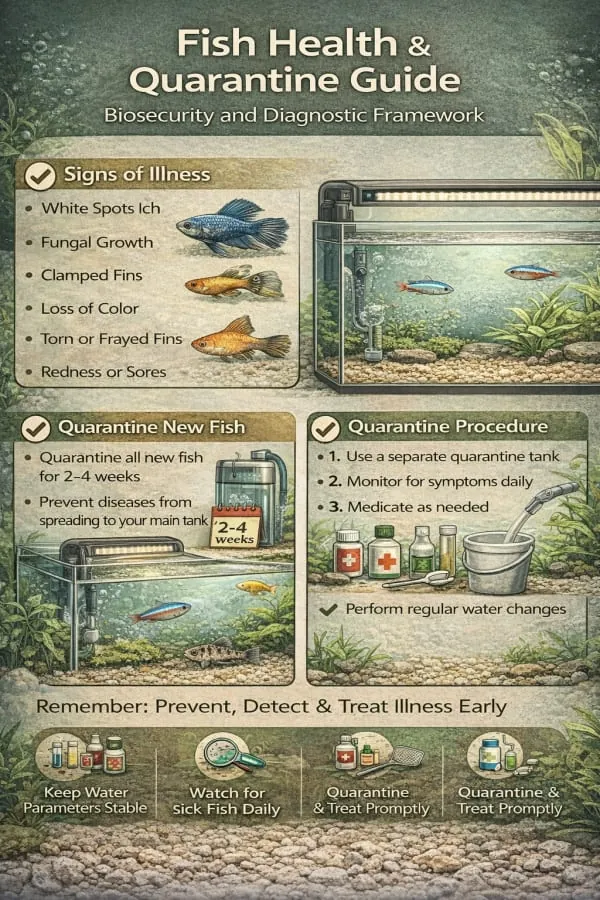
Quarantine new fish, spot the early warning signs, and treat disease without wrecking your tank. A practical freshwater fish health guide.

Acclimate new fish, shrimp, and coral safely: temperature floating, drip acclimation, plop-and-drop for shipped livestock, and the first 24 hours.
Keeping Frontosa Cichlid?
AquaLens identifies your fish and plants from a photo, tracks water chemistry, and flags health issues early — free on iOS and Android.