Blue Dolphin Cichlid Care Guide
Cyrtocara moorii · Freshwater Fish
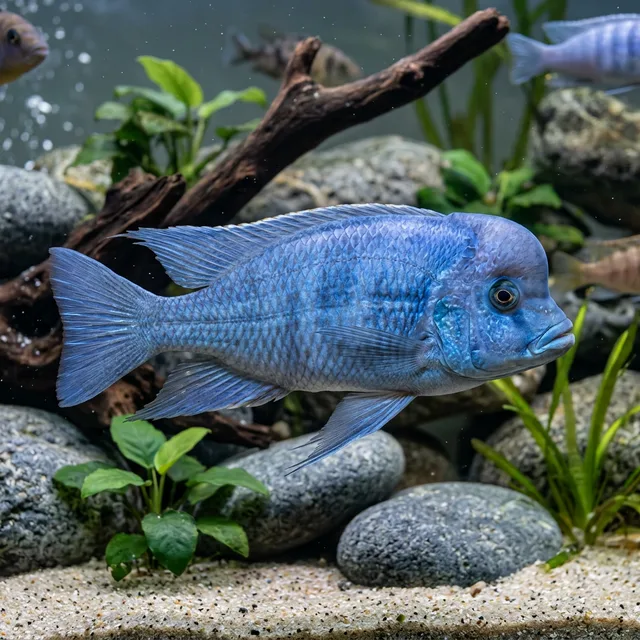
What Blue Dolphin Cichlid look like
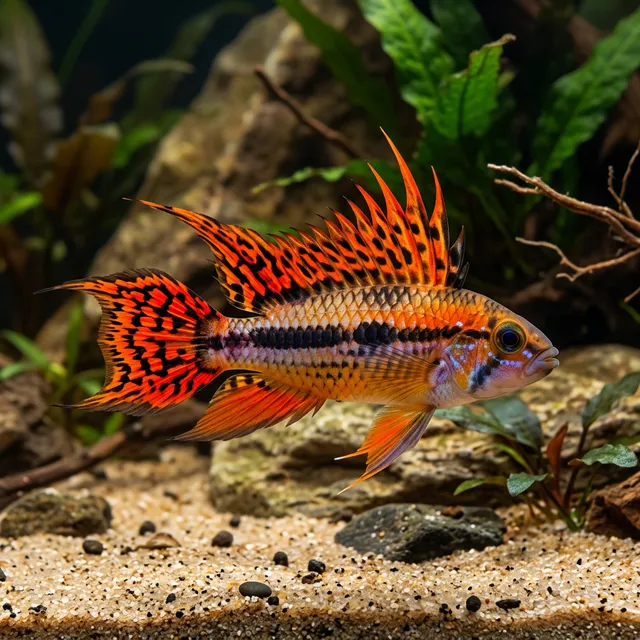
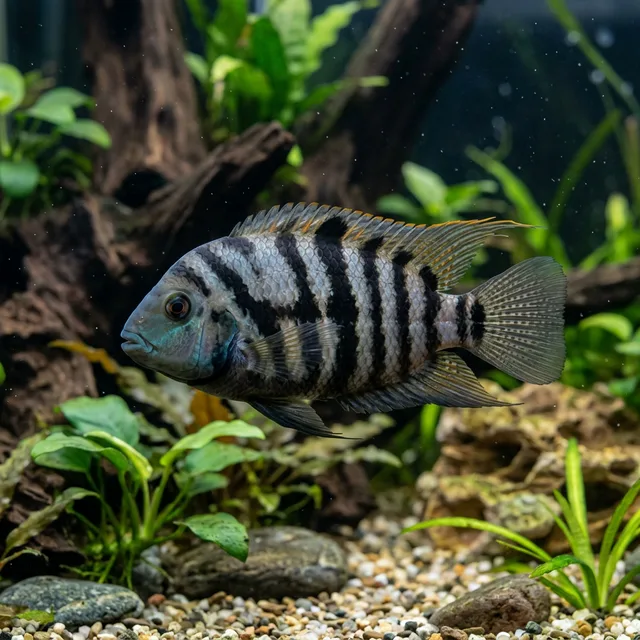
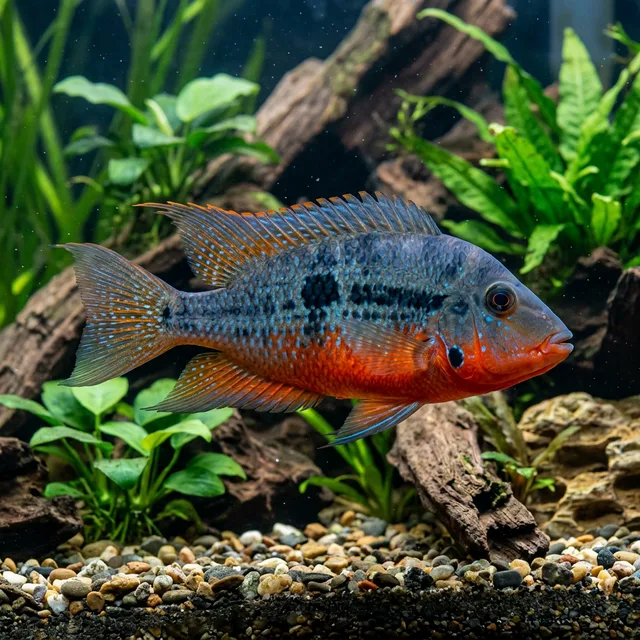
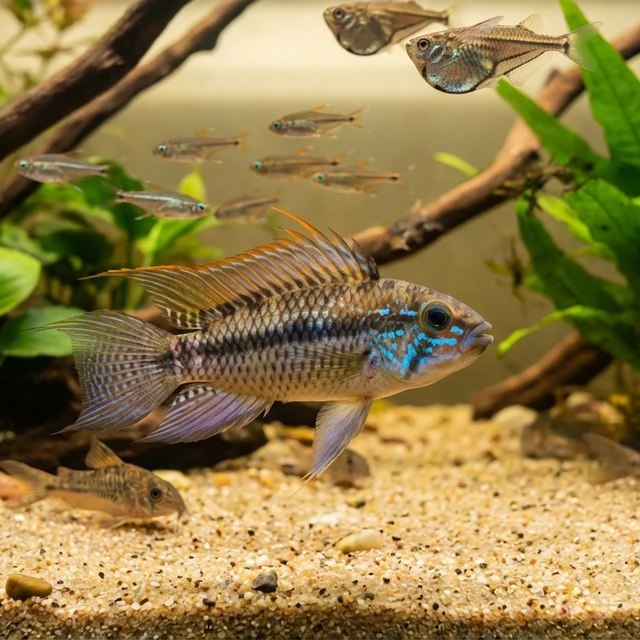
Cyrtocara moorii, commonly known as the Blue Dolphin Cichlid, exhibits a distinctive, laterally compressed body shape that is reminiscent of a dolphin, hence its common name. Adults can reach a maximum size of approximately 5 to 15 inches, with males typically being larger and exhibiting more pronounced nuchal humps compared to females, demonstrating sexual dimorphism. The species possesses a robust, elongated head with a slightly protruding lower jaw, equipped with conical teeth adapted for a varied diet. Its coloration ranges from a vibrant blue to a more subdued grayish hue, often with darker vertical stripes, and it features a pronounced dorsal fin that extends along the length of the body, contributing to its streamlined appearance. Defensive adaptations include a strong, laterally positioned lateral line system that aids in detecting vibrations in the water, and its ability to retreat into rocky crevices within its natural habitat. The caudal fin is deeply forked, enhancing its agility in the water column.
Behavior & temperament
The Blue Dolphin Cichlid is primarily a social species that exhibits a hierarchical structure within groups, often forming loose schools in their natural habitat. They are predominantly found in the mid to upper water column of Lake Malawi, where they inhabit rocky substrates. During breeding, they exhibit mouthbrooding behavior, with females incubating fertilized eggs in their mouths until they hatch, showcasing a strong parental instinct. This species is generally peaceful but can exhibit territorial aggression, particularly during breeding periods or when establishing dominance within a group. They are known to engage in displays of courtship and aggression, which can include fin flaring and body posturing.
Diet & feeding
In the wild, the Blue Dolphin Cichlid is an omnivore, feeding on a diet that includes algae, small invertebrates, and detritus. In captivity, they thrive on a varied diet that includes high-quality pellets, spirulina flakes, and occasional live or frozen foods such as brine shrimp and bloodworms to ensure optimal health and coloration.
Behind the name
Cyrtocara (curved face); moorii (named in honor of the Scottish naturalist Dr. Andrew Moor)
Plan your tank
Check the numbers before you buy: tank volume, a stocking plan, cycle progress, water changes, and your ongoing care routine.
Keep reading

Choose compatible fish: school sizes, swimming zones, aggression, temperature and hardness matching, and honest bioload math for a peaceful community.
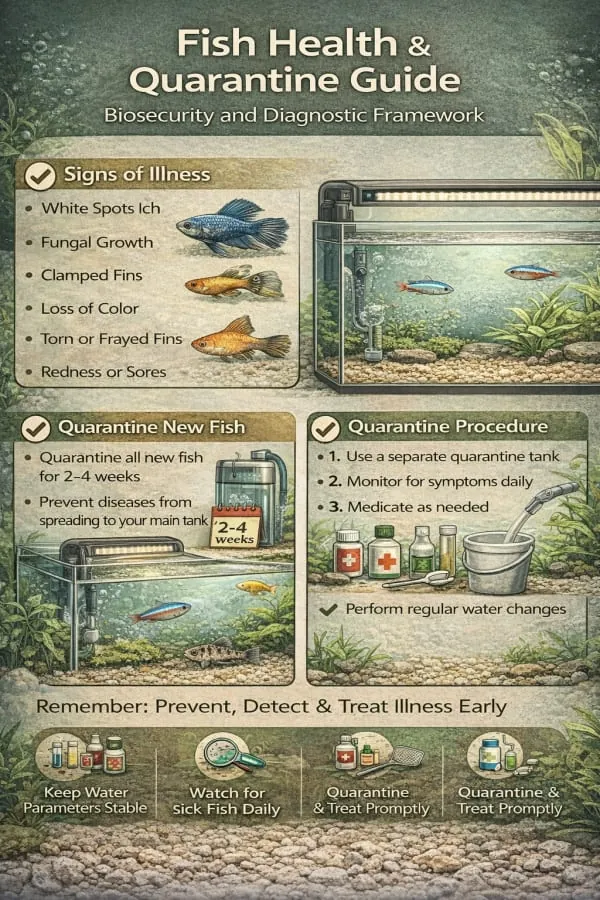
Quarantine new fish, spot the early warning signs, and treat disease without wrecking your tank. A practical freshwater fish health guide.

Acclimate new fish, shrimp, and coral safely: temperature floating, drip acclimation, plop-and-drop for shipped livestock, and the first 24 hours.
Keeping Blue Dolphin Cichlid?
AquaLens identifies your fish and plants from a photo, tracks water chemistry, and flags health issues early — free on iOS and Android.