Jaguar Cichlid Care Guide
Parachromis managuensis · Freshwater Fish
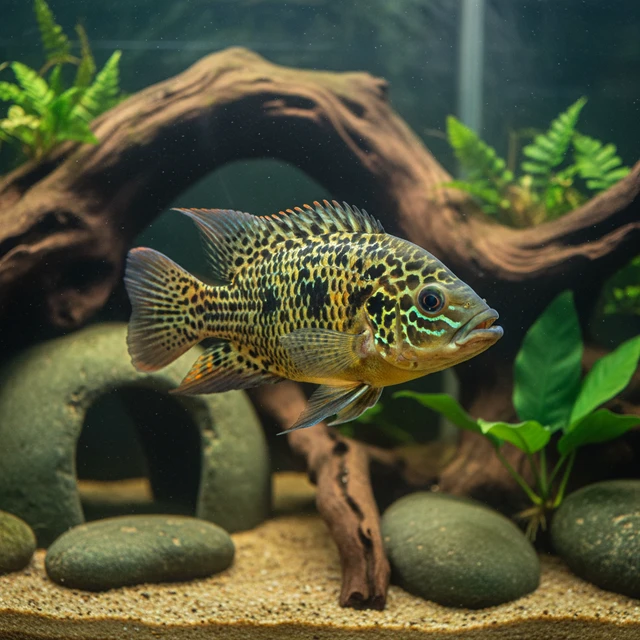
What Jaguar Cichlid look like
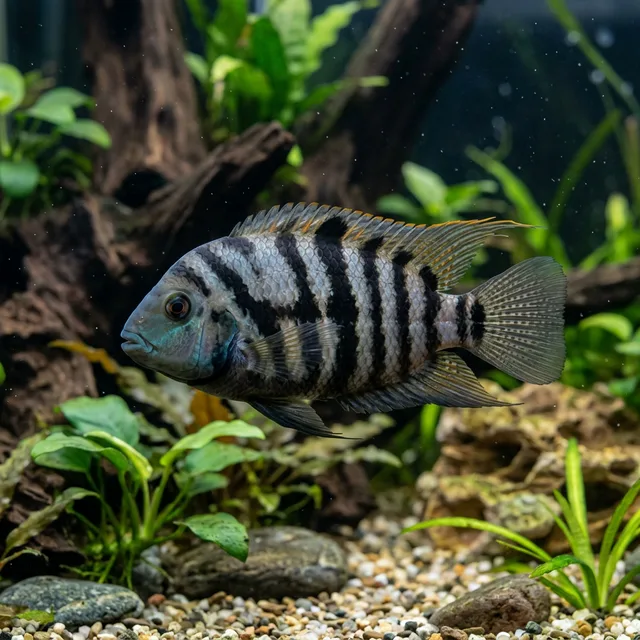
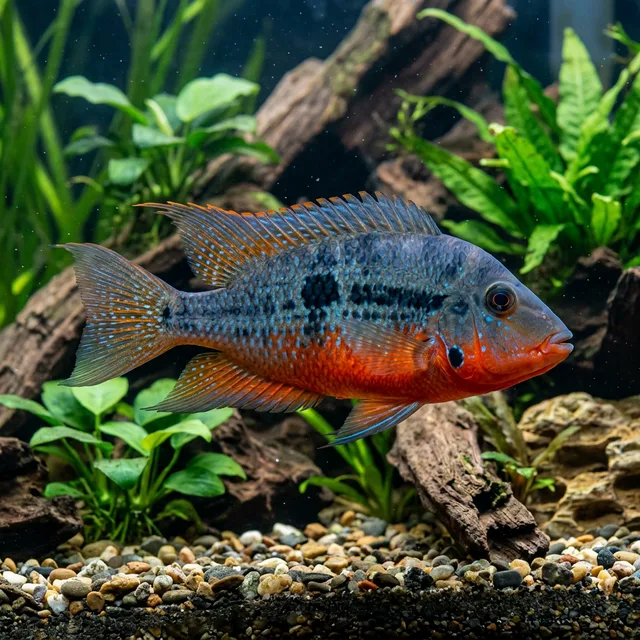
The Jaguar Cichlid (Parachromis managuensis) exhibits a robust and laterally compressed body, reaching a maximum adult size of 14-16 inches (35-40 cm). This species displays pronounced sexual dimorphism, with males typically larger and more vibrantly colored than females, often showcasing more extensive black spotting and a more pronounced nuchal hump during breeding. The body is adorned with a striking pattern of large, irregular black spots and blotches against a pale golden to silver background, reminiscent of a jaguar's coat. The head is large and equipped with powerful jaws, featuring conical teeth adapted for grasping and consuming prey. Notably, the species possesses an elongated dorsal fin that extends along the length of the body, contributing to its streamlined appearance, and a well-defined lateral line that aids in detecting vibrations in the water, enhancing its predatory capabilities.
Behavior & temperament
Jaguar Cichlids are known for their aggressive and territorial behavior, often establishing dominance hierarchies within their environment. They are primarily solitary or can be found in pairs during breeding, exhibiting a strong inclination towards territoriality, especially in confined spaces. This species typically occupies the mid to lower water column, often dwelling near structures such as rocks and submerged wood. Breeding behavior involves the female laying eggs on flat surfaces, which the male fertilizes; they exhibit parental care by guarding the eggs and fry. Their temperament is generally aggressive, particularly towards conspecifics and smaller tank mates, making them unsuitable for community tanks without careful selection of compatible species.
Diet & feeding
In the wild, Jaguar Cichlids are carnivorous predators, primarily feeding on smaller fish, invertebrates, and crustaceans. In captivity, they require a diet rich in high-quality pellets, frozen or live foods such as shrimp, and occasional plant matter to ensure optimal health and coloration.
Behind the name
Parachromis (beside the color); managuensis (from Lake Managua, Nicaragua, where the species was first described).
Plan your tank
Check the numbers before you buy: tank volume, a stocking plan, cycle progress, water changes, and your ongoing care routine.
Keep reading
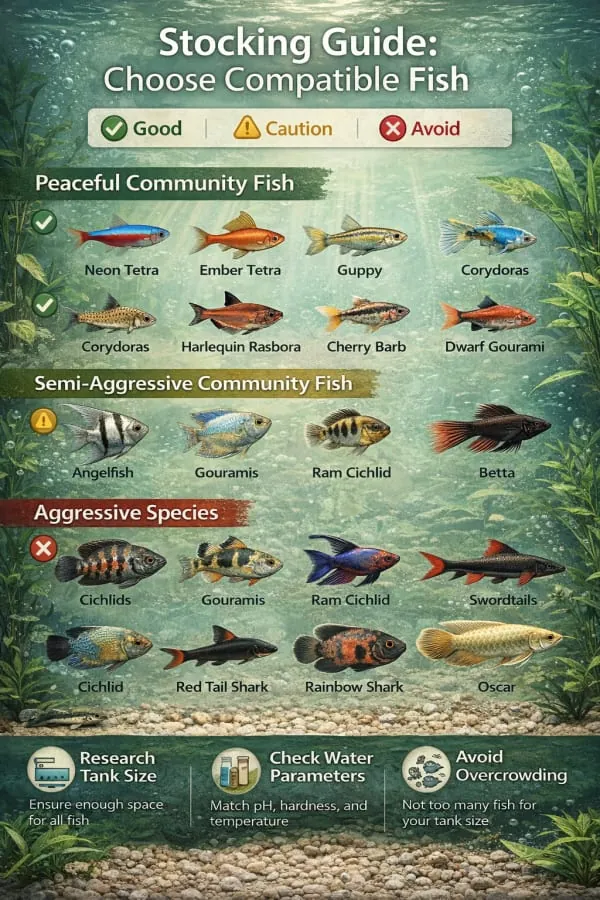
Choose compatible fish: school sizes, swimming zones, aggression, temperature and hardness matching, and honest bioload math for a peaceful community.
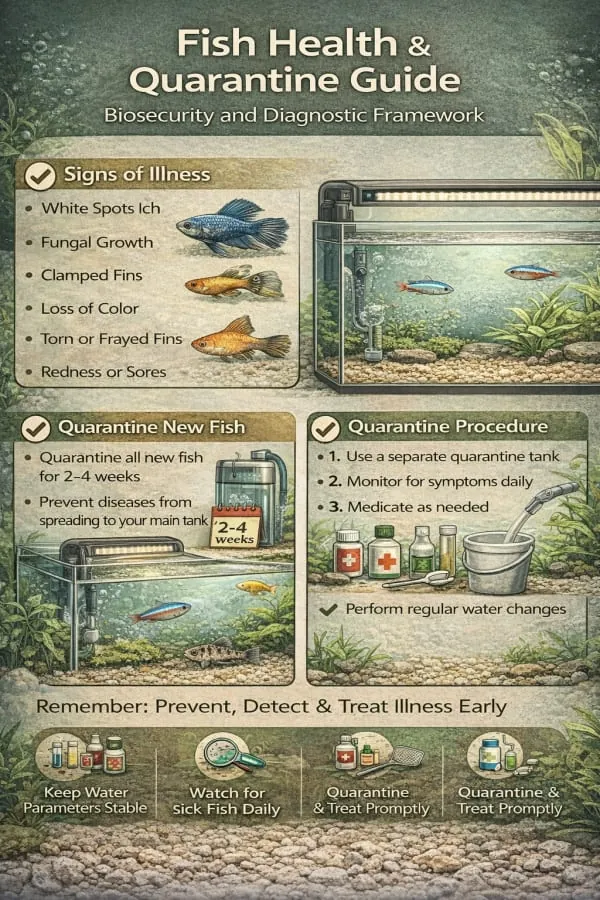
Quarantine new fish, spot the early warning signs, and treat disease without wrecking your tank. A practical freshwater fish health guide.
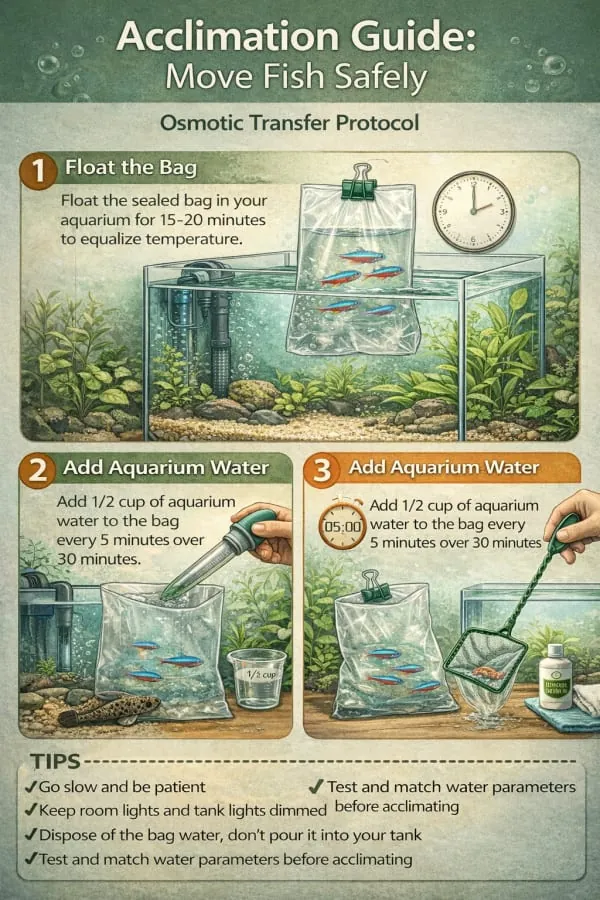
Acclimate new fish, shrimp, and coral safely: temperature floating, drip acclimation, plop-and-drop for shipped livestock, and the first 24 hours.
Keeping Jaguar Cichlid?
AquaLens identifies your fish and plants from a photo, tracks water chemistry, and flags health issues early — free on iOS and Android.