Marbled Headstander Care Guide
Abramites hypselonotus · Freshwater Fish
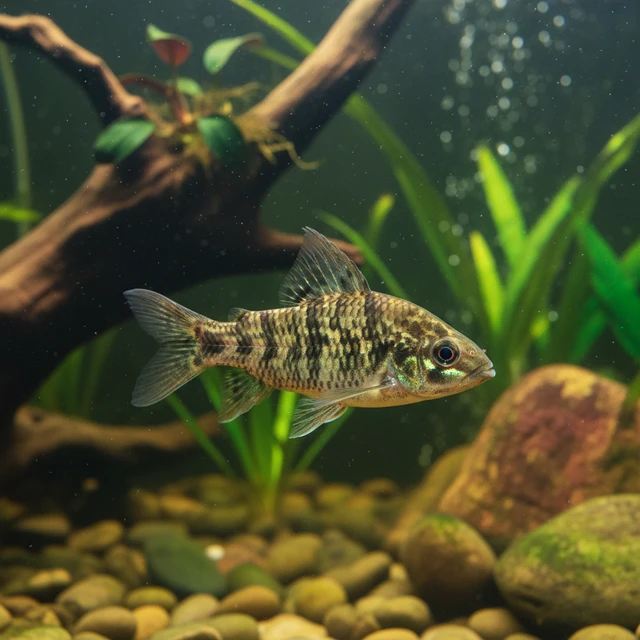
What Marbled Headstander look like
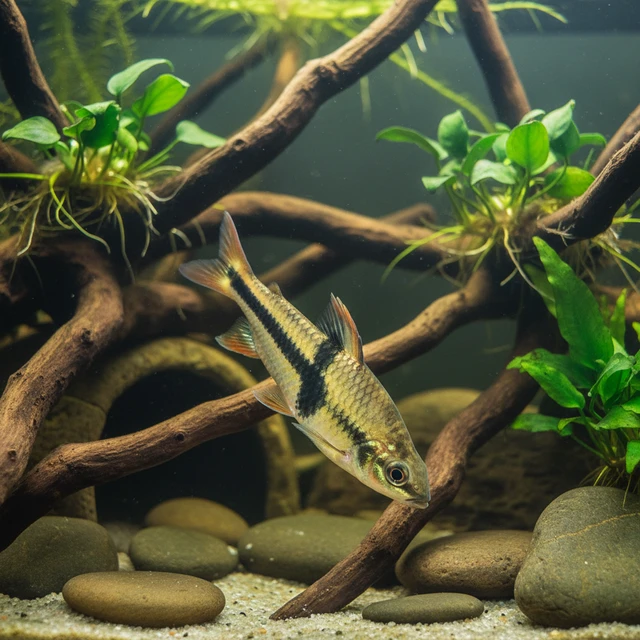
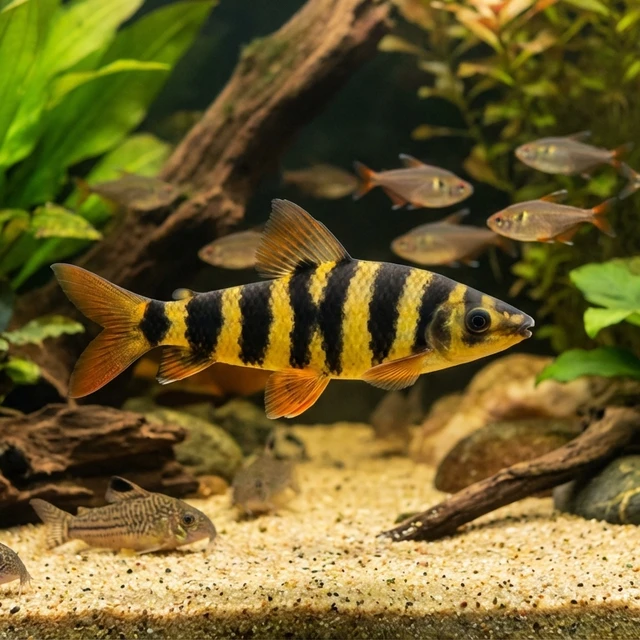
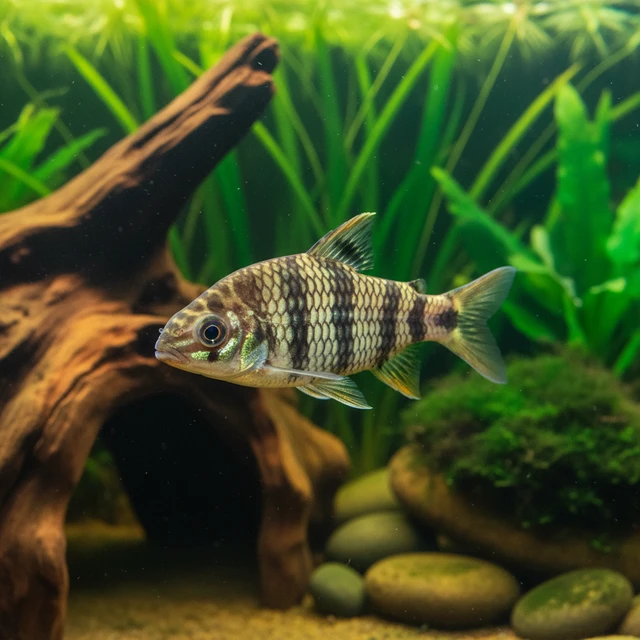
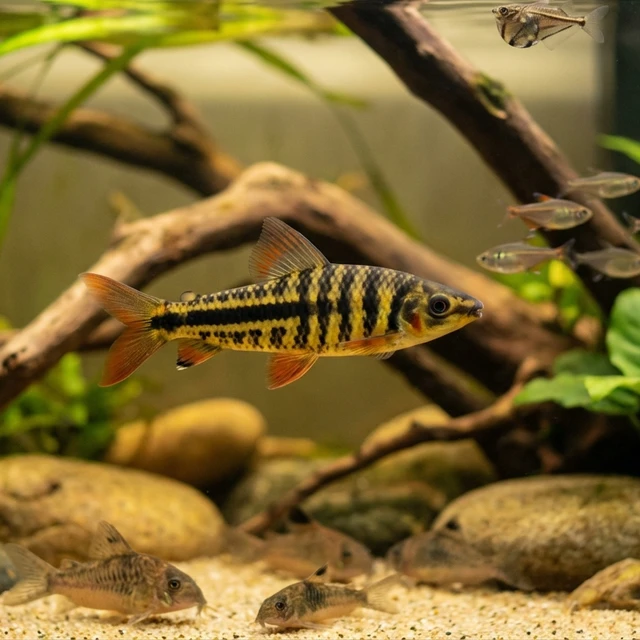
The Marbled Headstander (Abramites hypselonotus) exhibits a medium to large body size, typically reaching a maximum length of 3 to 5 inches (7.5 to 12.5 cm). Its body is laterally compressed and characterized by a pale silver-cream base color adorned with broad, dark brown to black marbled bands and blotches that run vertically along the flanks. The head is pointed and slightly elongated, contributing to its distinctive swimming posture. Notably, this species swims at a 45-degree angle, a unique behavioral adaptation that aids in its foraging strategy. The fish possesses a well-developed lateral line system, which is crucial for detecting vibrations in the water. The dentition is adapted for herbivorous feeding, featuring pharyngeal teeth that facilitate the processing of plant material. The dorsal fin is elongated and extends towards the caudal fin, while the anal fin is similarly elongated, enhancing maneuverability in its aquatic environment. Sexual dimorphism is subtle, with males typically exhibiting more vibrant coloration and slightly larger fins during the breeding season.
Behavior & temperament
The Marbled Headstander is primarily a social fish that exhibits a tendency to form loose schools, although it can also be found solitary at times. It inhabits the mid to upper water column, often seen swimming at an angle that allows it to graze on algae and plant matter. This species is known for its unique head-down swimming posture, which is a behavioral adaptation for feeding. Breeding behavior involves egg scattering, where females release eggs among vegetation, providing some cover for the developing embryos. The temperament of the Marbled Headstander is generally peaceful, though it can exhibit territorial behaviors during breeding periods, particularly among males competing for mates.
Diet & feeding
In the wild, the Marbled Headstander primarily feeds on algae, aquatic plants, and detritus, making it an obligate herbivore. In captivity, it requires a diet rich in plant matter, including high-quality spirulina flakes, blanched vegetables, and algae wafers to maintain optimal health.
Behind the name
The genus name 'Abramites' is derived from the Greek word 'abramis', referring to a type of bream, while the species name 'hypselonotus' comes from the Greek 'hypselos' (high) and 'notus' (back), likely referring to its distinctive dorsal profile.
Plan your tank
Check the numbers before you buy: tank volume, a stocking plan, cycle progress, water changes, and your ongoing care routine.
Keep reading
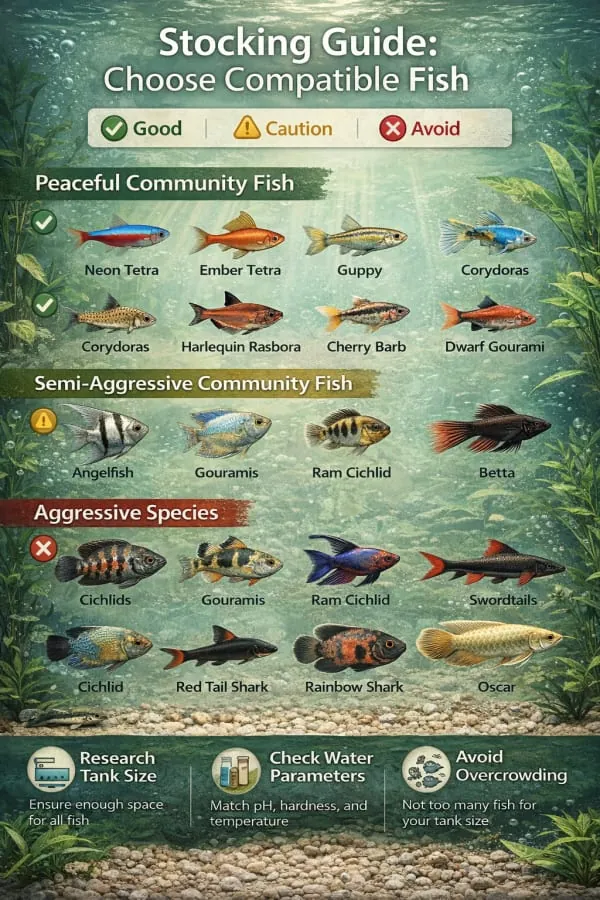
Choose compatible fish: school sizes, swimming zones, aggression, temperature and hardness matching, and honest bioload math for a peaceful community.
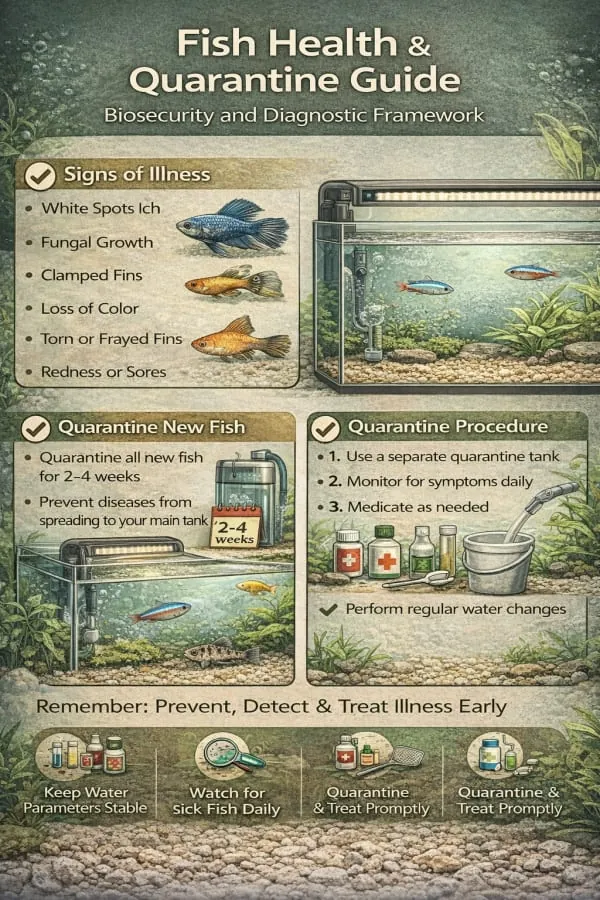
Quarantine new fish, spot the early warning signs, and treat disease without wrecking your tank. A practical freshwater fish health guide.
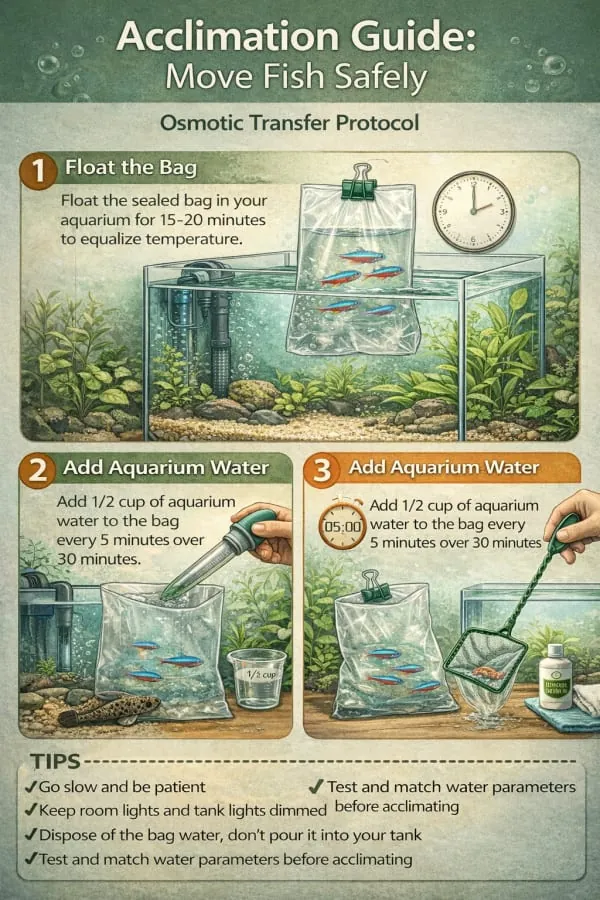
Acclimate new fish, shrimp, and coral safely: temperature floating, drip acclimation, plop-and-drop for shipped livestock, and the first 24 hours.
Keeping Marbled Headstander?
AquaLens identifies your fish and plants from a photo, tracks water chemistry, and flags health issues early — free on iOS and Android.