Mirabilis Eartheater Care Guide
Geophagus mirabilis · Freshwater Fish
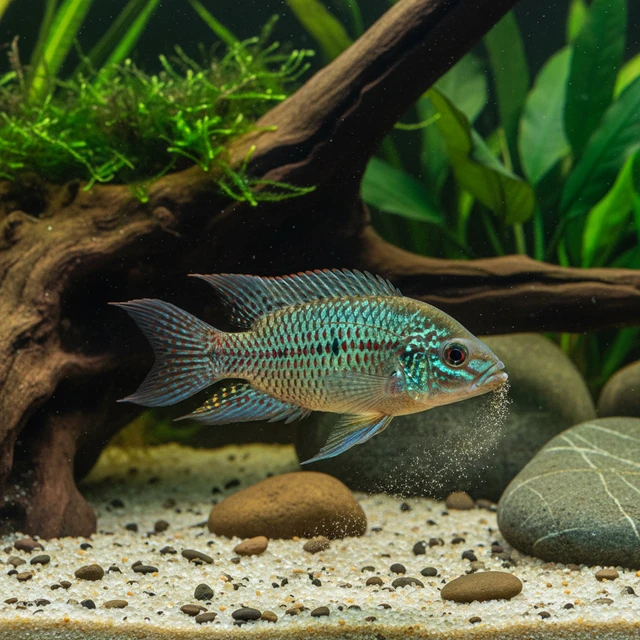
What Mirabilis Eartheater look like
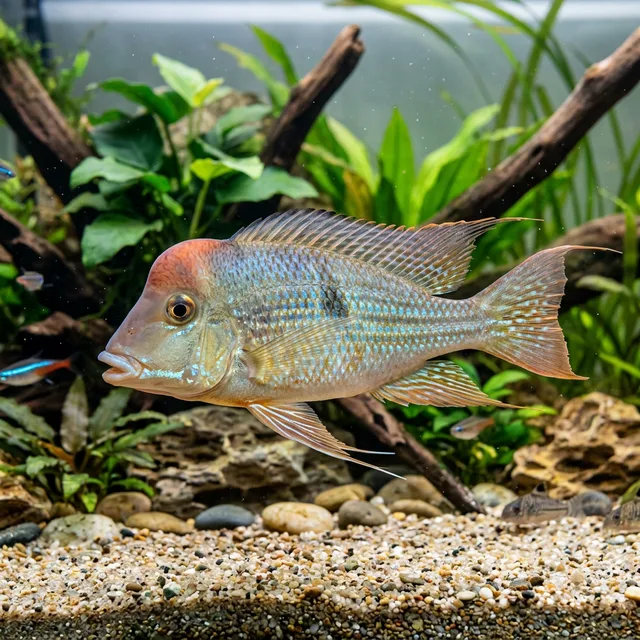
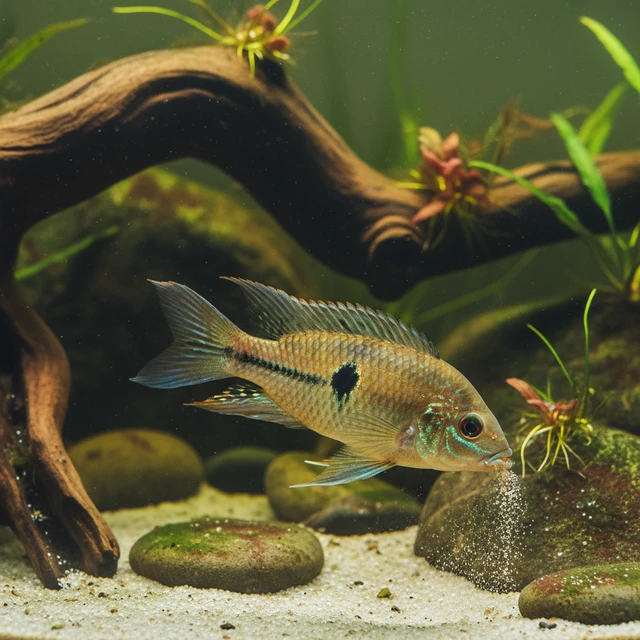
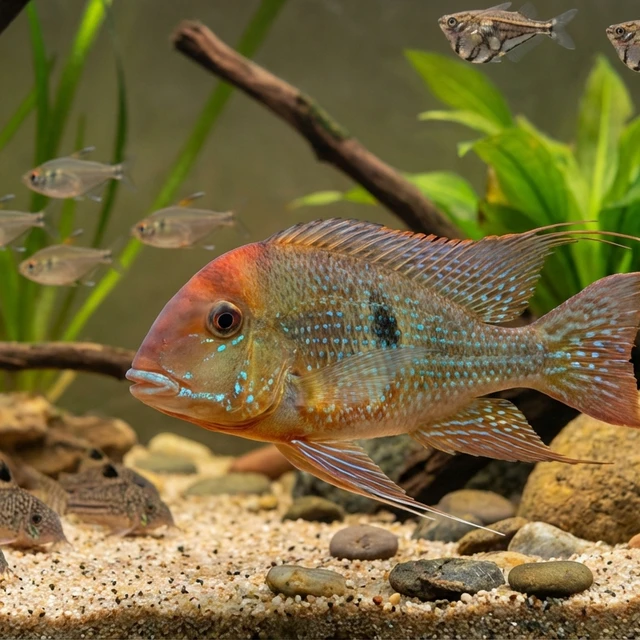
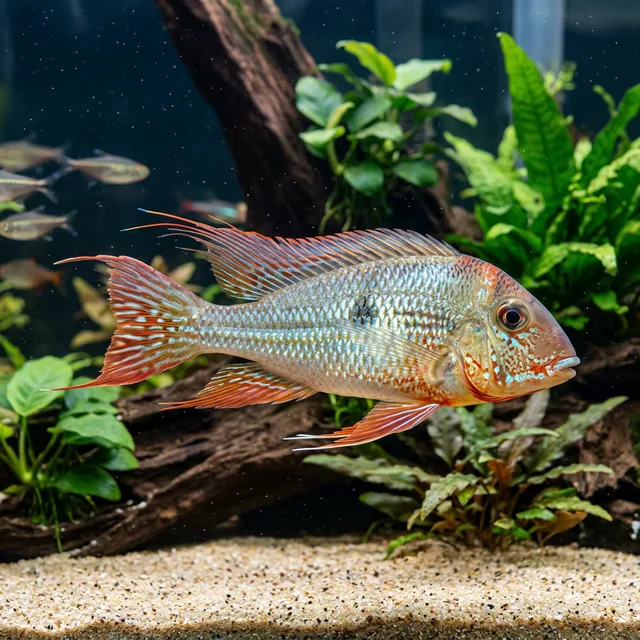
Geophagus mirabilis, commonly known as the Mirabilis Eartheater, exhibits a medium-sized, laterally compressed body that typically reaches a maximum adult size of 5-7 inches. The species displays sexual dimorphism, with males generally being larger and more vibrantly colored than females, particularly during breeding. The body is characterized by an olive-green coloration adorned with striking iridescent blue-green spots, which create a jewel-like appearance, and a prominent dark mid-body spot. Notably, this species possesses a unique adaptation for substrate sifting; it has specialized gill structures that allow it to continuously process sand and detritus, facilitating its feeding behavior. The dorsal fin is elongated and extends along the back, while the anal fin is similarly elongated, contributing to its streamlined shape. Additionally, the presence of a lateral line system aids in detecting vibrations in the water, enhancing its sensory capabilities in its natural habitat.
Behavior & temperament
In terms of behavior, Geophagus mirabilis is primarily a benthic species, often found dwelling near the substrate in shallow waters of South America. It exhibits a social structure that can be described as semi-social, often forming loose aggregations but not obligate schools. This species is known for its territorial nature, especially during breeding periods, where males may display aggressive behaviors to defend their nesting sites. The breeding behavior is characterized by substrate spawning, where eggs are laid in pits dug into the sand, and both parents participate in guarding the eggs and fry. Overall, the temperament of the Mirabilis Eartheater is generally peaceful, but it can exhibit aggression towards conspecifics or other species that invade its territory.
Diet & feeding
In the wild, Geophagus mirabilis is an omnivorous species that primarily feeds on small invertebrates, detritus, and organic matter found within the substrate. In captivity, it thrives on a varied diet that includes high-quality pellets, frozen or live foods such as bloodworms and brine shrimp, and should also have access to vegetable matter to ensure a balanced nutrition.
Behind the name
Geophagus (earth eater); mirabilis (wonderful or remarkable).
Plan your tank
Check the numbers before you buy: tank volume, a stocking plan, cycle progress, water changes, and your ongoing care routine.
Keep reading

Choose compatible fish: school sizes, swimming zones, aggression, temperature and hardness matching, and honest bioload math for a peaceful community.
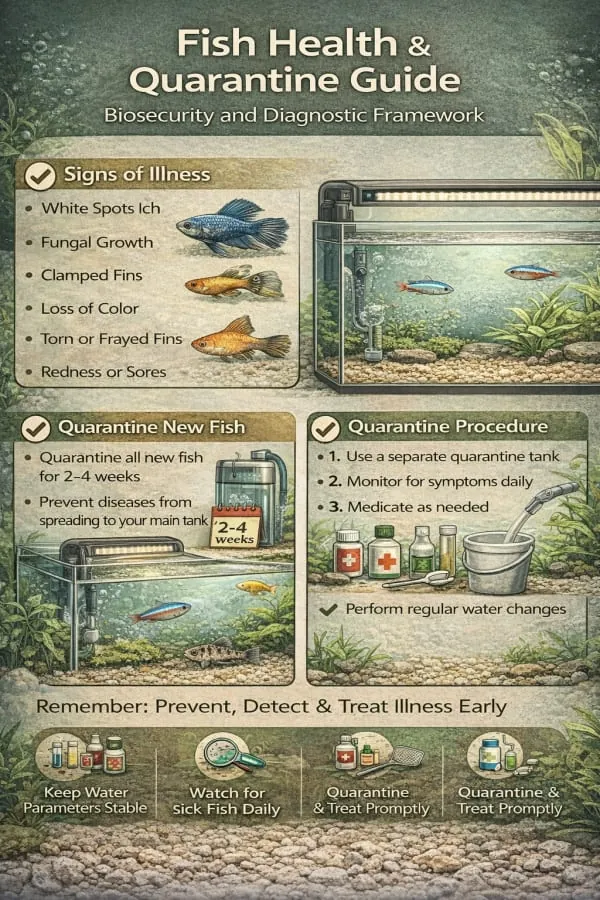
Quarantine new fish, spot the early warning signs, and treat disease without wrecking your tank. A practical freshwater fish health guide.

Acclimate new fish, shrimp, and coral safely: temperature floating, drip acclimation, plop-and-drop for shipped livestock, and the first 24 hours.
Keeping Mirabilis Eartheater?
AquaLens identifies your fish and plants from a photo, tracks water chemistry, and flags health issues early — free on iOS and Android.