Black Molly Care Guide
Poecilia sphenops · Freshwater Fish
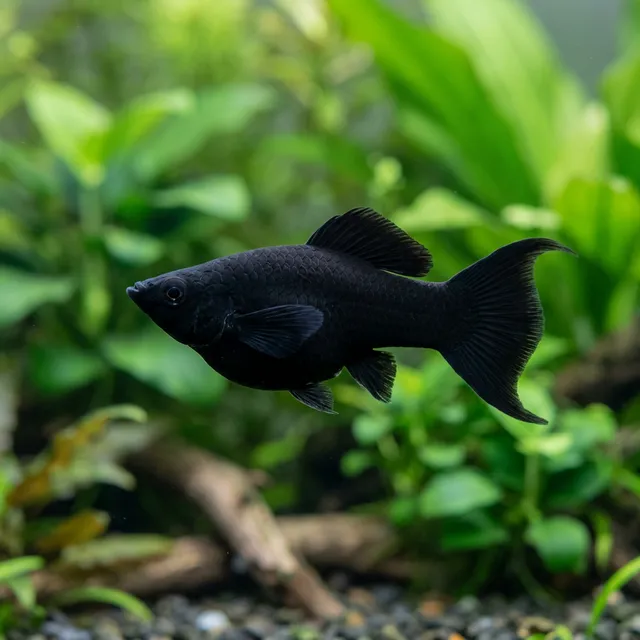
What Black Molly look like
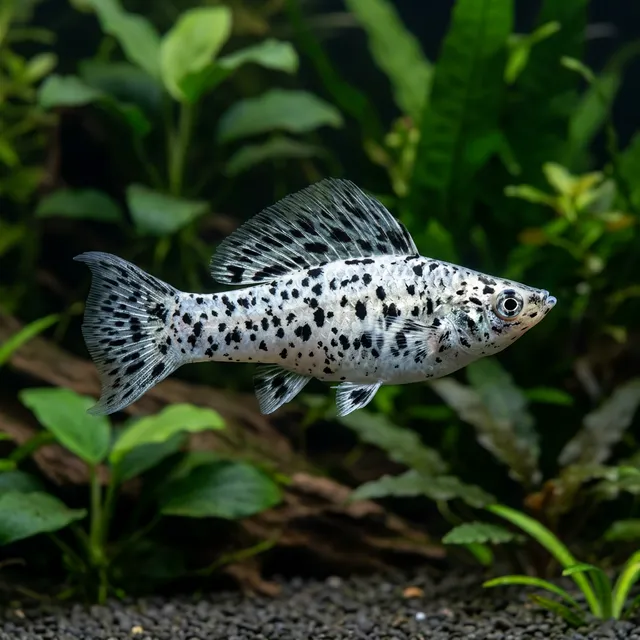
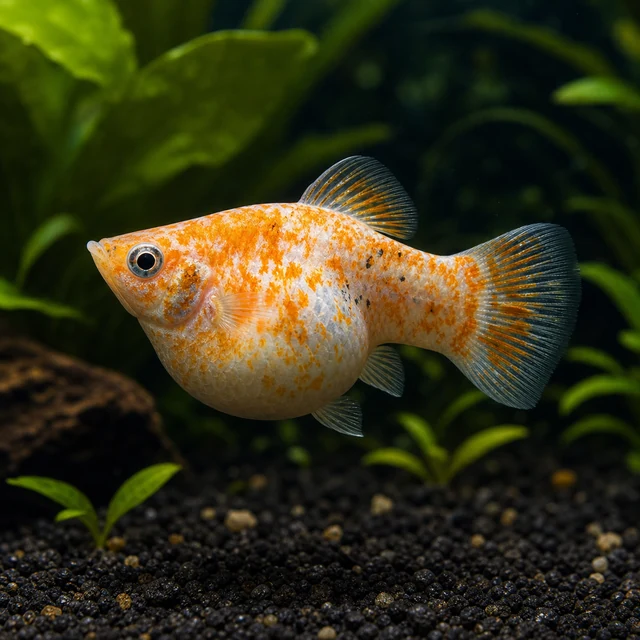
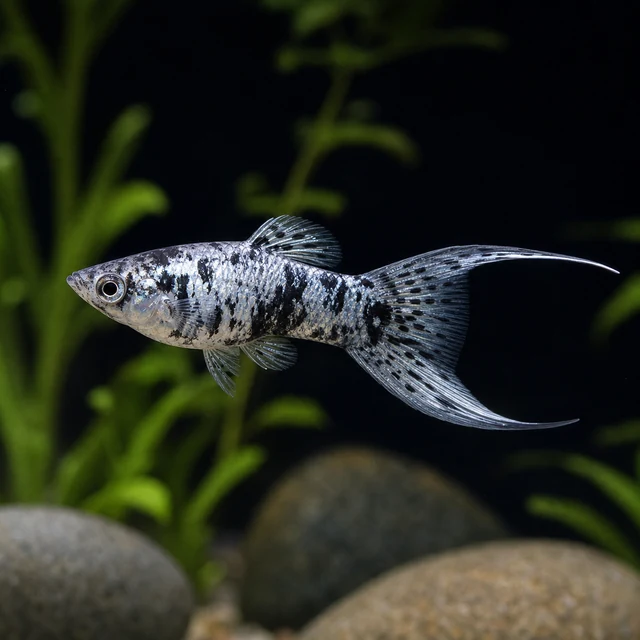
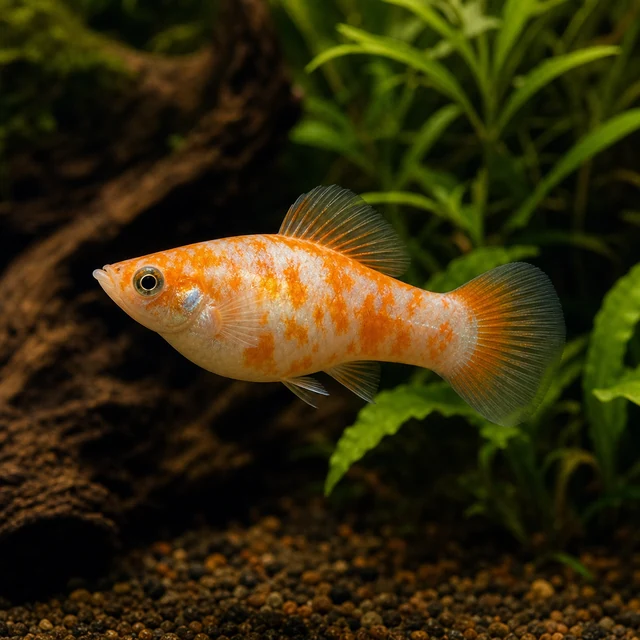
Poecilia sphenops, commonly known as the Black Molly, exhibits a fusiform body shape that is laterally compressed, allowing for agile movement in its aquatic environment. Adults can reach a maximum size of approximately 5 to 15 centimeters, with females generally being larger than males, showcasing sexual dimorphism. Males possess a modified anal fin known as a gonopodium, which is elongated and used for reproduction, while females have a more rounded anal fin. The species is characterized by its strikingly dark pigmentation, which can range from deep black to a lighter grayish hue, often with a glossy sheen. Defensive adaptations include a high level of adaptability to varying water conditions and the ability to thrive in both freshwater and brackish environments. Unique morphological features include a well-developed lateral line system, which aids in detecting vibrations in the water, and a small adipose fin located behind the dorsal fin, contributing to its streamlined shape.
Behavior & temperament
Black Mollies are social fish that thrive in groups, often forming loose schools in their natural habitat. They are primarily found in the upper to mid-water column, where they exhibit a peaceful temperament, although males can display territorial behavior during breeding. Breeding occurs through internal fertilization, with females being livebearers, giving birth to free-swimming fry rather than laying eggs. Their social hierarchy is relatively fluid, with no strict dominance, allowing for a harmonious community in both wild and aquarium settings. Black Mollies are known for their curious nature and can exhibit playful behavior, often interacting with their environment and tank mates.
Diet & feeding
In the wild, Black Mollies are omnivorous, feeding on a varied diet that includes algae, detritus, and small invertebrates. In captivity, they require a balanced diet consisting of high-quality flake food, spirulina-based pellets, and occasional live or frozen foods such as brine shrimp or daphnia to ensure optimal health.
Behind the name
Poecilia (from Greek 'poikilos', meaning varied or mottled); sphenops (from Greek 'sphen', meaning wedge, and 'ops', meaning face, referring to the shape of the fish).
Plan your tank
Check the numbers before you buy: tank volume, a stocking plan, cycle progress, water changes, and your ongoing care routine.
Keep reading

Choose compatible fish: school sizes, swimming zones, aggression, temperature and hardness matching, and honest bioload math for a peaceful community.
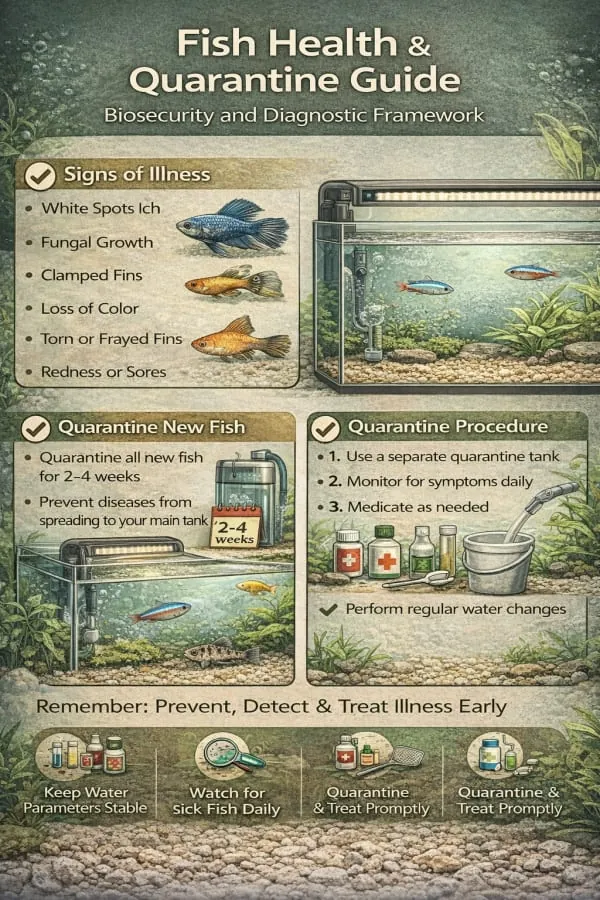
Quarantine new fish, spot the early warning signs, and treat disease without wrecking your tank. A practical freshwater fish health guide.
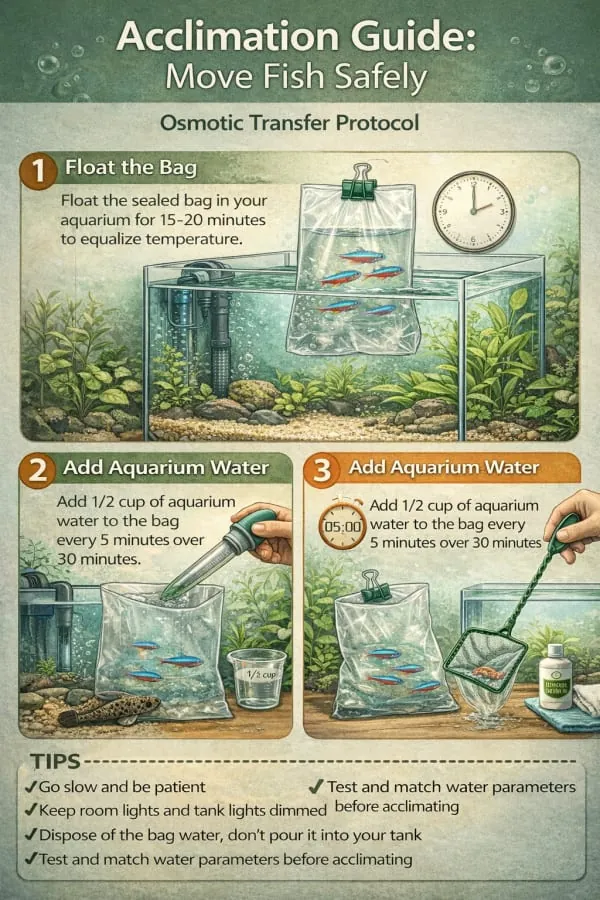
Acclimate new fish, shrimp, and coral safely: temperature floating, drip acclimation, plop-and-drop for shipped livestock, and the first 24 hours.
Keeping Black Molly?
AquaLens identifies your fish and plants from a photo, tracks water chemistry, and flags health issues early — free on iOS and Android.