Moon Jellyfish Care Guide
Aurelia aurita · Saltwater Jellyfish
What Moon Jellyfish look like
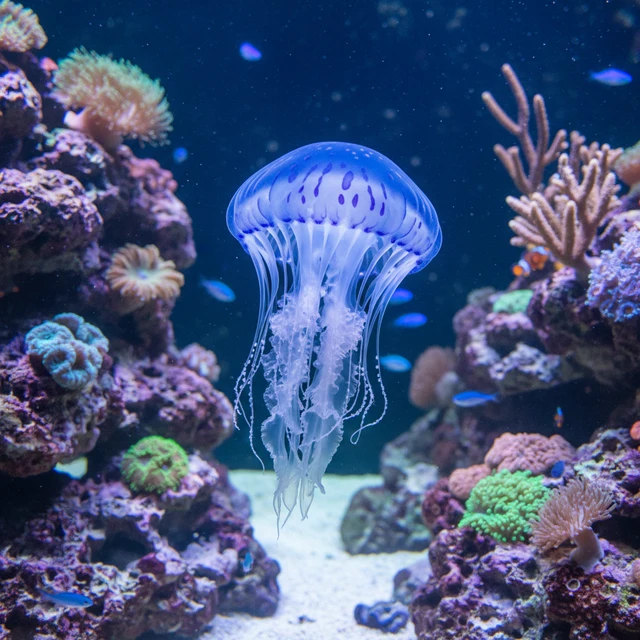
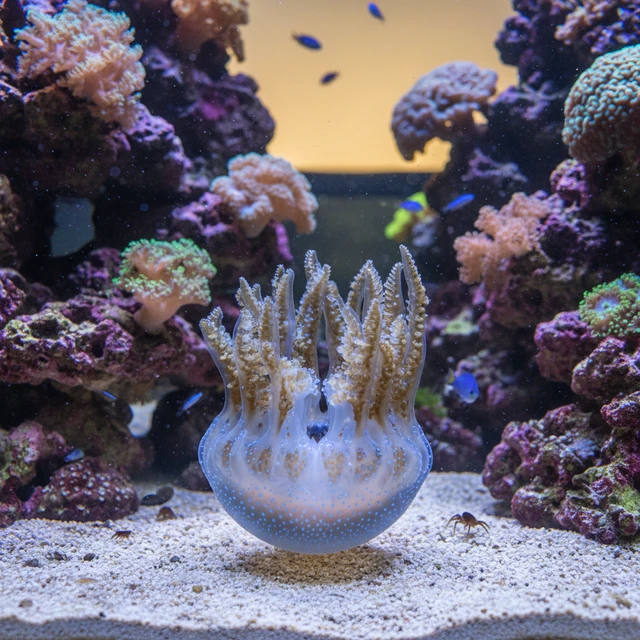
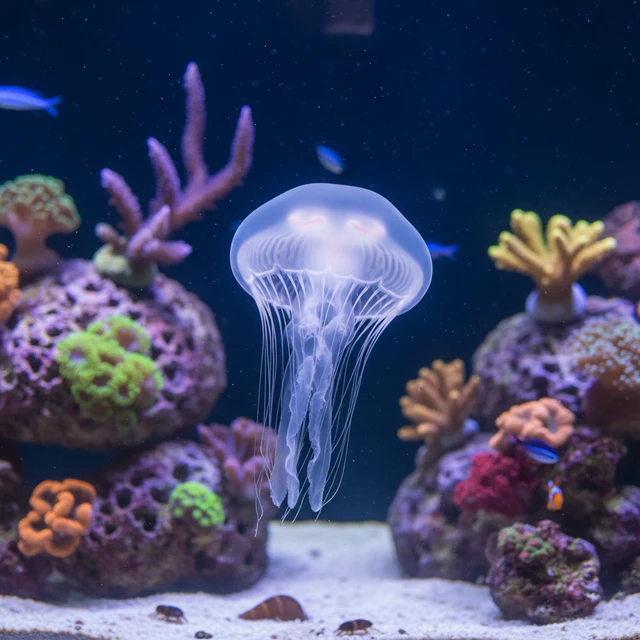
Aurelia aurita, commonly known as the Moon Jellyfish, exhibits a distinctive bell-shaped, translucent body that can reach a maximum diameter of 40 cm (16 inches). The umbrella is typically pale blue to white, with a smooth surface and a characteristic four-leaf clover pattern of gonads visible through the bell. The jellyfish possesses long, trailing tentacles that can extend up to 10 times the diameter of the bell, equipped with specialized stinging cells (nematocysts) for capturing prey. Sexual dimorphism is subtle, with males generally smaller and more slender than females. The Moon Jellyfish's defensive adaptations include the ability to pulsate and drift with currents, allowing it to evade predators, while its stinging tentacles can deter smaller fish and invertebrates.
Behavior & temperament
Moon Jellyfish are primarily planktonic and exhibit a passive drifting behavior, relying on ocean currents for movement. They are typically solitary but can form large aggregations during certain seasons. Their feeding behavior involves capturing planktonic organisms, such as small fish larvae and zooplankton, using their tentacles to ensnare prey. Aurelia aurita has a unique method of locomotion, contracting and relaxing its bell to propel itself through the water. This species is generally non-aggressive and poses minimal threat to larger marine animals, although their stinging cells can cause mild irritation to human skin.
Diet & feeding
Aurelia aurita is a carnivorous species that primarily feeds on zooplankton, including small crustaceans and fish larvae. In captivity, they require a diet of finely strained plankton and specialized jellyfish food to thrive.
Behind the name
The genus name 'Aurelia' is derived from the Latin word 'aureus,' meaning 'golden,' while 'aurita' translates to 'eared,' referencing the bell's shape and the appearance of the gonads resembling ears.
Plan your tank
Check the numbers before you buy: tank volume, salinity, salt mix, water changes, and your ongoing care routine. Keeping reef? Start from the Saltwater & Reef hub.
Keep reading
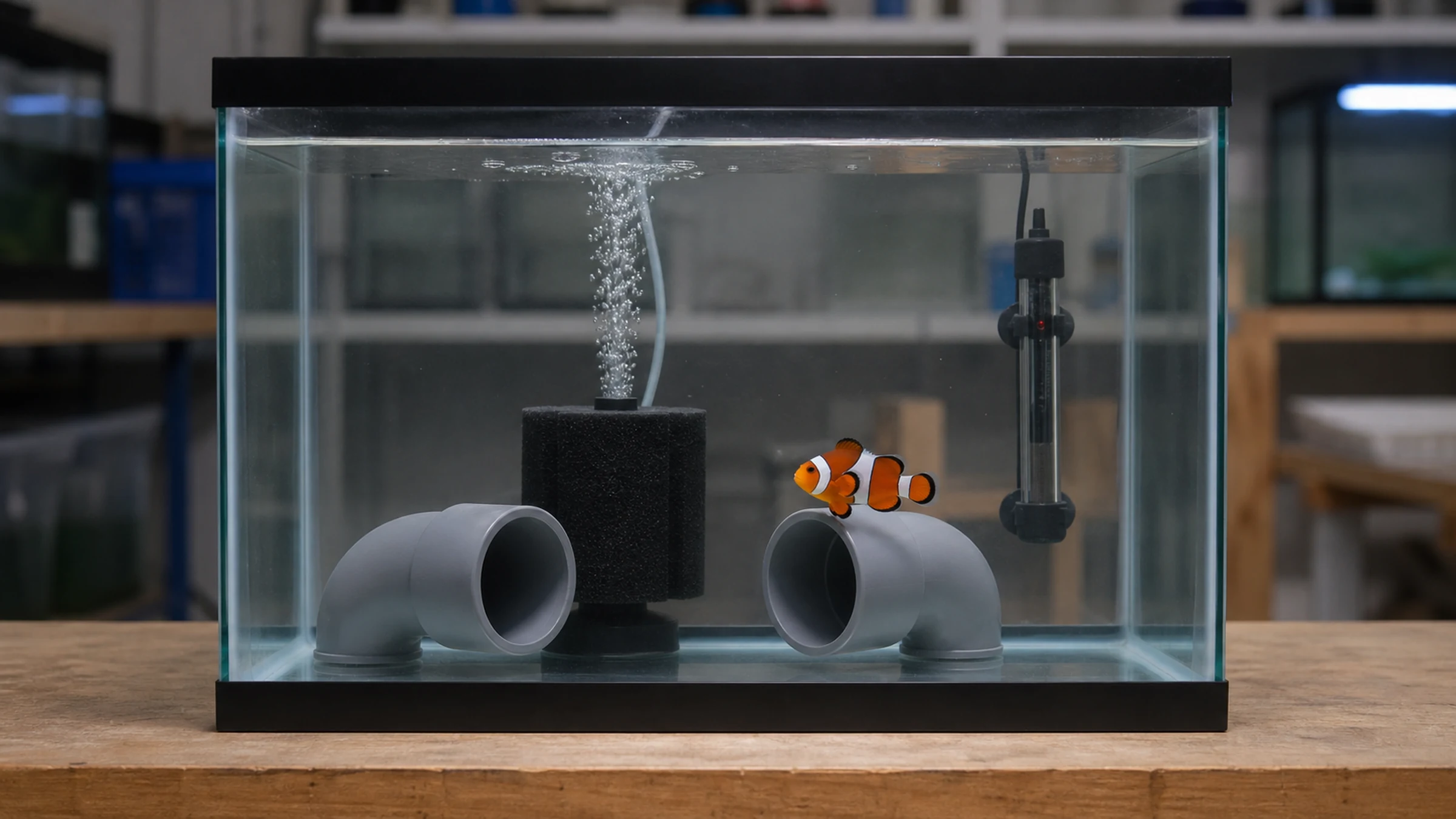
How to quarantine new saltwater fish against marine ich, velvet, and brooklynella: the QT tank, treatments, timelines, and the buy-clean shortcut.
What every reef parameter means and where to keep it: salinity, temperature, pH, alkalinity, calcium, magnesium, nitrate, and phosphate.
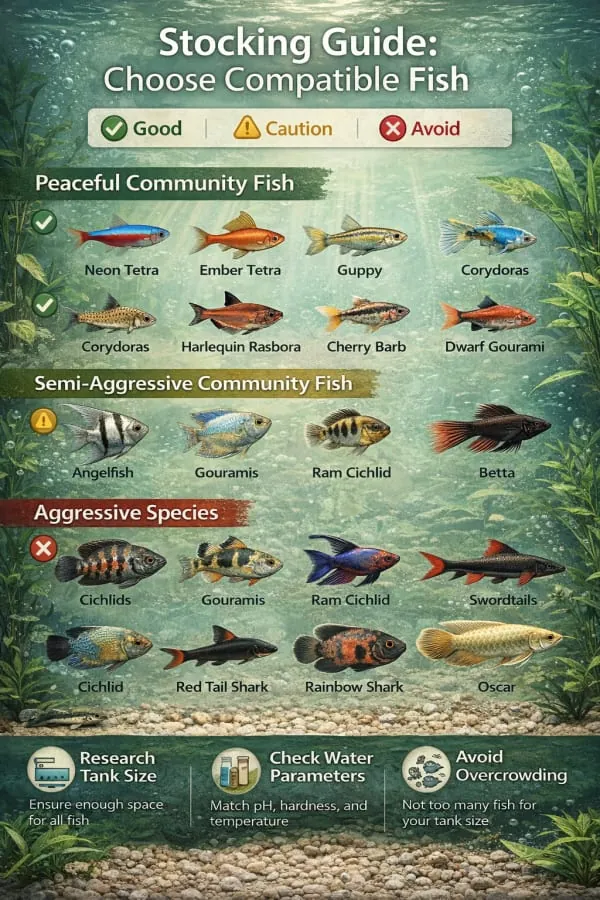
Choose compatible fish: school sizes, swimming zones, aggression, temperature and hardness matching, and honest bioload math for a peaceful community.
Keeping Moon Jellyfish?
AquaLens identifies your fish and plants from a photo, tracks water chemistry, and flags health issues early — free on iOS and Android.