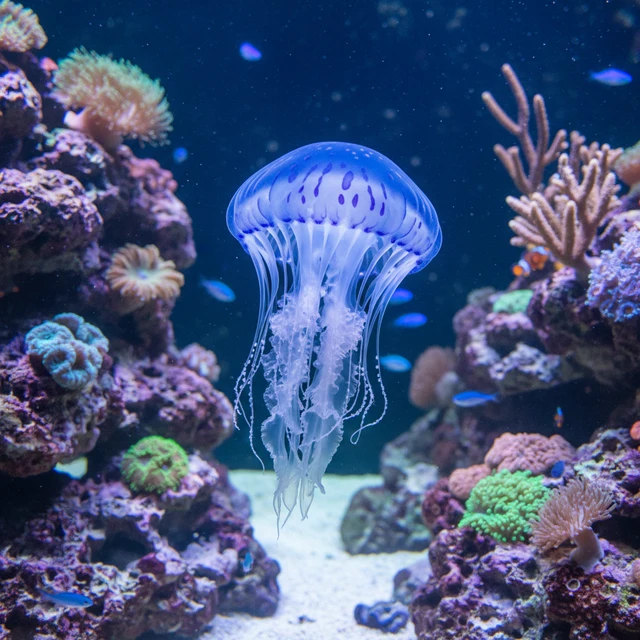
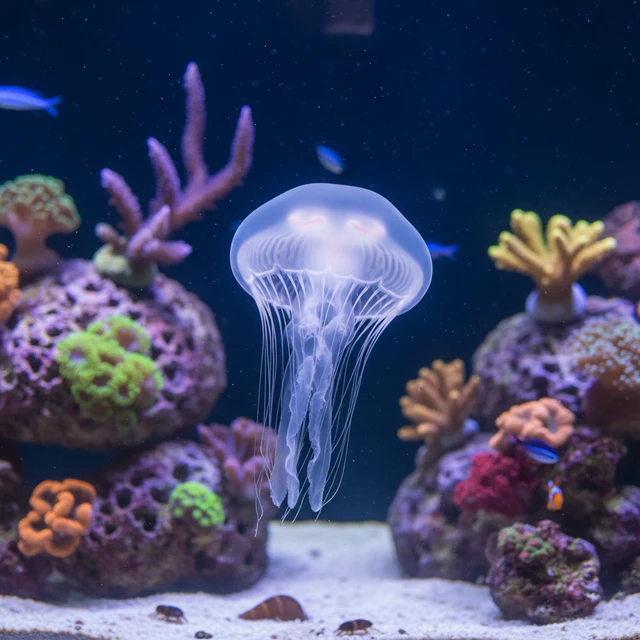
Upside-down Jellyfish Care Guide
Cassiopea xamachana · Saltwater Jellyfish
What Upside-down Jellyfish look like
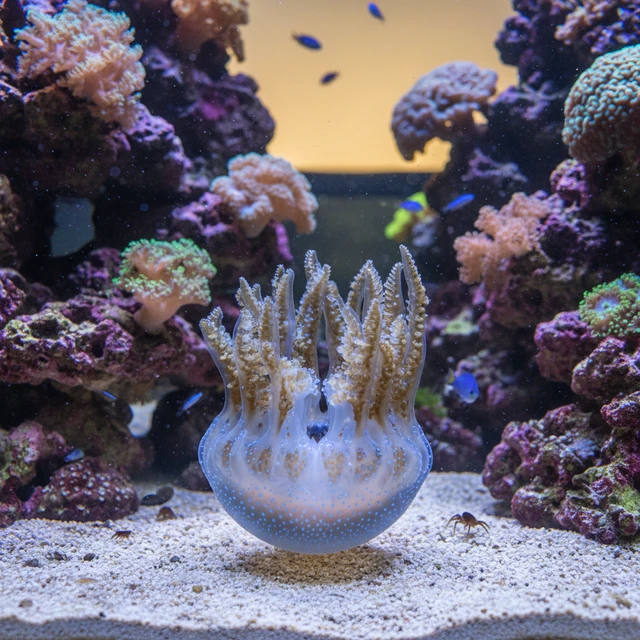
Cassiopea xamachana, commonly known as the upside-down jellyfish, exhibits a distinctive morphology characterized by its flattened, bell-shaped medusa that can reach a maximum diameter of 40 cm. The bell is typically translucent with a pale yellow to brown hue, often adorned with a pattern of small, dark spots. The oral arms, which are elongated and frilled, extend downward, giving the jellyfish its characteristic upside-down posture. This species displays minimal sexual dimorphism, although females may be slightly larger than males. Defensive adaptations include the presence of specialized stinging cells (nematocysts) on the oral arms that can deliver a mild sting to potential predators. Unique to this species is its symbiotic relationship with zooxanthellae, which reside within the tissues of the bell and contribute to its coloration and energy acquisition through photosynthesis.
Behavior & temperament
Cassiopea xamachana is typically found resting on the substrate in shallow waters, maintaining its upside-down position to maximize light exposure for its symbiotic zooxanthellae. This species exhibits a relatively sedentary lifestyle, with limited movement facilitated by pulsations of the bell for locomotion. Breeding occurs through external fertilization, where males release sperm into the water column, and females capture it to fertilize their eggs. The jellyfish can exhibit a range of temperamental behaviors, from passive to mildly aggressive when disturbed, particularly when defending its territory against other invertebrates.
Diet & feeding
In the wild, Cassiopea xamachana primarily feeds on plankton, small crustaceans, and organic detritus, utilizing its stinging cells to capture prey. In captivity, it requires a diet supplemented with live or frozen zooplankton and may benefit from the addition of phytoplankton to support its symbiotic algae.
Behind the name
The genus name 'Cassiopea' is derived from Greek mythology, referring to Cassiopeia, the queen of Ethiopia, while the species name 'xamachana' is derived from the indigenous term for this jellyfish in the Caribbean region.
Plan your tank
Check the numbers before you buy: tank volume, salinity, salt mix, water changes, and your ongoing care routine. Keeping reef? Start from the Saltwater & Reef hub.
Keep reading
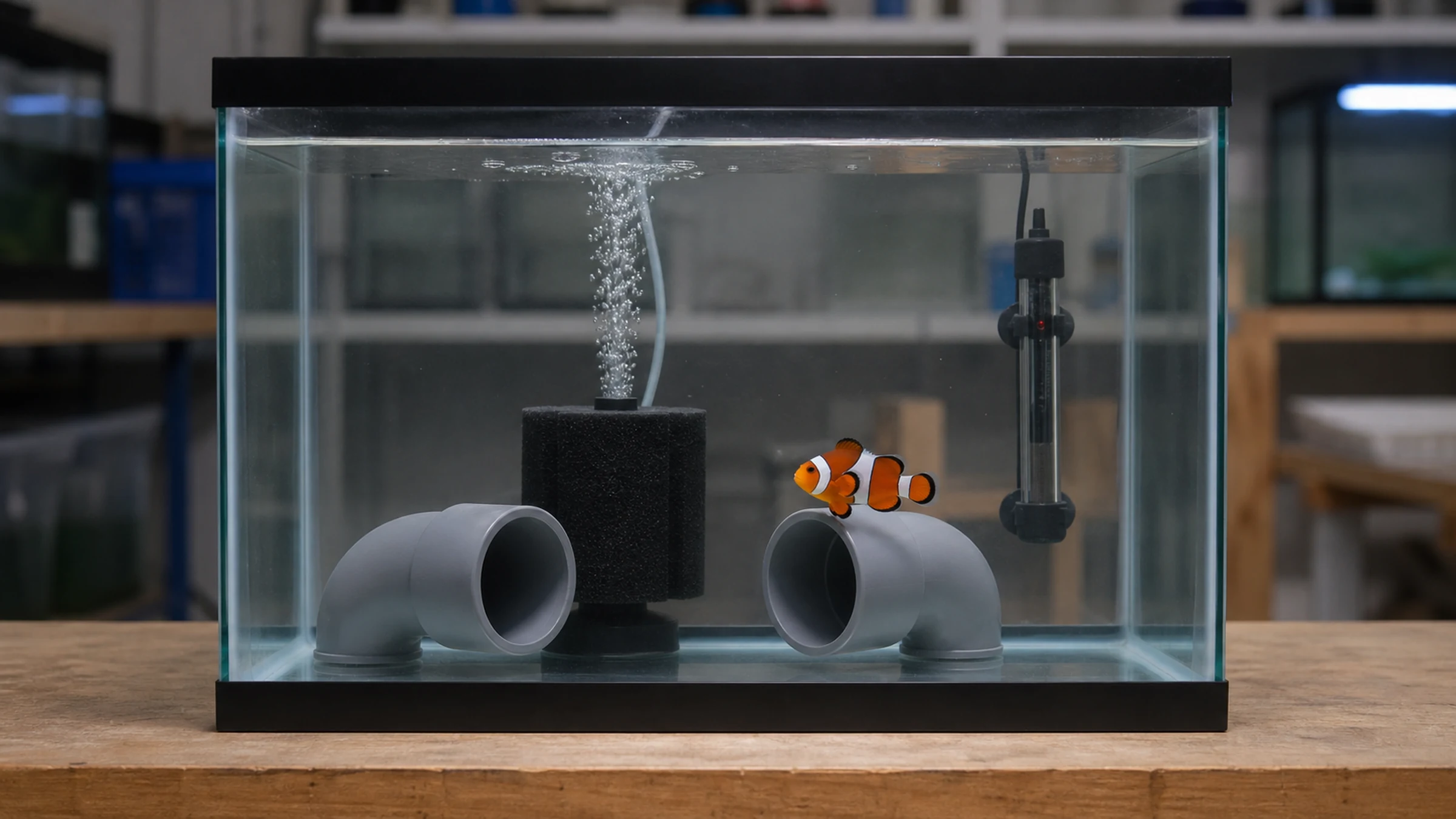
How to quarantine new saltwater fish against marine ich, velvet, and brooklynella: the QT tank, treatments, timelines, and the buy-clean shortcut.
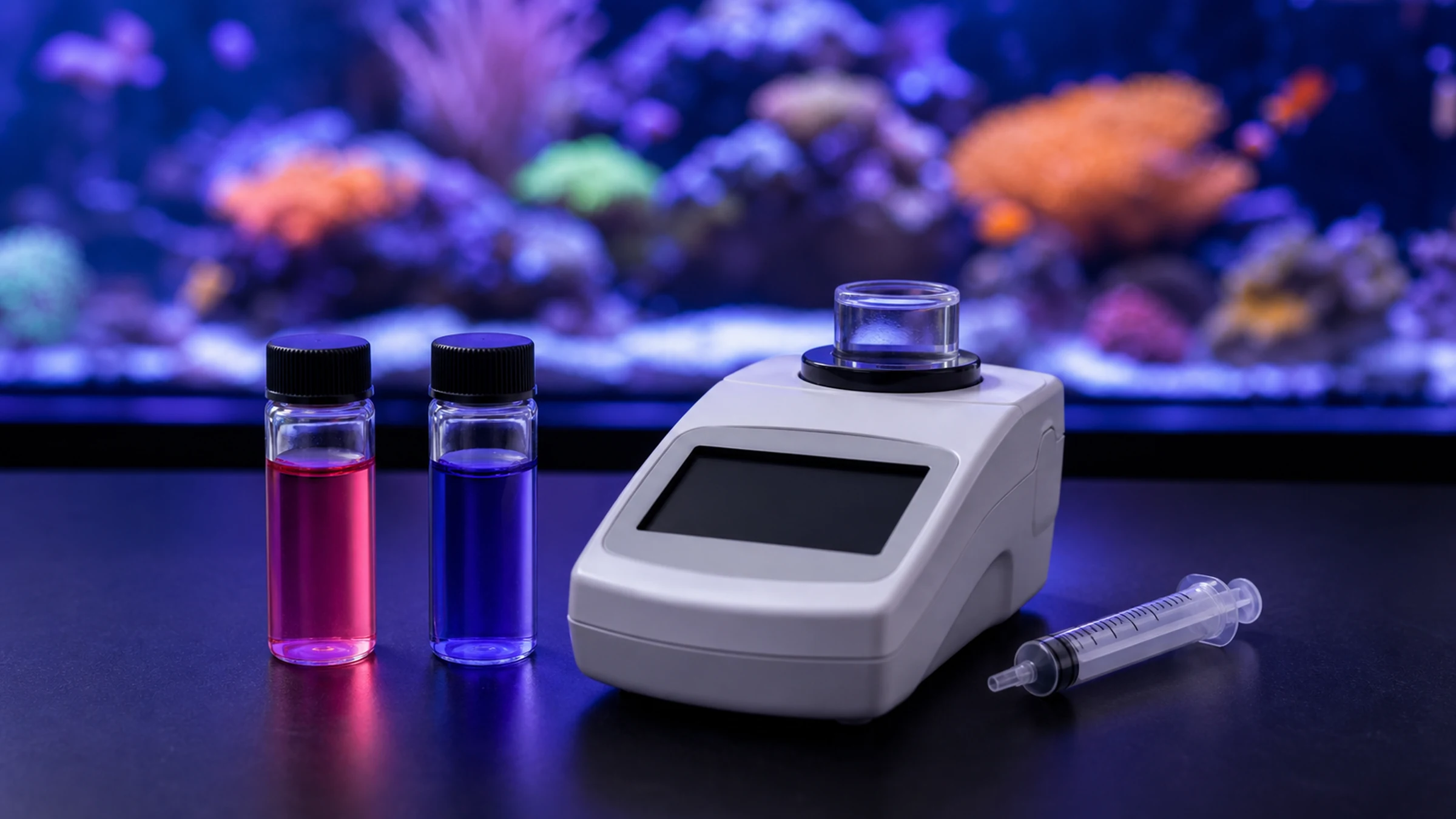
What every reef parameter means and where to keep it: salinity, temperature, pH, alkalinity, calcium, magnesium, nitrate, and phosphate.

Choose compatible fish: school sizes, swimming zones, aggression, temperature and hardness matching, and honest bioload math for a peaceful community.
Keeping Upside-down Jellyfish?
AquaLens identifies your fish and plants from a photo, tracks water chemistry, and flags health issues early — free on iOS and Android.