Motoro Stingray Care Guide
Potamotrygon motoro · Freshwater Fish
What Motoro Stingray look like
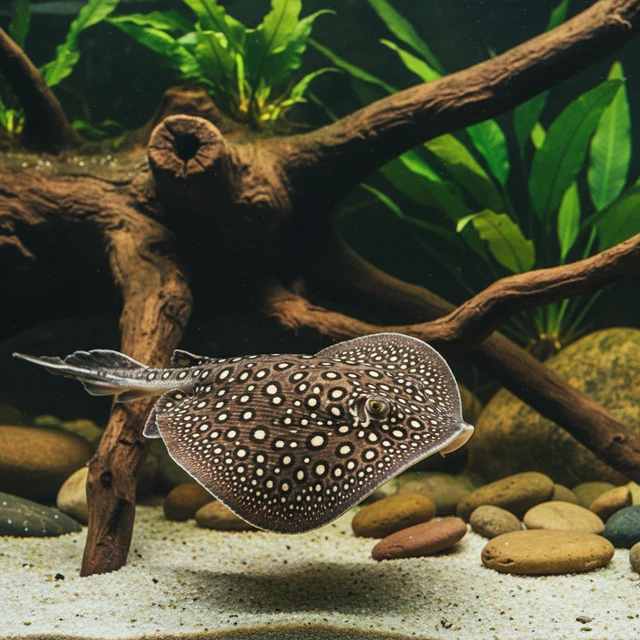
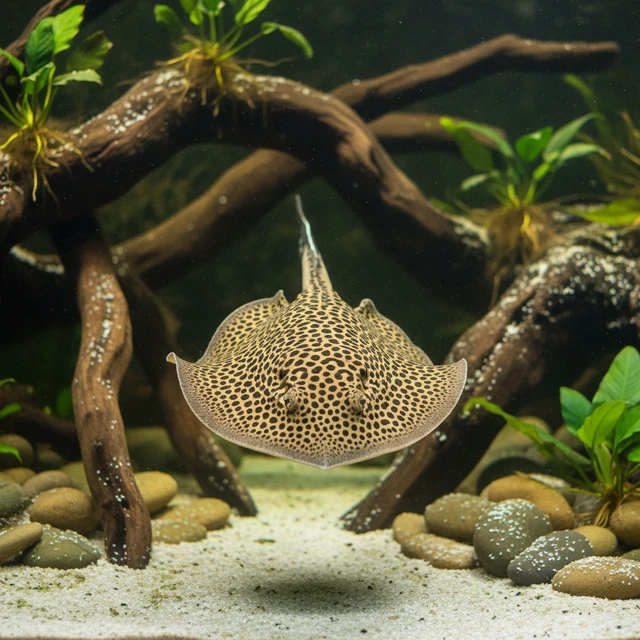
The Motoro Stingray (Potamotrygon motoro) exhibits a large, disc-shaped body that can reach a maximum adult size of 18-24 inches across, with a flattened, circular profile that facilitates its benthic lifestyle. The dorsal surface is characterized by a dark brown to olive coloration, adorned with distinctive cream to orange ring-shaped ocelli spots that serve as a form of camouflage against predators. Sexual dimorphism is subtle, with females typically being larger and more robust than males. A notable feature of this species is its long, slender tail, which is equipped with a venomous barb used for defense against potential threats. The body is devoid of scales, presenting a smooth texture, while the presence of a well-developed lateral line system aids in detecting vibrations in the water. The pectoral fins are broad and wing-like, allowing for graceful movements along the substrate.
Behavior & temperament
Motoro Stingrays are primarily solitary creatures, although they may be observed in loose aggregations during breeding seasons. They inhabit the benthic zone of rivers and floodplains in South America, where they often bury themselves in the substrate to avoid detection. Their breeding behavior involves internal fertilization, with females giving birth to live young, a characteristic of viviparous reproduction. These stingrays exhibit a generally docile temperament but can display defensive aggression when threatened, utilizing their venomous tail barb as a deterrent. They are primarily nocturnal, foraging for food during the night and relying on their electroreception to locate prey hidden within the substrate.
Diet & feeding
In the wild, the Motoro Stingray is a carnivorous feeder, primarily consuming small fish, crustaceans, and invertebrates found on the riverbed. In captivity, they require a diet rich in meaty foods such as high-quality frozen or live foods, including shrimp, fish fillets, and specialized stingray pellets to ensure optimal health.
Behind the name
Potamotrygon (river stingray); motoro (from the indigenous term for 'stingray').
Plan your tank
Check the numbers before you buy: tank volume, a stocking plan, cycle progress, water changes, and your ongoing care routine.
Keep reading

Choose compatible fish: school sizes, swimming zones, aggression, temperature and hardness matching, and honest bioload math for a peaceful community.

Quarantine new fish, spot the early warning signs, and treat disease without wrecking your tank. A practical freshwater fish health guide.

Acclimate new fish, shrimp, and coral safely: temperature floating, drip acclimation, plop-and-drop for shipped livestock, and the first 24 hours.
Keeping Motoro Stingray?
AquaLens identifies your fish and plants from a photo, tracks water chemistry, and flags health issues early — free on iOS and Android.