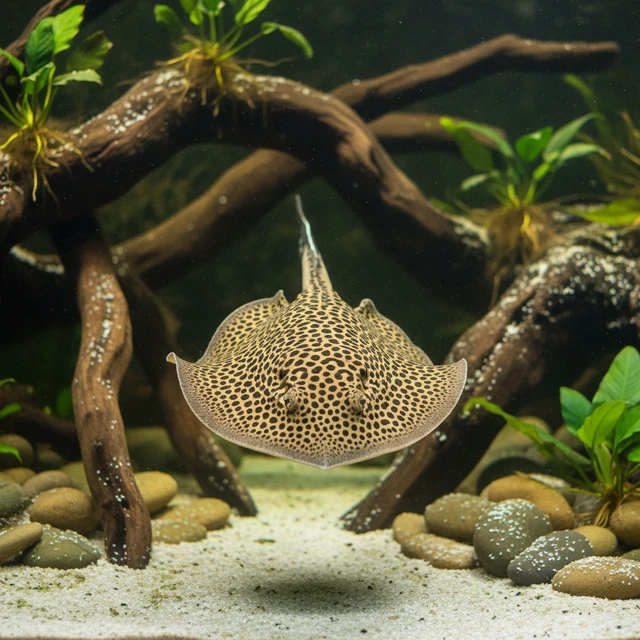
White-blotched River Stingray Care Guide
Potamotrygon leopoldi · Freshwater Fish
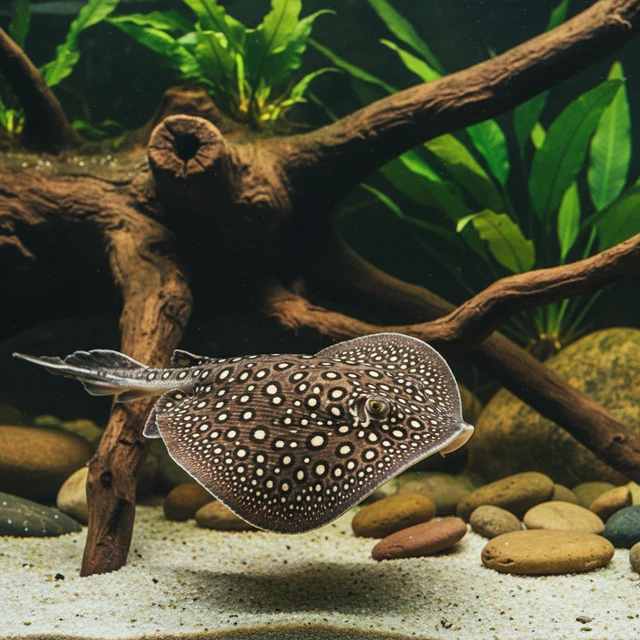
What White-blotched River Stingray look like
The White-blotched River Stingray (Potamotrygon leopoldi) exhibits a distinctive, large, disc-shaped body that can reach a maximum adult size of 18-24 inches across. Its morphology is characterized by a dramatic jet-black dorsal surface adorned with bright white, round spots, creating a striking contrast that enhances its visual appeal. The ventral side is typically lighter, facilitating camouflage against the substrate. Sexual dimorphism is subtle, with females generally being larger than males. This species possesses a long, slender tail equipped with a venomous barb, which serves as a defensive adaptation against potential predators. The stingray's body is laterally compressed, and it features a well-developed lateral line system, aiding in the detection of vibrations in the water. The pectoral fins are broad and flattened, allowing for graceful movements across the benthic environment, while the presence of an adipose fin contributes to its streamlined shape.
Behavior & temperament
Potamotrygon leopoldi is primarily a solitary species, although it may exhibit social behavior during breeding seasons. It inhabits the benthic zone of freshwater rivers and streams in Brazil, often found resting on the substrate or partially buried in sediment. The species is known for its relatively docile temperament, but it can display defensive aggression when threatened, especially when its venomous barb is involved. Breeding behavior involves egg scattering, where females release fertilized eggs into the substrate, providing a safe environment for the developing embryos. This species does not form structured social hierarchies, but individuals may interact during mating rituals.
Diet & feeding
In the wild, the White-blotched River Stingray is a carnivore, primarily feeding on small fish, crustaceans, and invertebrates. In captivity, it requires a diet rich in high-quality meaty foods such as frozen or live shrimp, fish fillets, and specialized stingray pellets to ensure optimal health.
Behind the name
Potamotrygon (river stingray); leopoldi (named in honor of a person, likely Leopold).
Plan your tank
Check the numbers before you buy: tank volume, a stocking plan, cycle progress, water changes, and your ongoing care routine.
Keep reading

Choose compatible fish: school sizes, swimming zones, aggression, temperature and hardness matching, and honest bioload math for a peaceful community.
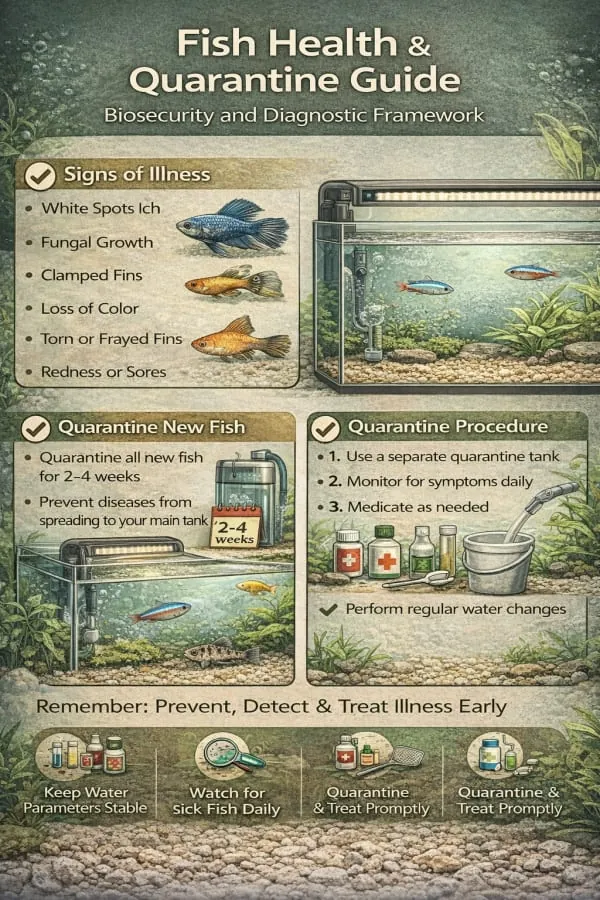
Quarantine new fish, spot the early warning signs, and treat disease without wrecking your tank. A practical freshwater fish health guide.
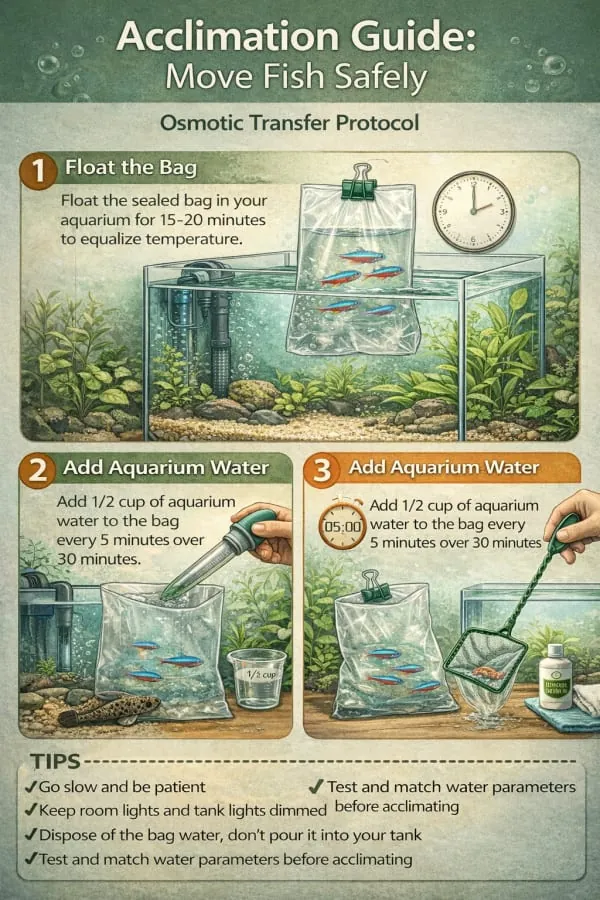
Acclimate new fish, shrimp, and coral safely: temperature floating, drip acclimation, plop-and-drop for shipped livestock, and the first 24 hours.
Keeping White-blotched River Stingray?
AquaLens identifies your fish and plants from a photo, tracks water chemistry, and flags health issues early — free on iOS and Android.