
Acclimation Guide: Move Fish Safely
Acclimate new fish, shrimp, and coral safely: temperature floating, drip acclimation, plop-and-drop for shipped livestock, and the first 24 hours.
On this page
The bag ride home is one of the most dangerous hours in an aquarium animal's life. Not because water changes are inherently deadly, but because a quick change is. Move a fish from bag water to tank water too fast and you can rupture the delicate cells in its gills, spike its blood chemistry, and hand a stressed, immune-suppressed animal to whatever pathogens are already in your system. Do it slowly and thoughtfully and most fish shrug the whole thing off within a day.
Acclimation is the deliberate, controlled handoff between two bodies of water. This guide covers every method worth knowing, when each one is right (and when it is quietly the wrong choice), and the first 24 hours that matter more than the acclimation itself. It applies to freshwater and saltwater; the saltwater notes are called out where the chemistry diverges.
Why a Fast Transfer Hurts
Three things are different between the bag and your tank, and each one can injure an animal on its own.
Temperature. Warm-water fish tolerate a slow drift but not a sudden drop or spike. A bag that rode home in a cold car, or one that baked on a sunny seat, is a thermal shock waiting to happen. Temperature is the easiest variable to fix and the one every method addresses first.
pH. This is the one beginners underestimate. The pH scale is logarithmic, so a shift of just one unit (say 7.0 to 8.0) is a tenfold change in acidity. That instantly alters how the fish's blood carries oxygen. Store water and shipping water are frequently a full unit or more away from a home tank, and the fish has no way to buffer against a jump that fast.
Dissolved solids (TDS, hardness, and salinity). A fish's gills and kidneys constantly manage the flow of water and salts across their membranes, a process called osmoregulation. When the surrounding water suddenly gets much harder or softer (or, for marine life, saltier or fresher), that system gets overwhelmed. Cells swell or shrivel, and the animal burns energy it does not have on emergency damage control. Invertebrates are far more sensitive here than fish, which is why shrimp and corals get the slowest, gentlest treatment.
The goal of every method below is the same: let the animal's own physiology catch up to the new water before it has to live in it. If you want to know exactly how far apart your two waters are before you start, AquaLens can scan a test strip or liquid kit from both the bag and your tank and log the numbers side by side, so "is this gap a problem?" becomes a question you can actually answer.
First: Read the Gap, Then Pick a Method
There is no single correct acclimation method. The right one depends on how far apart the two waters are and how sensitive the animal is. Before you open anything, ask two questions.
- How different is the water? If your fish came from a local shop that uses the same tap water you do, the gap may be small. If it was shipped overnight, came from a store with very different source water, or is a wild-caught or soft-water species, assume the gap is large.
- How sensitive is the animal? Hardy livebearers are forgiving. Shrimp, wild-caught fish, and most corals are not.
Use this to choose:
| Situation | Method | Why |
|---|---|---|
| Hardy fish, local store, similar water | Temperature float | Only temperature needs matching |
| Sensitive fish, shrimp, or unknown water gap | Drip acclimation | Slow blend of pH, hardness, salinity |
| Overnight-shipped fish | Plop and drop | Avoids the ammonia trap (see below) |
| Corals and most marine inverts | Drip acclimation, then dip | Salinity is unforgiving; pests hitch a ride |
A new fish, no matter how it arrives, is also a quarantine decision. The single most reliable way to avoid introducing disease is to acclimate new arrivals into a separate quarantine tank rather than straight into your display. Our fish health and quarantine guide walks through why, and it is doubly true for marine fish, where marine quarantine with prophylactic treatment is close to mandatory.
Method A: The Temperature Float
Use it for hardy fish (guppies, mollies, platies, danios, most tetras from a local store) when your water and the store's water are genuinely close.
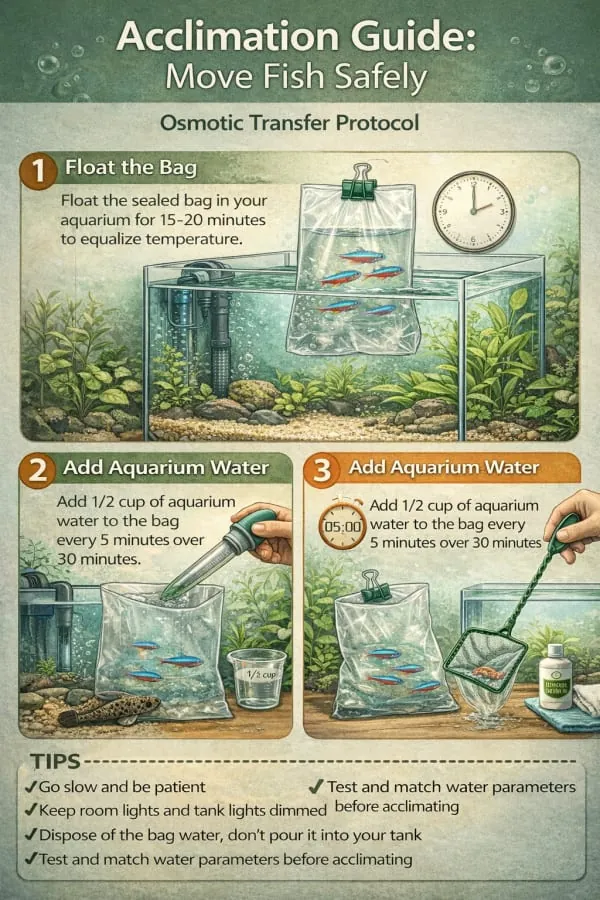
Float the sealed, unopened bag in your tank for 15 to 20 minutes. That equalizes temperature and nothing else. When the time is up, open the bag, net the fish out, and release it into the tank. Discard the bag water down a drain.
Two rules make or break this method.
Never pour bag water into your tank. It carries ammonia, waste, and stress hormones, and it may carry pathogens or parasites from the store system. Net the animal out every time.
Do not overrate what floating accomplishes. It matches temperature and buys you nothing on pH, hardness, or salinity. If you float a fish for 20 minutes and drop it from store water at pH 7.0 into your pH 8.0 tank, you have prevented thermal shock and caused pH shock. When in doubt about the water gap, step up to drip acclimation. Floating is the right tool only when you already know the two waters are similar.
Method B: Drip Acclimation (the Gold Standard)
Use it for shrimp (cherry and Amano especially), neon and cardinal tetras, discus, wild-caught fish, corals, marine inverts, and any time you are unsure how far apart the waters are. This is the method that respects osmoregulation, and it is the one I default to for anything I care about.
The setup.
- Gently pour the animal and its bag water into a clean bucket or specimen container dedicated to the tank (never a bucket that has held soap or cleaning chemicals). Tilt it so the animal is covered but the water is shallow enough to work with.
- Run a length of airline tubing from your tank down into the bucket to make a siphon. Start the siphon by gently sucking on the low end, or lower a tank-filled length and pinch it.
- Tie a loose knot in the tubing, or fit an airline control valve, to slow the flow to 2 to 3 drops per second. That slow drip is the entire point: it blends the two waters gradually enough that the animal's system keeps pace.
The process.
- Let it drip until the water volume in the bucket has roughly doubled. That usually takes 45 to 60 minutes.
- Pour out about half the bucket water (down a drain, not into your tank), then let it drip until it doubles again. For very sensitive animals or a very large water gap, a third round is not overkill.
- Net the animal into the tank. Discard all bucket water.
For saltwater keepers: drip acclimation for corals and inverts should be even slower and longer, because salinity mismatches are punishing. Check specific gravity in the bag against your tank first; if the bag reads noticeably lower, extend the drip. Many reefers follow acclimation with a coral dip in a dedicated pest-control solution before anything touches the display, to strip off flatworms, nudibranchs, and their eggs. Acclimation and pest quarantine are two different jobs, and corals need both.
Method C: Plop and Drop (Shipped Fish Only)
This one feels wrong the first time, and understanding why it is correct is worth a minute. Use it for fish that spent 12 or more hours in a shipping bag.
Here is the trap. During a long transit, a bagged fish keeps breathing and excreting in a sealed volume. Its CO₂ builds up, which pushes the bag water acidic. It also excretes ammonia. But at low pH, ammonia exists mostly as ammonium (NH₄⁺), which is far less toxic. So the fish sits in high-ammonia water that is not actually poisoning it, protected by the low pH.
The moment you open that bag, the trapped CO₂ escapes to the air, the pH climbs back up within minutes, and that safe ammonium converts straight back into toxic ammonia (NH₃), right around the fish's gills. Now imagine drip acclimating in that state: you would hold the fish in rising-ammonia water for a full hour. That is the opposite of help.
The protocol.
- Float the sealed bag for about 15 minutes to match temperature only.
- Open the bag, pour it through a net over a bucket (to catch the fish, not to keep the water), and move the fish from the net into the tank immediately.
- Get the fish into clean, low-ammonia tank water before the pH swing can do its damage.
Plop and drop trades a small, brief osmotic jolt for avoiding a large, sustained ammonia exposure. For a heavily shipped fish that is the safer bargain. Note the water-gap caveat still applies: if you know the shipper's water and your tank are wildly different in salinity or hardness, an experienced keeper may do a very fast, closely watched partial acclimation instead. For most freshwater fish arriving by mail, straight plop and drop is the standard.
The First 24 Hours (This Is the Part People Skip)
Acclimation gets the animal into the tank alive. The next day decides whether it stays that way. A freshly moved fish is stressed and immune-compromised, which is exactly when opportunistic disease strikes.
Lights off. Keep the aquarium lights off for the rest of the day and ideally the first 24 hours. Darkness lowers cortisol (the stress hormone), reduces aggression from established tank mates, and gives the newcomer a chance to find cover and settle.
Do not feed for 24 hours. A stressed fish should be spending its energy on osmoregulation and immune response, not digestion, which itself consumes oxygen. Skipping one day of food harms nothing. See our feeding guide for how to restart once they have settled.
Watch for distress signals. Clamped fins, rapid or labored gilling, gasping at the surface, or "the shimmies" (shaking in place without moving forward) all point to osmotic or environmental stress. A brief hiding spell is normal; persistent gasping is not. Test your water; ammonia or a stalled cycle will make a new arrival's day far worse.
Give tank mates something else to do. In a tank with territorial residents, feeding the existing fish a little (in a different corner) while the newcomer explores, or rearranging hardscape before the introduction, can blunt the welcome-committee aggression that pushes a stressed new fish over the edge.
Setting Up for Success Before the Fish Arrives
The best acclimation starts before you leave the store. A few upstream decisions do more than any drip rate.
Cycle the tank first. No acclimation method saves a fish added to an uncycled tank, because the ammonia and nitrite that follow will poison it over days. If your tank is not cycled, stop and read fishless cycling; it is the single most important thing you can do for new fish. AquaLens's cycle tracker reads each test photo, tells you which phase you are in, and confirms you are safe to stock before you buy anything.
Know your parameters. You cannot judge the water gap if you do not know your own numbers. Our water test interpretation guide explains what each reading means, and the water chemistry guide covers pH, KH, and GH, the three that drive acclimation risk.
Do not overstock, and check compatibility. Adding too many fish at once overwhelms the biofilter and multiplies the stress. Add slowly. Before you buy, run the stocking calculator and, for shoaling species, the schooling calculator so you bring home a group that will actually settle. The stocking and compatibility guide covers who can live with whom, and the Build My Tank planner can map a stocking plan end to end.
Minimize the trip. Ask the store to bag with plenty of air (or pure oxygen for a long drive), keep the bag dark and insulated, and go straight home. Every extra hour in the bag pushes it further into the ammonia trap.
Doing This With AquaLens
The hardest part of acclimation is guessing how far apart two waters really are. AquaLens removes the guess: scan a test strip or liquid kit from both the bag and your tank, and it logs the two readings side by side, so the pH and hardness gap becomes a number instead of a hunch. With that gap in front of you, choosing float, drip, or plop-and-drop is an evidence call rather than a coin flip.
Get AquaLens free and read the gap before your next arrival goes in.
Quick Species Notes
- Livebearers (guppies, mollies, platies): hardy; temperature float is usually fine from a local store.
- Neon and cardinal tetras: soft-water fish, sensitive to pH and hardness swings; drip acclimate.
- Otocinclus (profile): frequently arrive starved and fragile; drip slowly and target a well-established, algae-rich tank.
- Shrimp: the most osmotically sensitive common livestock; slow drip, never rush, and mind copper in any medication (cherry, Amano, and Caridina all count).
- Discus and wild-caught fish: drip acclimate and quarantine without exception.
- Corals and marine inverts: slow drip for salinity, then a pest dip before the display.
When you are researching any of these before you buy, the species library has care profiles for 1,750 species with the parameters each one actually wants.
Common Mistakes
- Pouring bag water into the tank. Always net the animal out.
- Floating a shipped fish and then drip acclimating it. That is the ammonia trap; use plop and drop instead.
- Drip acclimating over open air for hours with no heater. The bucket cools; on a long drip, a small heater or a warm-water float keeps temperature from crashing while you blend chemistry.
- Adding fish to an uncycled tank. No acclimation fixes this.
- Feeding immediately. Wait a day.
- Adding a whole group at once to a young tank. Stagger additions so the biofilter keeps up.
Frequently Asked Questions
How long should I acclimate new fish?
It depends on the method and the animal. A temperature float for hardy fish from a local store takes 15 to 20 minutes. Drip acclimation for sensitive fish, shrimp, or corals typically runs 45 to 60 minutes per doubling of water volume, often 1 to 2 hours total. Overnight-shipped fish should use plop and drop, which is just a 15-minute temperature float before an immediate transfer.
Can I pour the bag water into my aquarium?
No. Bag water carries ammonia, fish waste, stress hormones, and potentially parasites or disease from the store or shipper's system. Always net the animal out and discard the bag water down a drain, never into your tank.
What is drip acclimation and how do I do it?
Drip acclimation slowly blends your tank water into the animal's bag water using a siphon. Pour the animal and bag water into a clean bucket, run airline tubing from the tank to the bucket, and restrict the flow to 2 to 3 drops per second. Let the volume double over about an hour, discard half, and repeat before netting the animal into the tank.
Why do you plop and drop shipped fish instead of drip acclimating them?
During long transit, a sealed bag builds up CO2 and turns acidic, which keeps toxic ammonia in its safer ammonium form. Opening the bag lets CO2 escape, the pH rises, and ammonium converts back to toxic ammonia around the fish. Drip acclimating would hold the fish in that rising-ammonia water for an hour, so getting it into clean tank water quickly is safer.
Should I feed new fish right after adding them?
No. Wait about 24 hours before the first feeding. A freshly moved fish is stressed and should spend its energy on osmoregulation and immune response rather than digestion, which also consumes oxygen. Skipping one day of food does no harm.
Why turn the aquarium lights off after adding fish?
Keeping the lights off for the first 24 hours lowers the fish's cortisol stress hormone, reduces aggression from established tank mates, and gives the newcomer a chance to find cover and settle in. It is one of the simplest ways to improve survival.
Do shrimp need special acclimation?
Yes. Shrimp are far more sensitive to changes in hardness, TDS, and pH than most fish, and they are very vulnerable to copper in medications. Always use slow drip acclimation for shrimp, take longer than you would for fish, and never rush the transfer into the tank.
How is saltwater and coral acclimation different?
Salinity mismatches are unforgiving, so marine inverts and corals need slow, extended drip acclimation while you match specific gravity. Corals should also get a dedicated pest dip before they enter the display to remove flatworms, nudibranchs, and eggs. Acclimation and pest quarantine are separate steps that corals both need.
Can I skip quarantine and acclimate new fish straight into my display tank?
You can, but it is risky. New arrivals are stressed and immune-compromised, which is exactly when disease takes hold, and adding them directly can introduce parasites to your whole tank. A separate quarantine tank is the most reliable way to protect existing livestock, and it is close to mandatory for marine fish.
What are the signs a fish is not handling acclimation well?
Watch for clamped fins, rapid or labored gilling, gasping at the surface, and the shimmies, which is shaking in place without moving forward. A brief hiding spell is normal, but persistent gasping or shimmying signals osmotic or environmental stress, so test your water and check that your tank is fully cycled.
Log Every New Arrival Safely
AquaLens scans the bag water and your tank so you know the exact gap before you pick a method, then watches your parameters and warns you before a stressed newcomer runs into trouble.
Keep reading
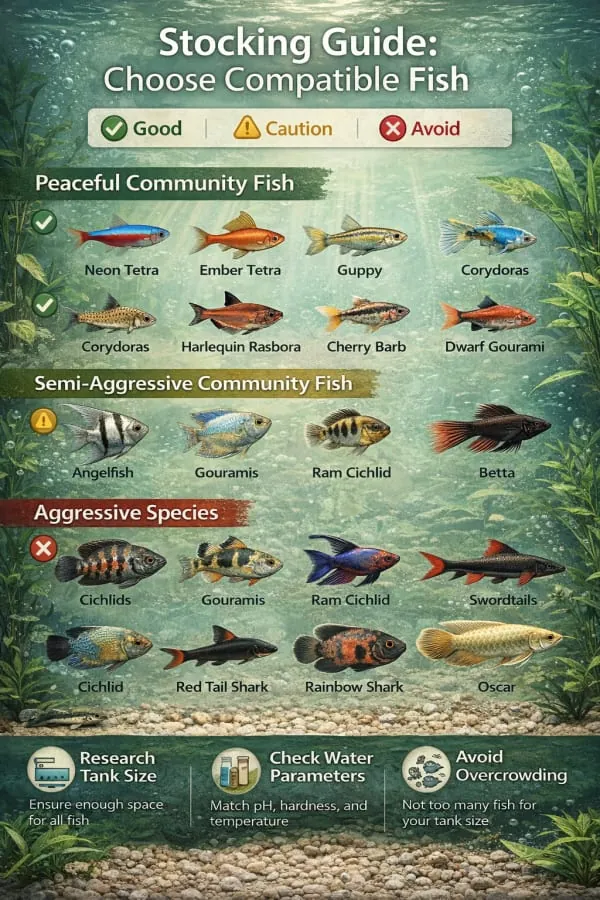
Choose compatible fish: school sizes, swimming zones, aggression, temperature and hardness matching, and honest bioload math for a peaceful community.
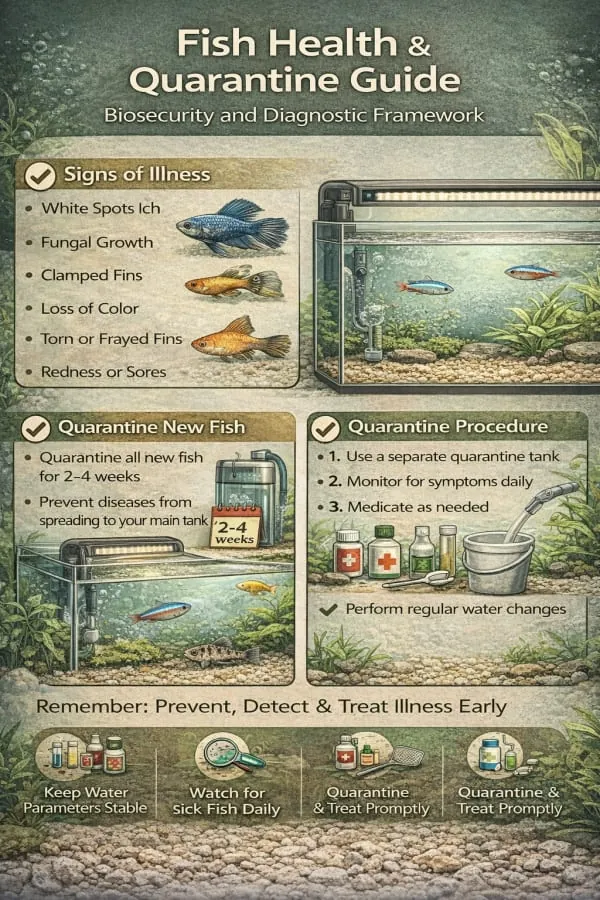
Quarantine new fish, spot the early warning signs, and treat disease without wrecking your tank. A practical freshwater fish health guide.
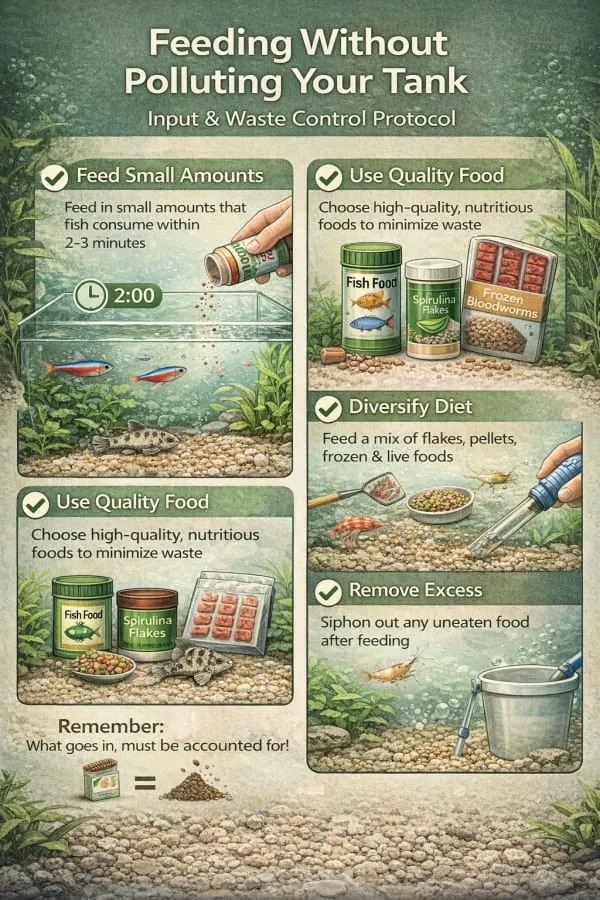
How much and how often to feed aquarium fish, why overfeeding causes cloudy water, algae, and ammonia spikes, and how to stop meals becoming pollution.