OB Peacock (Marble) Care Guide
Aulonocara OB · Freshwater Fish
.Real.webp)
What OB Peacock (Marble) look like
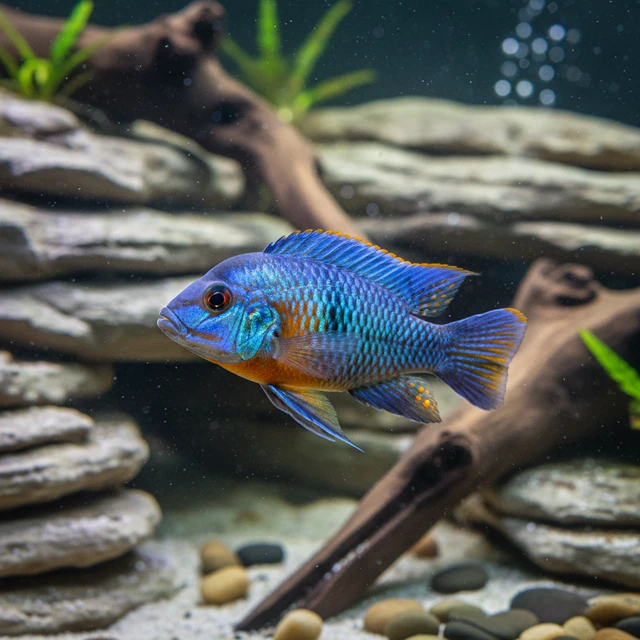
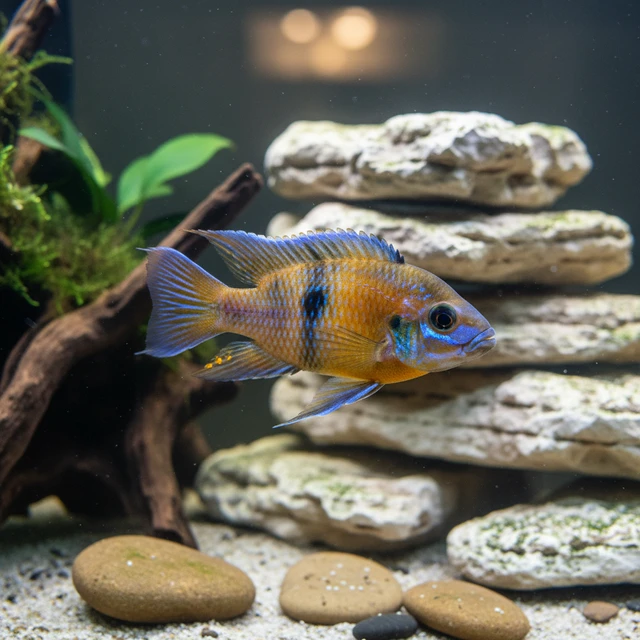
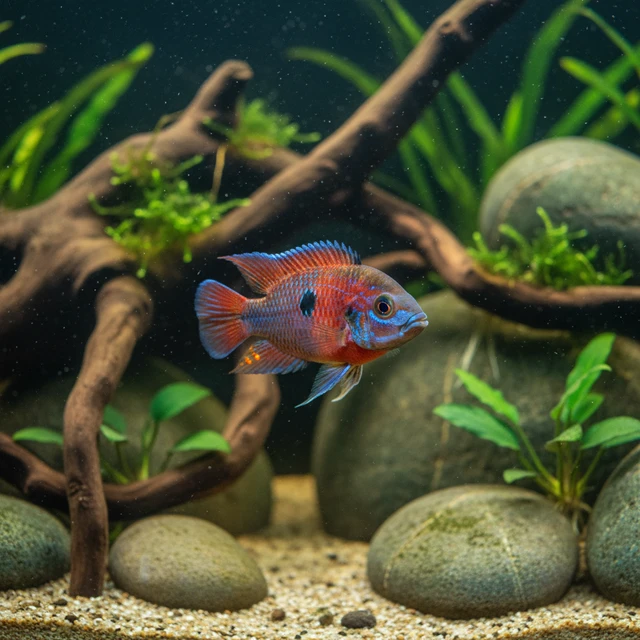
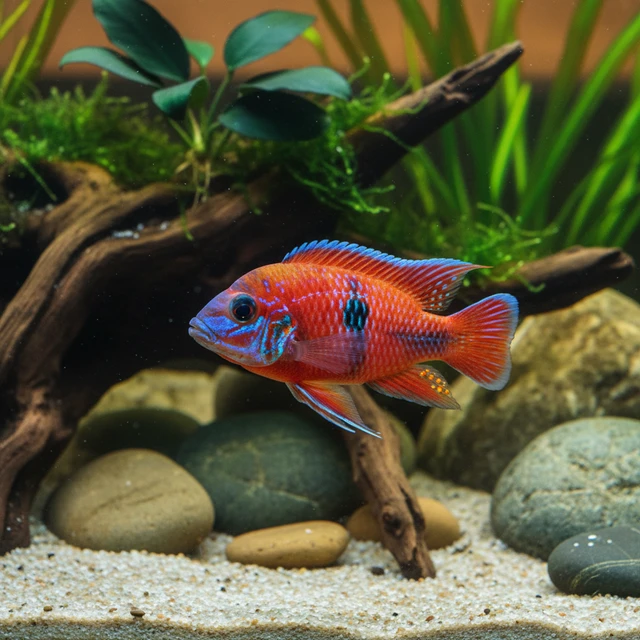
The Aulonocara OB, commonly known as the OB Peacock (Marble), exhibits a strikingly vibrant and complex coloration characterized by a chaotic, heavily mottled pattern of bright pink, neon blue, orange, and jagged black ink-splatter splotches, which is a hallmark of the OB mutation. This species typically reaches a maximum adult size of approximately 10-25 cm, with males generally being larger and more vividly colored than females, showcasing sexual dimorphism. The body is laterally compressed and fusiform, which aids in agile swimming. Notable morphological features include a pronounced dorsal fin that extends into a long, flowing filament in males, and a well-developed lateral line system that aids in navigation and prey detection. Defensive adaptations include a robust body structure and the ability to quickly retreat into crevices or rocky substrates when threatened.
Behavior & temperament
Aulonocara OB is primarily a social species, often found in small groups or harems within its natural habitat, exhibiting a hierarchical social structure where dominant males establish territories. This species typically dwells in the mid to upper water column, often near rocky substrates where they can seek refuge. Breeding behavior involves the male displaying vibrant colors and engaging in elaborate courtship rituals to attract females, who are mouthbrooders, incubating fertilized eggs in their buccal cavity until they hatch. The temperament of the OB Peacock is generally semi-aggressive, particularly during breeding, but they can coexist peacefully with other species if provided adequate space and hiding spots.
Diet & feeding
In the wild, Aulonocara OB is an omnivore, feeding on a varied diet that includes small invertebrates, algae, and detritus. In captivity, they thrive on a balanced diet of high-quality pellets, frozen or live foods, and vegetable matter, requiring a mix of protein and plant-based nutrients to maintain optimal health.
Behind the name
Aulonocara (groove face); OB (referring to the orange-blotch mutation).
Plan your tank
Check the numbers before you buy: tank volume, a stocking plan, cycle progress, water changes, and your ongoing care routine.
Keep reading

Choose compatible fish: school sizes, swimming zones, aggression, temperature and hardness matching, and honest bioload math for a peaceful community.

Quarantine new fish, spot the early warning signs, and treat disease without wrecking your tank. A practical freshwater fish health guide.

Acclimate new fish, shrimp, and coral safely: temperature floating, drip acclimation, plop-and-drop for shipped livestock, and the first 24 hours.
Keeping OB Peacock (Marble)?
AquaLens identifies your fish and plants from a photo, tracks water chemistry, and flags health issues early — free on iOS and Android.