Otocinclus Care Guide
Otocinclus vittatus · Freshwater Fish
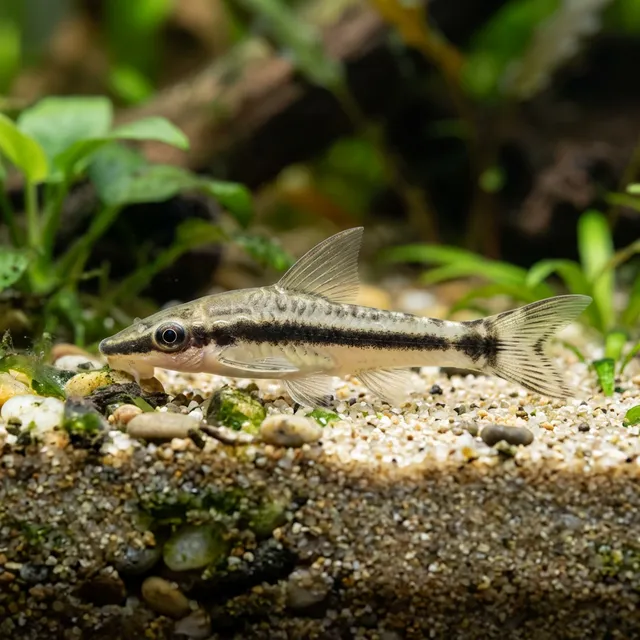
What Otocinclus look like
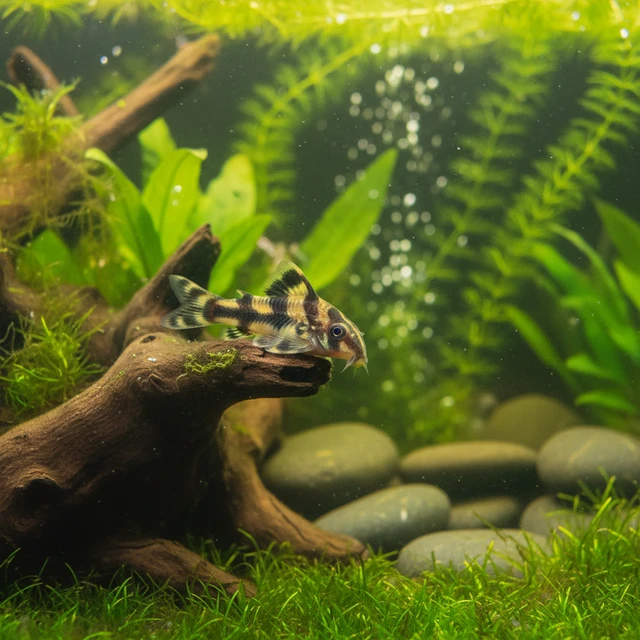
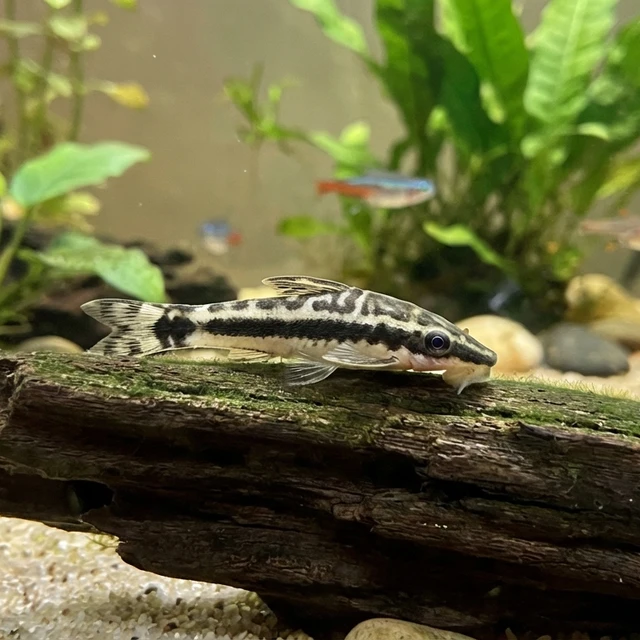
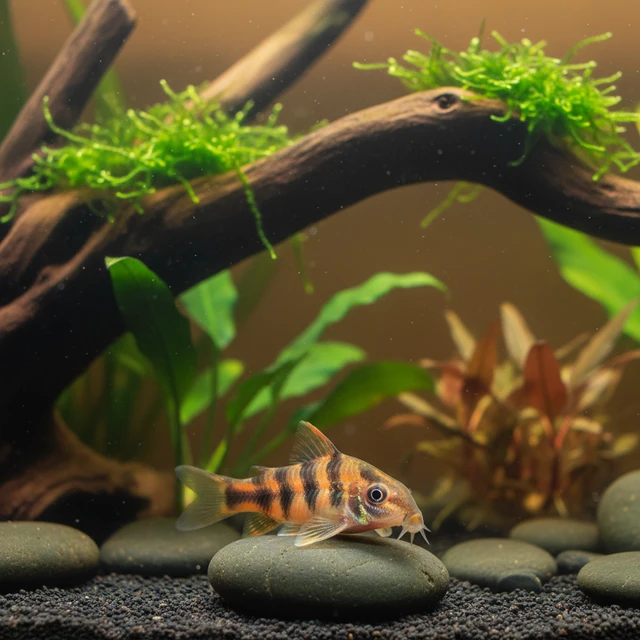
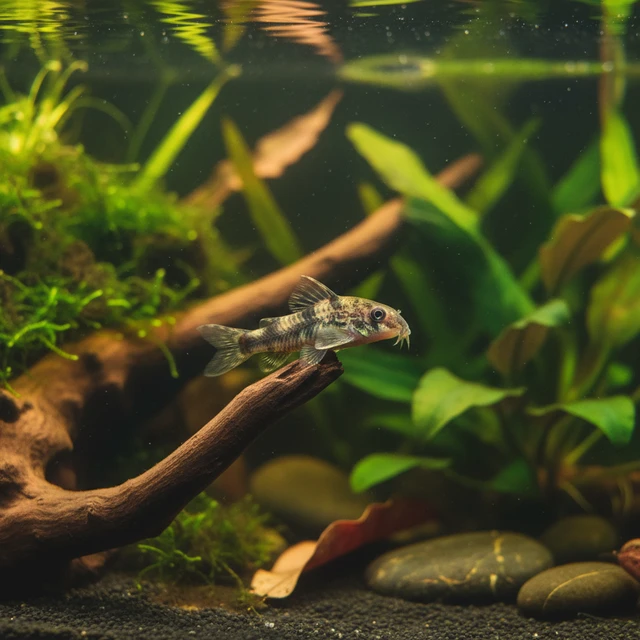
Otocinclus vittatus is a diminutive, laterally compressed catfish, reaching a maximum adult size of approximately 1.5 to 2 inches (3.8 to 5.1 cm). The body exhibits a slender, cylindrical form with a flattened ventral surface, facilitating its benthic lifestyle. The coloration is primarily pale with a distinctive dark horizontal stripe extending from the snout to the base of the caudal fin, while the ventral surface is white. Notably, the species possesses a specialized sucker-mouth adapted for adhering to various surfaces, allowing it to graze effectively on algae. The eyes are proportionately large, providing enhanced visual acuity in its natural habitat. Defensive adaptations include its small size and cryptic coloration, which help it evade predation. The absence of heavy armor or barbels distinguishes it from larger, more robust catfish species.
Behavior & temperament
Otocinclus vittatus is primarily a social fish, often found in small groups, although it does not exhibit strict schooling behavior. This species typically occupies the benthic zone of freshwater environments, where it forages for algae on surfaces such as rocks, plants, and aquarium glass. Breeding behavior in this species is characterized as egg scattering, with females releasing eggs in a suitable substrate while males engage in courtship displays. The temperament of Otocinclus is generally peaceful, making it an ideal inhabitant of community aquariums, though it may exhibit slight territoriality during breeding periods.
Diet & feeding
In the wild, Otocinclus vittatus primarily feeds on algae, biofilm, and detritus, making it an obligate herbivore. In captivity, it requires a diet rich in spirulina and other algae-based foods, supplemented with blanched vegetables and high-quality sinking pellets to ensure optimal health.
Behind the name
Otocinclus (ear-clinging); vittatus (striped).
Plan your tank
Check the numbers before you buy: tank volume, a stocking plan, cycle progress, water changes, and your ongoing care routine.
Keep reading

Choose compatible fish: school sizes, swimming zones, aggression, temperature and hardness matching, and honest bioload math for a peaceful community.
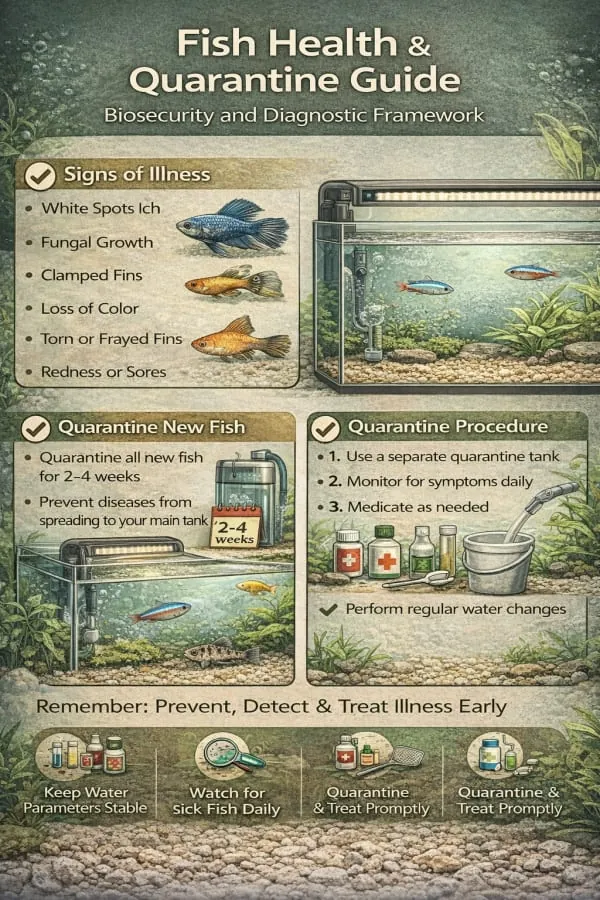
Quarantine new fish, spot the early warning signs, and treat disease without wrecking your tank. A practical freshwater fish health guide.
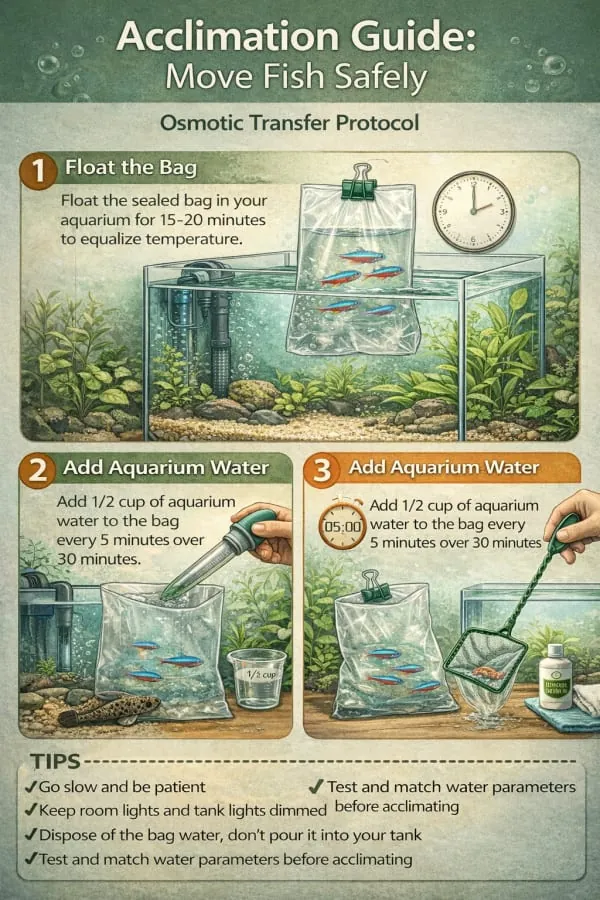
Acclimate new fish, shrimp, and coral safely: temperature floating, drip acclimation, plop-and-drop for shipped livestock, and the first 24 hours.
Keeping Otocinclus?
AquaLens identifies your fish and plants from a photo, tracks water chemistry, and flags health issues early — free on iOS and Android.