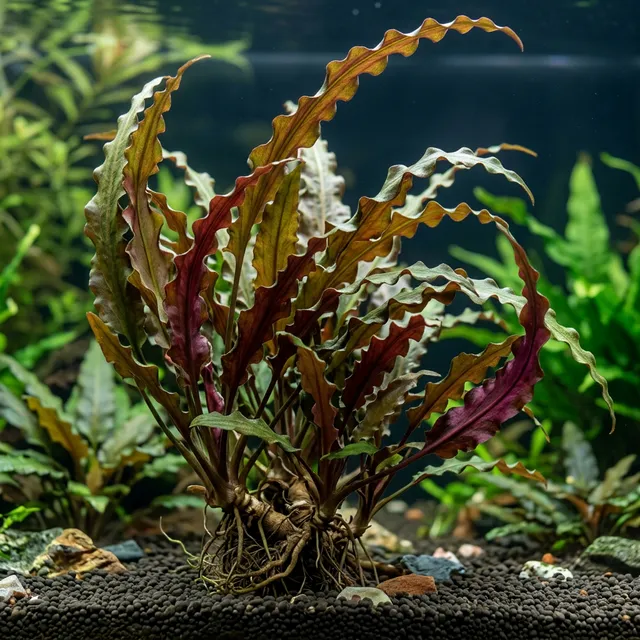
Red Tiger Lotus Care Guide
Nymphaea zenkeri · Freshwater Plant
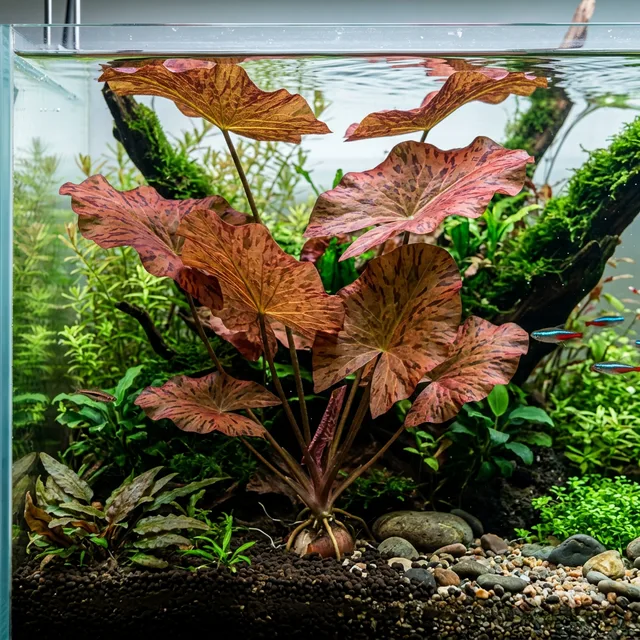
What Red Tiger Lotus look like
Nymphaea zenkeri, commonly known as the Red Tiger Lotus, exhibits a striking morphology characterized by its broad, floating leaves that can reach a maximum diameter of 5 to 15 inches. The leaves are typically ovate to circular, with a glossy surface and a deep green coloration adorned with reddish-brown mottling, giving it a 'tiger' appearance. The plant's petioles are robust and can extend several feet in length, allowing the leaves to float at the water's surface. The flowers of the Red Tiger Lotus are particularly notable, featuring a star-shaped structure with numerous petals that can vary in color from pink to red, often with a yellow center. This species demonstrates minimal sexual dimorphism, as both male and female flowers appear similar. Defensive adaptations include the production of secondary metabolites that may deter herbivory. Unique morphological features include the presence of a rhizome that anchors the plant in substrate and allows for vegetative propagation, as well as a well-developed aerenchyma tissue that aids in buoyancy and gas exchange.
Behavior & temperament
In its natural habitat, Nymphaea zenkeri typically dwells in shallow, slow-moving waters, often found in the littoral zones of lakes and ponds. This species exhibits a solitary growth habit, although it can form dense colonies through vegetative propagation. The Red Tiger Lotus is primarily a surface-dwelling plant, with its leaves floating on the water's surface, while its roots anchor into the substrate below. During the breeding season, the plant produces flowers that open during the day and close at night, facilitating pollination by insects. The Red Tiger Lotus is generally non-aggressive and does not exhibit territorial behavior, making it a suitable addition to community aquariums.
Diet & feeding
In the wild, Nymphaea zenkeri is an omnivorous plant that derives nutrients from both the water column and substrate, absorbing minerals and organic matter. In captivity, it requires a nutrient-rich substrate and benefits from regular fertilization, particularly with potassium and trace elements to support its growth and flowering.
Behind the name
Nymphaea (from Greek 'nymphaios', meaning 'water nymph'); zenkeri (named in honor of the botanist Wilhelm Zenker).
Plan your tank
Check the numbers before you buy: tank volume, a stocking plan, cycle progress, water changes, and your ongoing care routine.
Keep reading
Diagnose aquarium plant deficiencies by leaf age and symptom: yellowing, pinholes, twisting, and stunting. Read the pattern, then fix it safely.

PAR-first planted tank lighting: choose intensity by what you grow, set photoperiod and spectrum, kill shadows, and hold algae back without overspending.

Aquarium CO₂ injection made safe: how carbon, light, and nutrients balance, which system to buy, and how to dial it in without gassing your fish.
Keeping Red Tiger Lotus?
AquaLens identifies your fish and plants from a photo, tracks water chemistry, and flags health issues early — free on iOS and Android.