Poliaks Killifish Care Guide
Aphyosemion poliaki · Freshwater Fish
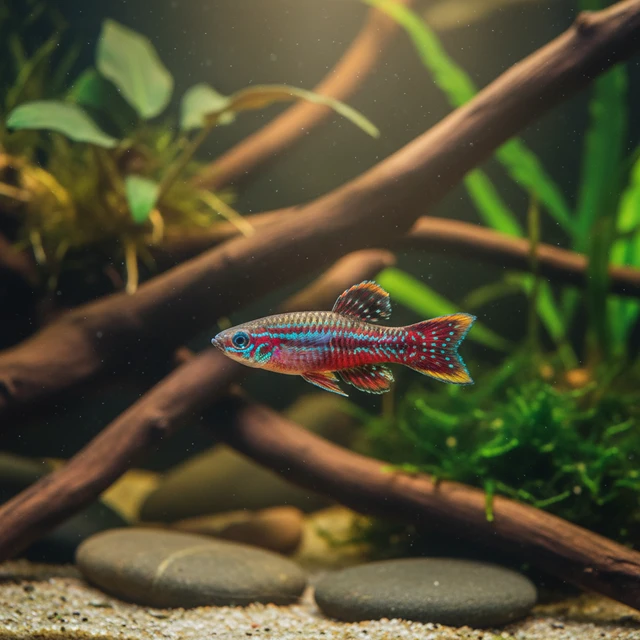
What Poliaks Killifish look like
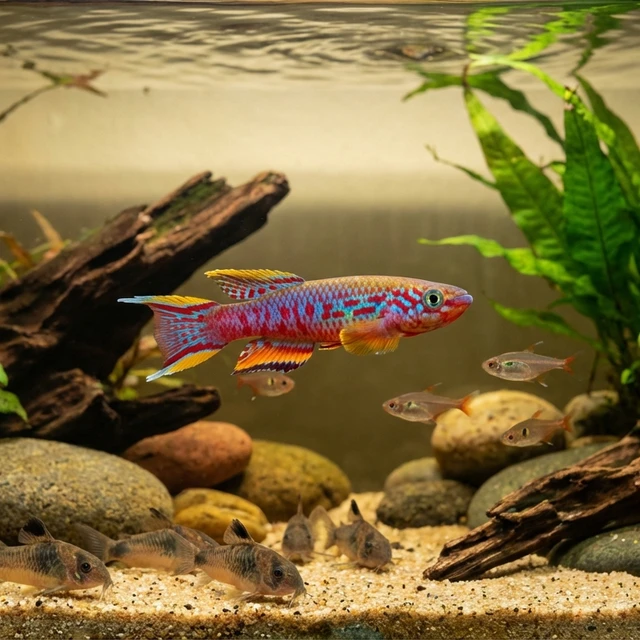
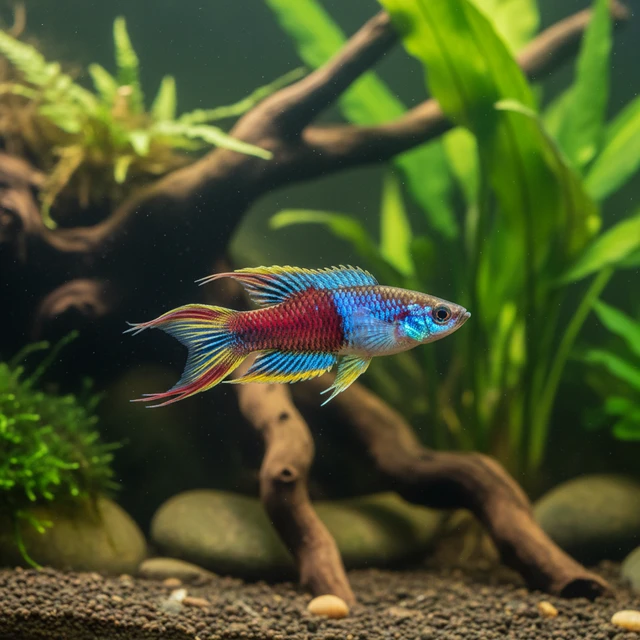
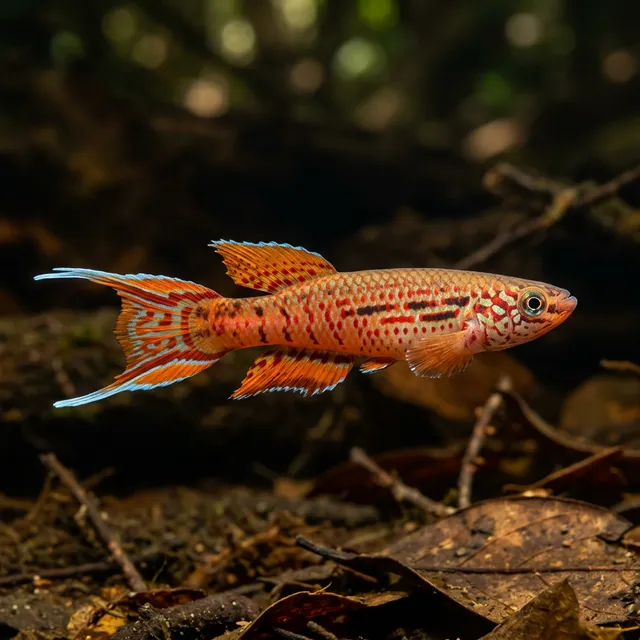
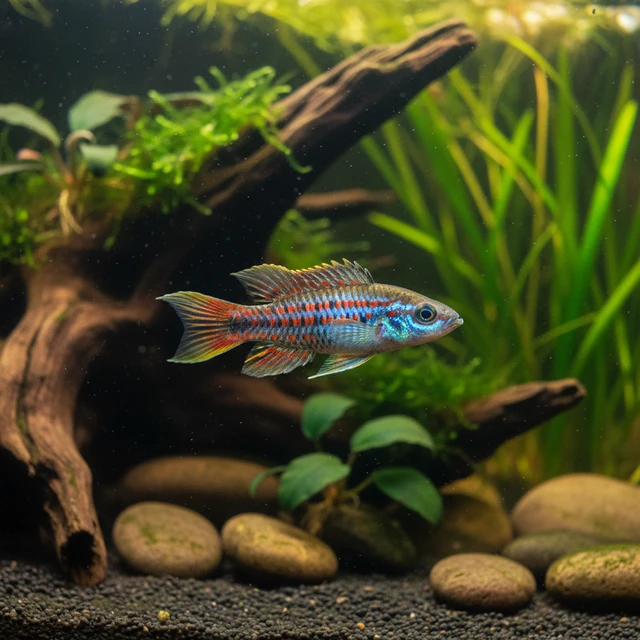
Aphyosemion poliaki, commonly known as Poliaks Killifish, exhibits a small, laterally compressed body that typically reaches a maximum adult size of approximately 2-3 inches (5-7.5 cm). Males are characterized by their striking metallic blue-green coloration adorned with vibrant red spots, complemented by ornate, patterned fins that display a range of hues, enhancing their visual appeal. In contrast, females are more subdued in appearance, presenting a plain brown coloration that aids in camouflage. This species lacks significant sexual dimorphism in body shape but is distinguished by the males' elaborate fin structures and coloration. The species possesses a well-defined lateral line system, which aids in detecting vibrations in the water, and exhibits a robust dentition adapted for a carnivorous diet. Defensive adaptations include rapid swimming capabilities and the ability to blend into dense aquatic vegetation, providing refuge from potential predators.
Behavior & temperament
Poliaks Killifish are primarily found in shallow, densely vegetated waters of West Africa, where they exhibit a preference for the upper water column, making them predominantly pelagic. They are known to be social fish, often forming loose schools, although they can also display territorial behavior, particularly males during mating displays. Breeding occurs through egg scattering, with females laying adhesive eggs among aquatic plants, ensuring the survival of their offspring. The species is generally peaceful but can exhibit mild aggression during breeding periods, particularly among males vying for dominance and mating opportunities.
Diet & feeding
In the wild, Poliaks Killifish are carnivorous, primarily feeding on small invertebrates and zooplankton. In captivity, they thrive on a diet rich in high-quality live or frozen foods such as brine shrimp, daphnia, and finely chopped bloodworms to meet their nutritional needs.
Behind the name
Aphyosemion (from Greek 'aphyo' meaning 'to grow' and 'semeion' meaning 'sign' or 'mark'); poliaki (named in honor of the researcher who studied this species).
Plan your tank
Check the numbers before you buy: tank volume, a stocking plan, cycle progress, water changes, and your ongoing care routine.
Keep reading

Choose compatible fish: school sizes, swimming zones, aggression, temperature and hardness matching, and honest bioload math for a peaceful community.
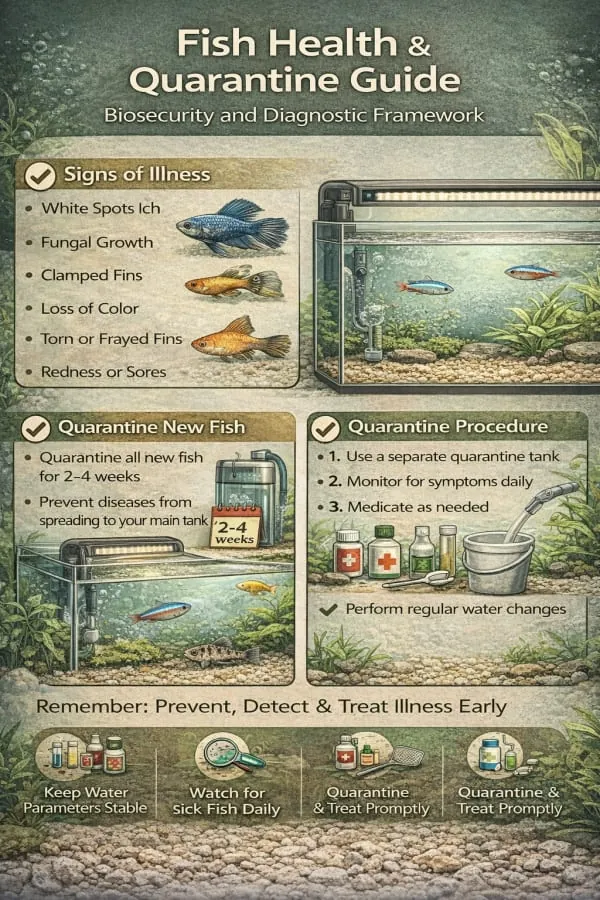
Quarantine new fish, spot the early warning signs, and treat disease without wrecking your tank. A practical freshwater fish health guide.
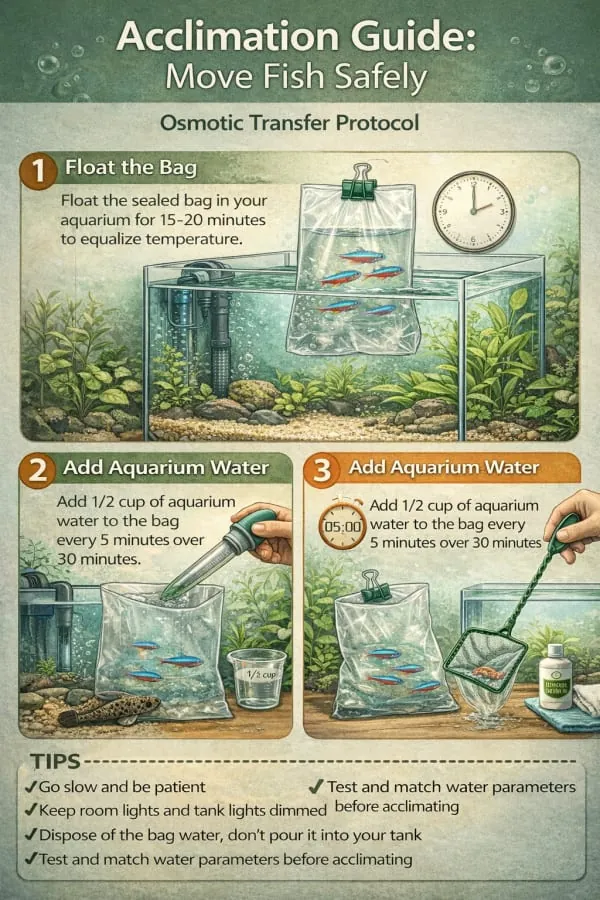
Acclimate new fish, shrimp, and coral safely: temperature floating, drip acclimation, plop-and-drop for shipped livestock, and the first 24 hours.
Keeping Poliaks Killifish?
AquaLens identifies your fish and plants from a photo, tracks water chemistry, and flags health issues early — free on iOS and Android.