Rainbow Shark Care Guide
Epalzeorhynchos frenatum · Freshwater Fish
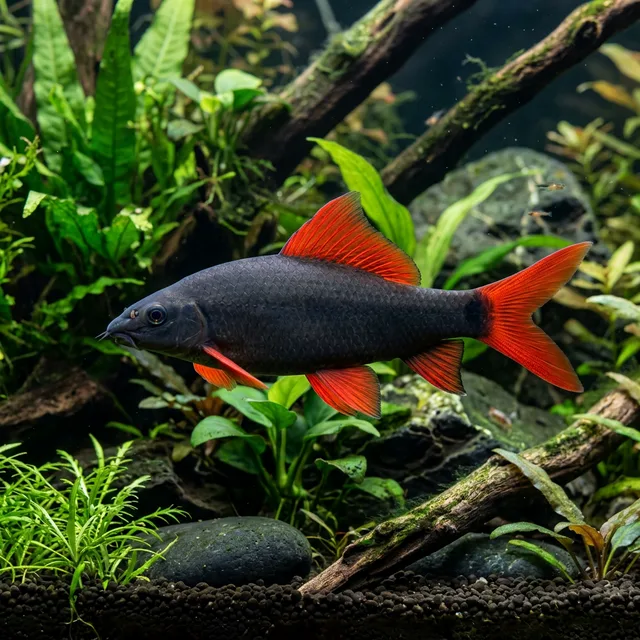
What Rainbow Shark look like
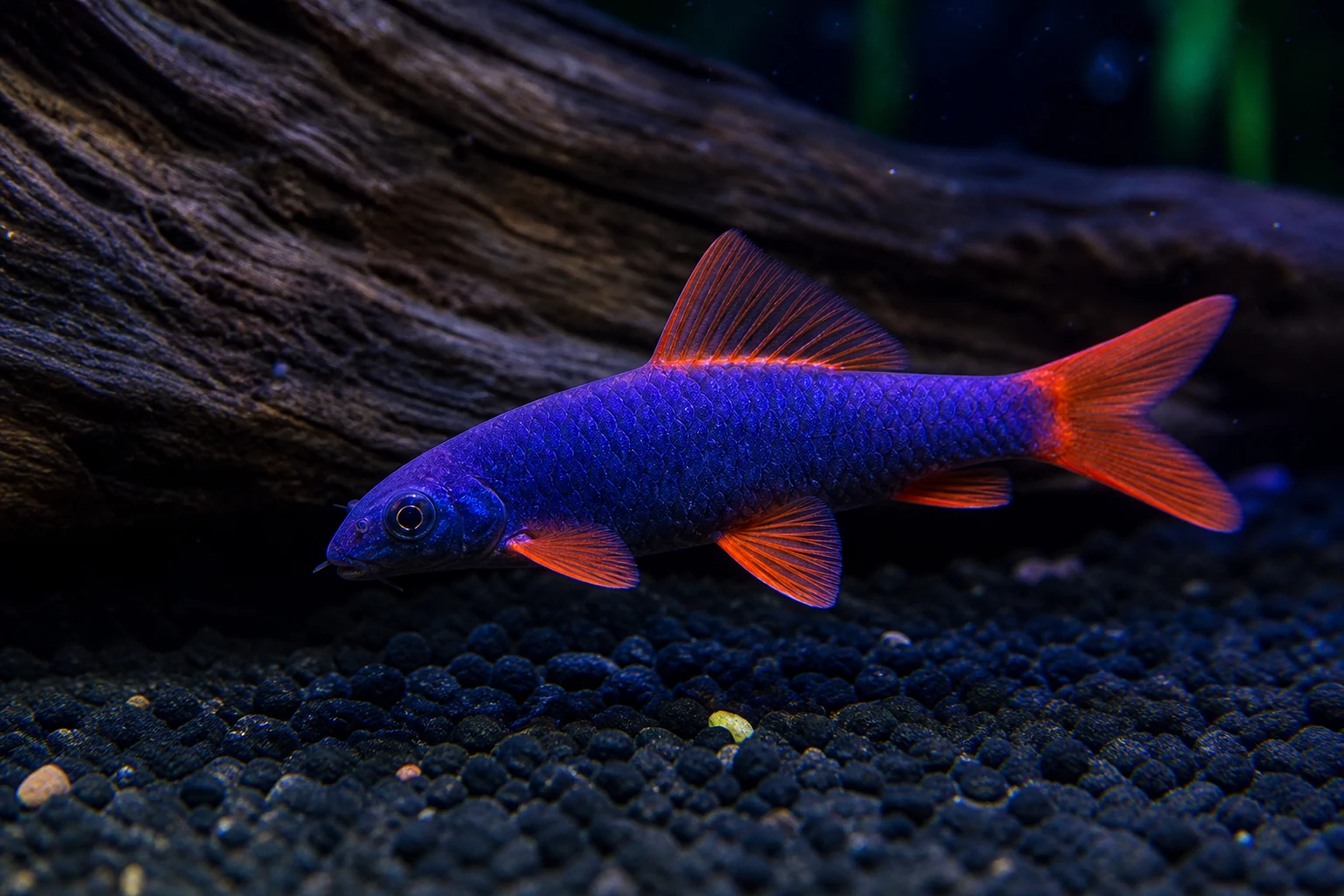
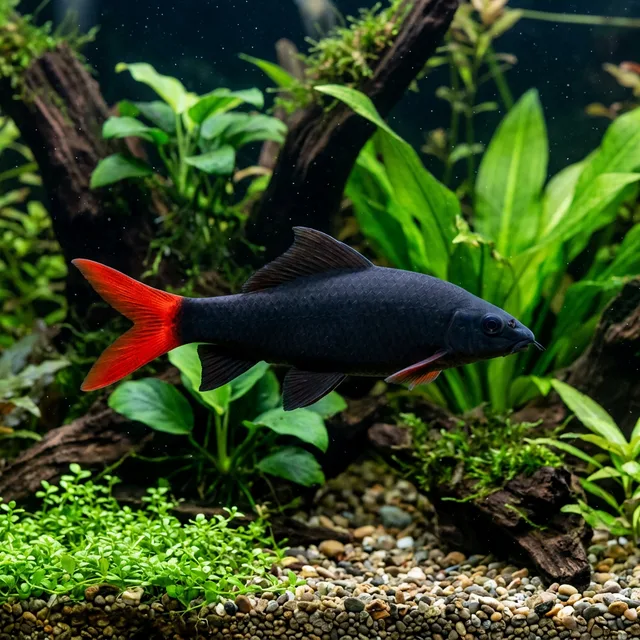
The Rainbow Shark (Epalzeorhynchos frenatum) exhibits a fusiform body shape, typically reaching a maximum adult size of 6 inches (15 cm), although some individuals can grow slightly larger. The species displays sexual dimorphism, with males generally being more slender and having more pronounced coloration compared to females. Its body is predominantly dark gray to black, providing a striking contrast to its vivid red-orange fins, which are well-developed and brightly colored. The fish possesses two pairs of sensory barbels located on the upper jaw, aiding in foraging. A rounded forehead and an upturned mouth contribute to its shark-like profile, while the streamlined body enhances its swimming efficiency. Notably, the Rainbow Shark has a well-defined lateral line, which is crucial for detecting vibrations in the water, and its dentition is adapted for an omnivorous diet, featuring small, sharp teeth suitable for grazing on algae and consuming small invertebrates.
Behavior & temperament
Rainbow Sharks are primarily solitary and territorial, often establishing a hierarchy within their environment, particularly in confined spaces. They are known to inhabit the benthic zone of freshwater systems, where they prefer to dwell near the substrate among rocks and vegetation. During breeding, they exhibit egg-scattering behavior, with females releasing eggs that are fertilized externally by males. Their temperament can vary; while they may display aggression towards conspecifics, especially in smaller tanks, they can coexist peacefully with other species if provided ample space and hiding spots. Their behavior is characterized by occasional bouts of chasing, particularly during territorial disputes, making it essential to monitor their interactions with tank mates.
Diet & feeding
In the wild, Rainbow Sharks are omnivorous, feeding on algae, plant matter, and small invertebrates. In captivity, they require a varied diet that includes high-quality flake food, algae wafers, and occasional protein sources such as frozen or live foods to maintain optimal health.
Behind the name
Epalzeorhynchos (from Greek 'epalzein' meaning 'to cover' and 'rhynchos' meaning 'snout'); frenatum (from Latin 'frenatus' meaning 'bridled' or 'restrained', referring to the fish's distinctive fin structure).
Plan your tank
Check the numbers before you buy: tank volume, a stocking plan, cycle progress, water changes, and your ongoing care routine.
Keep reading
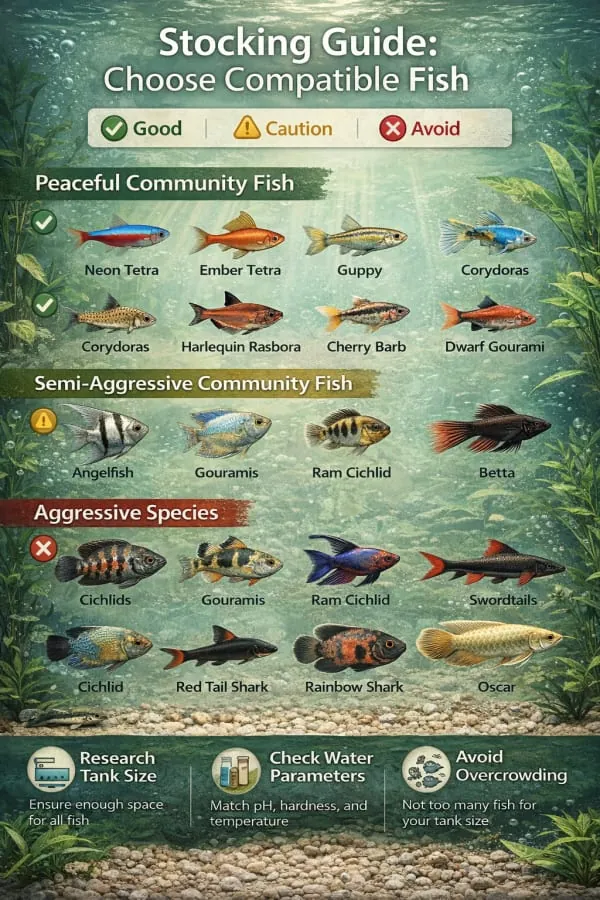
Choose compatible fish: school sizes, swimming zones, aggression, temperature and hardness matching, and honest bioload math for a peaceful community.
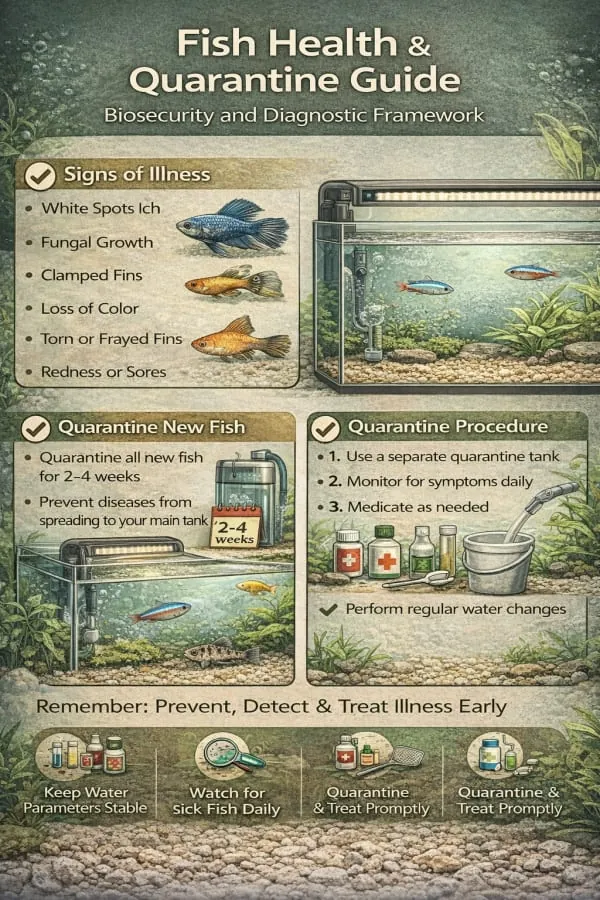
Quarantine new fish, spot the early warning signs, and treat disease without wrecking your tank. A practical freshwater fish health guide.
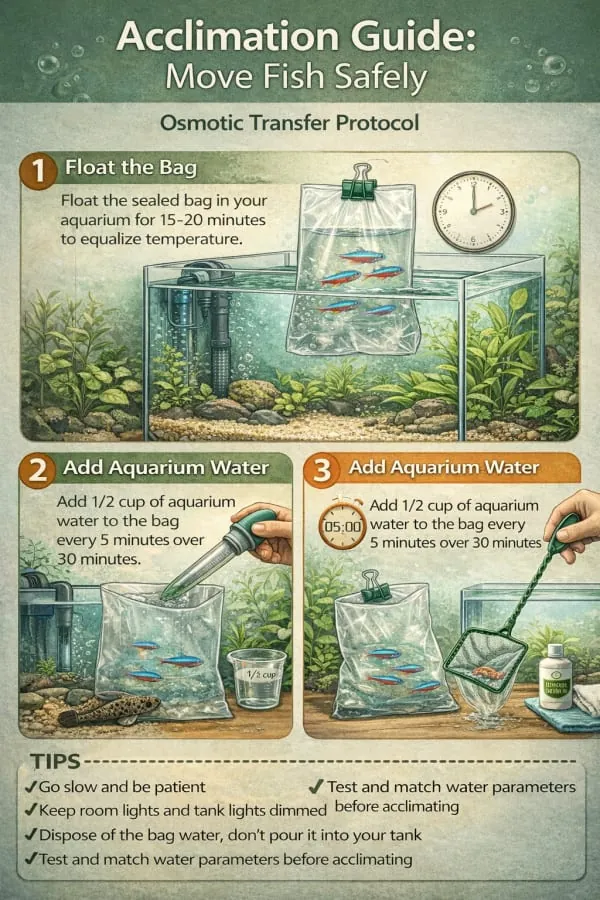
Acclimate new fish, shrimp, and coral safely: temperature floating, drip acclimation, plop-and-drop for shipped livestock, and the first 24 hours.
Keeping Rainbow Shark?
AquaLens identifies your fish and plants from a photo, tracks water chemistry, and flags health issues early — free on iOS and Android.