Red Bellied Piranha Care Guide
Pygocentrus nattereri · Freshwater Fish
What Red Bellied Piranha look like
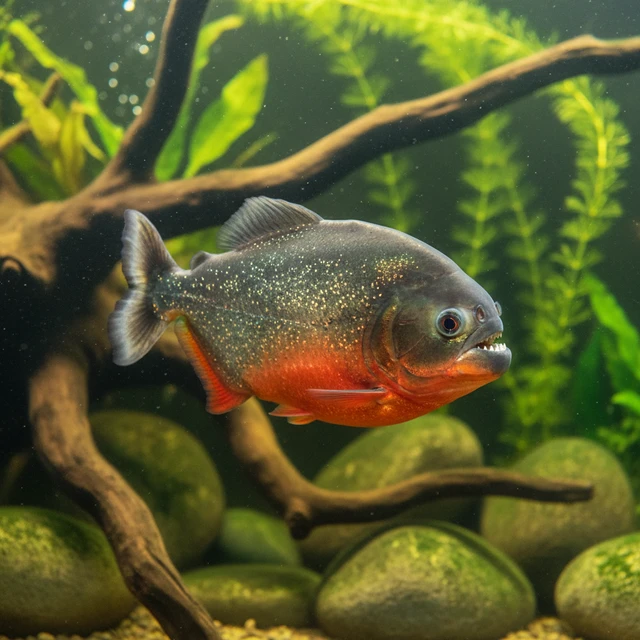
The Red Bellied Piranha (Pygocentrus nattereri) exhibits a robust, laterally compressed body that typically reaches a maximum adult size of 8-10 inches, although some individuals can grow up to 15 inches in optimal conditions. This species displays pronounced sexual dimorphism, with males generally being smaller and more slender than females, especially during the breeding season. The coloration is striking, featuring a silvery-blue-gray body adorned with a vivid red-orange belly, throat, and anal fin, which serve as a warning coloration to potential predators. The jaw is notably powerful, equipped with interlocking, razor-sharp teeth that are highly visible when the mouth is agape, a morphological adaptation for its carnivorous diet. Additionally, the piranha possesses a well-developed lateral line system that aids in detecting vibrations in the water, enhancing its predatory capabilities.
Behavior & temperament
Red Bellied Piranhas are primarily social fish, often found in groups, which can exhibit a hierarchical structure where larger individuals dominate feeding and breeding opportunities. They inhabit the mid to lower water column, typically dwelling in the pelagic zone of rivers and lakes. Their breeding behavior is characterized by egg scattering, where females release eggs in shallow waters, and males fertilize them shortly after. Piranhas are known for their aggressive temperament, particularly when in groups, as they can exhibit territorial behavior and heightened aggression during feeding times, making them fascinating yet challenging species to keep in an aquarium setting.
Diet & feeding
In the wild, Red Bellied Piranhas are carnivorous, primarily feeding on fish, crustaceans, and other aquatic organisms. In captivity, they require a diet rich in protein, including high-quality pellets, frozen or live foods such as shrimp, fish, and worms to ensure optimal health and growth.
Behind the name
Pygocentrus (from Greek 'pygos' meaning 'rump' and 'kentron' meaning 'sharp point'); nattereri (named in honor of the German naturalist Johann Natterer).
Plan your tank
Check the numbers before you buy: tank volume, a stocking plan, cycle progress, water changes, and your ongoing care routine.
Keep reading
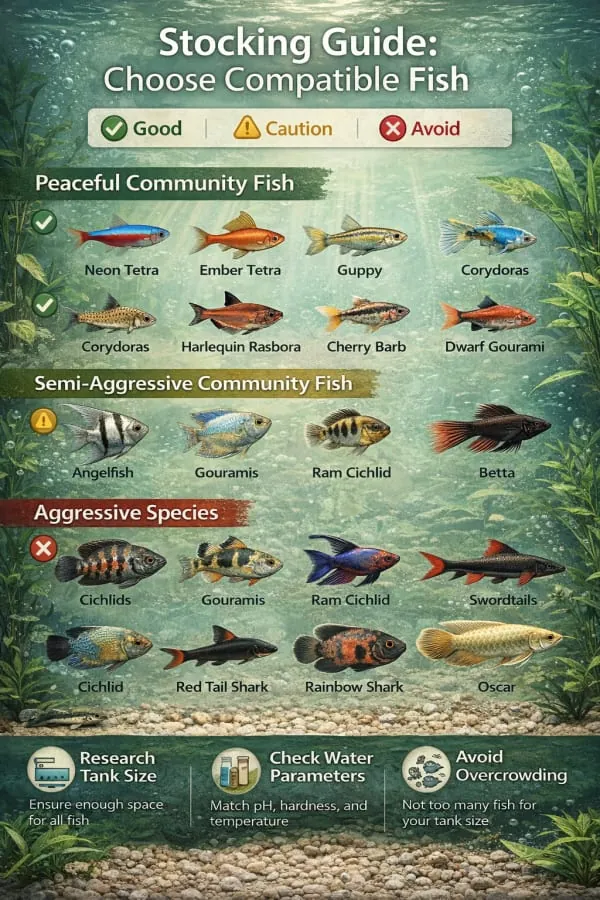
Choose compatible fish: school sizes, swimming zones, aggression, temperature and hardness matching, and honest bioload math for a peaceful community.
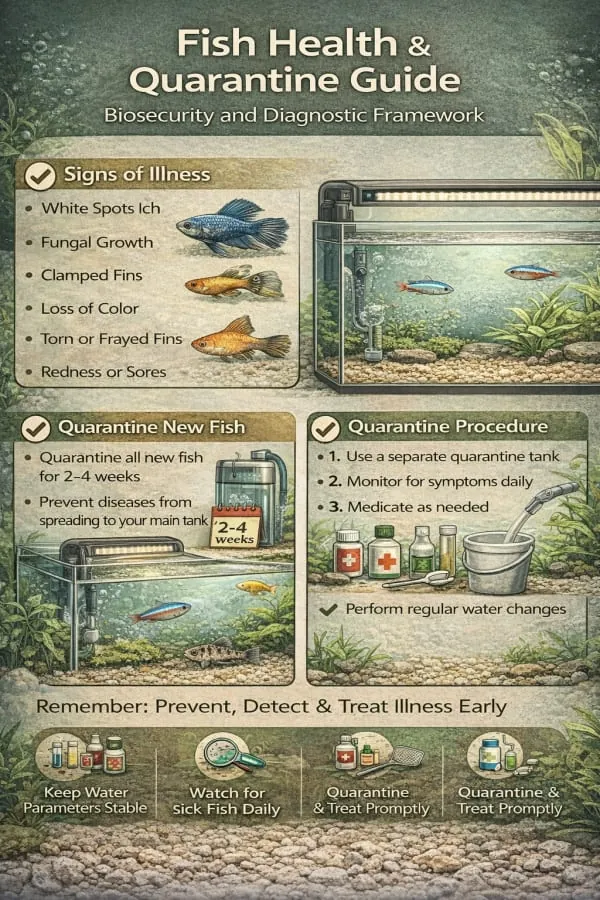
Quarantine new fish, spot the early warning signs, and treat disease without wrecking your tank. A practical freshwater fish health guide.
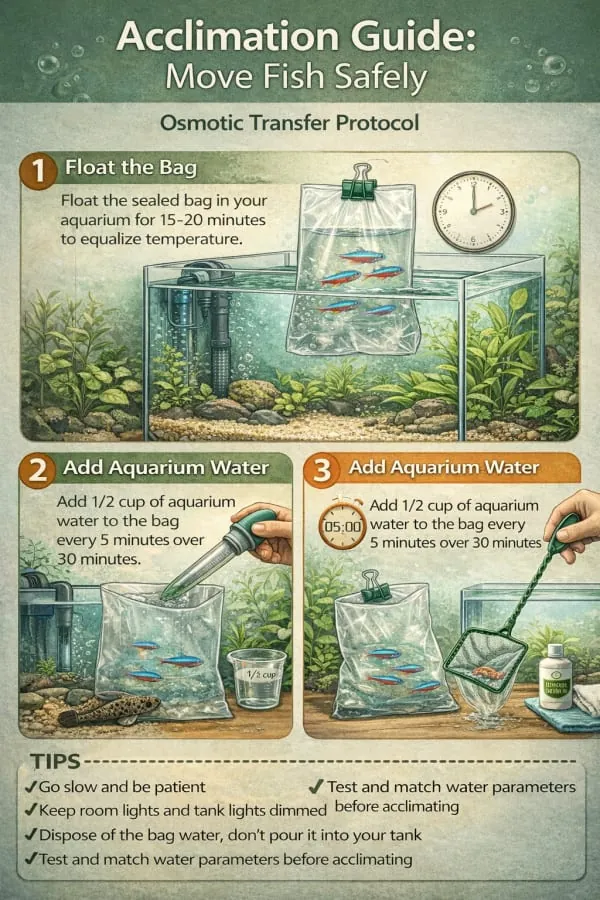
Acclimate new fish, shrimp, and coral safely: temperature floating, drip acclimation, plop-and-drop for shipped livestock, and the first 24 hours.
Keeping Red Bellied Piranha?
AquaLens identifies your fish and plants from a photo, tracks water chemistry, and flags health issues early — free on iOS and Android.