Red Devil Cichlid Care Guide
Amphilophus labiatus · Freshwater Fish
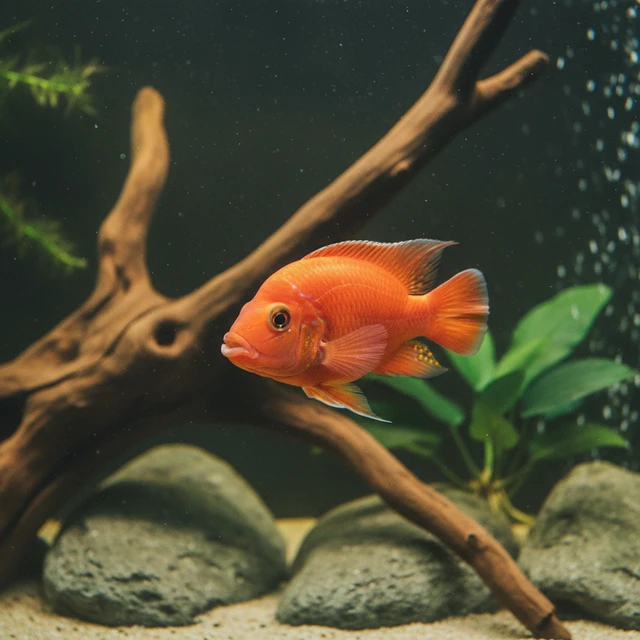
What Red Devil Cichlid look like
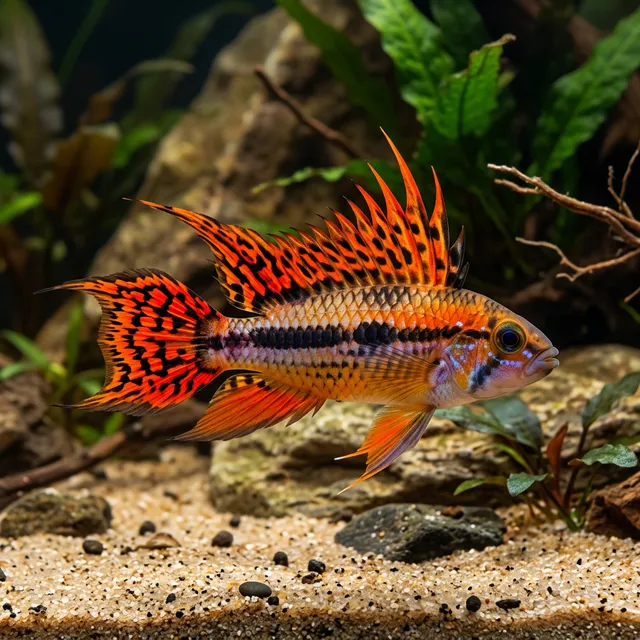
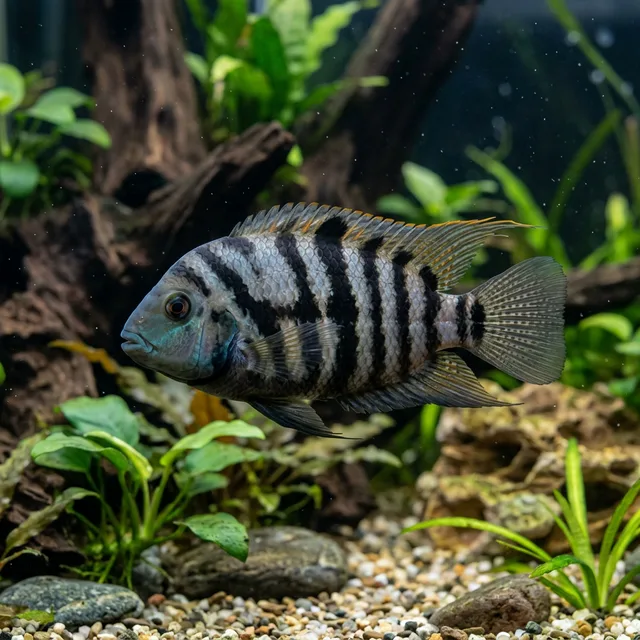
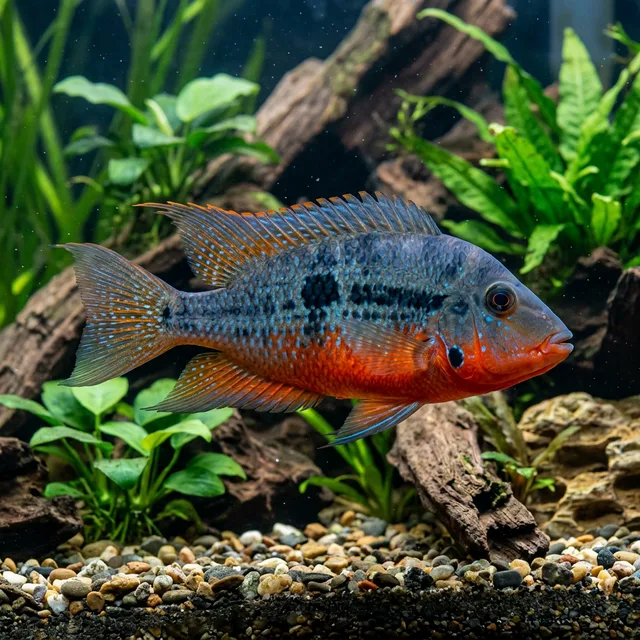
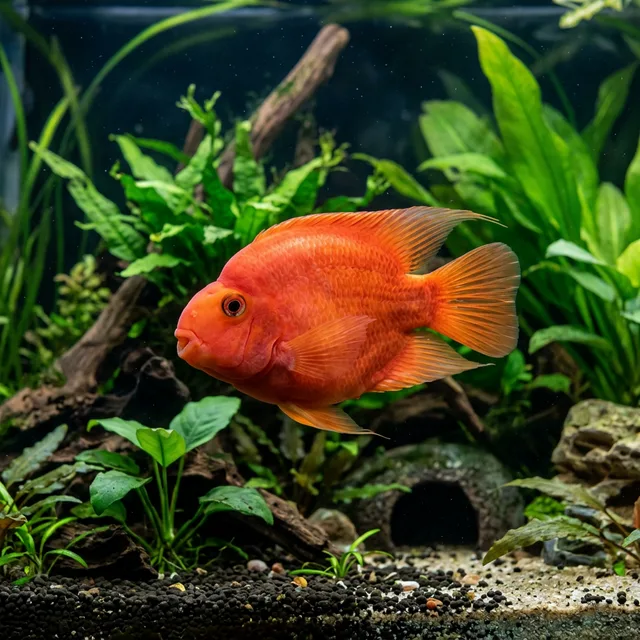
The Red Devil Cichlid (Amphilophus labiatus) exhibits a robust, laterally compressed body that can reach a maximum adult size of 10 to 12 inches. This species is characterized by its deep, stocky form and extremely thick, fleshy, rubbery lips that protrude prominently, serving as a distinctive morphological feature. The coloration varies from vibrant orange to deep red, with some individuals displaying a grayish hue adorned with dark barring. Mature males are particularly notable for developing a pronounced nuchal hump, which further accentuates their aggressive demeanor. The dentition is well-adapted for an omnivorous diet, featuring strong, conical teeth suited for both plant and animal matter. Additionally, the presence of a lateral line system aids in detecting water movements, enhancing their predatory capabilities. The dorsal fin is elongated and extends along the back, contributing to their streamlined appearance, while the caudal fin is broad and powerful, facilitating agile movements in their aquatic environment.
Behavior & temperament
The Red Devil Cichlid is known for its aggressive and territorial behavior, often establishing dominance within its habitat. This species is typically solitary or can be found in pairs during breeding, as they do not form obligate schools. They inhabit the mid to lower water column, favoring rocky substrates and caves for shelter. Breeding behavior is characterized by substrate spawning, where females scatter eggs on flat surfaces, and males exhibit protective and aggressive behaviors towards potential threats. Their temperament is generally aggressive, particularly during breeding periods, and they are known to defend their territory vigorously against intruders, making them unsuitable for community tanks with smaller or less aggressive species.
Diet & feeding
In the wild, the Red Devil Cichlid is an omnivore, feeding on a varied diet that includes plant matter, insects, and smaller fish. In captivity, they require a balanced diet consisting of high-quality pellets, supplemented with live or frozen foods such as brine shrimp and bloodworms to ensure optimal health and coloration.
Behind the name
Amphilophus (from Greek, meaning 'both sides' or 'double') and labiatus (from Latin, meaning 'lipped'), referring to the prominent lips of this species.
Plan your tank
Check the numbers before you buy: tank volume, a stocking plan, cycle progress, water changes, and your ongoing care routine.
Keep reading
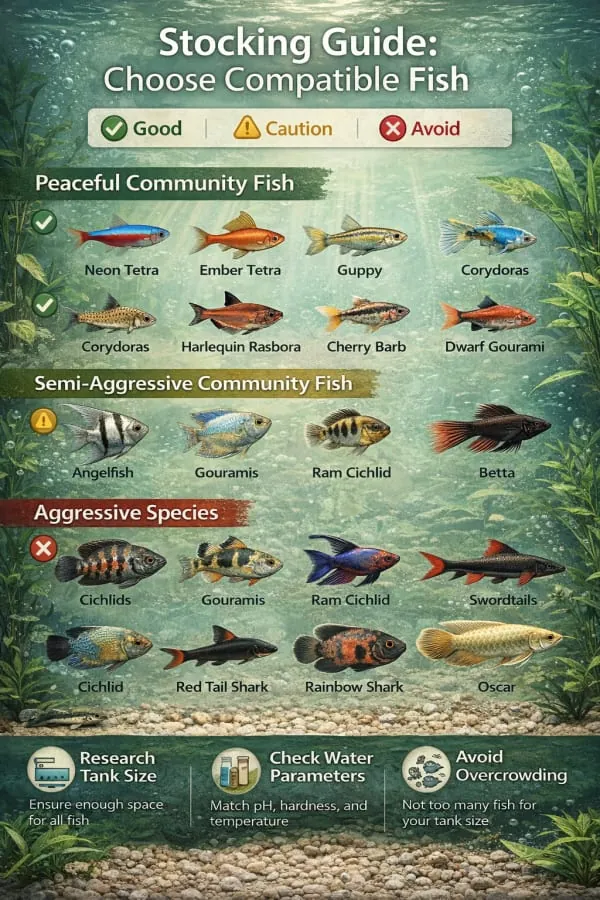
Choose compatible fish: school sizes, swimming zones, aggression, temperature and hardness matching, and honest bioload math for a peaceful community.
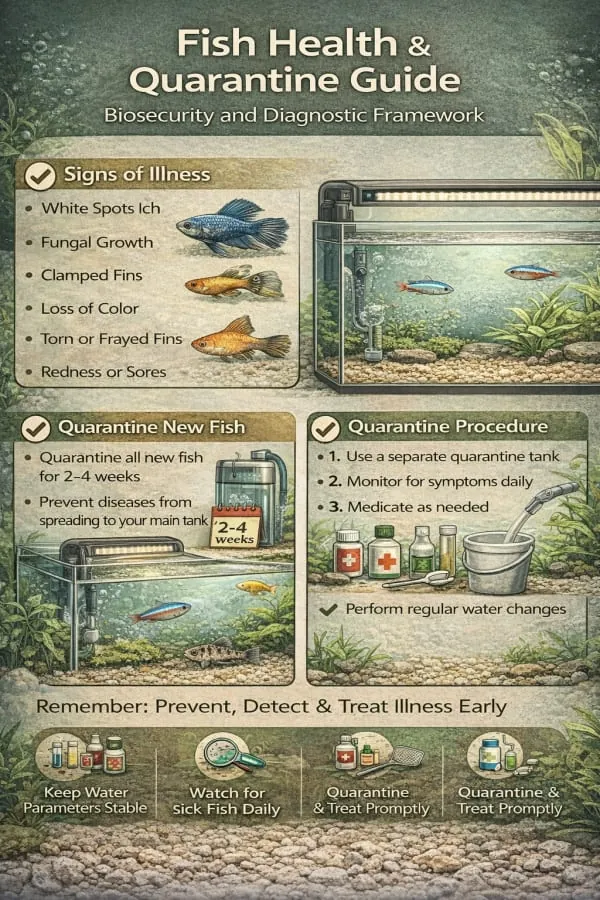
Quarantine new fish, spot the early warning signs, and treat disease without wrecking your tank. A practical freshwater fish health guide.
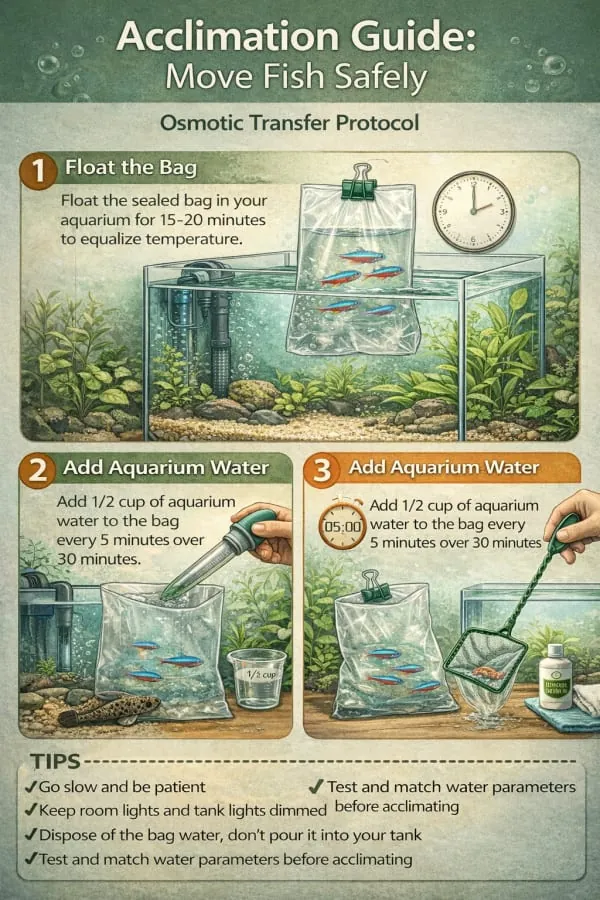
Acclimate new fish, shrimp, and coral safely: temperature floating, drip acclimation, plop-and-drop for shipped livestock, and the first 24 hours.
Keeping Red Devil Cichlid?
AquaLens identifies your fish and plants from a photo, tracks water chemistry, and flags health issues early — free on iOS and Android.