Redtail Catfish Care Guide
Phractocephalus hemioliopterus · Freshwater Fish
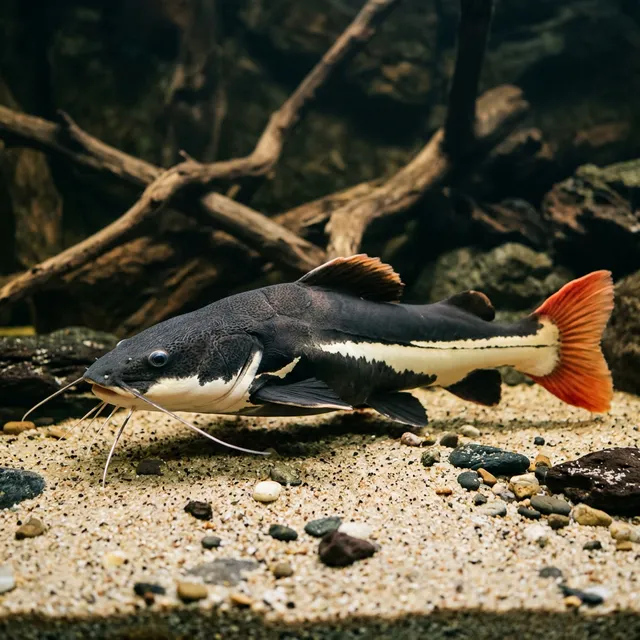
What Redtail Catfish look like
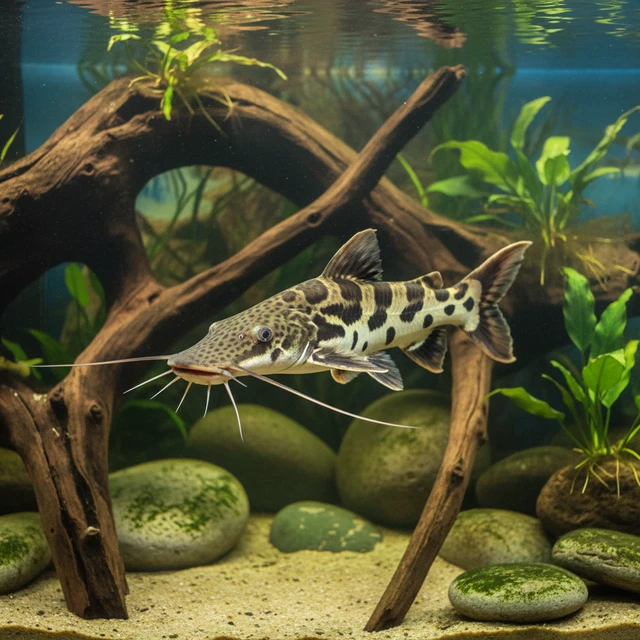
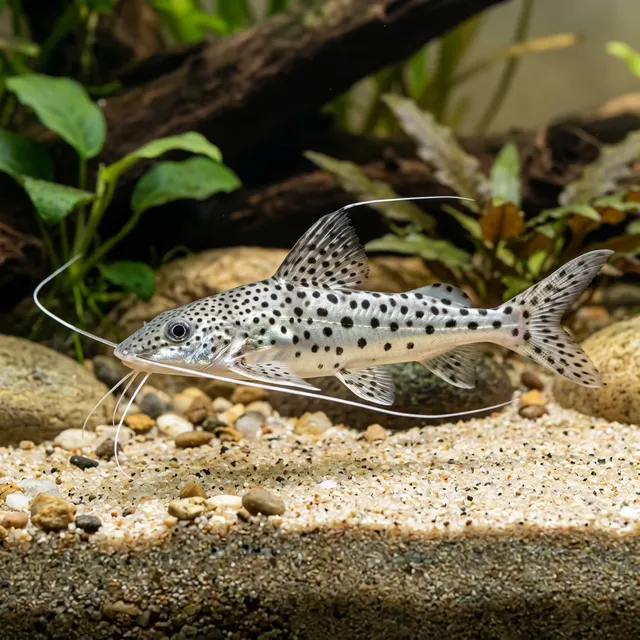
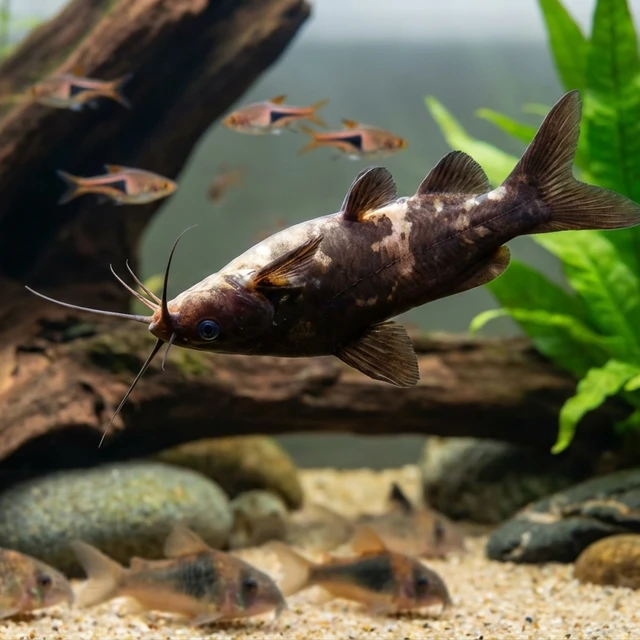
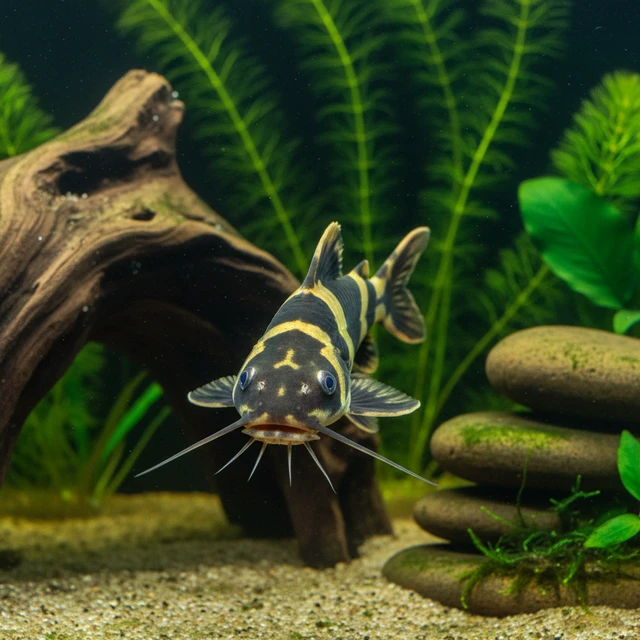
The Redtail Catfish (Phractocephalus hemioliopterus) exhibits a robust, fusiform body that can reach a maximum adult size of 5 to 15 feet, making it a true giant among freshwater species. Its dorsal surface is a dark grey to black, providing effective camouflage in its native Amazonian waters, while the ventral side is a stark white, enhancing contrast. Notably, the species features a distinctive bright red to orange coloration on the tips of its caudal and dorsal fins, which serves as a visual cue during social interactions. The mouth is exceptionally large and wide, equipped with numerous conical teeth adapted for grasping prey. The lateral line system is well-developed, allowing for enhanced sensory perception in turbid waters. Additionally, the presence of an adipose fin further distinguishes this species, contributing to its streamlined morphology, essential for navigating swift river currents. Sexual dimorphism is subtle, with males typically exhibiting slightly more pronounced coloration during breeding periods.
Behavior & temperament
Redtail Catfish are primarily solitary and exhibit a territorial nature, often establishing dominance over a defined area within their habitat. They are predominantly benthic dwellers, preferring the lower strata of river systems where they can utilize their camouflage and ambush predation techniques. During breeding, they engage in a unique spawning behavior, where females scatter eggs over substrate, which are then fertilized by males. This species displays a moderate level of aggression, particularly towards smaller fish, and is known to be a voracious predator, often consuming any fish that fits within its massive mouth. Their social hierarchy is not strictly defined, but larger individuals tend to dominate feeding and breeding opportunities.
Diet & feeding
In the wild, the Redtail Catfish is a carnivore, primarily feeding on fish, crustaceans, and other aquatic organisms. In captivity, it requires a diet rich in high-quality protein sources, including pellets designed for large carnivorous fish, live or frozen foods such as shrimp, fish fillets, and occasionally, whole prey items to meet its nutritional needs.
Behind the name
Phractocephalus (from Greek 'phraktos' meaning 'enclosed' and 'kephalē' meaning 'head'); hemioliopterus (from Greek 'hemi' meaning 'half' and 'oliopterus' meaning 'winged').
Plan your tank
Check the numbers before you buy: tank volume, a stocking plan, cycle progress, water changes, and your ongoing care routine.
Keep reading

Choose compatible fish: school sizes, swimming zones, aggression, temperature and hardness matching, and honest bioload math for a peaceful community.
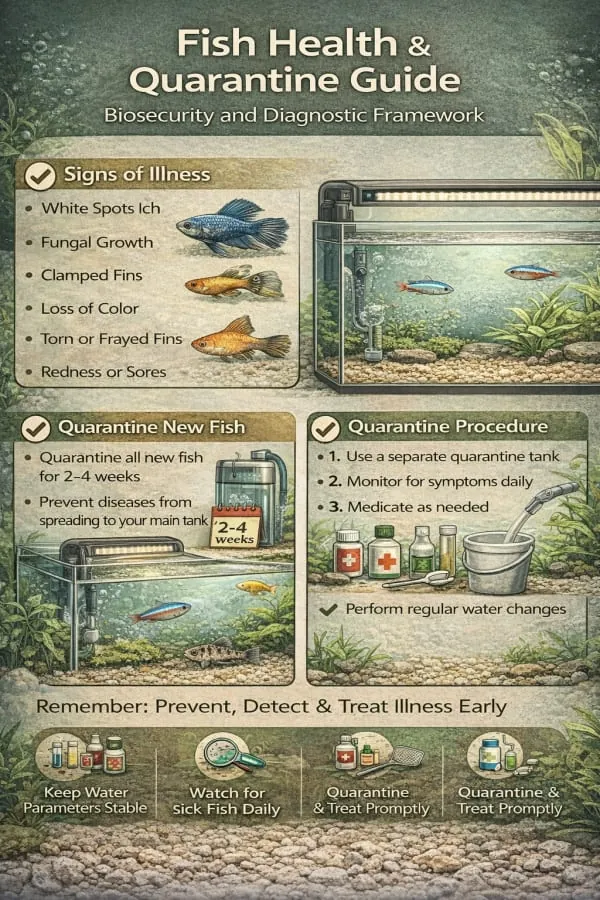
Quarantine new fish, spot the early warning signs, and treat disease without wrecking your tank. A practical freshwater fish health guide.

Acclimate new fish, shrimp, and coral safely: temperature floating, drip acclimation, plop-and-drop for shipped livestock, and the first 24 hours.
Keeping Redtail Catfish?
AquaLens identifies your fish and plants from a photo, tracks water chemistry, and flags health issues early — free on iOS and Android.