Rosy Barb Care Guide
Pethia conchonius · Freshwater Fish
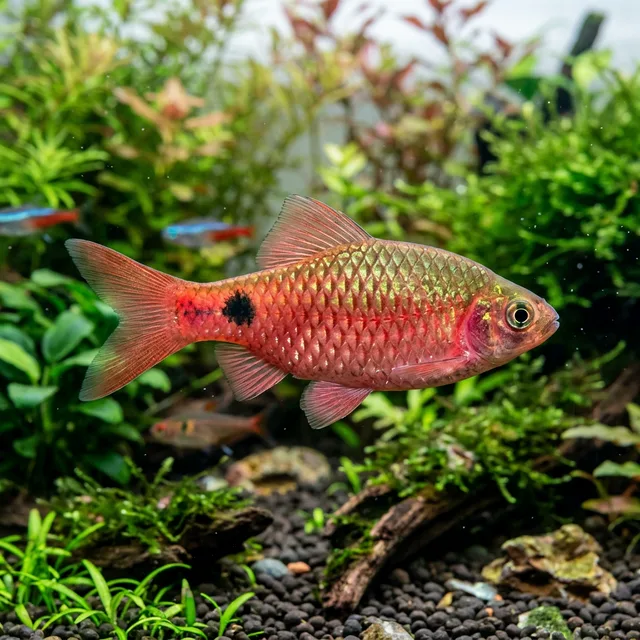
What Rosy Barb look like
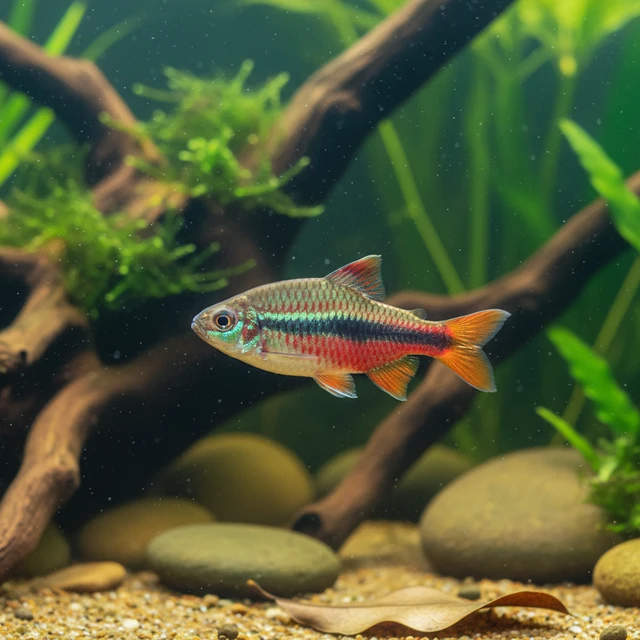
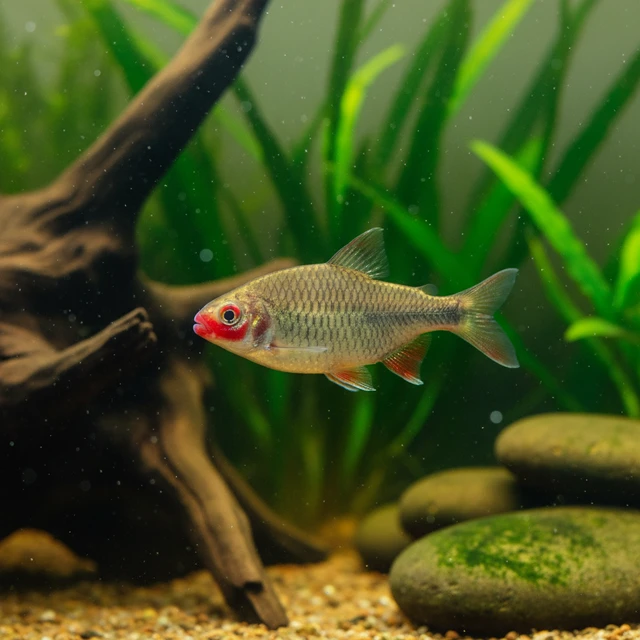
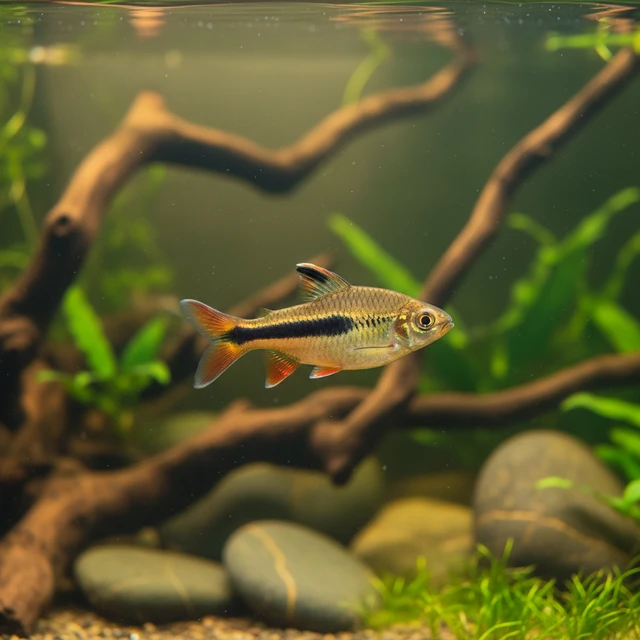
The Rosy Barb (Pethia conchonius) exhibits a fusiform body shape, characterized by a laterally compressed profile that facilitates agile swimming. Adults can reach a maximum length of approximately 5 inches (12.7 cm), with females generally being slightly larger and more rotund than males, particularly during the breeding season, showcasing sexual dimorphism. Their coloration is a striking blend of rosy pink to orange hues, particularly pronounced in males, which also display a more vibrant coloration during courtship. The species possesses a single dorsal fin located centrally on the body, along with an adipose fin, and a forked caudal fin that aids in propulsion. Notably, the Rosy Barb features a lateral line that runs along the side of the body, equipped with sensory cells that detect changes in water pressure and movement, enhancing their ability to navigate their environment. Their dentition consists of small, conical teeth adapted for an omnivorous diet, allowing them to efficiently graze on plant material and consume small invertebrates.
Behavior & temperament
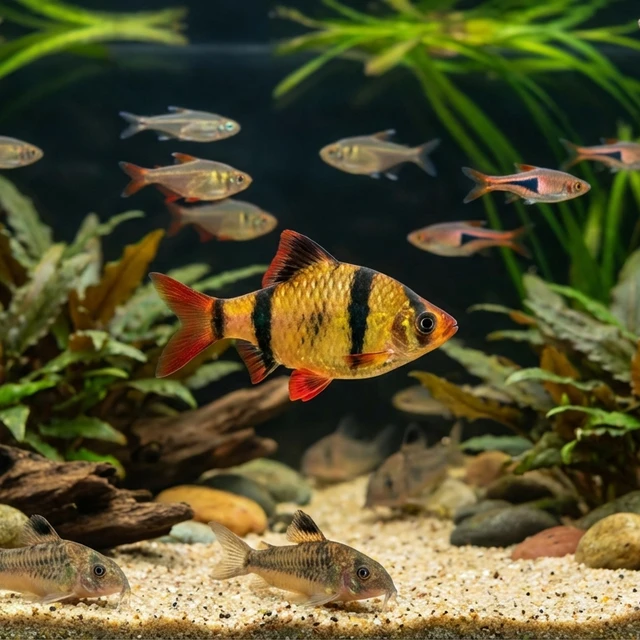
Rosy Barbs are social fish that thrive in groups, exhibiting a schooling behavior that enhances their safety from predators. They typically inhabit the mid to upper levels of the water column, where they are often seen darting playfully among aquatic vegetation. Their breeding behavior is characterized by egg scattering, where females release eggs onto the substrate, and males fertilize them externally. The species displays a generally peaceful temperament, although males can exhibit territorial aggression during breeding periods, particularly towards one another. In the presence of adequate space and hiding spots, they coexist harmoniously with other species, making them suitable for community aquariums.
Diet & feeding
In the wild, Rosy Barbs are omnivorous, feeding on a varied diet that includes algae, plant matter, and small invertebrates. In captivity, they thrive on a balanced diet of high-quality flake food, supplemented with live or frozen foods such as daphnia and brine shrimp, as well as blanched vegetables to ensure optimal health.
Behind the name
Pethia (derived from the Sanskrit word 'pethi', meaning 'small fish'); conchonius (from Latin 'conchonia', referring to the rosy coloration reminiscent of shells).
Plan your tank
Check the numbers before you buy: tank volume, a stocking plan, cycle progress, water changes, and your ongoing care routine.
Keep reading

Choose compatible fish: school sizes, swimming zones, aggression, temperature and hardness matching, and honest bioload math for a peaceful community.

Quarantine new fish, spot the early warning signs, and treat disease without wrecking your tank. A practical freshwater fish health guide.

Acclimate new fish, shrimp, and coral safely: temperature floating, drip acclimation, plop-and-drop for shipped livestock, and the first 24 hours.
Keeping Rosy Barb?
AquaLens identifies your fish and plants from a photo, tracks water chemistry, and flags health issues early — free on iOS and Android.