Pink Rotala Care Guide
Rotala rotundifolia · Freshwater Plant
What Pink Rotala look like
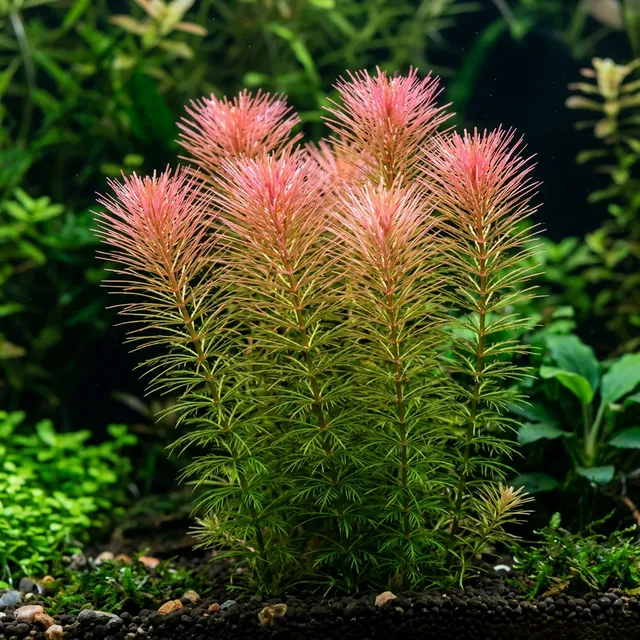
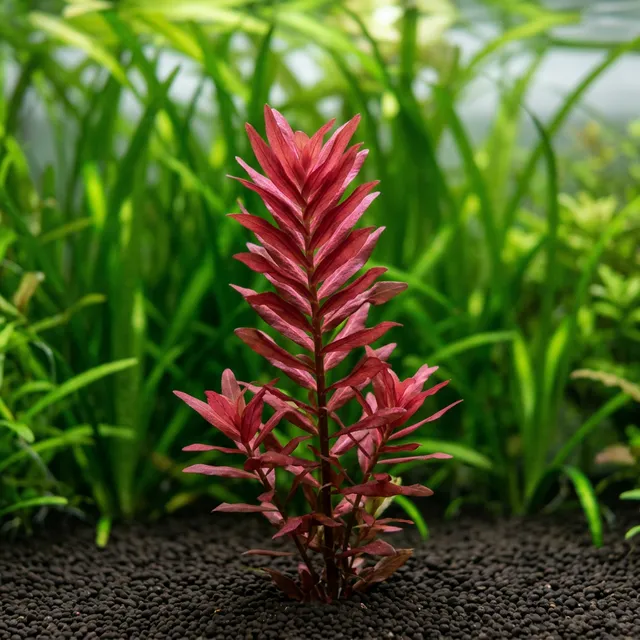
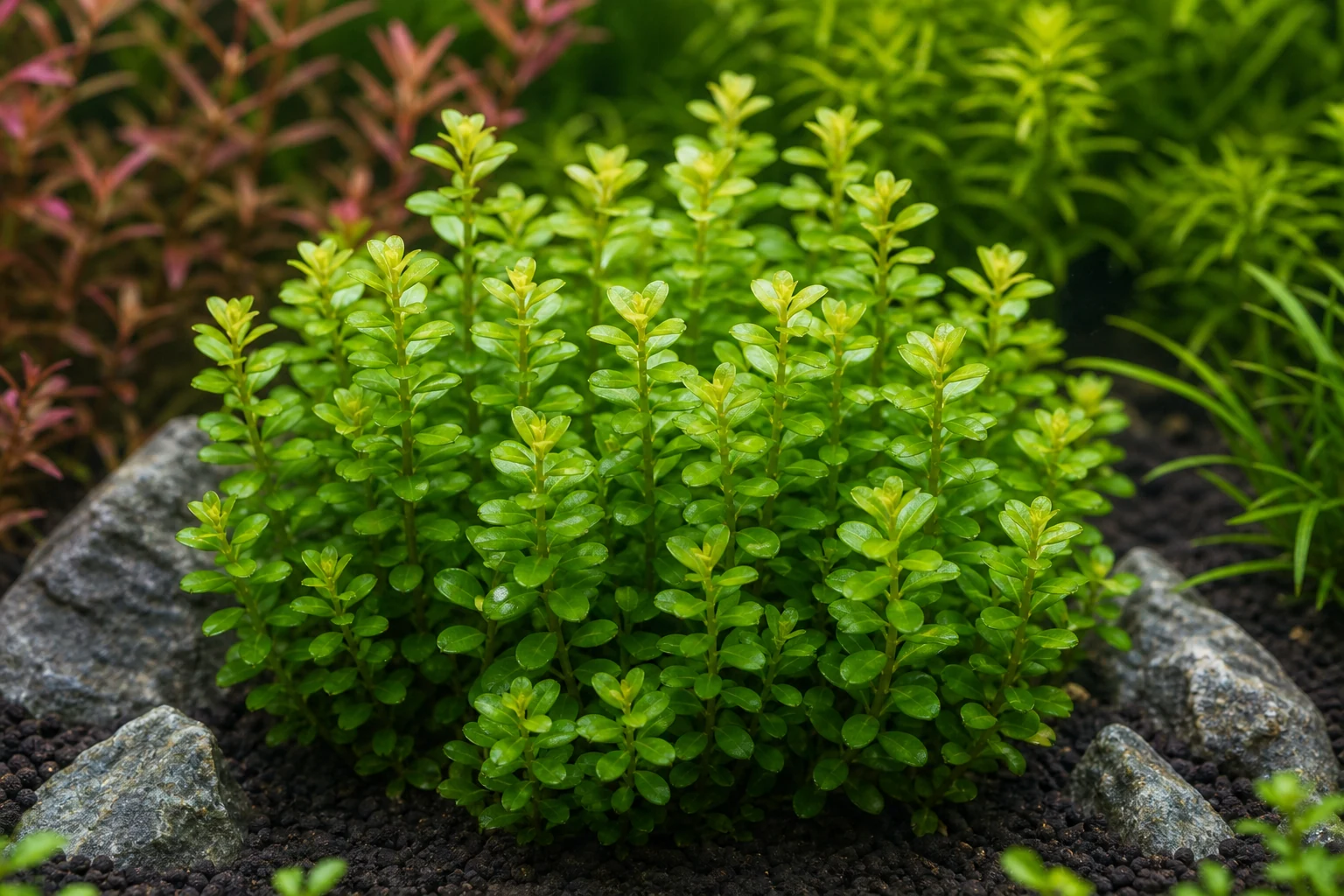
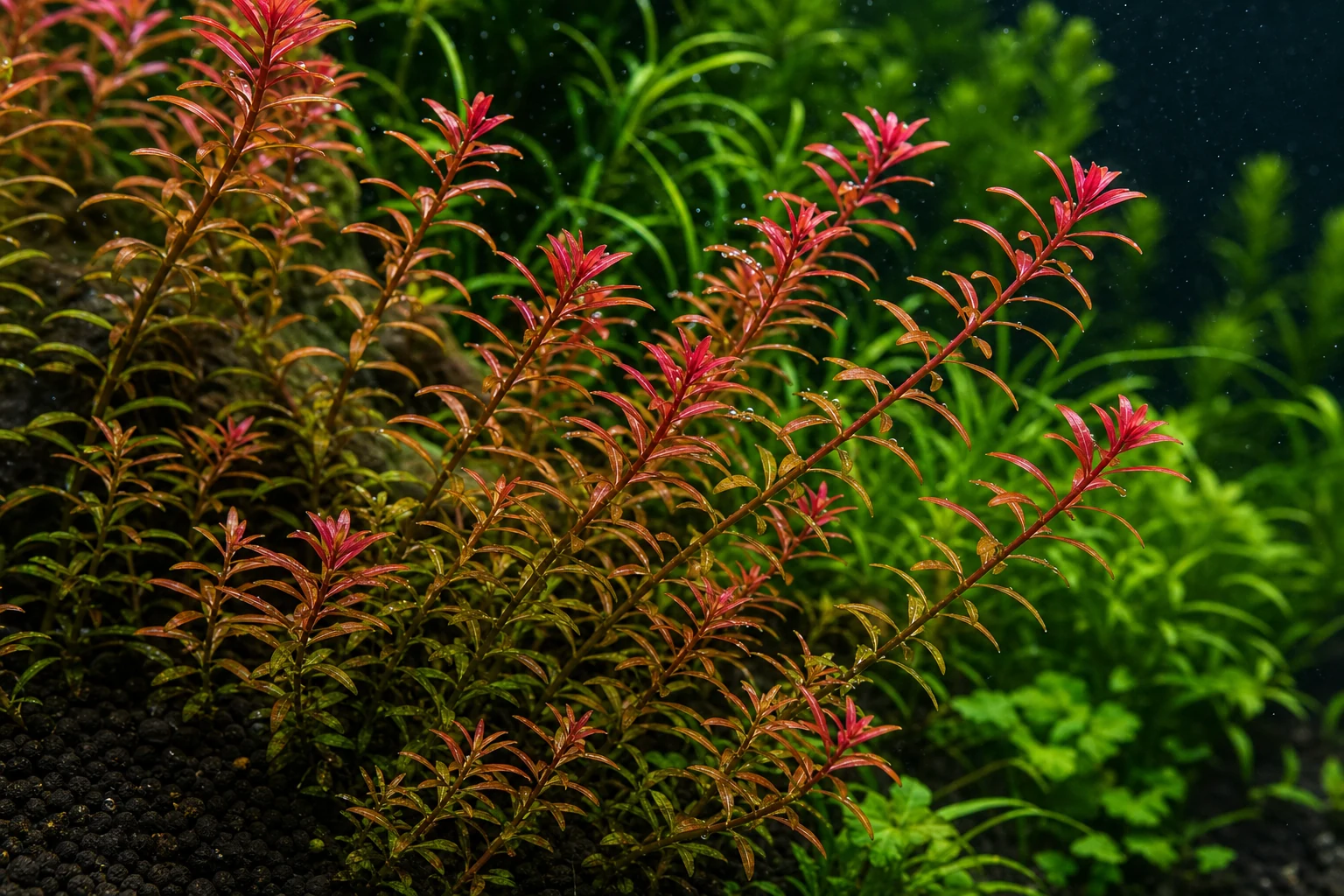
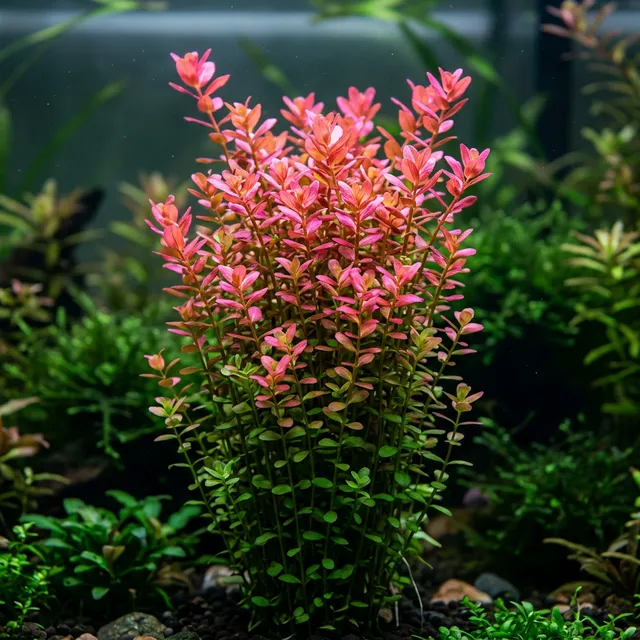
Rotala rotundifolia is a delicate, feathery stem plant characterized by its small, rounded leaves that are arranged in opposite pairs along slender, flexible stems. This species can reach a maximum height of approximately 10-15 inches under optimal conditions, with the upper portions of the plant exhibiting a striking transformation to vivid pink to reddish-orange hues when exposed to high light levels, while the lower segments remain a lush green. The leaves, measuring about 0.5 inches in length, are oval to round in shape, contributing to the plant's overall bushy appearance when regularly trimmed. The stems are thin and can grow significantly tall, creating dense bushy columns that enhance the aesthetic appeal of aquatic environments. Notably, this species lacks any significant defensive adaptations, relying instead on its rapid growth and dense foliage to outcompete other plants for light and space.
Behavior & temperament
In its natural habitat of Southeast Asia, Rotala rotundifolia typically dwells in shallow waters, often found in the upper water column where it can access ample sunlight for photosynthesis. It exhibits a clumping growth habit, which allows it to form dense colonies, providing shelter for small aquatic organisms. This species does not display hierarchical behavior, as it is primarily a solitary plant that thrives in groups without forming strict social structures. Its breeding behavior is not applicable in the traditional sense, as it reproduces vegetatively through stem cuttings rather than through seeds. The plant is generally non-aggressive and is suitable for community tanks, where it can coexist peacefully with a variety of fish and invertebrates.
Diet & feeding
Rotala rotundifolia is an obligate photosynthetic organism, relying on light to produce energy through photosynthesis. In captivity, it requires high light levels to maintain its vibrant coloration and healthy growth, along with nutrient-rich substrates or water column fertilizers to support its development.
Behind the name
Rotala (derived from Latin, meaning 'to rotate'); rotundifolia (from Latin, 'rotundus' meaning 'round' and 'folium' meaning 'leaf', referring to the rounded leaves of the plant).
Plan your tank
Check the numbers before you buy: tank volume, a stocking plan, cycle progress, water changes, and your ongoing care routine.
Keep reading
Diagnose aquarium plant deficiencies by leaf age and symptom: yellowing, pinholes, twisting, and stunting. Read the pattern, then fix it safely.

PAR-first planted tank lighting: choose intensity by what you grow, set photoperiod and spectrum, kill shadows, and hold algae back without overspending.

Aquarium CO₂ injection made safe: how carbon, light, and nutrients balance, which system to buy, and how to dial it in without gassing your fish.
Keeping Pink Rotala?
AquaLens identifies your fish and plants from a photo, tracks water chemistry, and flags health issues early — free on iOS and Android.