Whorly Rotala Care Guide
Rotala wallichii · Freshwater Plant
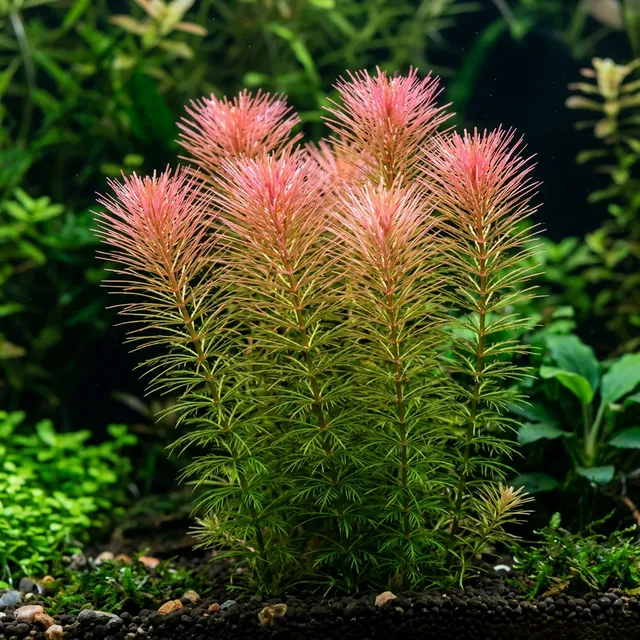
What Whorly Rotala look like
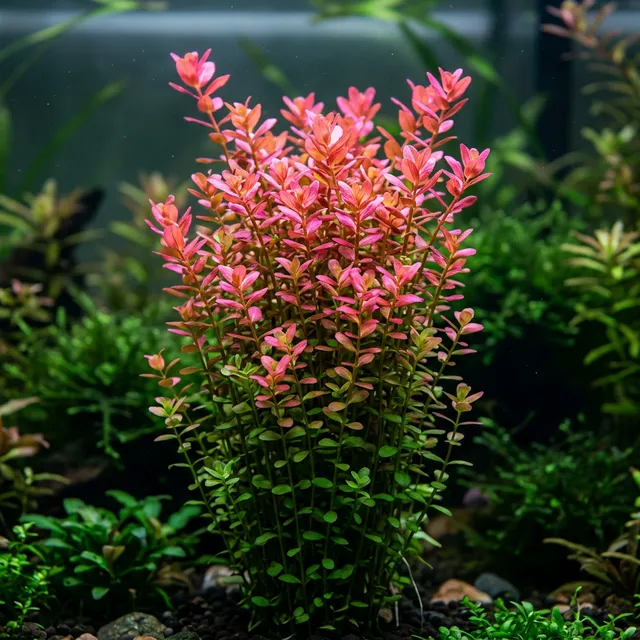
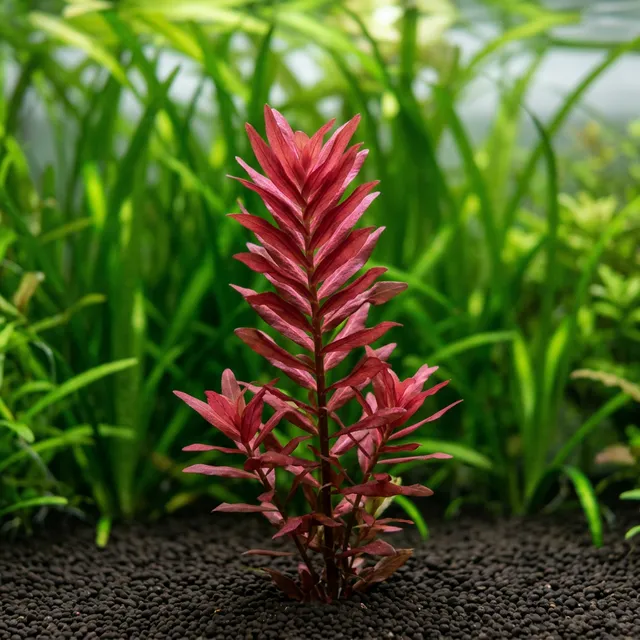
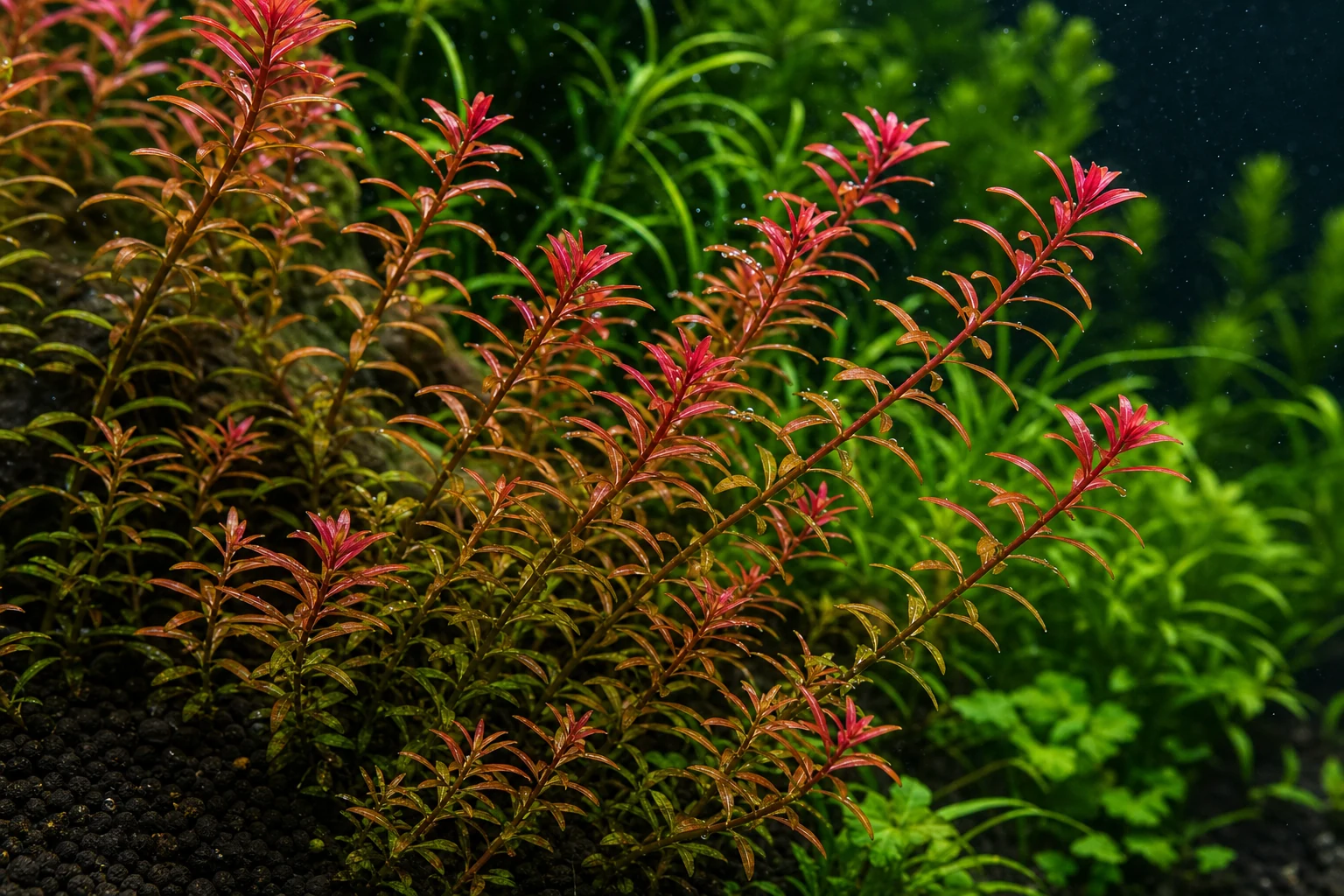
Rotala wallichii, commonly known as Whorly Rotala, exhibits a distinctive morphology characterized by its slender, needle-like leaves that are arranged in whorls around the stem, resembling a bottlebrush. This aquatic plant can reach a maximum height of 1 to 6 feet, depending on the conditions of its environment. The leaves are highly delicate and feathery, contributing to its unique texture, which is unlike that of other aquatic flora. Under optimal lighting conditions, the tips of the leaves can develop vibrant hues of pink to reddish-orange, while the basal portions maintain a lush green coloration. The stems are typically erect and can grow in tight vertical columns, providing a striking visual element in aquascapes. Notably, this species lacks any significant defensive adaptations, relying instead on its rapid growth and aesthetic appeal to deter herbivory.
Behavior & temperament
In its natural habitat, Rotala wallichii is typically found in shallow waters where it thrives in a benthic environment, often forming dense stands. It does not exhibit a social hierarchy as it is a solitary plant species; however, it can be found in clusters that create a visually appealing aquatic landscape. The plant is primarily rooted in substrate but can extend its growth towards the water surface, adapting to varying light conditions. Rotala wallichii reproduces through vegetative propagation, producing new shoots from the base of the plant, and does not engage in traditional breeding behaviors such as flowering in the aquarium setting. This species is generally non-aggressive, making it suitable for community tanks, but it requires careful management to prevent overgrowth.
Diet & feeding
Rotala wallichii is a photosynthetic plant that relies on light and carbon dioxide for its nutritional needs. In captivity, it thrives best with high-quality lighting and may benefit from additional CO2 supplementation to enhance growth and coloration.
Behind the name
The genus name 'Rotala' is derived from the Latin 'rotalis', meaning 'wheel-like', referring to the whorled arrangement of leaves, while the species name 'wallichii' honors the botanist Nathaniel Wallich.
Plan your tank
Check the numbers before you buy: tank volume, a stocking plan, cycle progress, water changes, and your ongoing care routine.
Keep reading
Diagnose aquarium plant deficiencies by leaf age and symptom: yellowing, pinholes, twisting, and stunting. Read the pattern, then fix it safely.

PAR-first planted tank lighting: choose intensity by what you grow, set photoperiod and spectrum, kill shadows, and hold algae back without overspending.

Aquarium CO₂ injection made safe: how carbon, light, and nutrients balance, which system to buy, and how to dial it in without gassing your fish.
Keeping Whorly Rotala?
AquaLens identifies your fish and plants from a photo, tracks water chemistry, and flags health issues early — free on iOS and Android.