Shadow Panda Shrimp Care Guide
Caridina cantonensis var. Shadow Panda · Freshwater Invert
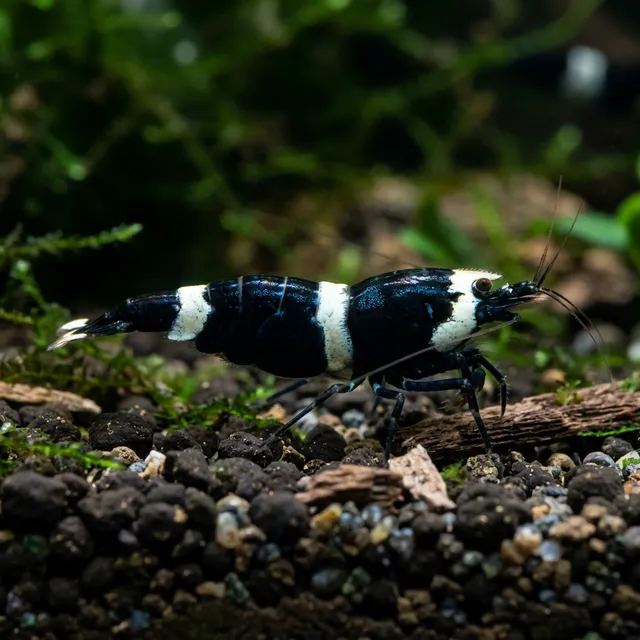
What Shadow Panda Shrimp look like
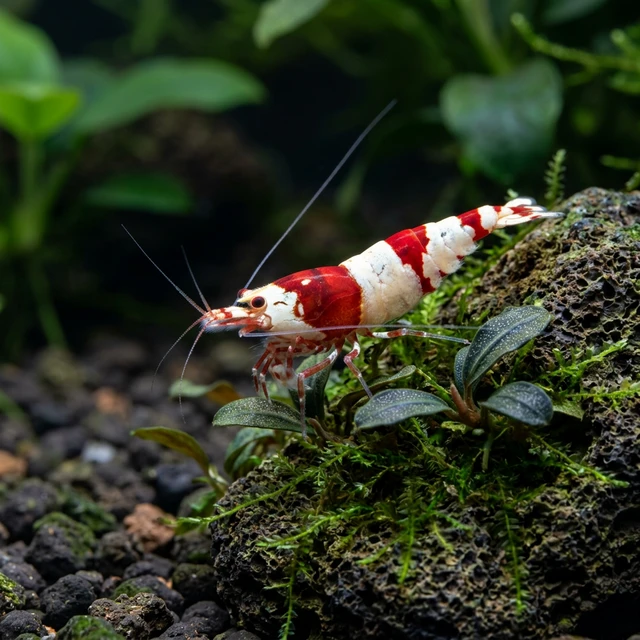
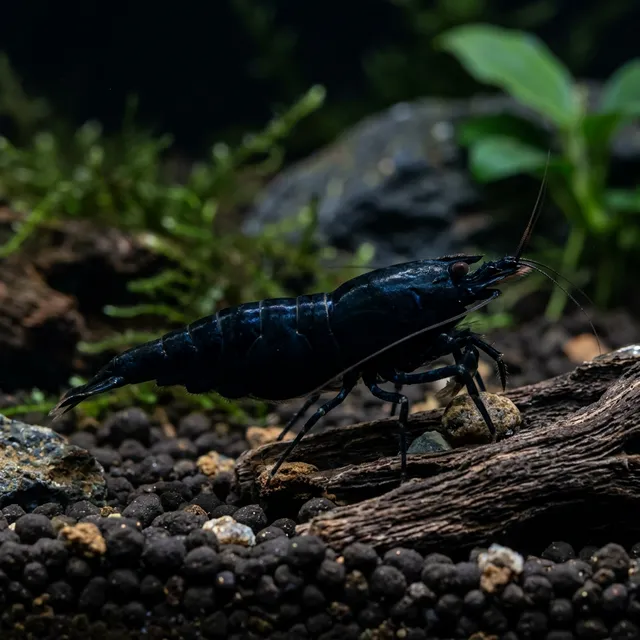
The Shadow Panda Shrimp (Caridina cantonensis var. Shadow Panda) exhibits a strikingly unique morphology characterized by a compact, laterally compressed body that typically reaches a maximum adult size of approximately 1 inch (2.5 cm). This rare variant showcases a deep jet-black exoskeleton, which is interspersed with bold, opaque white patches that create a distinctive panda-like pattern. The black coloration is notably more intense and opaque compared to the standard Crystal Black variant, while the white areas are thick and solid, prominently displayed on the cephalothorax and along the midsection. The body may also exhibit a subtle blue-black iridescence under certain lighting conditions. The shrimp's appendages, including its legs and antennae, are predominantly dark, enhancing the overall contrast of its appearance. Defensive adaptations include the ability to blend into dark substrates, and the presence of a robust carapace that provides protection from predators. Notably, the Shadow Panda Shrimp lacks the typical red coloration found in other variants, which serves to differentiate it from potential mimics in its habitat.
Behavior & temperament
In terms of ethology, the Shadow Panda Shrimp is primarily a benthic organism, often found dwelling among leaf litter and substrate in freshwater environments. It exhibits a social structure that allows for small groups, though it is not an obligate schooler; individuals may be seen foraging alone or in pairs. The shrimp displays a relatively peaceful temperament, but can exhibit territorial behavior, particularly during breeding periods. Breeding occurs through a process of egg scattering, where females release fertilized eggs into the water column, which then adhere to surfaces in the environment. The Shadow Panda Shrimp is known for its active foraging behavior, utilizing its chelae to sift through substrate for detritus and biofilm.
Diet & feeding
In the wild, the Shadow Panda Shrimp is an omnivore, feeding on biofilm, detritus, and small microorganisms. In captivity, it requires a varied diet that includes high-quality algae wafers, finely crushed pellets, and occasional live or frozen foods such as daphnia or brine shrimp to ensure optimal health and coloration.
Behind the name
The genus name 'Caridina' is derived from the Latin 'caris', meaning 'shrimp', while 'cantonensis' refers to its origin near Canton (Guangzhou) in China. The variety name 'Shadow Panda' reflects its distinctive coloration and pattern reminiscent of a panda.
Plan your tank
Check the numbers before you buy: tank volume, a stocking plan, cycle progress, water changes, and your ongoing care routine.
Keep reading

Choose compatible fish: school sizes, swimming zones, aggression, temperature and hardness matching, and honest bioload math for a peaceful community.
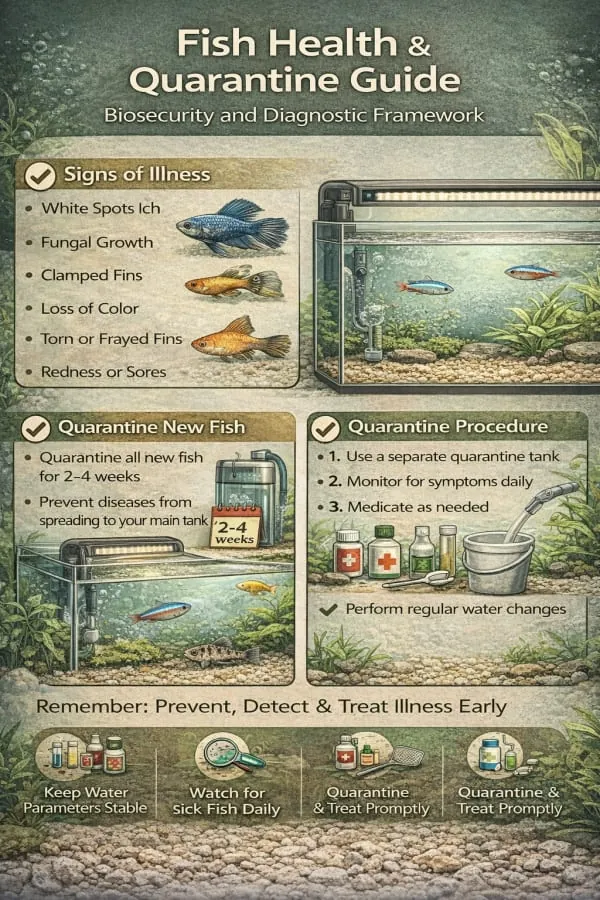
Quarantine new fish, spot the early warning signs, and treat disease without wrecking your tank. A practical freshwater fish health guide.
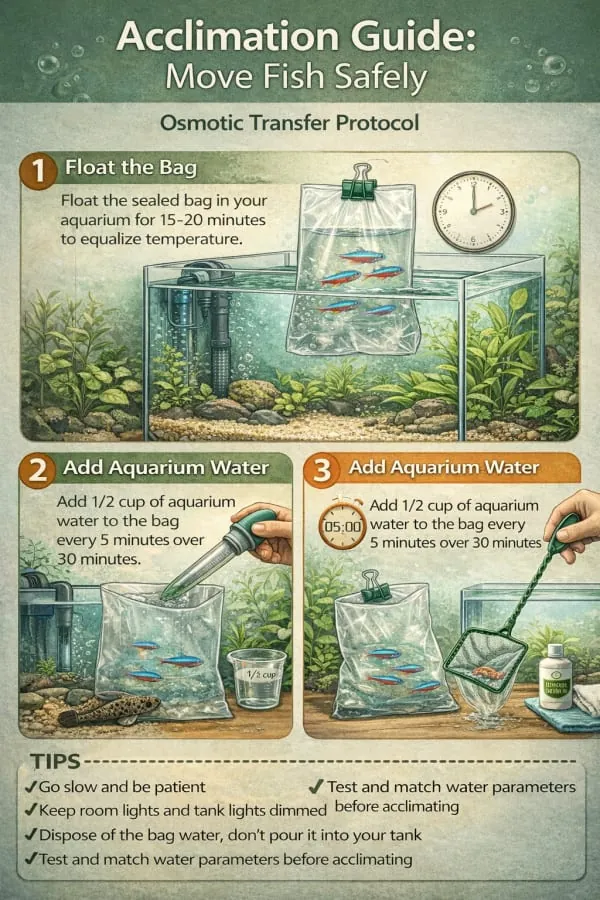
Acclimate new fish, shrimp, and coral safely: temperature floating, drip acclimation, plop-and-drop for shipped livestock, and the first 24 hours.
Keeping Shadow Panda Shrimp?
AquaLens identifies your fish and plants from a photo, tracks water chemistry, and flags health issues early — free on iOS and Android.