Texas Cichlid Care Guide
Herichthys cyanoguttatus · Freshwater Fish
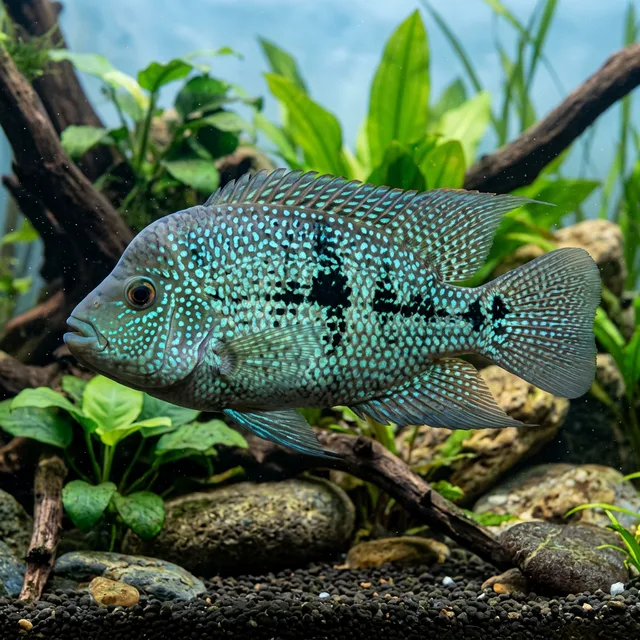
What Texas Cichlid look like
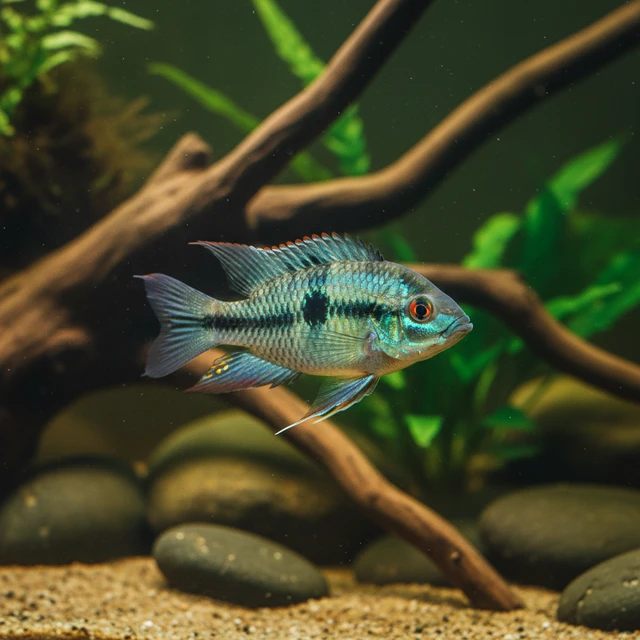
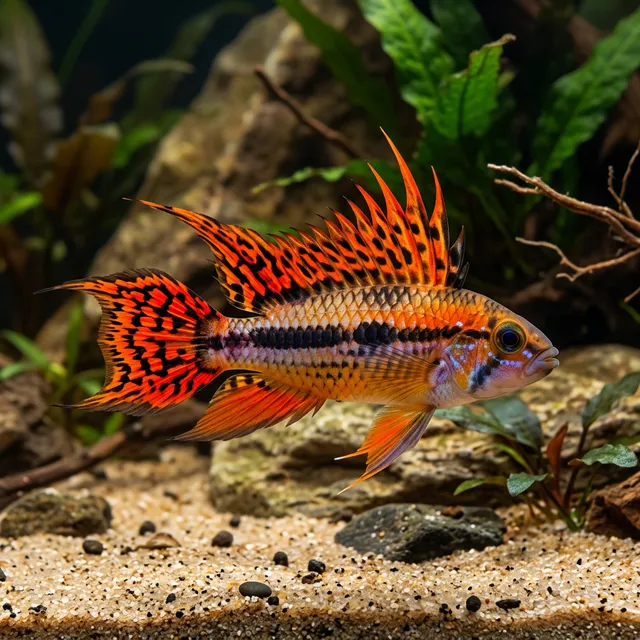
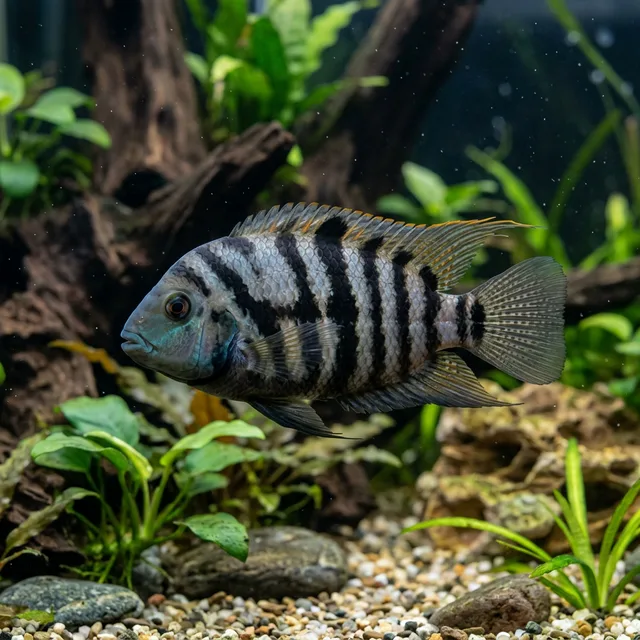
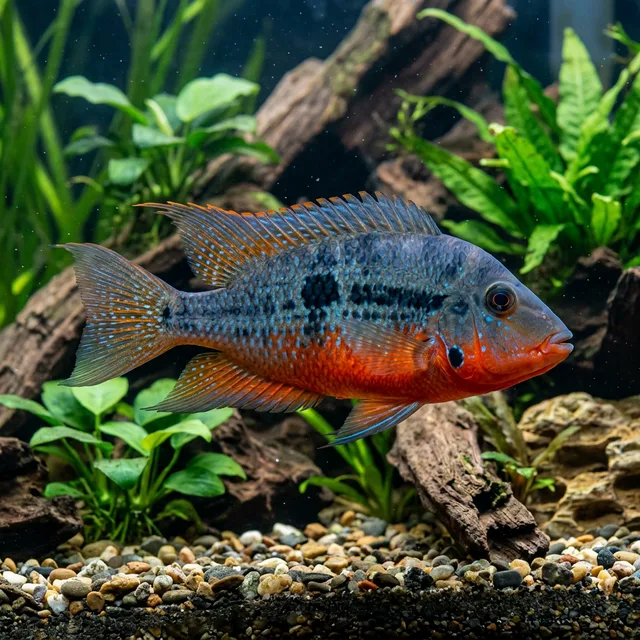
The Texas Cichlid (Herichthys cyanoguttatus) exhibits a robust, laterally compressed body that can reach a maximum adult size of 15 inches (38 cm), although individuals typically range from 5 to 10 inches (13 to 25 cm). This species displays sexual dimorphism, with males generally being larger and possessing more pronounced nuchal humps compared to females. The coloration is striking, featuring a base hue of olive-green to brown, adorned with vibrant blue or turquoise spots that are particularly pronounced in breeding males. Unique morphological features include a prominent dorsal fin that extends along the length of the body, an adipose fin, and a well-defined lateral line system that aids in sensory perception. Defensive adaptations include a robust set of pharyngeal teeth, which are effective for crushing prey and deterring potential threats, as well as a tendency to exhibit territorial behavior during breeding periods.
Behavior & temperament
Texas Cichlids are generally territorial and can exhibit aggressive behavior, particularly during breeding seasons when they become highly protective of their nesting sites. They are not obligate schoolers and can be found either solitary or in loose groups, depending on environmental conditions. These fish typically inhabit the mid to lower water column, favoring rocky substrates in their native habitats. Breeding behavior involves the construction of nests in crevices, where females scatter eggs that are subsequently guarded by both parents, showcasing a biparental care strategy. Their temperament can vary, with individuals displaying varying levels of aggression based on tank mates and environmental stressors.
Diet & feeding
In the wild, Texas Cichlids are omnivorous, feeding on a varied diet that includes insects, crustaceans, and plant matter. In captivity, they require a balanced diet consisting of high-quality pellets, frozen or live foods, and occasional vegetable matter to meet their nutritional needs.
Behind the name
Herichthys (from Greek 'heri' meaning 'of the river' and 'chthys' meaning 'fish'); cyanoguttatus (from Greek 'kyanos' meaning 'blue' and 'guttatus' meaning 'spotted').
Plan your tank
Check the numbers before you buy: tank volume, a stocking plan, cycle progress, water changes, and your ongoing care routine.
Keep reading
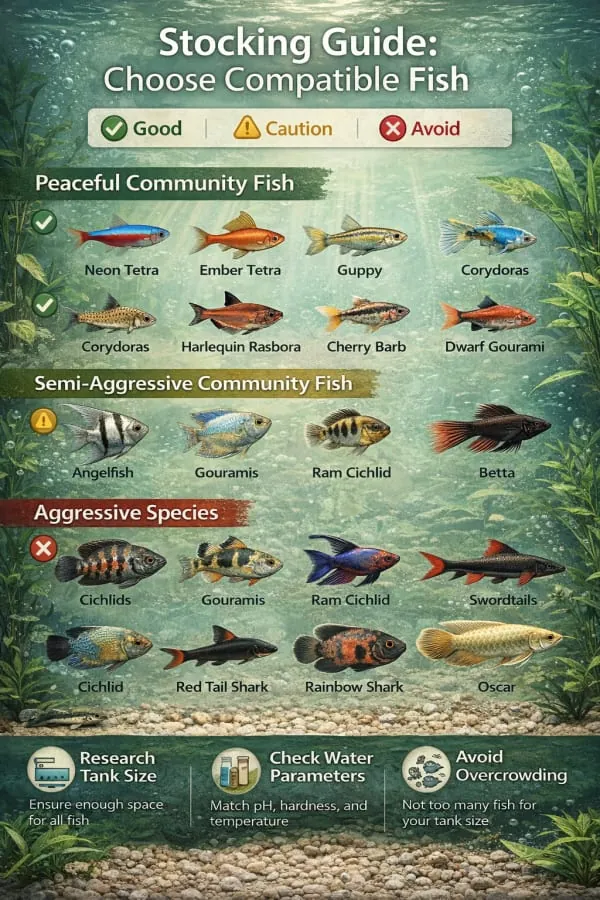
Choose compatible fish: school sizes, swimming zones, aggression, temperature and hardness matching, and honest bioload math for a peaceful community.
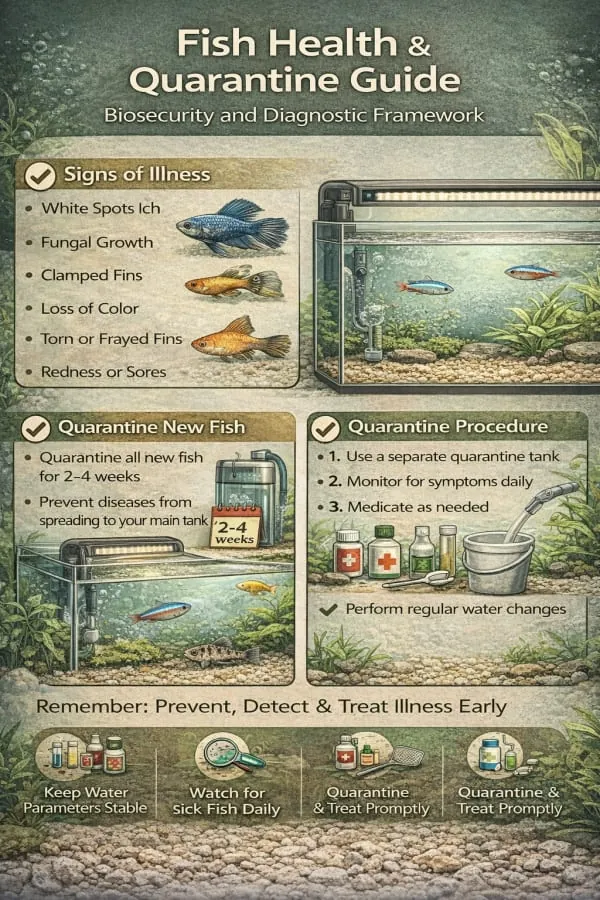
Quarantine new fish, spot the early warning signs, and treat disease without wrecking your tank. A practical freshwater fish health guide.
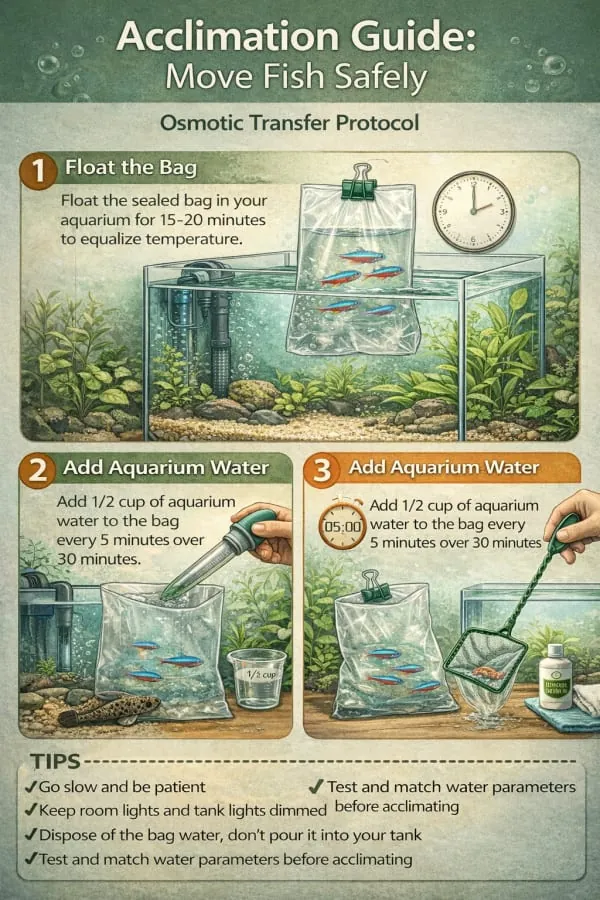
Acclimate new fish, shrimp, and coral safely: temperature floating, drip acclimation, plop-and-drop for shipped livestock, and the first 24 hours.
Keeping Texas Cichlid?
AquaLens identifies your fish and plants from a photo, tracks water chemistry, and flags health issues early — free on iOS and Android.