Tiger Shrimp Care Guide
Caridina mariae · Freshwater Invert
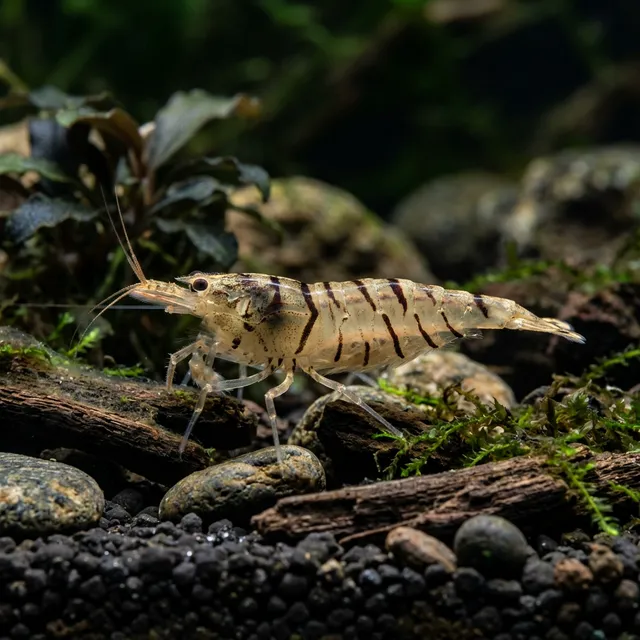
What Tiger Shrimp look like
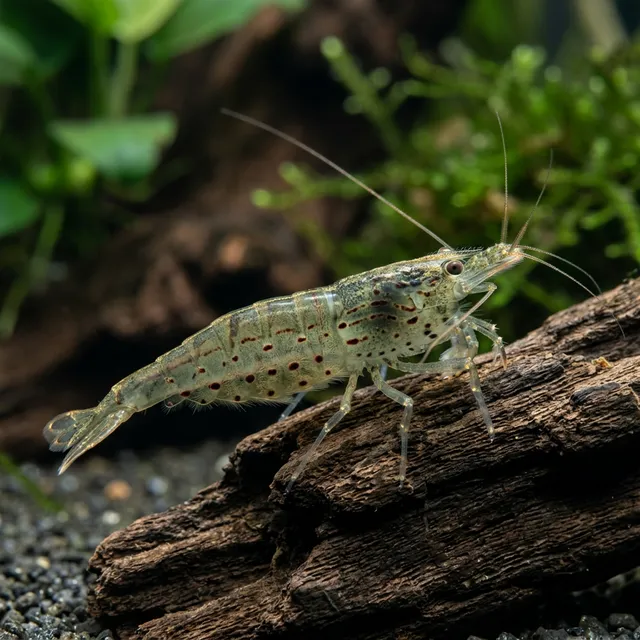
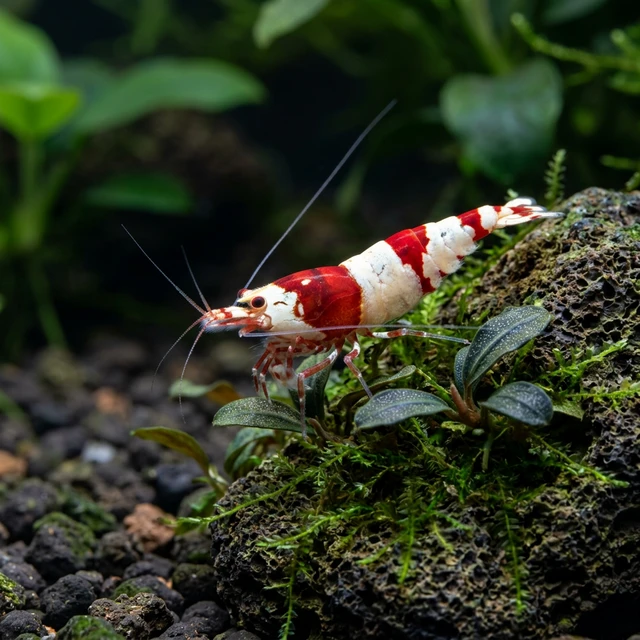
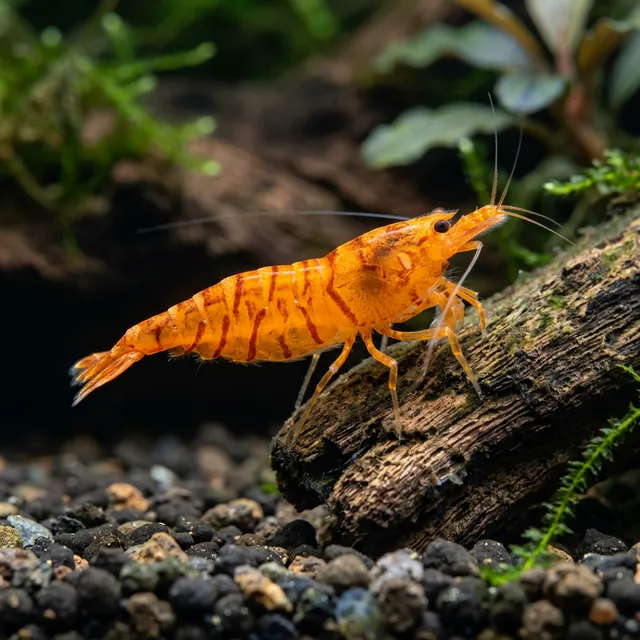
Caridina mariae, commonly known as the Tiger Shrimp, exhibits a transparent to tan exoskeleton adorned with 5 to 7 distinct, thin, dark brown to black vertical stripes that traverse its dorsal surface, providing effective camouflage among aquatic vegetation. This species typically reaches a maximum adult size of approximately 1 to 6 inches (2.5 to 15 cm), with females generally being larger than males, showcasing sexual dimorphism. The shrimp's body is laterally compressed, facilitating agile movement through its habitat. Notable morphological features include a well-developed rostrum, which aids in foraging, and a pair of prominent antennae that enhance sensory perception. The presence of a well-defined carapace and segmented abdomen, along with a fan-like tail (telson) and pleopods, contribute to its swimming capabilities. Defensive adaptations include the ability to blend into its environment and the potential for rapid retreat into crevices when threatened.
Behavior & temperament
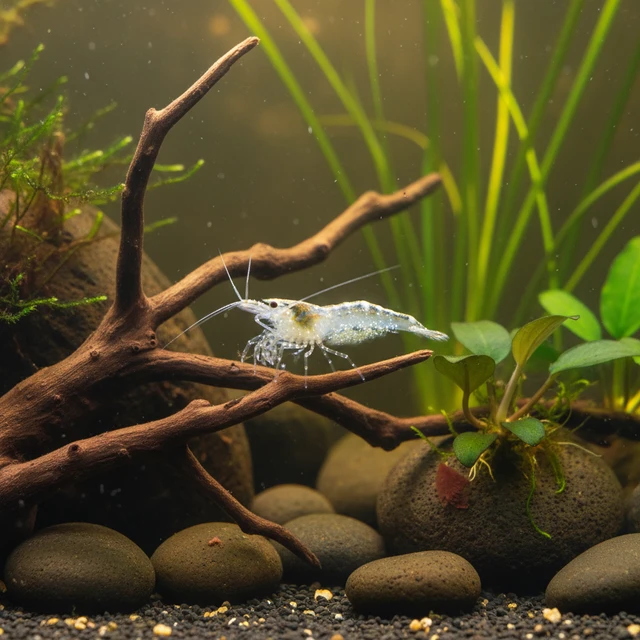
Tiger Shrimp are primarily found in freshwater environments, exhibiting a benthic lifestyle where they dwell on or near the substrate. They are generally social creatures, often forming loose aggregations, but can also display solitary behavior depending on environmental conditions. Their temperament is typically peaceful, although they may exhibit mild territoriality during breeding periods. Breeding behavior involves females releasing eggs into the water column, where they are fertilized externally, making them egg scatterers. This species is known for its active foraging behavior, scavenging for detritus and organic matter, and can often be seen sifting through substrate in search of food.
Diet & feeding
In the wild, Caridina mariae is an omnivore, feeding on algae, detritus, and small organic particles. In captivity, they require a varied diet that includes high-quality flake foods, algae wafers, and occasional protein sources such as blanched vegetables or specialized shrimp pellets.
Behind the name
Caridina (from Greek 'karis', meaning shrimp; 'ida', a diminutive suffix) and mariae (named in honor of a person, possibly a reference to a researcher or contributor in the field).
Plan your tank
Check the numbers before you buy: tank volume, a stocking plan, cycle progress, water changes, and your ongoing care routine.
Keep reading

Choose compatible fish: school sizes, swimming zones, aggression, temperature and hardness matching, and honest bioload math for a peaceful community.

Quarantine new fish, spot the early warning signs, and treat disease without wrecking your tank. A practical freshwater fish health guide.

Acclimate new fish, shrimp, and coral safely: temperature floating, drip acclimation, plop-and-drop for shipped livestock, and the first 24 hours.
Keeping Tiger Shrimp?
AquaLens identifies your fish and plants from a photo, tracks water chemistry, and flags health issues early — free on iOS and Android.