Tire Track Eel Care Guide
Mastacembelus armatus · Freshwater Fish
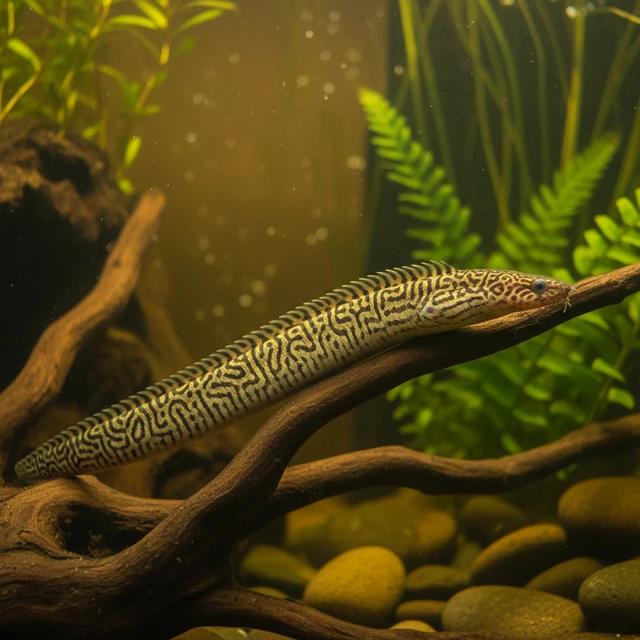
What Tire Track Eel look like
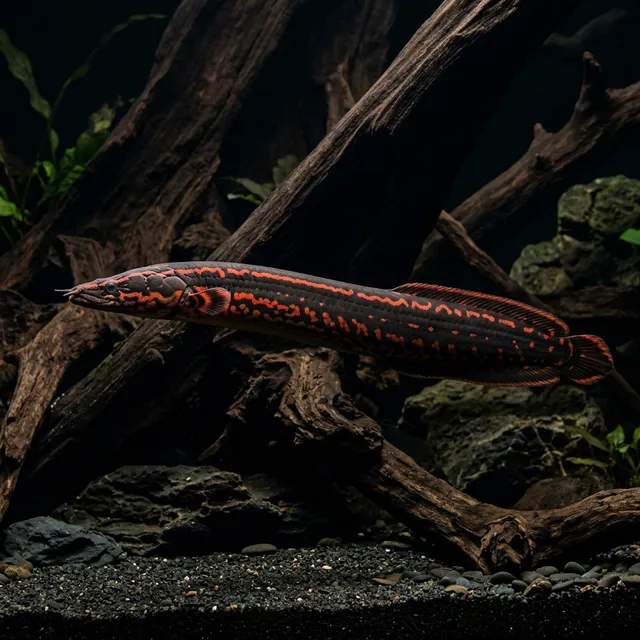
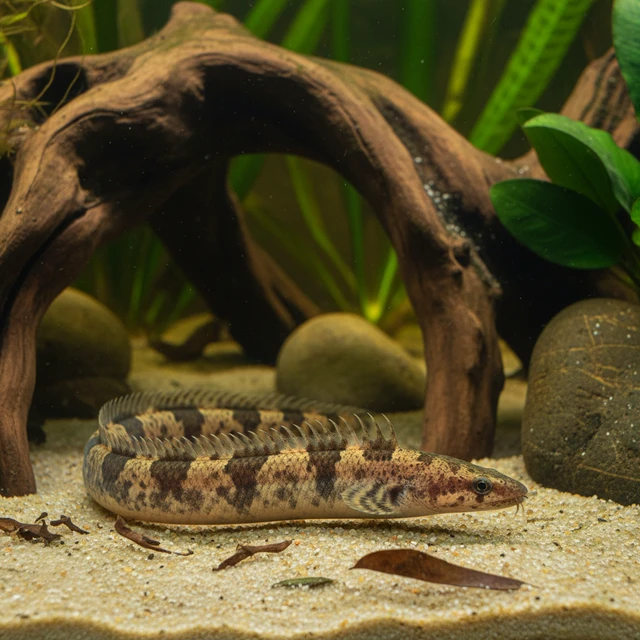
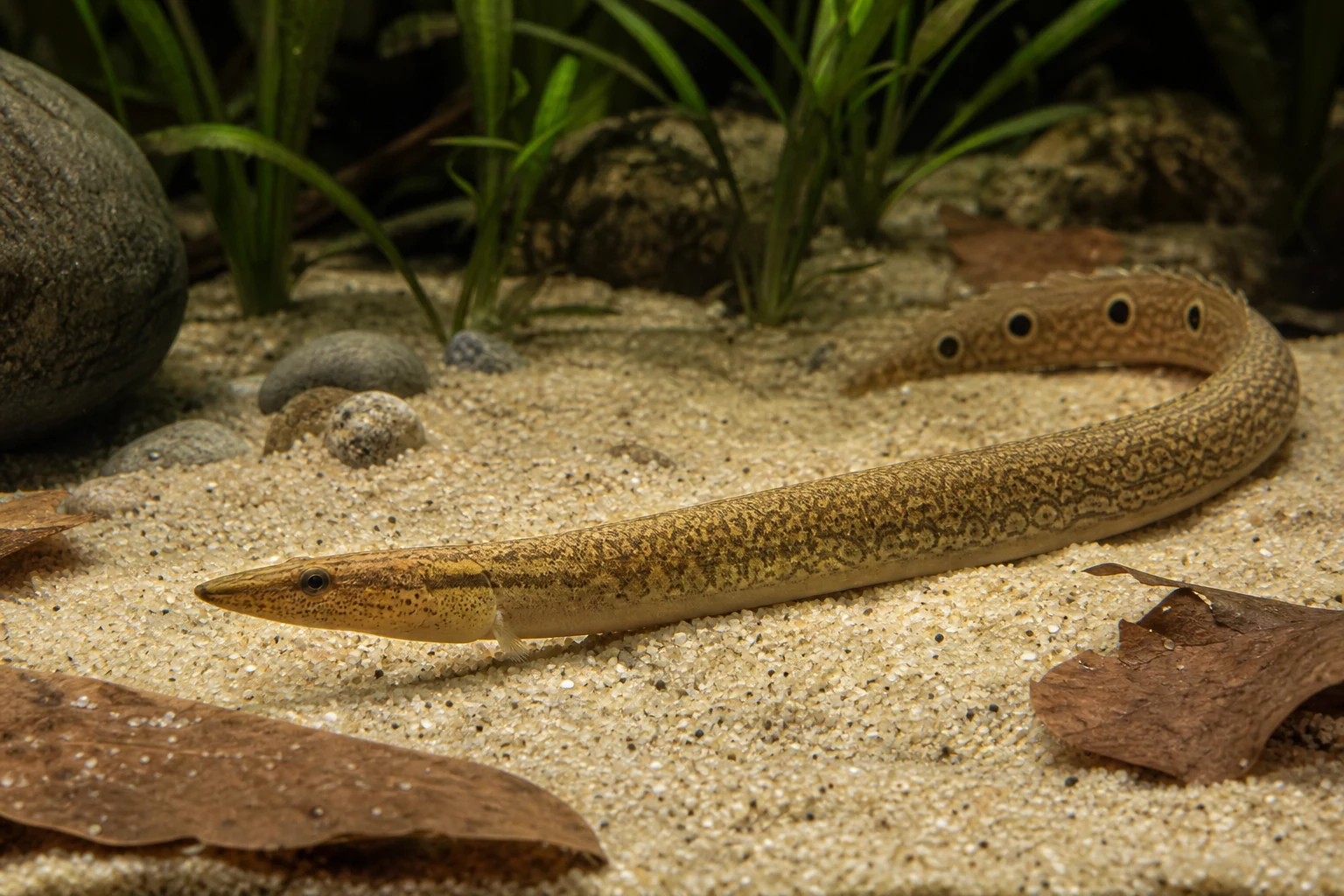
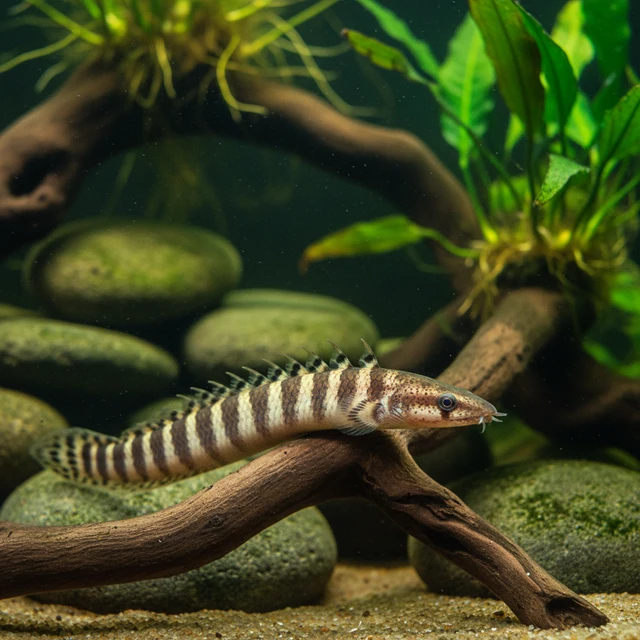
The Tire Track Eel (Mastacembelus armatus) exhibits a distinctive elongated, serpentine body that can reach a maximum adult size of 15 inches (38 cm). Its morphology is characterized by a highly mobile, pointed snout that tapers to a fine point, facilitating its predatory lifestyle. The body is adorned with a striking pattern of dark brown zig-zag lines against a lighter brown background, reminiscent of muddy tire tracks, which provides effective camouflage in its natural habitat. This species lacks traditional dorsal and anal fins, instead possessing a continuous fin that runs along the length of its body, contributing to its streamlined shape. The lateral line system is well-developed, aiding in the detection of vibrations in the water, essential for its hunting strategy. Sexual dimorphism is subtle, with females generally being slightly larger and rounder during breeding periods, while males may exhibit more pronounced coloration.
Behavior & temperament
Mastacembelus armatus is primarily a solitary and territorial species, often found in the benthic zone of slow-moving rivers and swamps. It prefers to dwell near submerged structures such as logs and rocks, where it can ambush prey. This species is known for its cryptic behavior, often remaining motionless for extended periods before striking at passing prey. During breeding, Tire Track Eels exhibit egg-scattering behavior, with females laying adhesive eggs on submerged surfaces. The temperament of this species can be described as moderately aggressive, particularly towards conspecifics and smaller tank mates, making careful selection of tank companions essential for a harmonious aquarium environment.
Diet & feeding
In the wild, the Tire Track Eel is a carnivorous predator, primarily feeding on small fish, invertebrates, and crustaceans. In captivity, it requires a diet rich in protein, including high-quality pellets, frozen or live foods such as bloodworms, brine shrimp, and earthworms to thrive.
Behind the name
Mastacembelus (from Greek mastax, meaning 'jaw' and embelos, meaning 'thrusting') refers to the structure of the jaw, while armatus (from Latin armatus, meaning 'armed') likely refers to its defensive adaptations and predatory nature.
Plan your tank
Check the numbers before you buy: tank volume, a stocking plan, cycle progress, water changes, and your ongoing care routine.
Keep reading

Choose compatible fish: school sizes, swimming zones, aggression, temperature and hardness matching, and honest bioload math for a peaceful community.

Quarantine new fish, spot the early warning signs, and treat disease without wrecking your tank. A practical freshwater fish health guide.

Acclimate new fish, shrimp, and coral safely: temperature floating, drip acclimation, plop-and-drop for shipped livestock, and the first 24 hours.
Keeping Tire Track Eel?
AquaLens identifies your fish and plants from a photo, tracks water chemistry, and flags health issues early — free on iOS and Android.