Uaru Care Guide
Uaru amphiacanthoides · Freshwater Fish
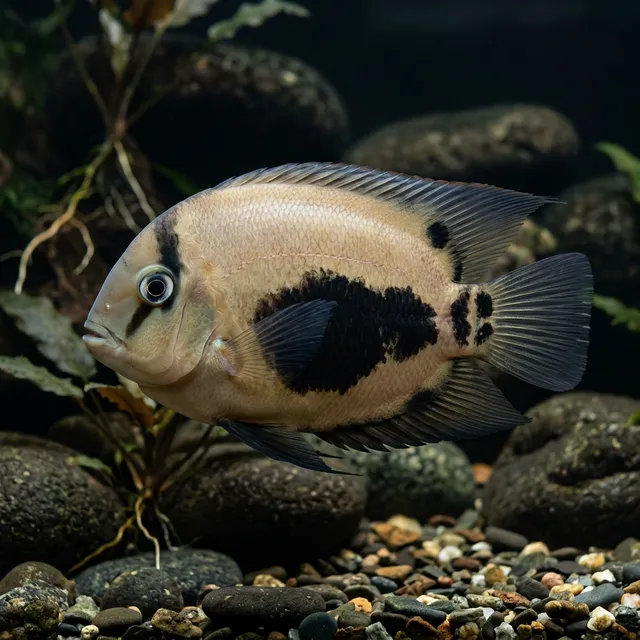
What Uaru look like
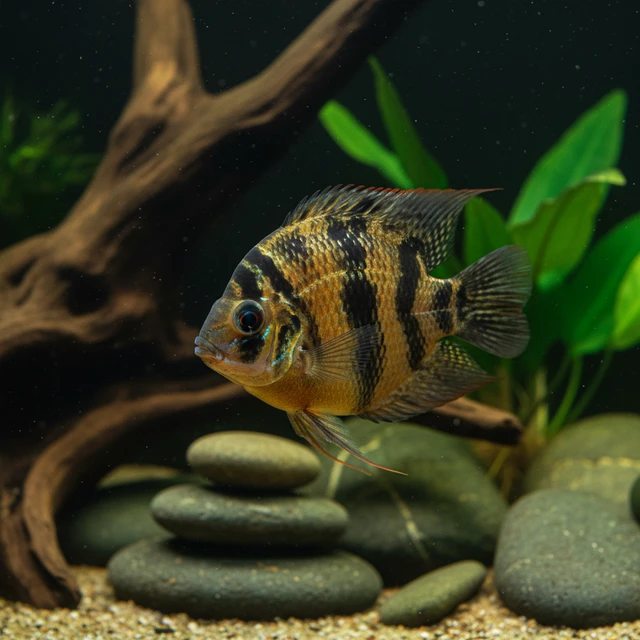
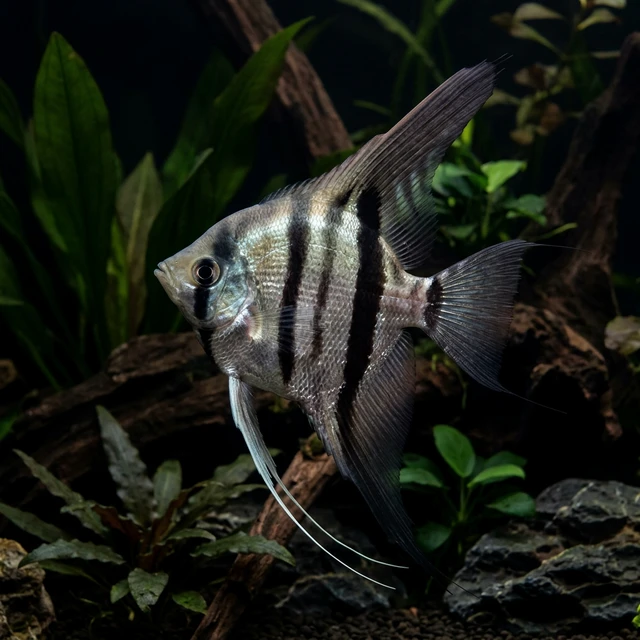
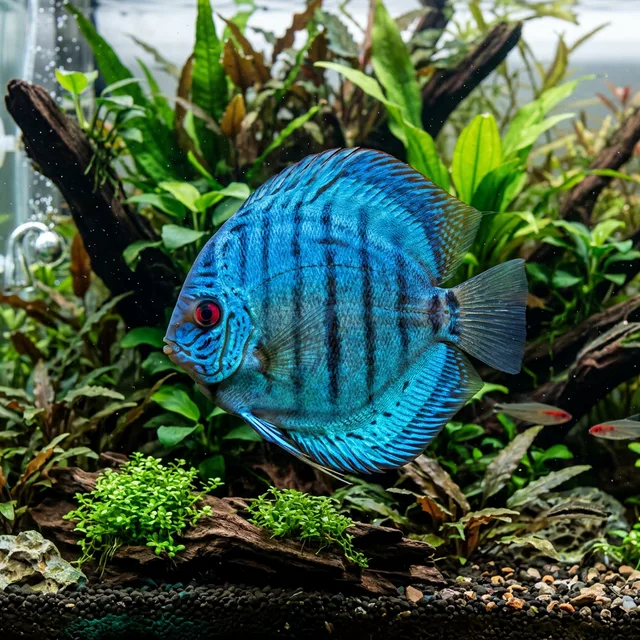
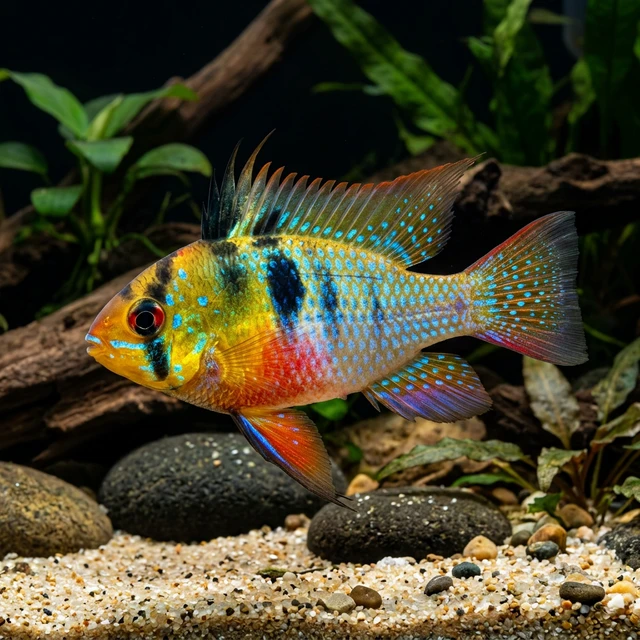
Uaru amphiacanthoides exhibits a distinctive deep, disc-like, oval body shape, reminiscent of a massive discus, with a maximum adult size ranging from 2 to 10 inches. The coloration is primarily a pale creamy-tan, which is strikingly contrasted by a prominent, dark black wedge or teardrop-shaped blotch located on the lower rear flank, serving as a key identification feature. This species possesses a laterally compressed body, which aids in maneuverability within its natural habitat. Sexual dimorphism is subtle, with males typically exhibiting slightly larger sizes and more pronounced coloration during breeding displays. Defensive adaptations include a robust body structure and the ability to blend into its environment, while the presence of an adipose fin and a well-developed lateral line system enhances sensory perception in its murky Amazonian waters.
Behavior & temperament
Uaru amphiacanthoides is generally a peaceful species, often found in small groups, though it can exhibit solitary behavior when establishing territory. This cichlid primarily inhabits the mid to lower water column, favoring areas with dense aquatic vegetation. Breeding behavior involves the laying of eggs on flat surfaces, where both parents exhibit care for the offspring, making them mouthbrooders. Their temperament is generally calm, but they can display territorial aggression during breeding periods, particularly towards conspecifics.
Diet & feeding
In the wild, Uaru amphiacanthoides is primarily herbivorous, consuming a diet rich in plant matter, including algae and detritus. In captivity, they require a diet high in vegetable matter, such as spirulina flakes and blanched vegetables, to maintain optimal health.
Behind the name
Uaru (from the indigenous Tupi language, meaning 'to eat') and amphiacanthoides (from Greek 'amphios' meaning 'both sides' and 'acanthus' meaning 'thorn', referring to the spiny structures on the fish).
Plan your tank
Check the numbers before you buy: tank volume, a stocking plan, cycle progress, water changes, and your ongoing care routine.
Keep reading
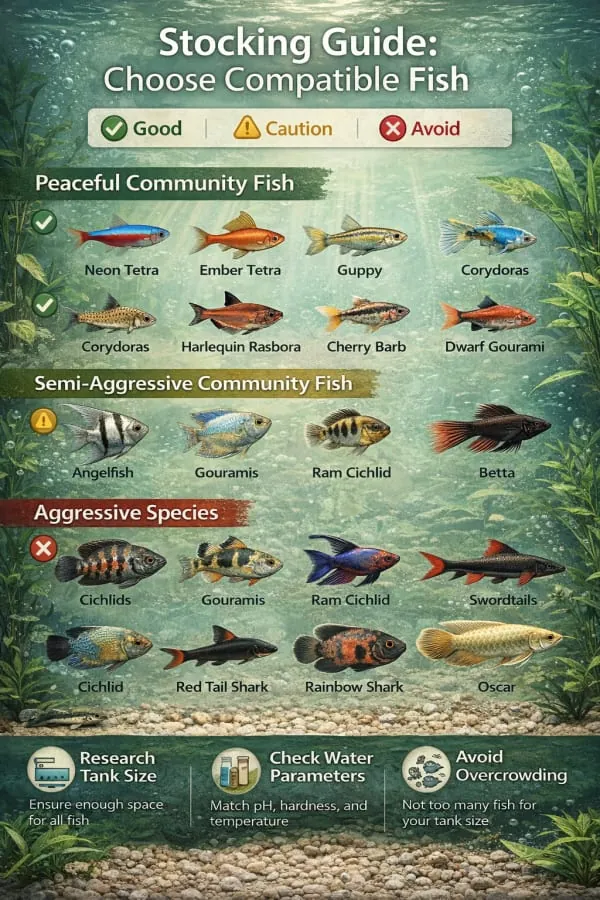
Choose compatible fish: school sizes, swimming zones, aggression, temperature and hardness matching, and honest bioload math for a peaceful community.
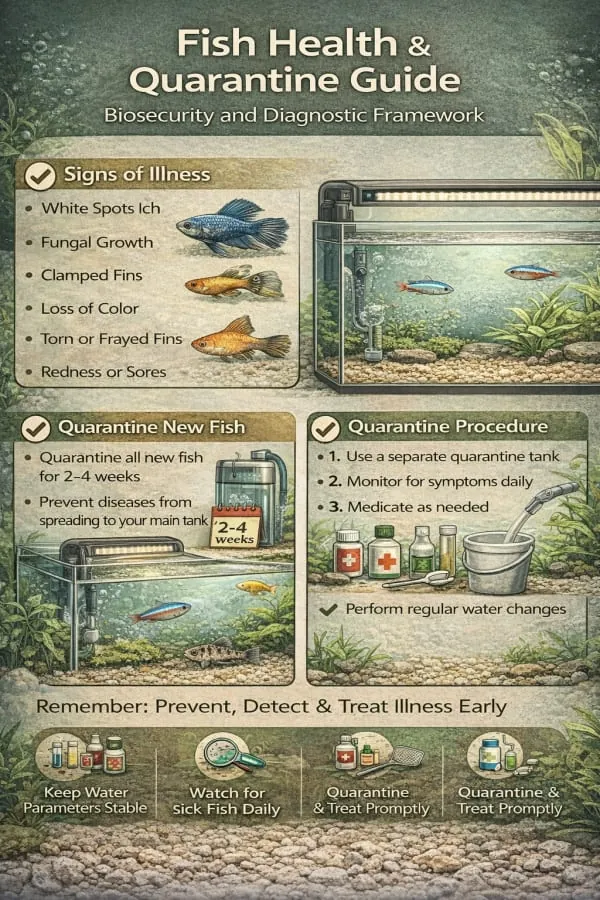
Quarantine new fish, spot the early warning signs, and treat disease without wrecking your tank. A practical freshwater fish health guide.
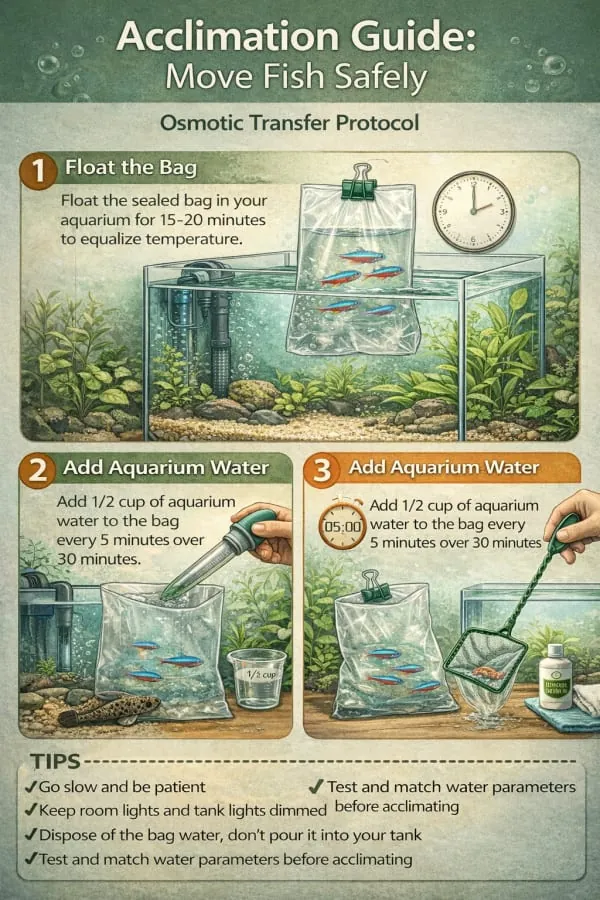
Acclimate new fish, shrimp, and coral safely: temperature floating, drip acclimation, plop-and-drop for shipped livestock, and the first 24 hours.
Keeping Uaru?
AquaLens identifies your fish and plants from a photo, tracks water chemistry, and flags health issues early — free on iOS and Android.