White Orchid Sulawesi Shrimp Care Guide
Caridina cf. spongicola · Freshwater Invert
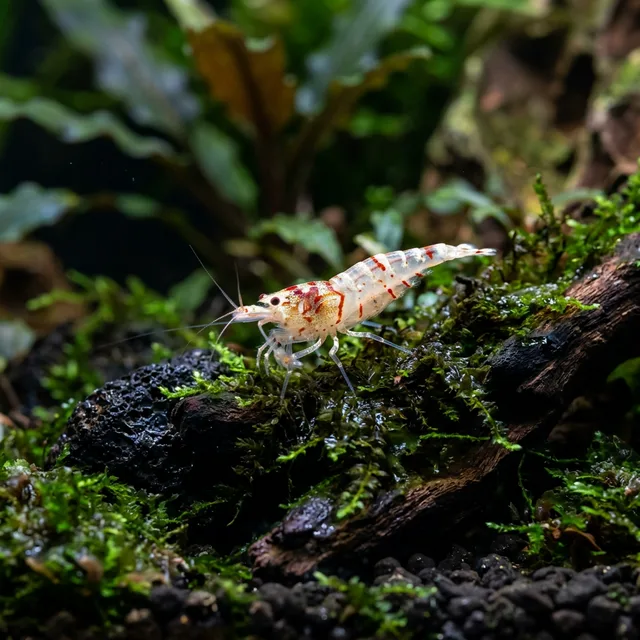
What White Orchid Sulawesi Shrimp look like
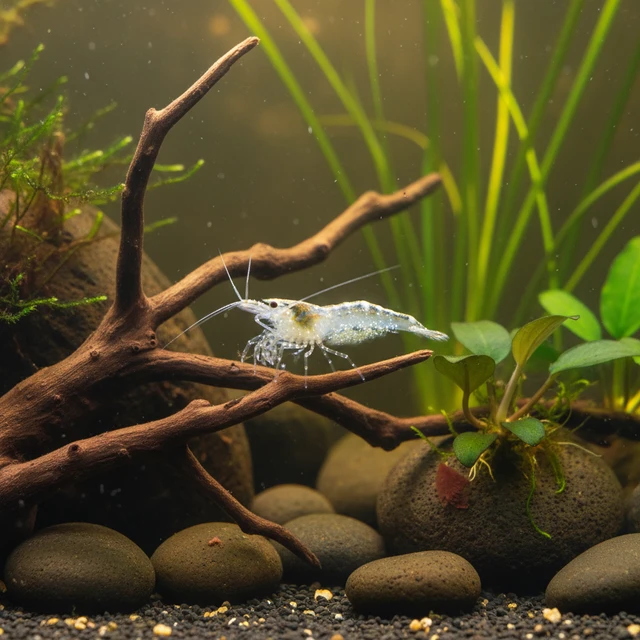
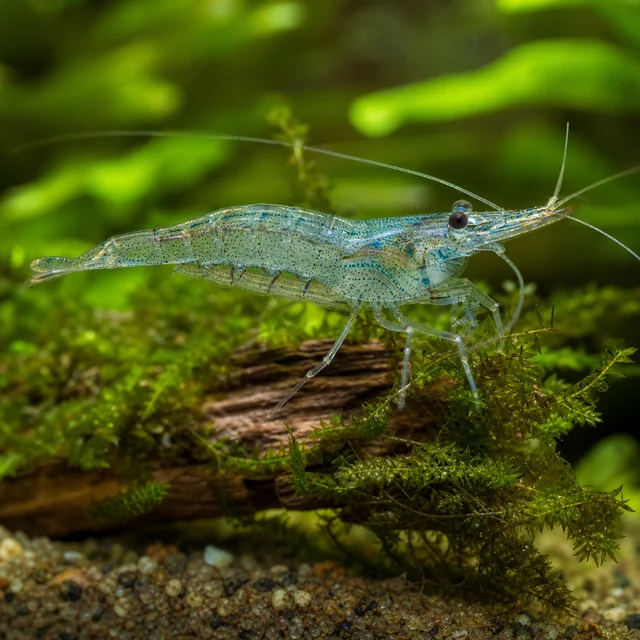
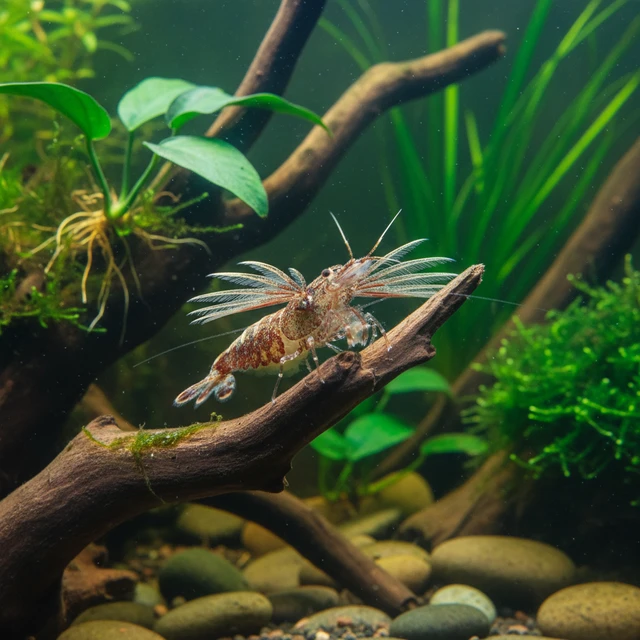
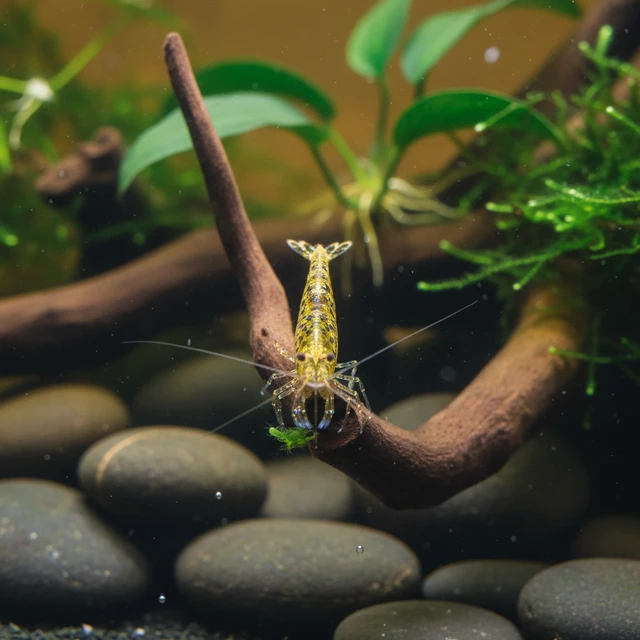
Caridina cf. spongicola, commonly known as the White Orchid Sulawesi Shrimp, exhibits a delicate and predominantly opaque white body, reaching a maximum adult size of approximately 4 to 8 centimeters. The shrimp's carapace may display faint reddish or pinkish patches, which are subtle yet distinctive against the solid creamy white background. The appendages, including the long, slender antennae, are also white, contributing to its overall ethereal appearance. This species lacks the transparency often seen in other shrimp, making its pristine coloration a key identifier. Notably, the shrimp possesses a well-developed rostrum and a pair of prominent compound eyes, which are essential for navigation and foraging. Its body is laterally compressed, allowing for agile movement through its natural habitat, while the presence of a well-defined exoskeleton provides some defense against predation.
Behavior & temperament
The White Orchid Sulawesi Shrimp is primarily a benthic dweller, often found among the substrate of freshwater environments in Sulawesi. It exhibits a social structure that leans towards a loose aggregation rather than strict schooling behavior, allowing for both solitary and communal living. These shrimp are generally peaceful but may display territoriality during breeding periods, particularly among males competing for females. Breeding behavior is characterized by egg scattering, with females carrying fertilized eggs under their pleopods until they hatch. The temperament of this species is generally calm, making them suitable for community tanks, although care should be taken to avoid aggressive tank mates.
Diet & feeding
In the wild, the White Orchid Sulawesi Shrimp is an omnivore, feeding on detritus, biofilm, and small organic particles. In captivity, they require a varied diet that includes high-quality shrimp pellets, blanched vegetables, and occasional protein sources such as brine shrimp or daphnia to ensure optimal health and coloration.
Behind the name
The genus name 'Caridina' is derived from the Greek word 'karis,' meaning 'shrimp,' while 'spongicola' translates to 'living among sponges,' indicating its natural habitat preference.
Plan your tank
Check the numbers before you buy: tank volume, a stocking plan, cycle progress, water changes, and your ongoing care routine.
Keep reading

Choose compatible fish: school sizes, swimming zones, aggression, temperature and hardness matching, and honest bioload math for a peaceful community.

Quarantine new fish, spot the early warning signs, and treat disease without wrecking your tank. A practical freshwater fish health guide.

Acclimate new fish, shrimp, and coral safely: temperature floating, drip acclimation, plop-and-drop for shipped livestock, and the first 24 hours.
Keeping White Orchid Sulawesi Shrimp?
AquaLens identifies your fish and plants from a photo, tracks water chemistry, and flags health issues early — free on iOS and Android.