Gold Nebula Shrimp Care Guide
Caridina villadolidi · Freshwater Invert
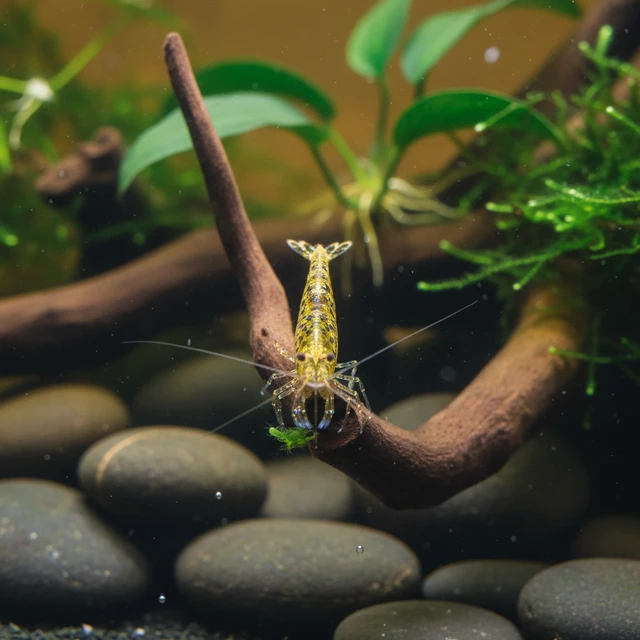
What Gold Nebula Shrimp look like
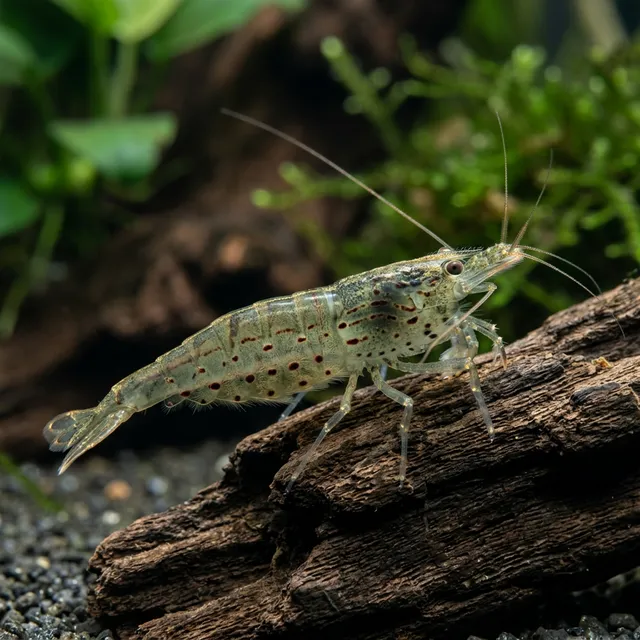
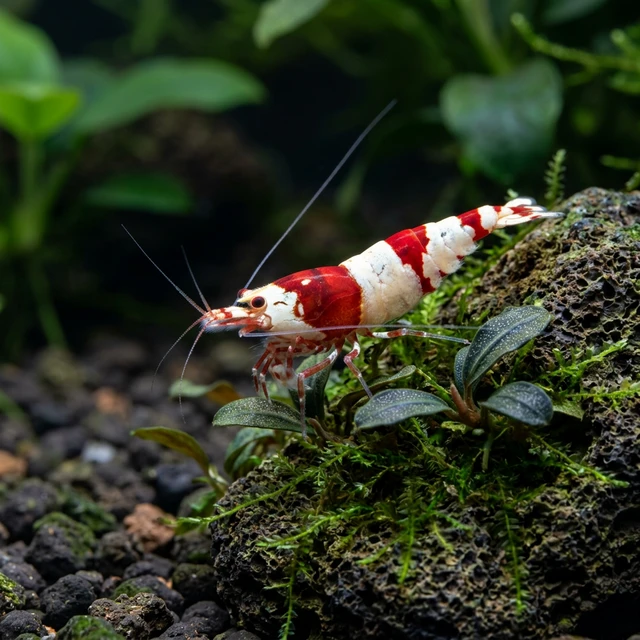
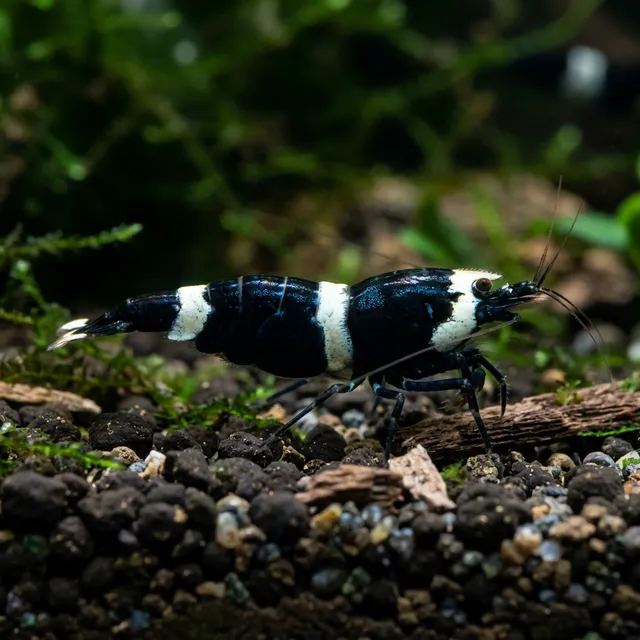
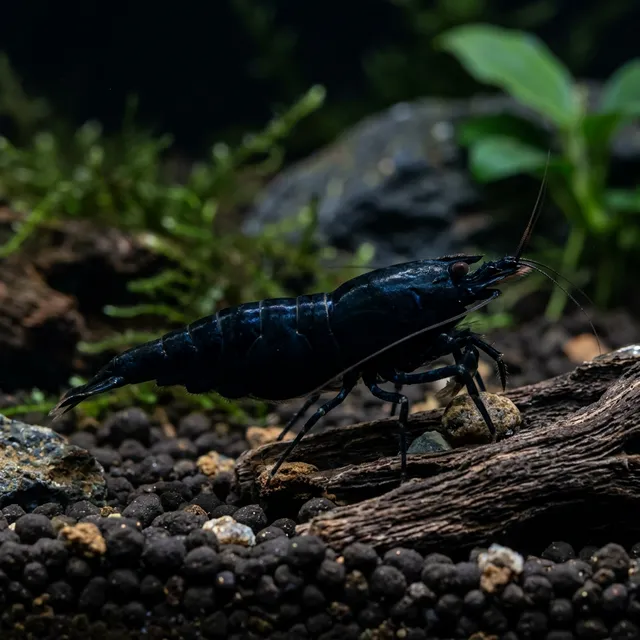
Caridina villadolidi, commonly known as the Gold Nebula Shrimp, exhibits a diminutive, laterally compressed body that typically reaches a maximum adult size of approximately 1 inch (2.5 cm). The shrimp's translucent golden exoskeleton is adorned with a striking nebula-like pattern of fine dark markings, which serves as both camouflage and a form of sexual dimorphism, with females often displaying a more pronounced reticulated pattern compared to males. This species possesses a well-developed rostrum, elongated antennae, and a distinctively segmented abdomen, which culminates in a fan-like tail (telson) that aids in propulsion. Notably, the presence of a pair of chelae (claws) is evident, which are utilized for foraging and defense against potential threats. The shrimp also features a pair of compound eyes that enhance its visual acuity in its natural habitat.
Behavior & temperament
Gold Nebula Shrimp are primarily found in the benthic zones of freshwater environments, where they exhibit a semi-social behavior, often forming loose aggregations rather than strict schools. They are not strictly hierarchical but display a level of social interaction that allows for cooperative foraging and mutual grooming. In terms of breeding behavior, they are ovoviviparous, with females carrying fertilized eggs in a brood pouch until they hatch into miniature versions of adults. Their temperament is generally peaceful, although they may exhibit territoriality during breeding periods or when competing for food resources.
Diet & feeding
In the wild, Gold Nebula Shrimp are omnivorous, feeding on detritus, biofilm, and small microorganisms. In captivity, they require a varied diet that includes high-quality algae wafers, blanched vegetables, and specialized shrimp pellets to ensure optimal health and coloration.
Behind the name
Caridina (from Greek 'karis', meaning shrimp; 'ida', indicating a diminutive form) and villadolidi (honoring the locality or individual associated with its discovery).
Plan your tank
Check the numbers before you buy: tank volume, a stocking plan, cycle progress, water changes, and your ongoing care routine.
Keep reading

Choose compatible fish: school sizes, swimming zones, aggression, temperature and hardness matching, and honest bioload math for a peaceful community.

Quarantine new fish, spot the early warning signs, and treat disease without wrecking your tank. A practical freshwater fish health guide.

Acclimate new fish, shrimp, and coral safely: temperature floating, drip acclimation, plop-and-drop for shipped livestock, and the first 24 hours.
Keeping Gold Nebula Shrimp?
AquaLens identifies your fish and plants from a photo, tracks water chemistry, and flags health issues early — free on iOS and Android.