
Reef Parameters Explained
What every reef parameter means and where to keep it: salinity, temperature, pH, alkalinity, calcium, magnesium, nitrate, and phosphate.
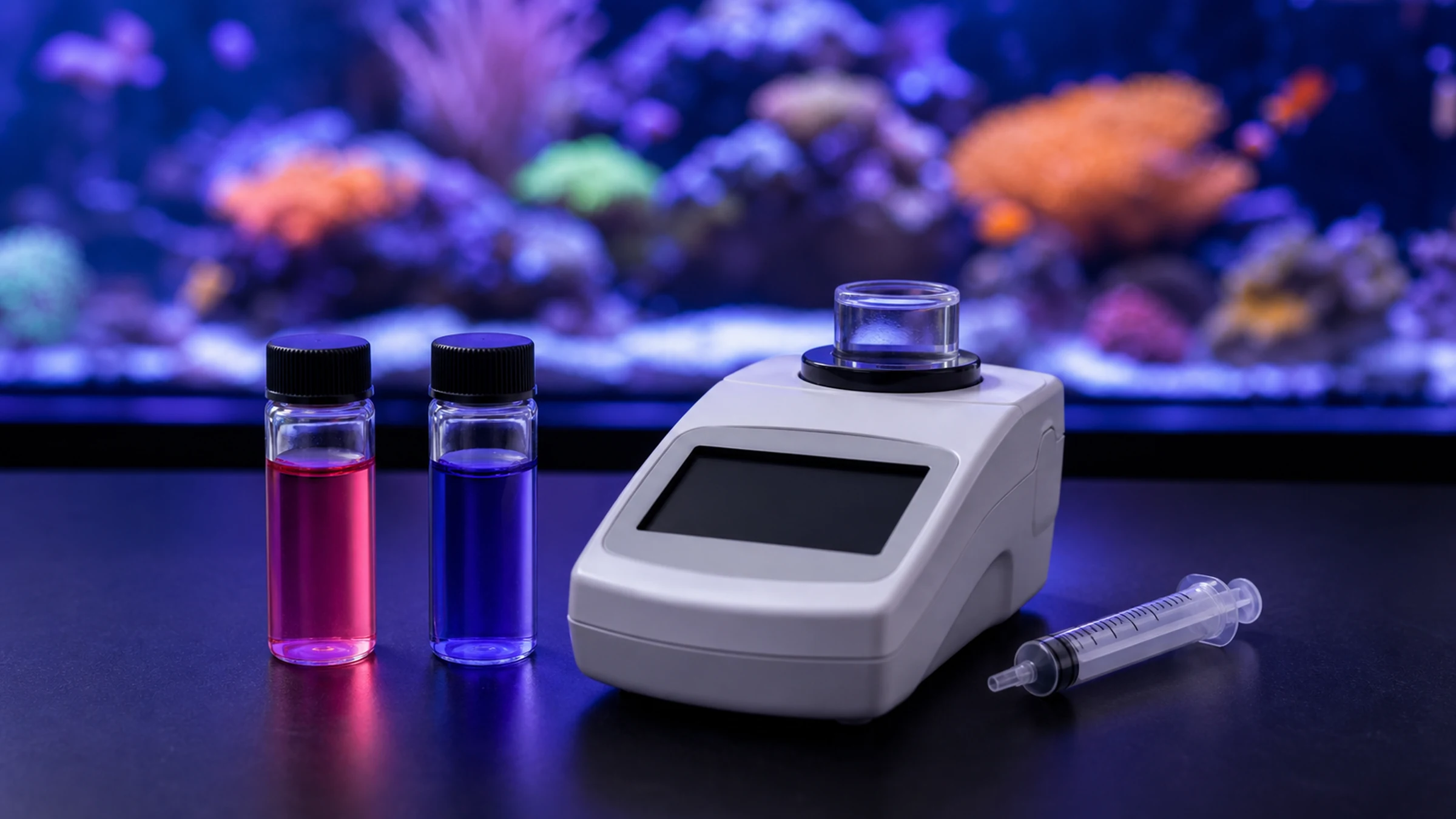
On this page
A reef tank is a chemistry set with living occupants. The numbers are not there to make the hobby feel technical: each one maps to something your corals and fish actually need, and the difference between a thriving reef and a struggling one is usually a parameter that drifted while nobody was watching. This guide explains what each number does and where to keep it, without turning you into a chemist.
The single most important idea comes first: stability beats perfection. A reef held steadily at a slightly imperfect number is healthier than one bouncing around the "ideal." Everything below is a target range to hold calmly, not a bullseye to chase.
The target ranges at a glance
| Parameter | Target | What it does |
|---|---|---|
| Salinity | 1.026 SG (35 ppt) | The saltiness of the water; everything else is measured against it. |
| Temperature | 76–78°F | Metabolism and oxygen; steadiness matters most. |
| pH | 7.8–8.4 | Acidity; tracks alkalinity and CO₂, swings on a day/night cycle. |
| Alkalinity | 8–9.5 dKH | Buffer and carbonate for coral skeleton; drifts fastest. |
| Calcium | 400–440 ppm | The other half of coral skeleton. |
| Magnesium | 1300–1380 ppm | Keeps calcium and alkalinity in solution. |
| Nitrate | 2–10 ppm | A nutrient; low but not zero. |
| Phosphate | 0.03–0.1 ppm | A nutrient; low but not zero. |
Salinity and temperature: the foundation
Salinity is how much salt is dissolved in your water, and a reef runs at natural-seawater strength, about 1.026 specific gravity, or 35 ppt. Measure it with a refractometer, not a plastic swing-arm hydrometer, and calibrate the refractometer with calibration fluid. As water evaporates, salt stays behind and salinity climbs, so you top up evaporation with fresh RO/DI water, never saltwater. The salinity converter turns readings between specific gravity and ppt, and the salt mix calculator works out how much salt a new batch needs.
Temperature should sit around 76–78°F and, above all, stay there. A stable 77°F is better than a tank that drifts between 75 and 81 across a day. Warm water also holds less oxygen, so summer heat spikes are a real risk worth planning for.
The big three: alkalinity, calcium, magnesium
These three build coral skeleton, and growing corals pull them out of the water continuously. Testing and replacing them is the core of reef chemistry.
Alkalinity (measured in dKH) is the water's carbonate buffer: the raw material corals use to lay down skeleton, and the thing that keeps pH from crashing. Keep it around 8–9.5 dKH. It is the parameter that moves fastest and the one most often behind sudden tissue recession, so it is the one to test most often. Critically, never raise it more than about 1 dKH per day: a fast alkalinity swing burns coral tissue.
Calcium is the other half of skeleton, kept around 400–440 ppm. It moves more slowly than alkalinity. The safe correction pace is about 20 ppm per day.
Magnesium is the quiet anchor. At 1300–1380 ppm it keeps calcium and alkalinity dissolved and stable; when it is low, the two fight each other and nothing holds no matter how much you dose. If your alkalinity and calcium refuse to stabilize, check magnesium first. Correct it at up to about 50 ppm per day.
The reef dosing calculator takes a current and target reading for any of the three and tells you both the dose and, more importantly, how many days the correction should take to stay under those safe daily limits. And never add a dry supplement straight to the tank: dissolve it in RO/DI water first, or you create pockets of extreme chemistry that scorch anything they touch.
pH: mostly a passenger
pH in a reef sits between 7.8 and 8.4 and rises and falls a little every day as photosynthesis pulls CO₂ out during lit hours and adds it back at night. You rarely dose for pH directly. It tracks alkalinity and the CO₂ level in your home air. If pH runs chronically low, the cause is often high indoor CO₂ (a well-sealed house), addressed with fresh-air ventilation or a CO₂ scrubber, not a pH product.
Nutrients: nitrate and phosphate
Here is where old advice was wrong. For years reefers chased zero nitrate and phosphate. We now know corals need some nutrients: starving them causes pale, bleached-looking coral, stalled growth, and outbreaks of nuisance organisms like dinoflagellates. Aim for low but detectable: roughly 2–10 ppm nitrate and 0.03–0.1 ppm phosphate, kept in reasonable balance with each other. Export excess with protein skimming, water changes, and, when needed, media, but do not try to erase them.
Putting it together
You do not need to master all of this at once. Get salinity and temperature stable, keep alkalinity steady and test it often, make sure magnesium is in range before you fight with calcium and alkalinity, and let nitrate and phosphate sit low rather than absent. Log every reading so you can see drift as a trend instead of discovering it as a problem. That early warning is exactly what AquaLens is built to give you. When a number needs correcting, correct it slowly. Reefs reward patience and punish sudden moves, every time.
Frequently Asked Questions
What are the ideal reef tank parameters?
A widely used target set is: salinity 1.026 specific gravity (35 ppt), temperature 76–78°F, pH 7.8–8.4, alkalinity 8–9.5 dKH, calcium 400–440 ppm, magnesium 1300–1380 ppm, nitrate 2–10 ppm, and phosphate about 0.03–0.1 ppm. Stability inside these ranges matters far more than hitting an exact figure.
What is the most important reef parameter?
Stability, then alkalinity. Corals tolerate a slightly off number far better than a moving one, and alkalinity is the parameter that drifts fastest as corals grow and is the one most often blamed for tissue loss. Keep alkalinity steady day to day and you have solved most of the chemistry battle.
Should nitrate and phosphate be zero in a reef tank?
No. That is an outdated idea. Corals need some nutrients, and bottoming both out to zero causes pale color, poor growth, and nuisance algae like dinoflagellates. Aim for low but detectable levels, roughly 2–10 ppm nitrate and 0.03–0.1 ppm phosphate, and keep them in balance rather than absent.
Why won't my alkalinity and calcium stay stable?
Low magnesium is the usual culprit. Magnesium keeps calcium and alkalinity in solution; when it is low, the two work against each other and you chase numbers endlessly. Get magnesium into the 1300–1380 ppm range first, then correct alkalinity and calcium. They will hold far better.
How often should I test my reef parameters?
While a reef is young or growing fast, test alkalinity two or three times a week and calcium, magnesium, nitrate, and phosphate weekly. Once your dosing is dialed in and readings are steady, you can relax the cadence, but never stop testing alkalinity, because it moves the fastest.
Track every reef parameter over time
AquaLens logs alkalinity, calcium, magnesium, salinity, nitrate, and phosphate from a photo of your test kit, plots them together, and flags drift before your corals feel it. The reef dosing tools tell you how to correct safely.
Keep reading
The honest trade-offs between a fish-only (FOWLR) saltwater tank and a full reef: cost, difficulty, equipment, and the order to buy things in.
How to cycle a saltwater or reef tank with live rock: the nitrogen cycle, an ammonia source, what to test, and how to know it's safe to add your first fish.
How to quarantine new saltwater fish against marine ich, velvet, and brooklynella: the QT tank, treatments, timelines, and the buy-clean shortcut.