
How to Cycle a Saltwater Tank
How to cycle a saltwater or reef tank with live rock: the nitrogen cycle, an ammonia source, what to test, and how to know it's safe to add your first fish.
On this page
Before a single fish goes in, a new saltwater tank has to grow an invisible workforce: the bacteria that turn fish waste into something far less toxic. That process is the nitrogen cycle, and getting it right is the difference between a stable tank and a heartbreaking first month. The chemistry is the same as freshwater, ammonia to nitrite to nitrate, but saltwater keepers usually run it with live rock, and the stakes are higher because marine livestock is expensive and less forgiving.
What the cycle actually does
Everything that lives in your tank produces ammonia, which is highly toxic even in small amounts. In a cycled tank, one group of bacteria converts ammonia into nitrite (also toxic), and a second group converts nitrite into nitrate, which is far less harmful and is exported by water changes and, in a reef, consumed in part by corals and algae.
Ammonia → Nitrite → Nitrate
Cycling is simply growing those two bacterial populations on your rock and sand until they can process a full livestock load. Until that workforce exists, any fish you add is swimming in its own poison.
What you need before you start
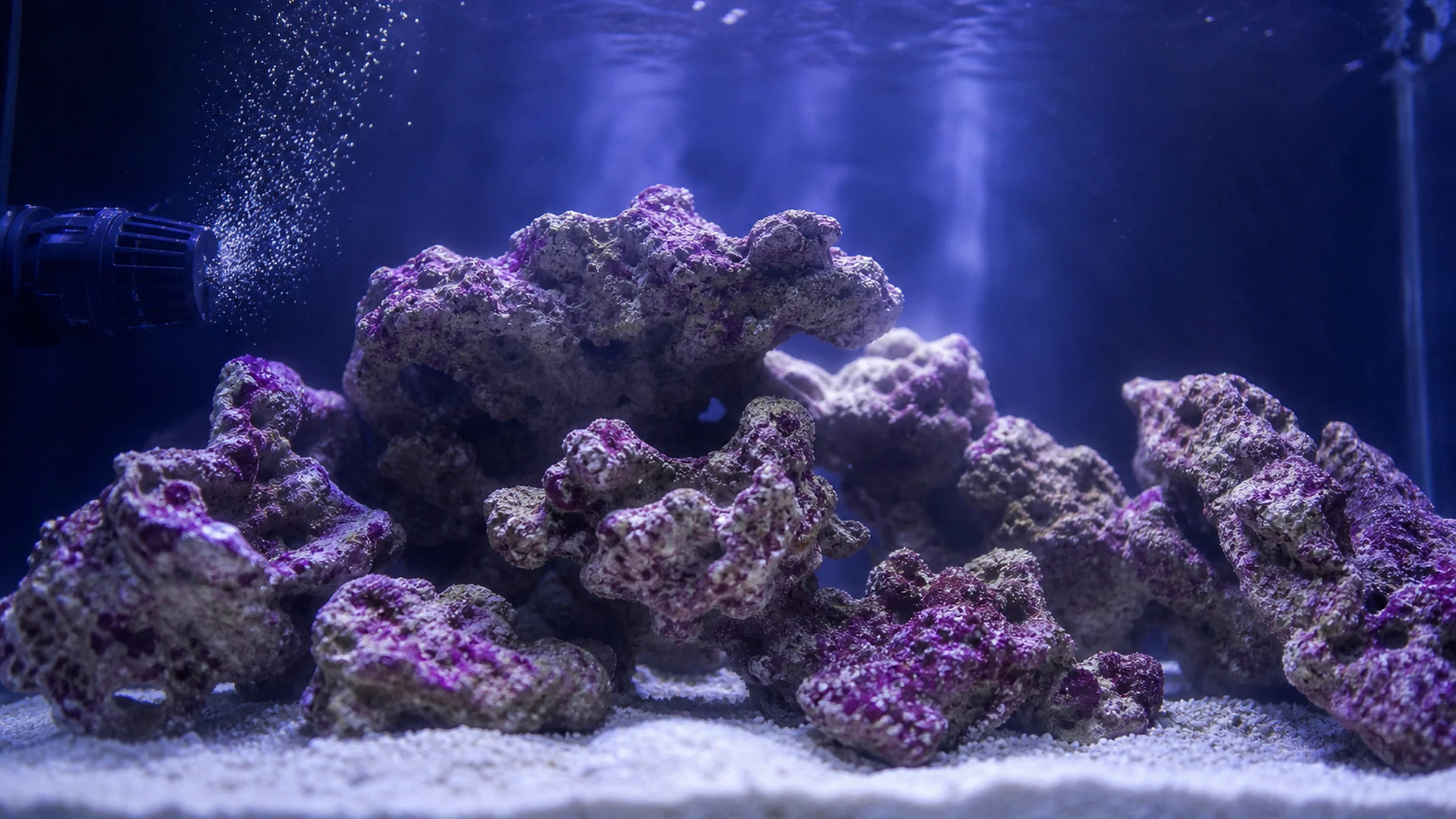
- Live rock, dry rock, or a mix. Live rock is porous reef rock already colonized by bacteria and life; it seeds the cycle and adds filtration. Dry rock is sterile: cheaper and pest-free, but you build the biology from zero, usually with a bottled bacteria product.
- Cured live sand (optional but helpful).
- An ammonia source. Bottled ammonium chloride is the cleanest and most controllable. A small piece of raw shrimp works but is messier.
- A marine test kit that reads ammonia, nitrite, and nitrate.
- Salt mix, RO/DI water, a refractometer, a heater, and a powerhead: mix your water to about 1.026 specific gravity (35 ppt) and hold it near 76–78°F. Warm, moving water grows bacteria faster.
The process, step by step
- Set up and mix. Aquascape your rock, add sand, fill with saltwater mixed to the right salinity, and run the heater and powerhead. Let it clear and stabilize for a day.
- Add ammonia. Dose an ammonia source to about 2 ppm. If you are using a bottled bacteria product, add it now per its instructions.
- Test and wait. Test ammonia, nitrite, and nitrate every day or two. You will see ammonia rise, then fall as nitrite rises, then nitrite fall as nitrate climbs. Top the ammonia back up to ~2 ppm if it crashes to zero early, so the bacteria keep feeding.
- Expect a nitrite plateau. The nitrite-to-nitrate step is usually the slow one. A week or more stuck on nitrite is normal. Keep going.
- Confirm the cycle. When a fresh dose of ammonia drops both ammonia and nitrite to 0 within about 24 hours, and nitrate is accumulating, the tank can support a livestock load.
- Water change, then stock slowly. Do a sizeable water change to bring nitrate down, then add your first fish only. Wait, watch, and add the rest over the following weeks so the bacteria can scale up with the load.
If you want the full theory behind these stages, the fishless cycling guide covers the same biology in more depth; this page is the saltwater-specific version.
Cycling with live rock vs dry rock
Both work. Live rock carries the bacteria and biodiversity to get going quickly, and it often barely shows a spike if it stayed wet in transit, but it can also introduce pests and hitchhikers. Dry rock with a bottled bacteria start is pest-free and cheaper, but slower and less predictable, and you are relying on the bottle to establish the biology. Many keepers split the difference: mostly dry rock with a piece or two of quality live rock to seed it.
The patience rule
There is no honest shortcut that removes the wait. Bottled bacteria and live rock shorten it; nothing skips it. The tank is ready when the tests say so, a full ammonia dose processed to nitrate in about a day, not when a week has passed. Rushing this step is the most common reason a first saltwater tank fails, and it is entirely avoidable. Test, wait, and let the biology catch up before anything lives in the water.
Once you are cycled and stocking, quarantine every new fish: the marine quarantine guide explains why that habit saves whole tanks.
Frequently Asked Questions
How long does it take to cycle a saltwater tank?
Usually two to six weeks. Starting with quality live rock or seeding with established biomedia can speed it up; a bottled-bacteria start with dry rock can be slower and less predictable. The tank is cycled when a dose of ammonia is fully processed to nitrate within about 24 hours, not when a calendar day arrives.
Do I need live rock to cycle a saltwater tank?
No, but it is the easiest path. Live rock arrives carrying the bacteria and biodiversity that run the cycle, so it seeds the tank and adds filtration surface at once. Dry rock plus a bottled bacteria product also works: it is cheaper and pest-free, but the cycle is often slower and you are building the biology from scratch.
How do I know when my saltwater tank is cycled?
Add an ammonia source to about 2 ppm and test daily. When both ammonia and nitrite read 0 within roughly 24 hours of dosing, and you see nitrate accumulating, the bacteria can handle a livestock load. Do a water change to bring nitrate down, then add your first (and only your first) fish.
Should I cycle with a fish?
No. Fishless cycling with an ammonia source is more humane and lets you build the bacteria to a real load before anything lives in the tank. Ammonia and nitrite are toxic, and cycling with a fish subjects it to weeks of exposure. There is no advantage that justifies it.
Why is my saltwater tank stuck on nitrite?
The second stage of the cycle is often the slow one. The bacteria that convert nitrite to nitrate establish more slowly than the first group, so a long nitrite plateau is normal. Keep testing, keep the ammonia source topped up modestly, hold temperature steady, and be patient. It resolves on its own.
Keep your reef steady between test days
AquaLens reads your reef test kit, tracks alkalinity, calcium, magnesium, and salinity over time, and warns you when a parameter starts to drift, while the fix is still a small dose.
Keep reading
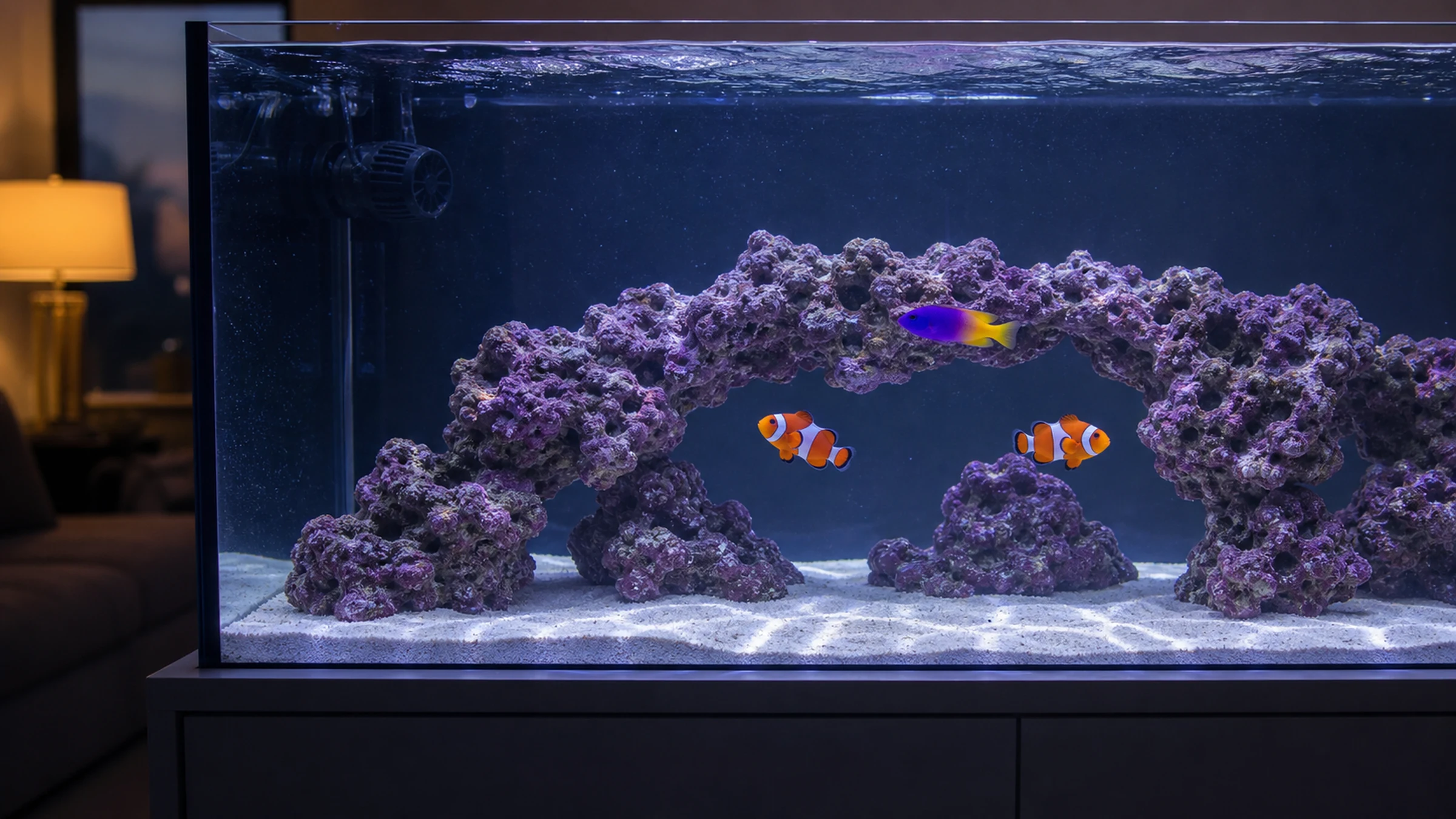
The honest trade-offs between a fish-only (FOWLR) saltwater tank and a full reef: cost, difficulty, equipment, and the order to buy things in.
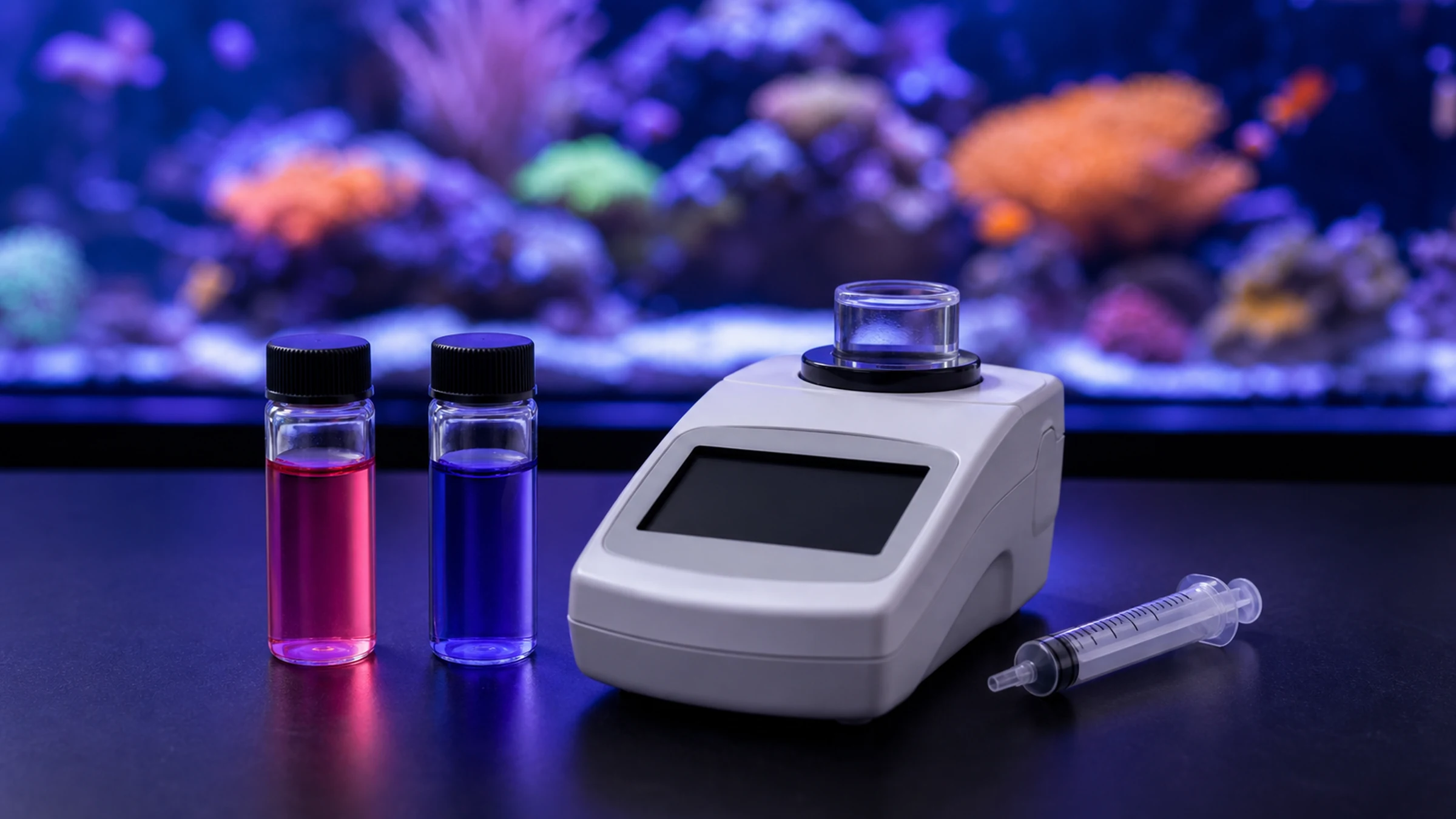
What every reef parameter means and where to keep it: salinity, temperature, pH, alkalinity, calcium, magnesium, nitrate, and phosphate.
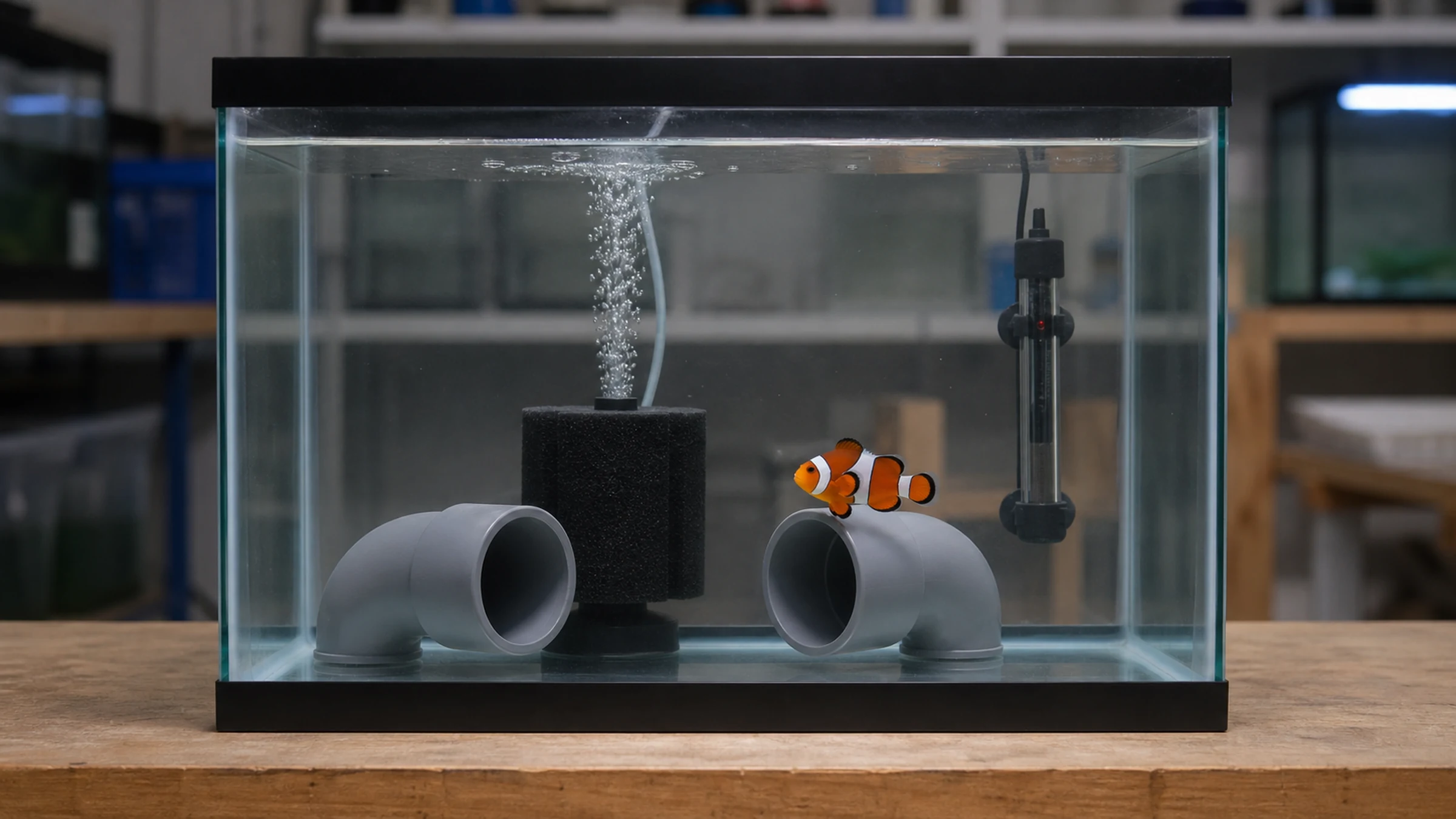
How to quarantine new saltwater fish against marine ich, velvet, and brooklynella: the QT tank, treatments, timelines, and the buy-clean shortcut.