
Fish-Only vs Reef: Choosing Your Saltwater Setup
The honest trade-offs between a fish-only (FOWLR) saltwater tank and a full reef: cost, difficulty, equipment, and the order to buy things in.
On this page
Saltwater keeping has a reputation for being hard. Most of that reputation comes from one decision made too early: trying to run a full coral reef before the basics of mixing water and holding parameters steady are second nature. Split the hobby into its two honest paths, fish-only and reef, and the difficulty becomes a choice you control rather than a wall you hit.
This guide lays out the real trade-offs so you can pick the setup that fits your budget, patience, and the tank you actually have.
The two paths
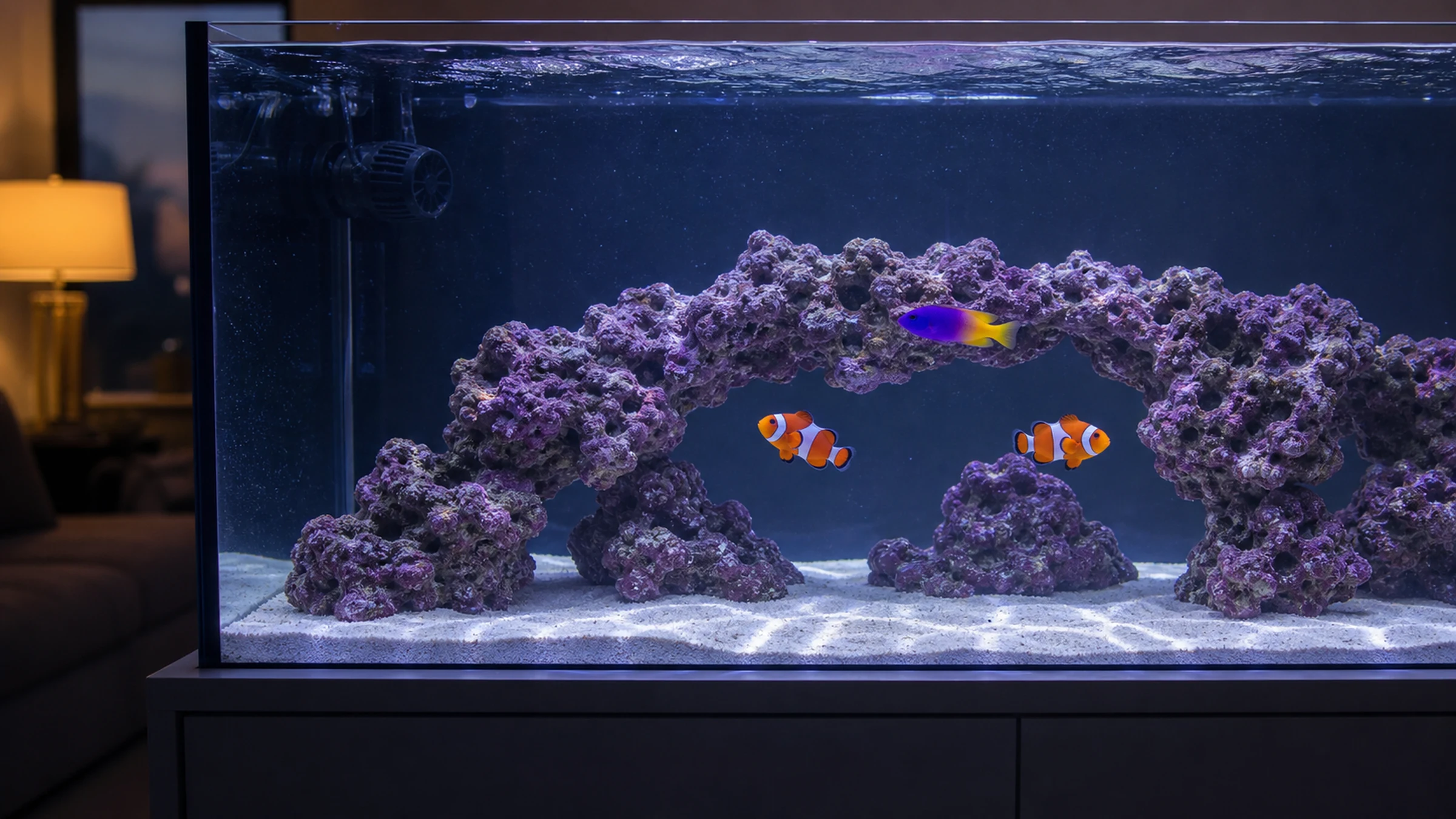
Fish-only with live rock (FOWLR) is saltwater fish, live rock for biological filtration, and clean-up crew. No corals. It runs on the same core gear as freshwater plus salt mixing and a skimmer. Chemistry is limited to salinity, temperature, and the nitrogen cycle. It is the forgiving, lower-cost way to learn saltwater, and it is a legitimate destination in its own right: a tang, a wrasse, and a pair of clownfish over aquascaped rock is a beautiful tank.
A reef tank adds corals, and corals change the requirements. They need stronger, reef-grade lighting, more flow, cleaner water, and, as they grow, supplementation of the calcium and alkalinity they pull out to build skeleton. The reward is a living landscape that grows and changes. The cost is more equipment, more testing, and less tolerance for neglect.
You do not have to choose forever. Many keepers start FOWLR and convert to a reef once the routine is comfortable. As long as they bought lighting and flow that can support corals from the start, the upgrade is mostly adding livestock and a dosing habit.
What both setups share
Every saltwater tank, fish-only or reef, needs the same foundation:
| Need | Why it matters |
|---|---|
| A tank with the largest volume you can fit | Bigger water volume swings more slowly. Stability is the whole game, and it is easier in 50 gallons than 15. |
| RO/DI water (or bought purified water) | Tap water adds nitrate, phosphate, silicate, and metals that feed algae and stress livestock. |
| Marine salt mix + a refractometer | You mix your own seawater and measure it precisely. A refractometer beats a swing-arm hydrometer. |
| A heater and reliable temperature | Aim for a stable temperature around 76–78°F; steadiness matters more than the exact number. |
| Live rock and/or biomedia | Surface area for the bacteria that run the nitrogen cycle. |
| A powerhead or two for flow | Saltwater animals expect moving water; stagnant tanks build detritus and dead spots. |
| A quarantine plan | Marine fish disease moves fast. A separate quarantine tank is the single best insurance you can buy. |
If you are new to the nitrogen cycle, start with how to cycle a saltwater tank before you buy any livestock.
What a reef adds on top
Going reef means adding, roughly in order:
- Reef lighting. Corals photosynthesize through symbiotic algae; they need the right spectrum and intensity, not just brightness. This is not optional for most corals.
- More flow. Corals want their surfaces bathed in moving water to bring food and carry away waste. Reef tanks typically run much higher turnover than fish-only.
- The big-three chemistry. Growing corals consume calcium, alkalinity, and magnesium. You will test them and, as coral mass grows, dose them back. The reef parameters guide explains each one, and the reef dosing calculator works out how far off you are and how fast to correct it safely.
- Cleaner nutrients. Corals do best with low but non-zero nitrate and phosphate. You will care about nutrient export (skimming, water changes, and sometimes media) in a way fish-only keepers can be relaxed about.
- Coral husbandry. Placement, acclimation to light, and pest quarantine become their own skill. The coral placement, flow, and lighting guide covers it.
Cost and difficulty, honestly
A fish-only saltwater tank costs a little more than the freshwater equivalent: mostly the salt, the RO/DI water, and a skimmer. A reef of the same size can cost several times more once you add reef lighting, more flow, testing, and the corals themselves, which range from ten-dollar frags to collector pieces in the hundreds.
Difficulty follows the same curve. Fish-only forgives a missed water change; a reef punishes an alkalinity swing with browned-out or receding corals. Neither is beyond a careful beginner, but the honest order is: get comfortable mixing water and holding salinity and temperature steady on a fish-only or lightly-stocked tank first, then add corals once that is routine.
What to buy first
If you are assembling a system, spend in this order and you will rarely regret it:
- The biggest tank and stand your space allows, plus a lid or screen if you keep jumpers.
- RO/DI water and salt mix, or a standing supply of bought purified saltwater.
- A refractometer, heater, and one or two powerheads.
- Live rock and a bag of cured live sand.
- A protein skimmer sized for your volume.
- A quarantine tank, even a bare 10–20 gallon with a sponge filter and heater.
- Only then, livestock, added slowly over weeks, and if you are going reef, lighting and flow that can grow with you before the first coral.
Buy livestock from sources that quarantine or captive-breed where you can; the where-to-buy corals and marine fish guide covers who is worth trusting and how to avoid importing disease and pests.
The bottom line
Choose fish-only if you want a stunning saltwater tank with a routine close to freshwater, at a lower cost, with room to add corals later. Choose reef if you want the living landscape and you are ready to test and dose for it. Either way, the winning move is the same: go as large as you can, keep salinity and temperature rock-steady, stock slowly, and quarantine everything wet that goes in.
Frequently Asked Questions
Is a saltwater tank harder than freshwater?
It asks more of you in three places: you mix your own water from salt and RO/DI, you keep salinity and temperature stable, and livestock is more expensive so mistakes cost more. None of it is difficult once the routine is set. A fish-only saltwater tank is only a little more work than a freshwater community; a full reef adds chemistry and lighting on top.
What size saltwater tank is best for a beginner?
Bigger is more forgiving, not harder. A larger volume dilutes mistakes and swings more slowly, so a 40–75 gallon tank is far kinder to a beginner than a 10-gallon nano, where salinity and temperature can move fast. Pick the largest tank your space and budget allow, then stock it slowly.
What is a FOWLR tank?
FOWLR means Fish-Only With Live Rock: saltwater fish and live rock for biological filtration, but no corals. It skips reef lighting, dosing, and the tightest chemistry, so it is the cheaper and more forgiving way into saltwater, and you can add corals later if you light and equip for them.
Do I need a protein skimmer?
For most reef and busier fish-only tanks, a skimmer earns its place by exporting waste before it becomes nitrate and phosphate. Very small or lightly stocked tanks can run skimmerless with disciplined water changes, but a properly sized skimmer makes the whole system more stable and is worth budgeting for.
Can I use tap water for a saltwater tank?
It is a common source of ongoing algae and problems. Tap water carries nitrate, phosphate, silicate, copper, and chlorine/chloramine in amounts that vary by day and by town. Purified RO/DI water removes that variable, and for a reef it is close to essential. Many local fish stores sell RO/DI by the jug if you do not want a unit yet.
Keep your reef steady between test days
AquaLens reads your reef test kit, tracks alkalinity, calcium, magnesium, and salinity over time, and warns you when a parameter starts to drift, while the fix is still a small dose.
Keep reading
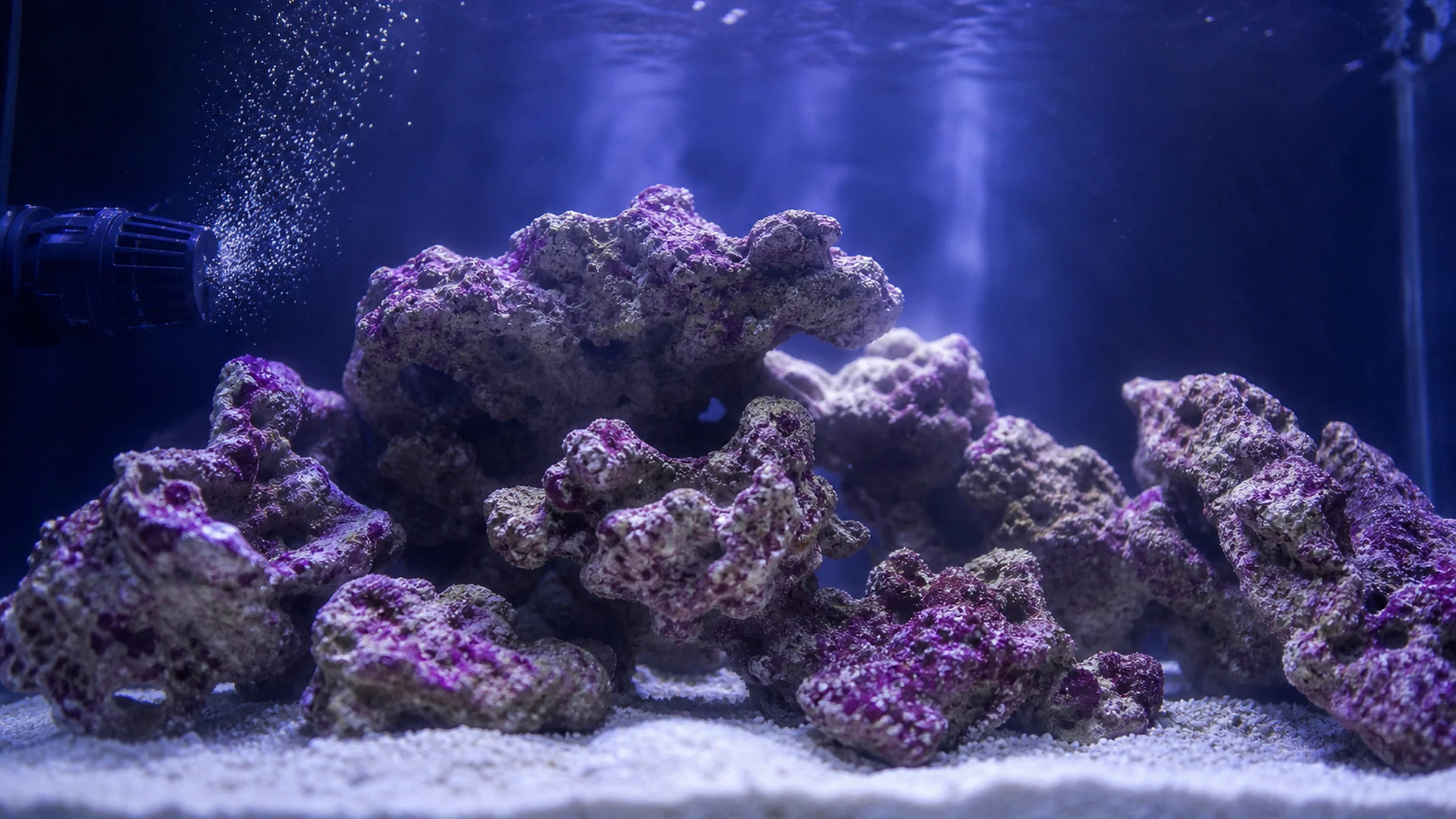
How to cycle a saltwater or reef tank with live rock: the nitrogen cycle, an ammonia source, what to test, and how to know it's safe to add your first fish.
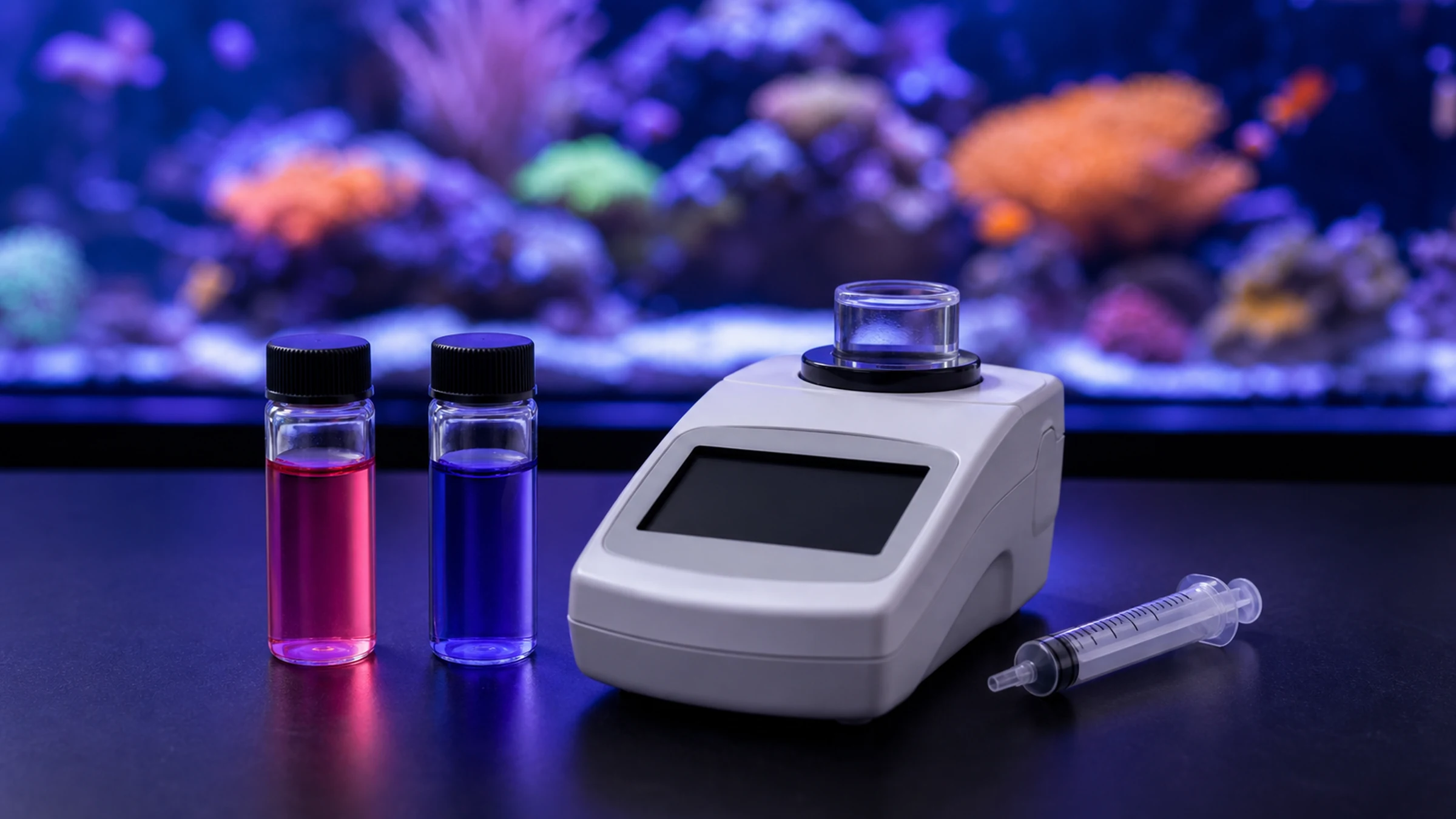
What every reef parameter means and where to keep it: salinity, temperature, pH, alkalinity, calcium, magnesium, nitrate, and phosphate.
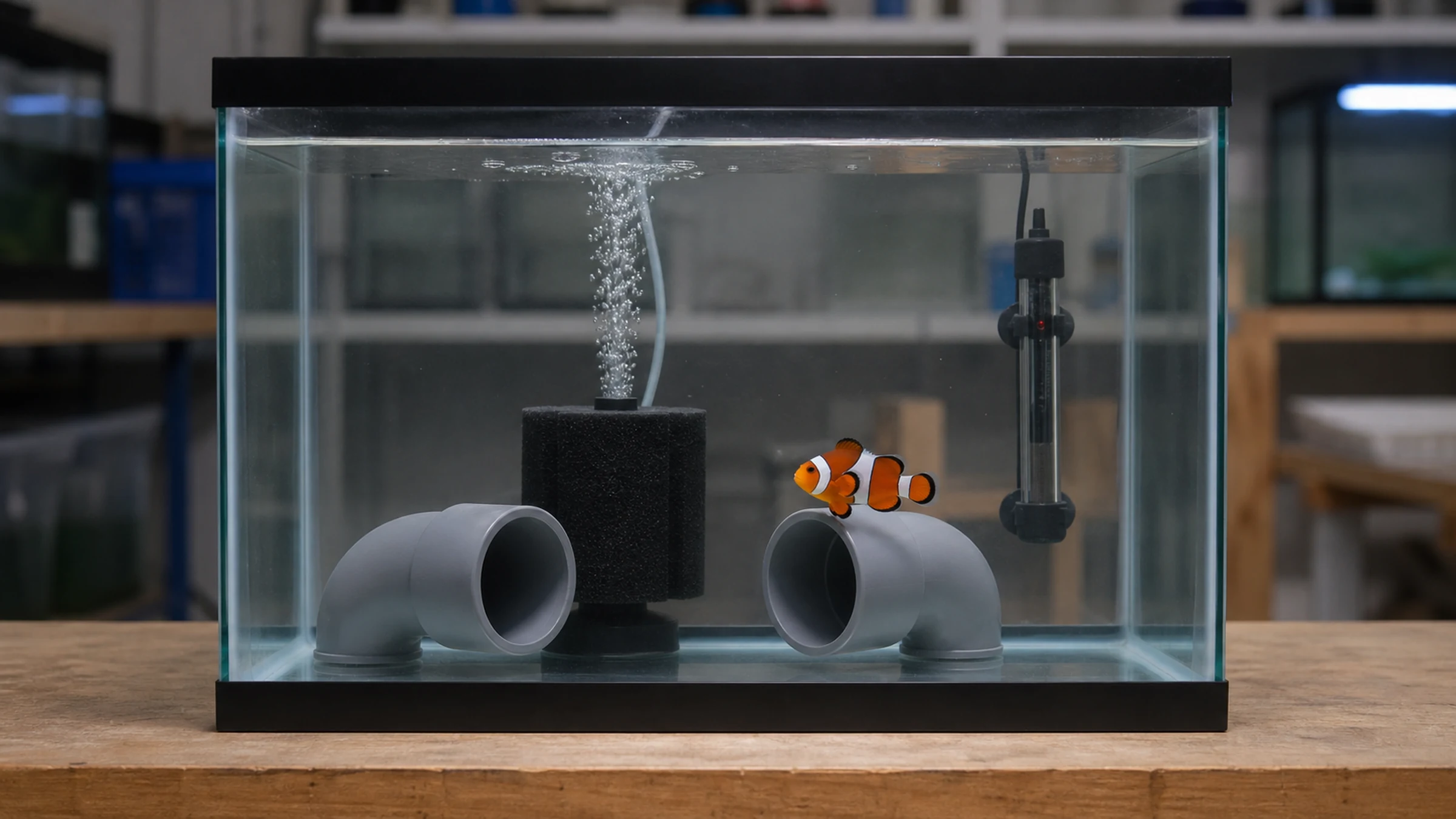
How to quarantine new saltwater fish against marine ich, velvet, and brooklynella: the QT tank, treatments, timelines, and the buy-clean shortcut.