African Dwarf Frog Care Guide
Hymenochirus spp. · Freshwater Reptile/Amphibian
What African Dwarf Frog look like
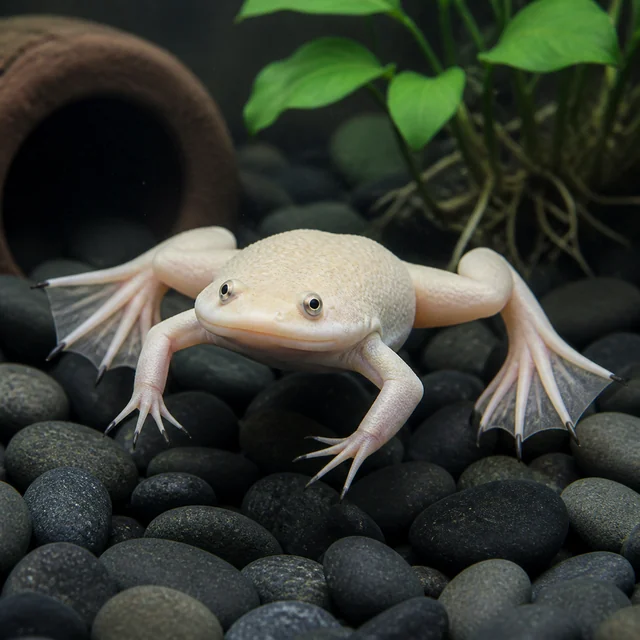
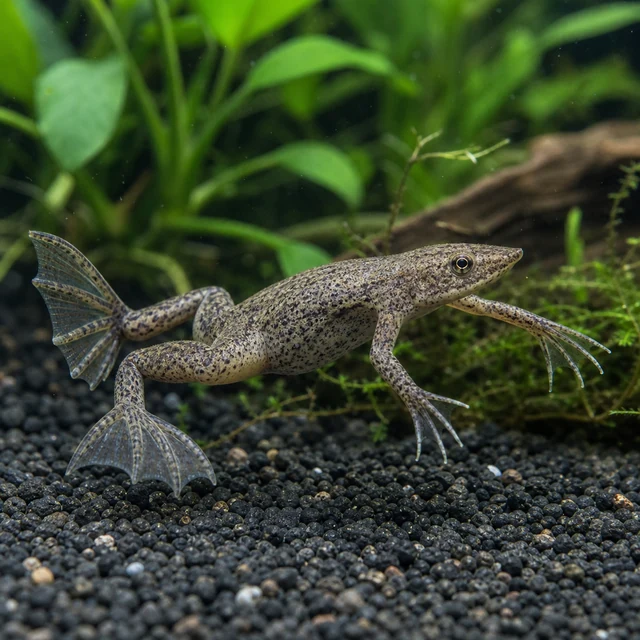
African Dwarf Frogs (Hymenochirus spp.) are small pipid frogs that usually remain around 1 to 2.5 inches long. They have a flattened aquatic body, smooth olive-brown to grey mottled skin, a pointed snout, side-set eyes, and long limbs with fully webbed fingers and toes that distinguish them from larger African clawed frogs. They lack scales, external gills, and a tail as adults, relying on lungs for air breathing while also absorbing oxygen through moist skin. Their subdued patterning provides camouflage among leaf litter, plants, and dark aquarium substrate.
Behavior & temperament
African Dwarf Frogs are peaceful, fully aquatic, and mostly bottom-oriented, but they must be able to reach the surface easily to breathe. They are slow, tactile hunters that use scent and movement cues while exploring plants, caves, and driftwood. They can be kept singly or in small groups and generally show low aggression, though they may accidentally nip during feeding. In community aquariums they do best with calm, small tank mates and targeted feeding because active fish can outcompete them. Breeding involves aquatic amplexus, with pairs releasing small eggs near the surface or among plants.
Diet & feeding
African Dwarf Frogs are carnivorous micro-predators that feed on small aquatic invertebrates, insect larvae, worms, and crustaceans. In captivity, offer sinking carnivore pellets and targeted portions of frozen or live foods such as bloodworms, daphnia, brine shrimp, mysis, tubifex, and finely chopped earthworm; they are slow feeders and should not be expected to compete with fast fish for flakes.
Behind the name
Hymenochirus combines Greek roots for membrane and hand, referring to the frog's webbed forefeet; the common name reflects its small adult size and African origin.
Plan your tank
Check the numbers before you buy: tank volume, a stocking plan, cycle progress, water changes, and your ongoing care routine.
Keep reading

Choose compatible fish: school sizes, swimming zones, aggression, temperature and hardness matching, and honest bioload math for a peaceful community.
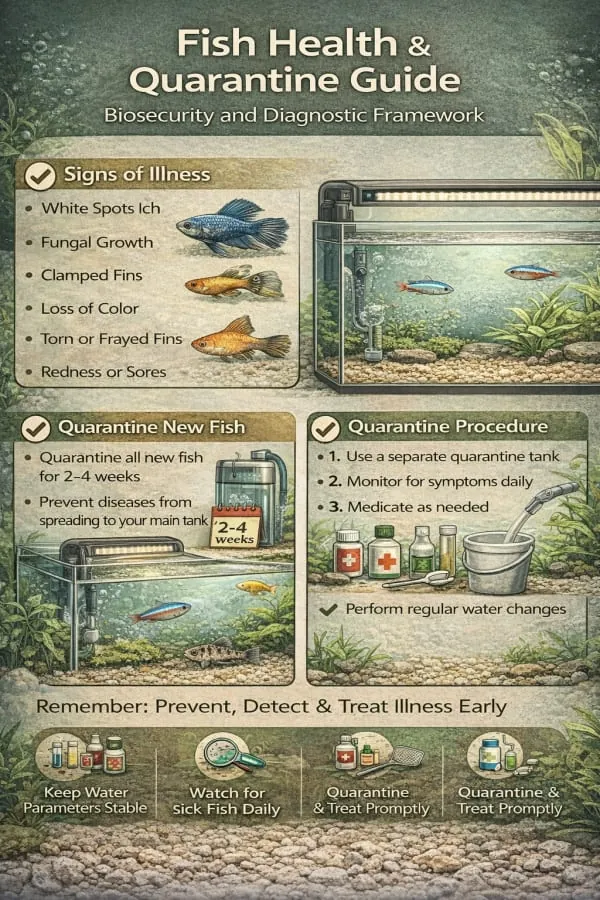
Quarantine new fish, spot the early warning signs, and treat disease without wrecking your tank. A practical freshwater fish health guide.

Acclimate new fish, shrimp, and coral safely: temperature floating, drip acclimation, plop-and-drop for shipped livestock, and the first 24 hours.
Keeping African Dwarf Frog?
AquaLens identifies your fish and plants from a photo, tracks water chemistry, and flags health issues early — free on iOS and Android.