Two-Stripe Apisto Care Guide
Apistogramma bitaeniata · Freshwater Fish
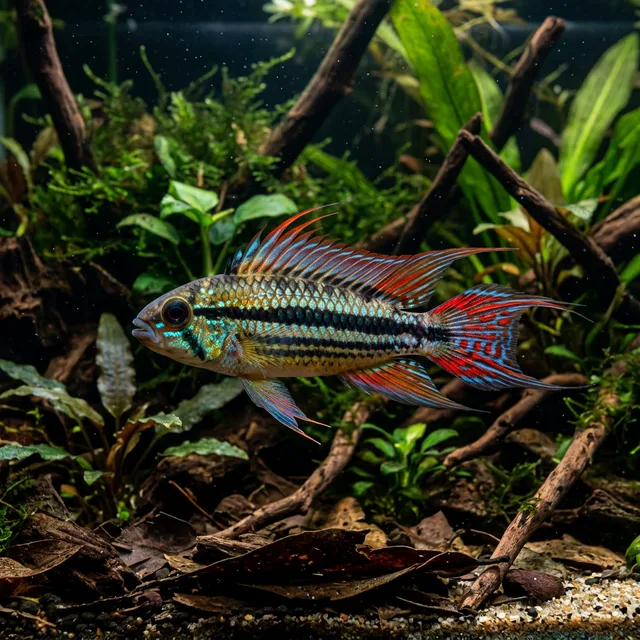
What Two-Stripe Apisto look like
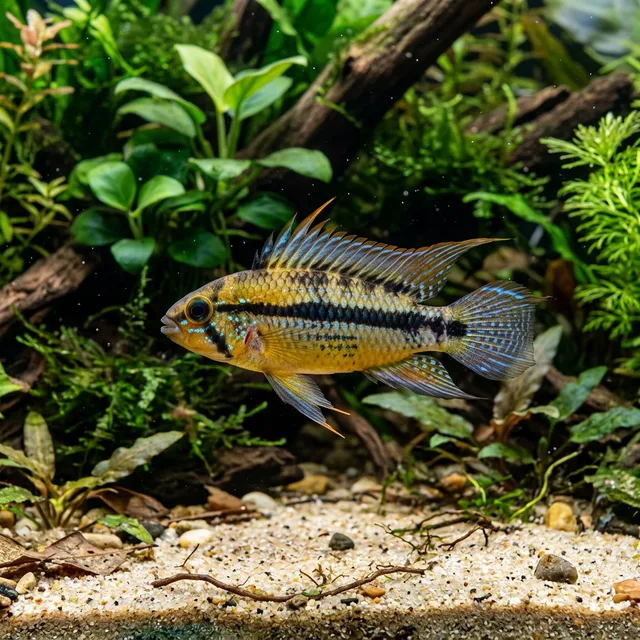
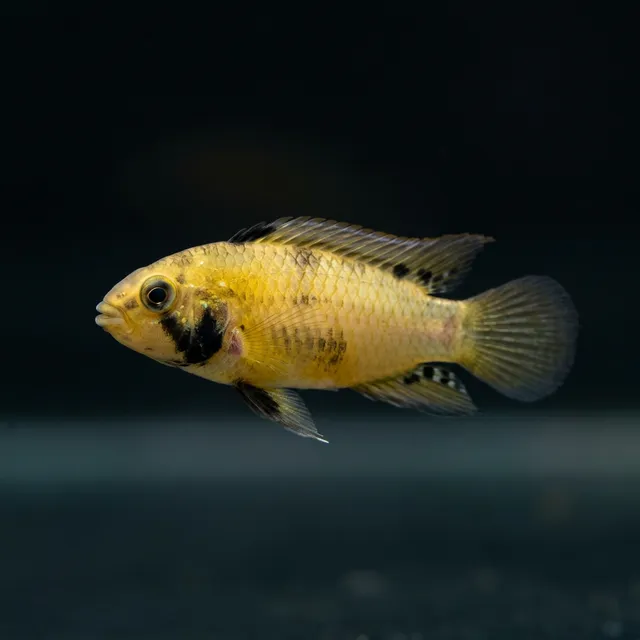
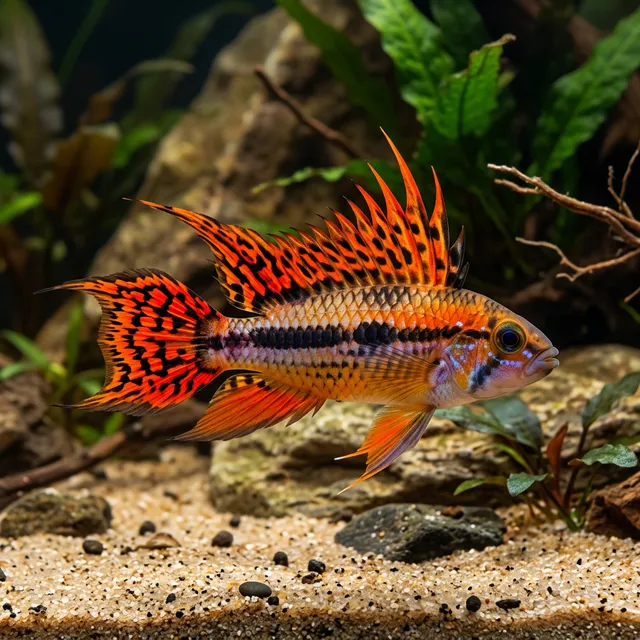
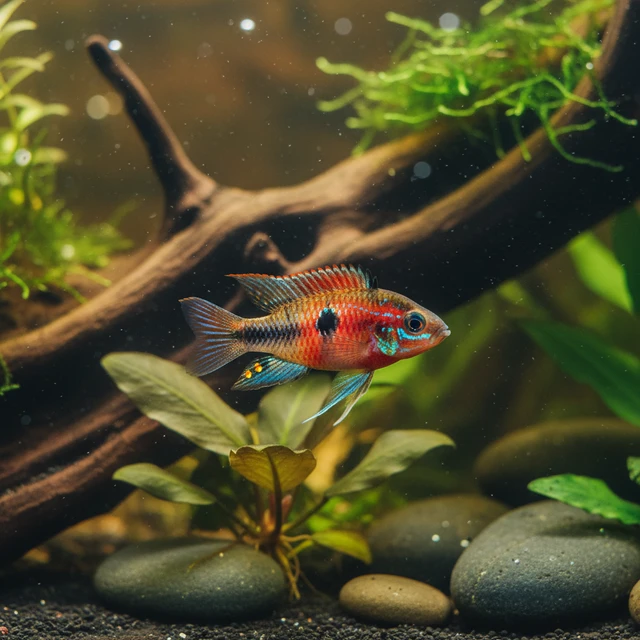
The Two-Stripe Apisto (Apistogramma bitaeniata) is a slender, laterally compressed cichlid characterized by its striking coloration and unique body shape. Adults typically reach a maximum size of approximately 3 inches (7.5 cm), with males generally being larger and more vibrantly colored than females, showcasing sexual dimorphism. The species exhibits two bold, unbroken black stripes running horizontally along its golden flank, which serve as a form of camouflage in its natural habitat. The dorsal fin is elongated and pointed, contributing to its distinctive appearance, while the caudal fin is forked and lyretail-shaped, enhancing its swimming agility. Defensive adaptations include a cryptic coloration that allows it to blend seamlessly into the leaf-littered substrate of its Amazonian environment, and it possesses a robust set of dentition suited for its carnivorous diet. The lateral line system is well-developed, aiding in the detection of vibrations in the water, which is crucial for both foraging and predator avoidance.
Behavior & temperament
The Two-Stripe Apisto is primarily a benthic dweller, often found in the lower strata of the water column among submerged vegetation and leaf litter. This species is known to be territorial, particularly during breeding, and exhibits a hierarchical social structure where dominant males establish territories that attract females. They are not obligate schoolers; however, they may form loose aggregations in the absence of aggression. Breeding behavior involves the female laying eggs in a concealed location, often within a cave or crevice, where she will guard them until they hatch. The temperament of the Two-Stripe Apisto can vary, with males displaying more aggressive behaviors during territorial disputes, while females tend to be more docile outside of breeding periods.
Diet & feeding
In the wild, the Two-Stripe Apisto primarily feeds on small invertebrates, including insect larvae and crustaceans, reflecting its carnivorous nature. In captivity, it requires a diet rich in protein, including high-quality pellets, frozen or live foods such as brine shrimp and daphnia, to maintain optimal health.
Behind the name
Apistogramma (from Greek 'apisto' meaning 'unfamiliar' and 'gramma' meaning 'letter' or 'character'); bitaeniata (from Latin 'bi-' meaning 'two' and 'taenia' meaning 'stripe').
Plan your tank
Check the numbers before you buy: tank volume, a stocking plan, cycle progress, water changes, and your ongoing care routine.
Keep reading
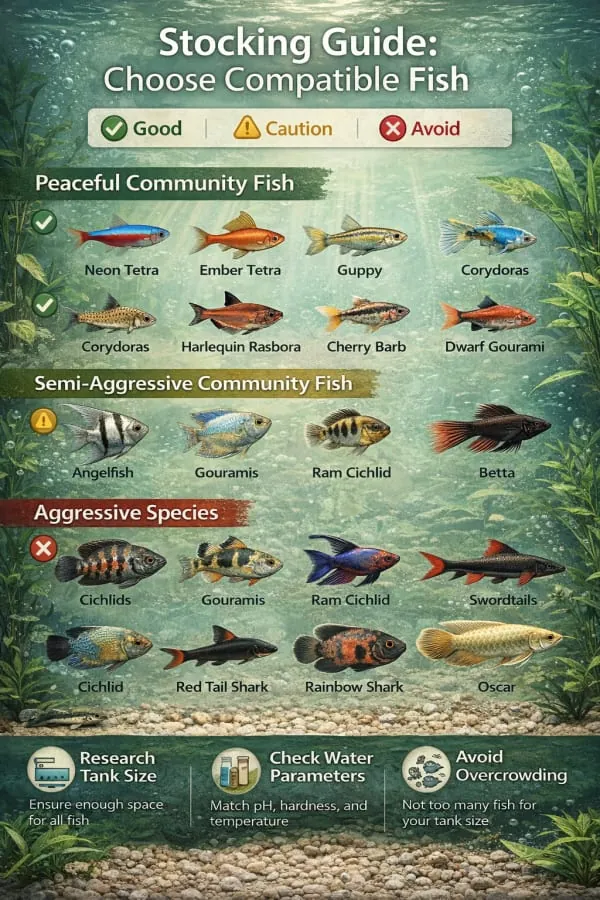
Choose compatible fish: school sizes, swimming zones, aggression, temperature and hardness matching, and honest bioload math for a peaceful community.
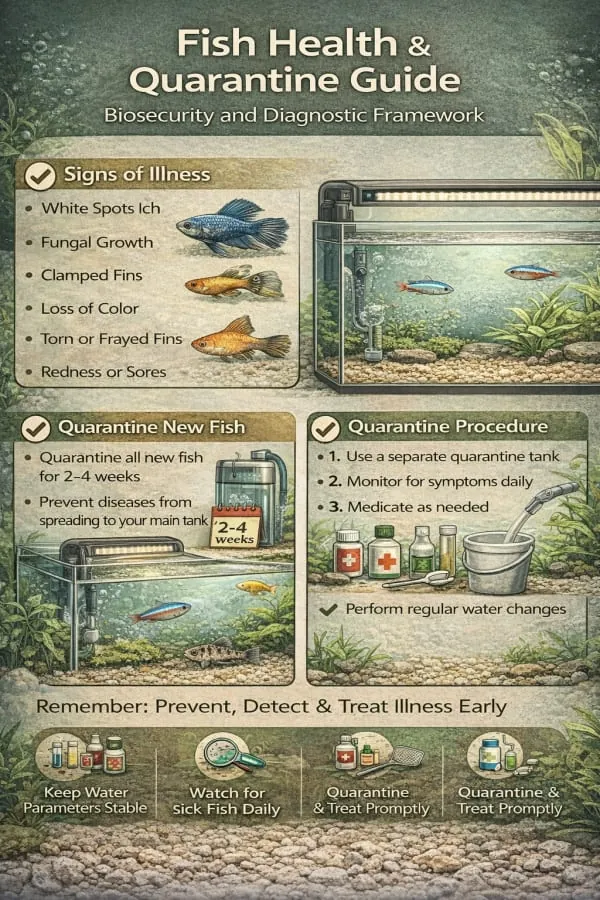
Quarantine new fish, spot the early warning signs, and treat disease without wrecking your tank. A practical freshwater fish health guide.
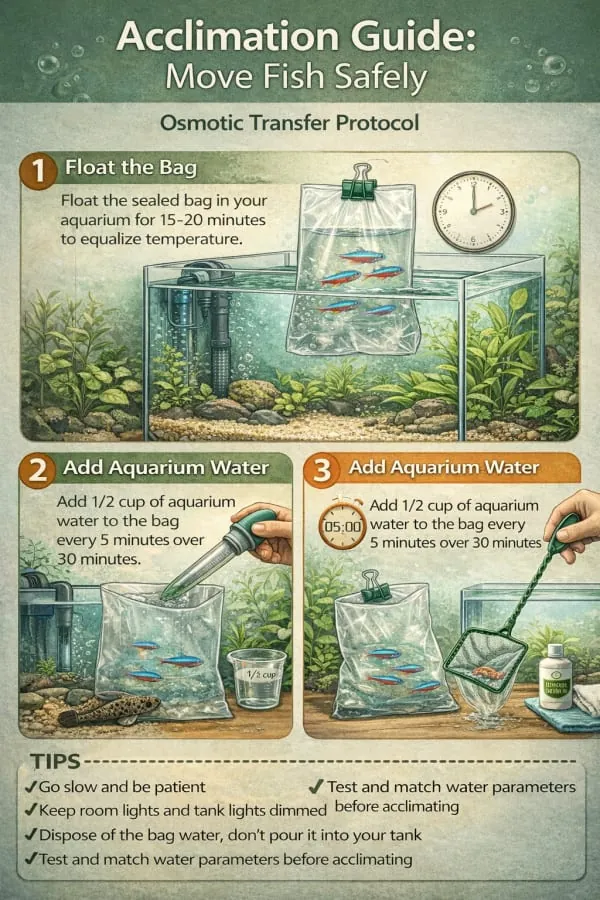
Acclimate new fish, shrimp, and coral safely: temperature floating, drip acclimation, plop-and-drop for shipped livestock, and the first 24 hours.
Keeping Two-Stripe Apisto?
AquaLens identifies your fish and plants from a photo, tracks water chemistry, and flags health issues early — free on iOS and Android.