Panduro Apisto Care Guide
Apistogramma panduro · Freshwater Fish
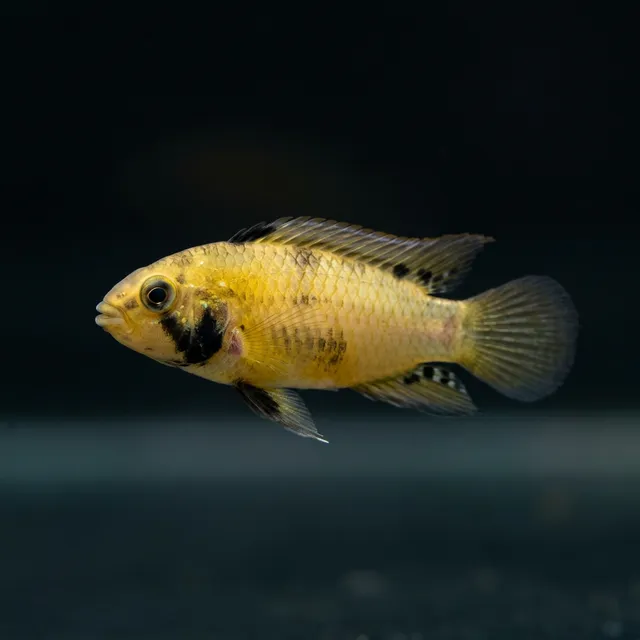
What Panduro Apisto look like
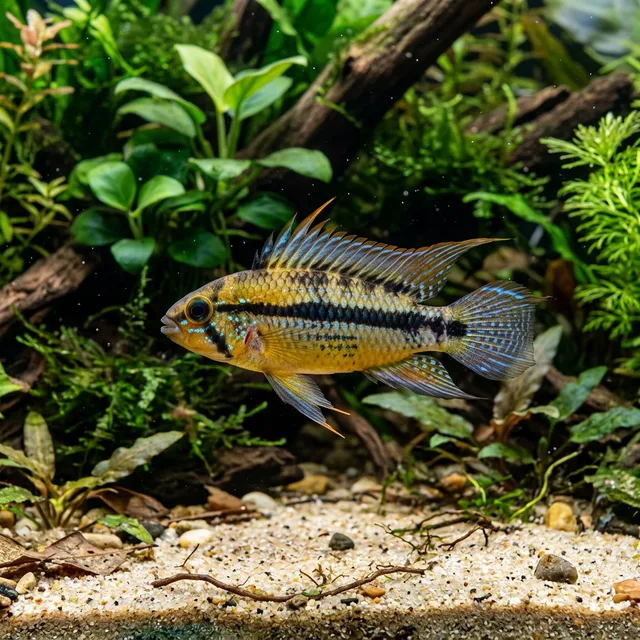
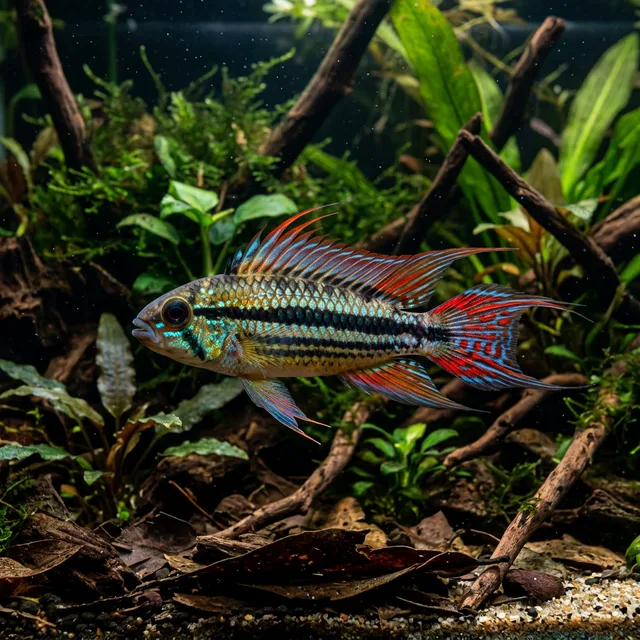
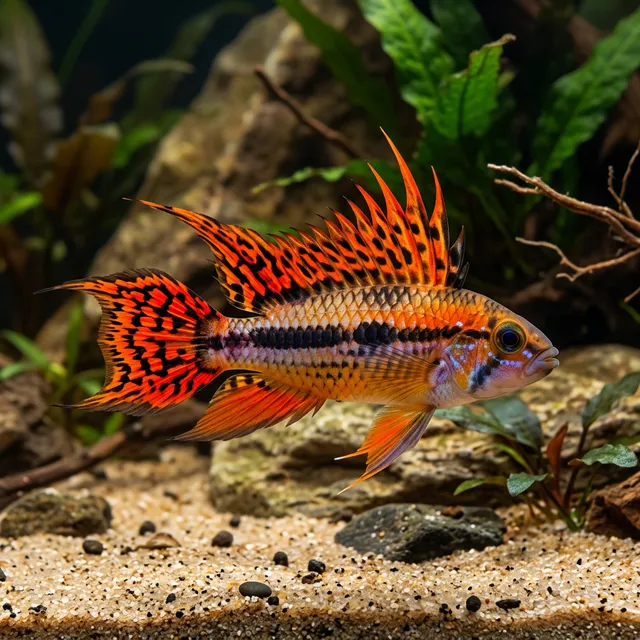
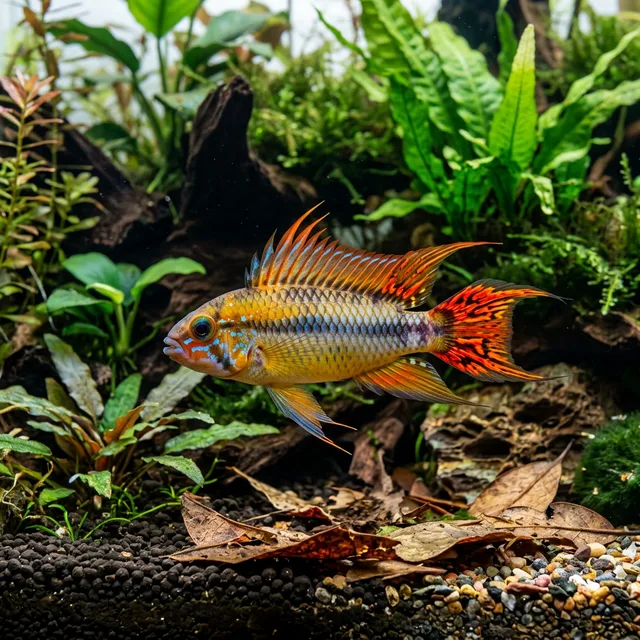
The Panduro Apisto (Apistogramma panduro) is a small, stocky cichlid characterized by its compact, laterally compressed body, reaching a maximum adult size of approximately 3 inches (7.5 cm). Sexual dimorphism is pronounced; males exhibit a striking iridescent blue coloration complemented by a prominent orange band along the caudal fin, while females are adorned with a vibrant yellow hue and a distinct black patch on their flanks. Both sexes possess a robust head with a slightly rounded snout and a terminal mouth equipped with small, conical teeth adapted for their carnivorous diet. The dorsal fin is elongated and pointed, extending towards the caudal fin, which is rounded and features a clean orange band. The species also displays a well-defined lateral line, which aids in the detection of vibrations in the water, a crucial adaptation for their benthic lifestyle.
Behavior & temperament
The Panduro Apisto is a monogamous species, typically forming stable pairs during breeding seasons. They are primarily benthic dwellers, often found in the lower strata of their aquatic environments, where they exhibit territorial behavior, particularly during spawning. This species is not an obligate schooler; instead, they prefer to establish a hierarchy within their pair, with males displaying more aggressive behaviors to defend their territory. Breeding involves the female laying eggs in a hidden location, which the male then guards. Their temperament is generally peaceful, though they can exhibit aggression when defending their nesting sites or during mating rituals.
Diet & feeding
In the wild, the Panduro Apisto primarily feeds on small invertebrates and zooplankton, reflecting its carnivorous nature. In captivity, it requires a diet rich in high-quality protein sources, such as live or frozen foods (e.g., brine shrimp, daphnia) and high-protein pellets to maintain optimal health.
Behind the name
The genus name 'Apistogramma' derives from the Greek 'apistos' (not certain) and 'gramma' (line or letter), referring to the uncertain classification of these fish. The species name 'panduro' is derived from the local name used in Peru, where this species is predominantly found.
Plan your tank
Check the numbers before you buy: tank volume, a stocking plan, cycle progress, water changes, and your ongoing care routine.
Keep reading

Choose compatible fish: school sizes, swimming zones, aggression, temperature and hardness matching, and honest bioload math for a peaceful community.
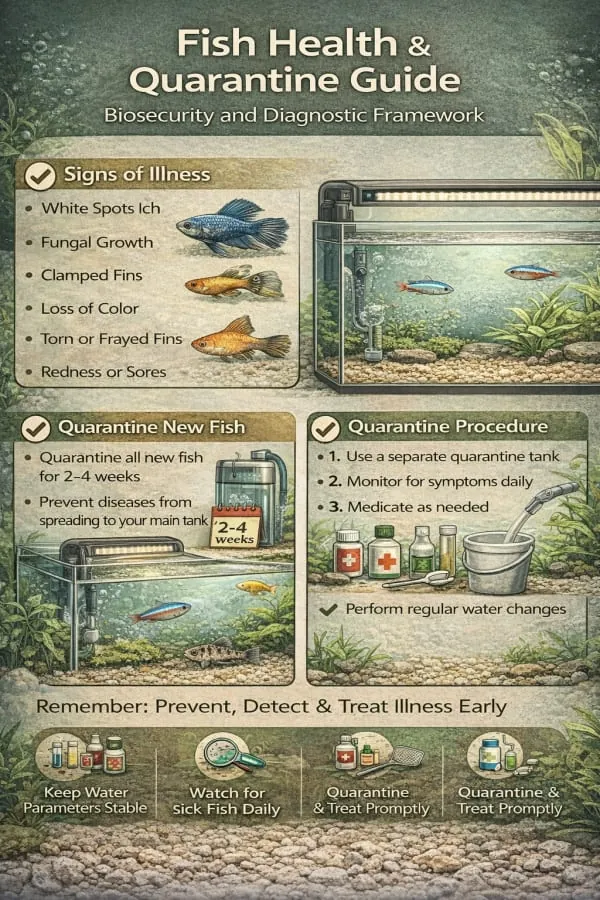
Quarantine new fish, spot the early warning signs, and treat disease without wrecking your tank. A practical freshwater fish health guide.

Acclimate new fish, shrimp, and coral safely: temperature floating, drip acclimation, plop-and-drop for shipped livestock, and the first 24 hours.
Keeping Panduro Apisto?
AquaLens identifies your fish and plants from a photo, tracks water chemistry, and flags health issues early — free on iOS and Android.