Blue Tuxedo Urchin Care Guide
Mespilia globulus · Saltwater Urchin
What Blue Tuxedo Urchin look like
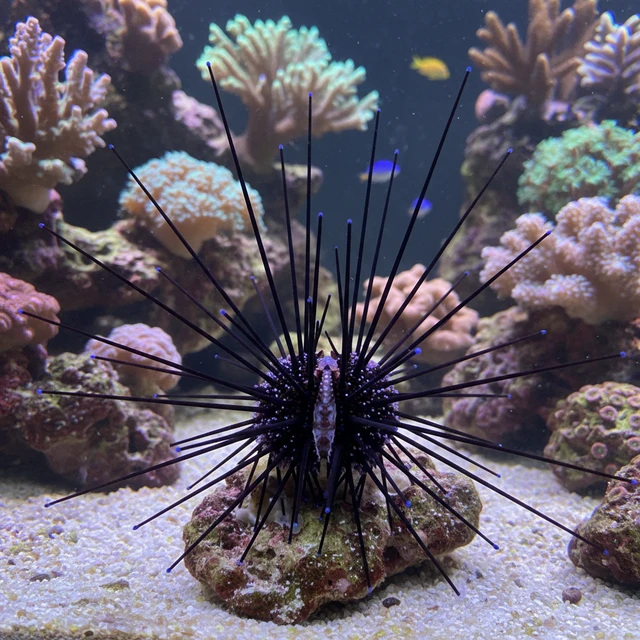
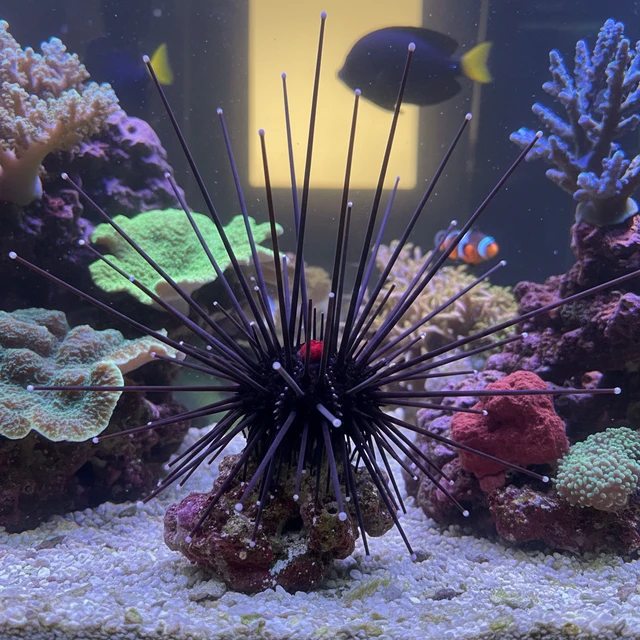
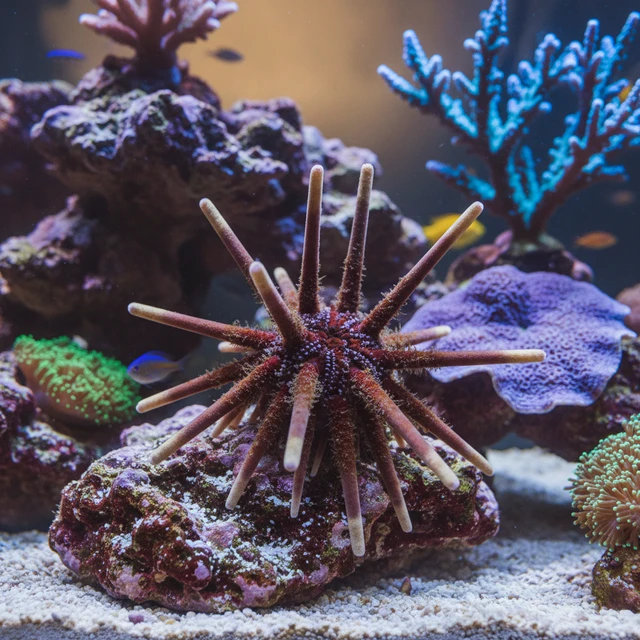
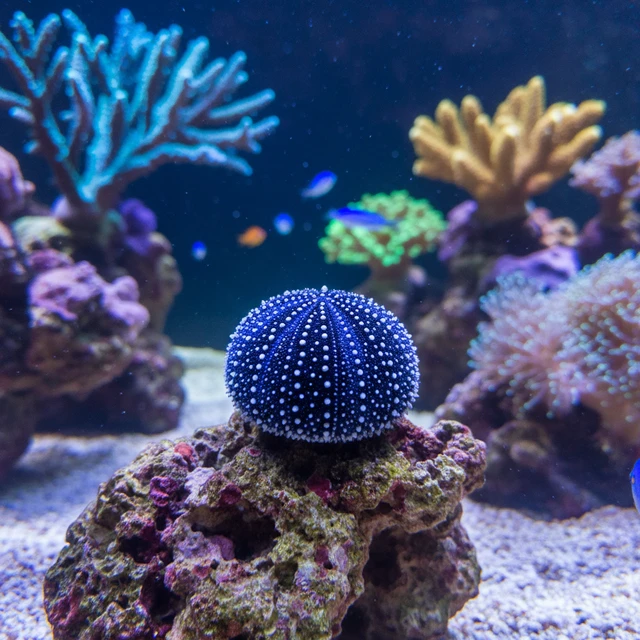
Mespilia globulus, commonly known as the Blue Tuxedo Urchin, exhibits a distinctive morphology characterized by its spherical body covered in vibrant blue spines, which can reach up to 4 inches (10 cm) in diameter. The spines are not only visually striking but also serve as a defensive adaptation against predators, providing both camouflage and a deterrent due to their sharpness. The urchin's test, or shell, is robust and typically displays a dark coloration that contrasts with the bright spines. Unique to this species is the presence of specialized tube feet that extend from the base of the spines, allowing for locomotion and feeding. The oral region is equipped with a complex jaw structure known as Aristotle's lantern, which is adapted for grazing on algae and detritus.
Behavior & temperament
Mespilia globulus is primarily a solitary invertebrate, exhibiting a non-aggressive temperament. It typically resides in crevices or among rocks in the reef, where it can graze on algae and organic matter. The urchin is mostly nocturnal, extending its spines and tube feet to forage during the night while retreating into protective habitats during the day. It has a notable ability to camouflage itself by incorporating debris and algae into its spines, enhancing its concealment from potential predators. This species does not exhibit significant social hierarchies but may be found in loose aggregations in areas with abundant food resources.
Diet & feeding
Mespilia globulus is primarily herbivorous, feeding on a diet of algae, detritus, and biofilm. In captivity, it requires a diet rich in marine algae and may benefit from supplemental feedings of spirulina or other algae-based foods.
Behind the name
The scientific name 'Mespilia' is derived from the Greek word 'mesos', meaning 'middle', and 'pilos', meaning 'hair', referring to the urchin's spiny appearance. The species name 'globulus' is Latin for 'little globe', indicative of its rounded body shape.
Plan your tank
Check the numbers before you buy: tank volume, salinity, salt mix, water changes, and your ongoing care routine. Keeping reef? Start from the Saltwater & Reef hub.
Keep reading
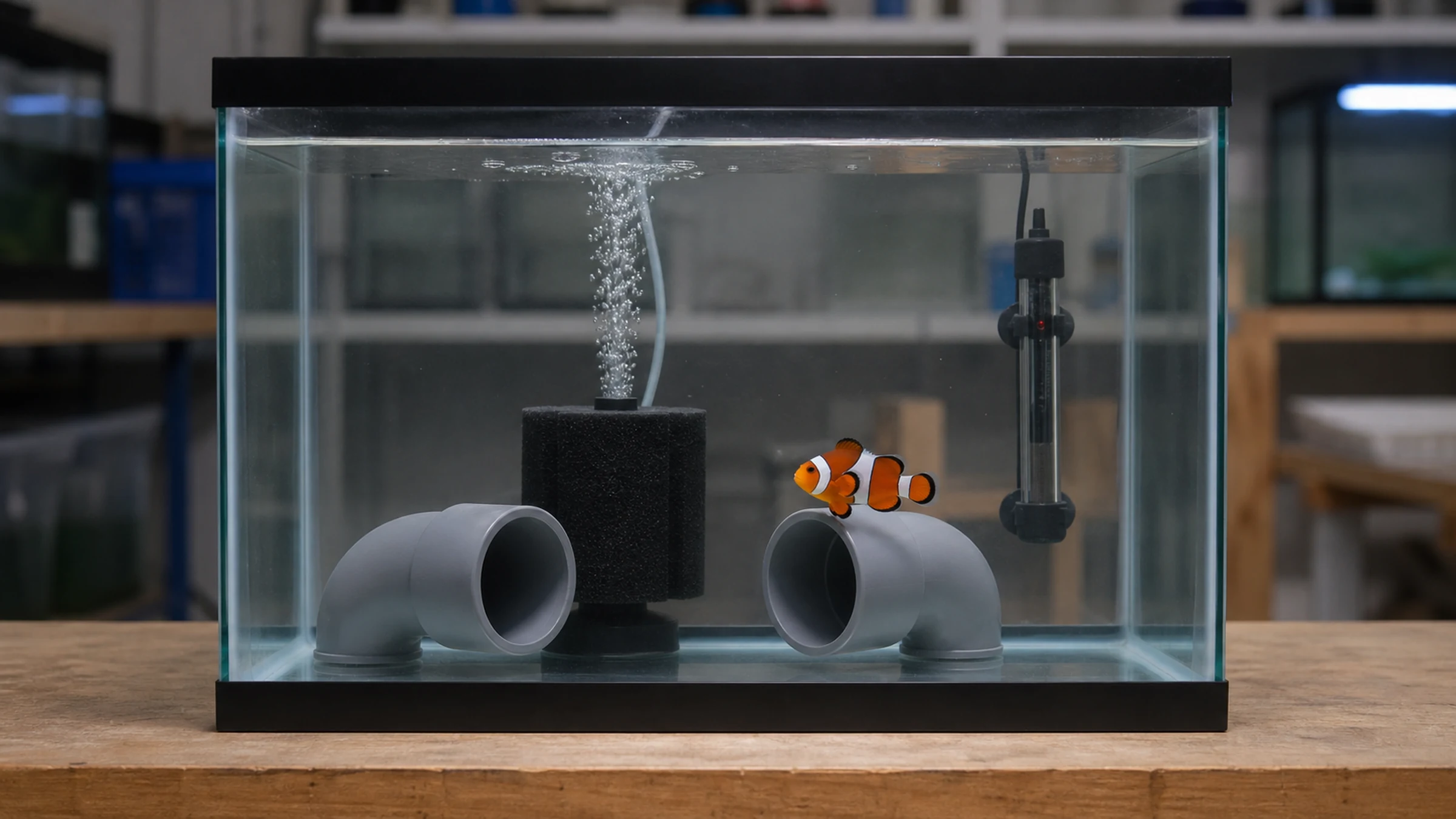
How to quarantine new saltwater fish against marine ich, velvet, and brooklynella: the QT tank, treatments, timelines, and the buy-clean shortcut.

What every reef parameter means and where to keep it: salinity, temperature, pH, alkalinity, calcium, magnesium, nitrate, and phosphate.

Choose compatible fish: school sizes, swimming zones, aggression, temperature and hardness matching, and honest bioload math for a peaceful community.
Keeping Blue Tuxedo Urchin?
AquaLens identifies your fish and plants from a photo, tracks water chemistry, and flags health issues early — free on iOS and Android.