Bucephalandra Care Guide
Bucephalandra sp. · Freshwater Plant
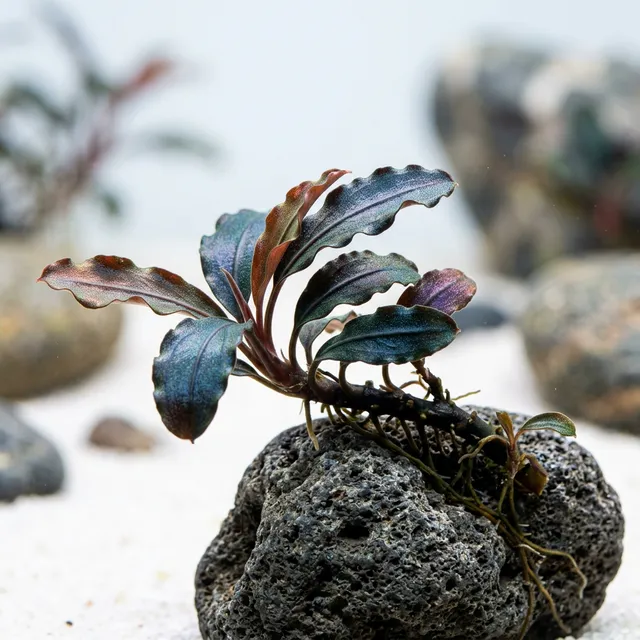
What Bucephalandra look like
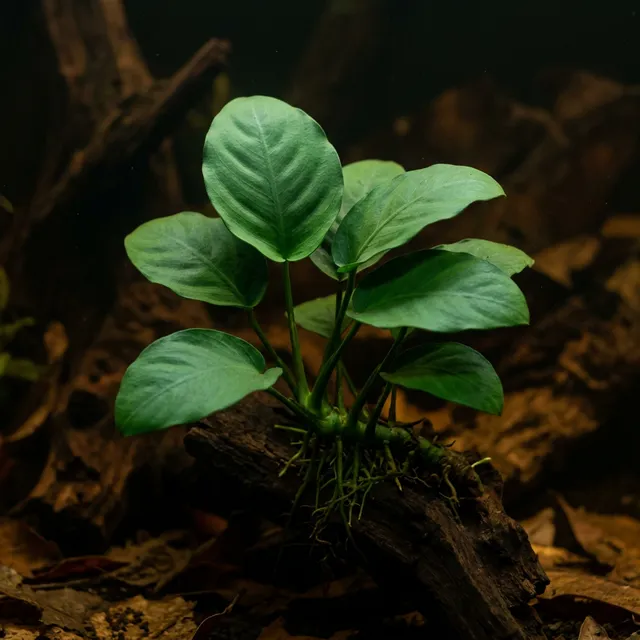
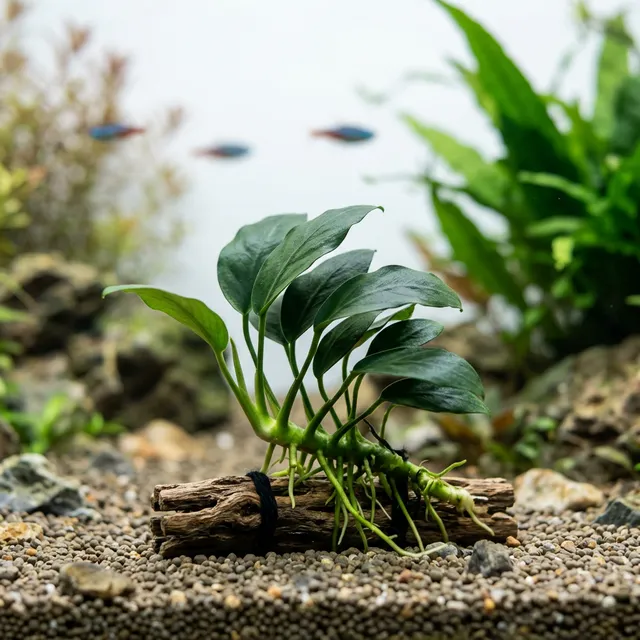
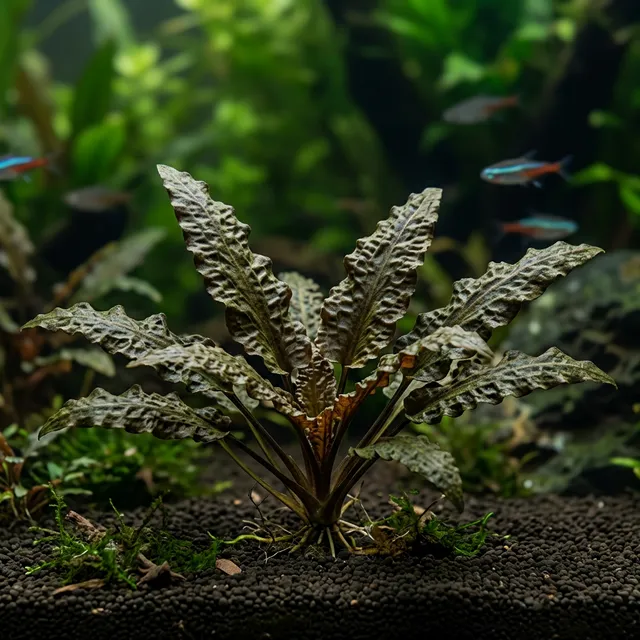
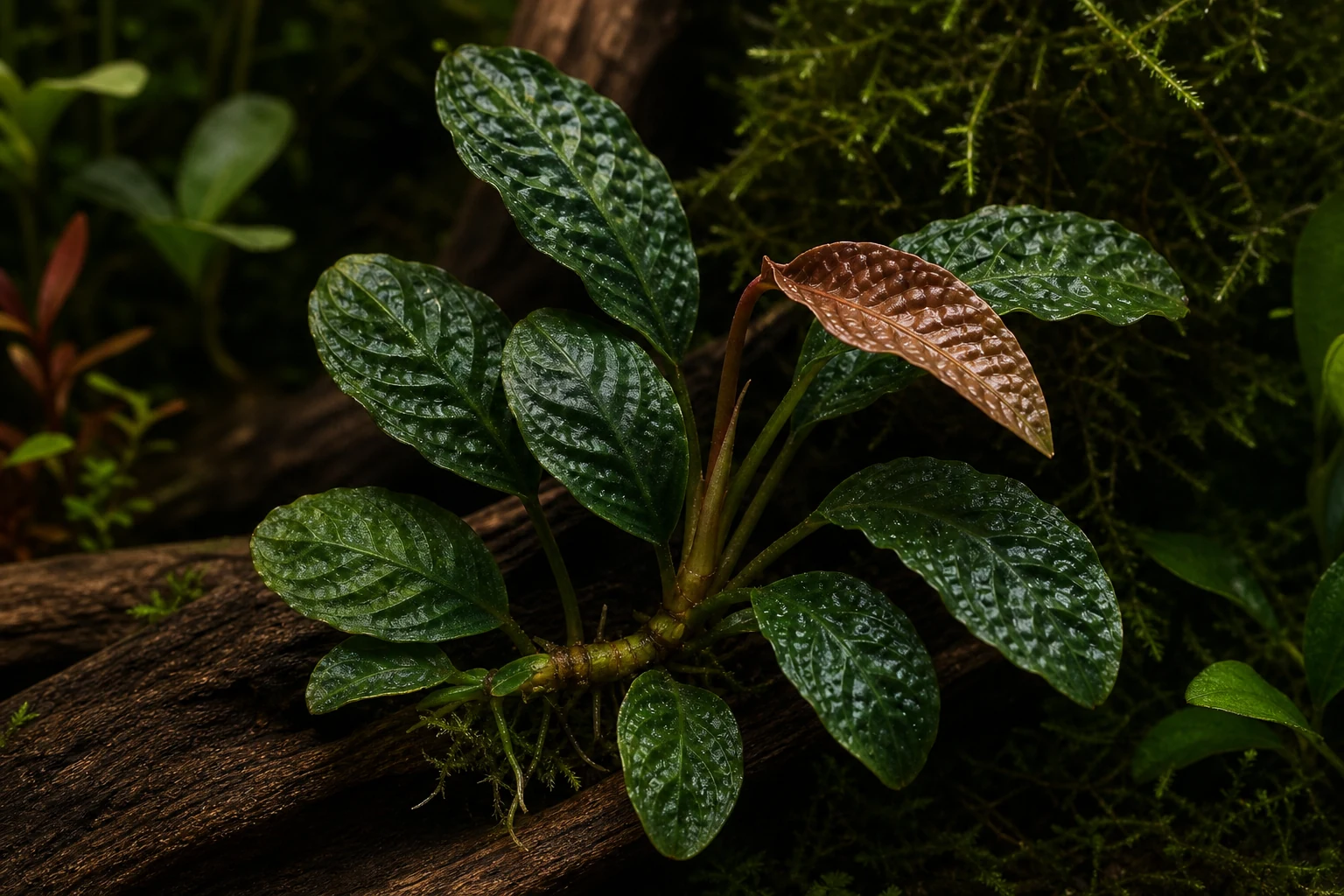
Bucephalandra sp. is a rare, intensely colored epiphytic aquatic plant belonging to the family Araceae. This species exhibits a range of leaf shapes, typically ovate to lanceolate, with a glossy, dark green to deep purple coloration that can exhibit iridescence under certain lighting conditions. The leaves can reach a maximum length of approximately 12 cm, with a width of 2-5 cm, depending on the specific variety and growing conditions. The plant's morphology is characterized by a robust rhizome system that anchors it securely to substrates, often found in the form of driftwood or rocks in its native habitat. While sexual dimorphism is not evident in the vegetative structures, reproductive features such as inflorescences can vary, with male and female flowers appearing on the same plant. Defensive adaptations include the production of secondary metabolites that may deter herbivory. Unique morphological features include a prominent midrib and a network of veins that enhance its structural integrity and water transport efficiency.
Behavior & temperament
Bucephalandra sp. primarily dwells in the benthic zone of slow-moving streams and rivers in Borneo, often found attached to submerged surfaces. It exhibits a solitary growth habit, though it can form dense colonies in optimal conditions. The plant is not known for aggressive interactions, as it primarily relies on photosynthesis for energy and does not compete aggressively for resources. Reproductive behavior involves the production of inflorescences that emerge above the water surface, where pollination occurs, followed by the development of seeds that can disperse to new locations. This species thrives in stable environments and does not exhibit significant behavioral changes in response to environmental fluctuations.
Diet & feeding
Bucephalandra sp. is an obligate autotroph, relying on photosynthesis as its primary means of sustenance. In captivity, it requires a well-lit environment with stable water conditions to facilitate optimal growth and photosynthetic activity.
Behind the name
Bucephalandra derives from the Greek 'bous' (meaning 'ox') and 'kephalē' (meaning 'head'), referring to the ox-head shape of the plant's leaves, combined with the suffix '-andra' indicating 'male' or 'man', often used in botanical nomenclature.
Plan your tank
Check the numbers before you buy: tank volume, a stocking plan, cycle progress, water changes, and your ongoing care routine.
Keep reading
Diagnose aquarium plant deficiencies by leaf age and symptom: yellowing, pinholes, twisting, and stunting. Read the pattern, then fix it safely.

PAR-first planted tank lighting: choose intensity by what you grow, set photoperiod and spectrum, kill shadows, and hold algae back without overspending.

Aquarium CO₂ injection made safe: how carbon, light, and nutrients balance, which system to buy, and how to dial it in without gassing your fish.
Keeping Bucephalandra?
AquaLens identifies your fish and plants from a photo, tracks water chemistry, and flags health issues early — free on iOS and Android.