Burmese Border Loach Care Guide
Syncrossus berdmorei · Freshwater Fish
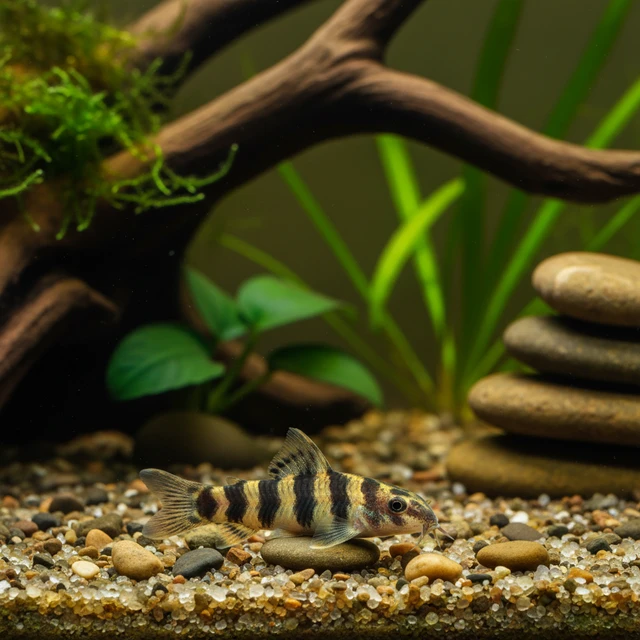
What Burmese Border Loach look like
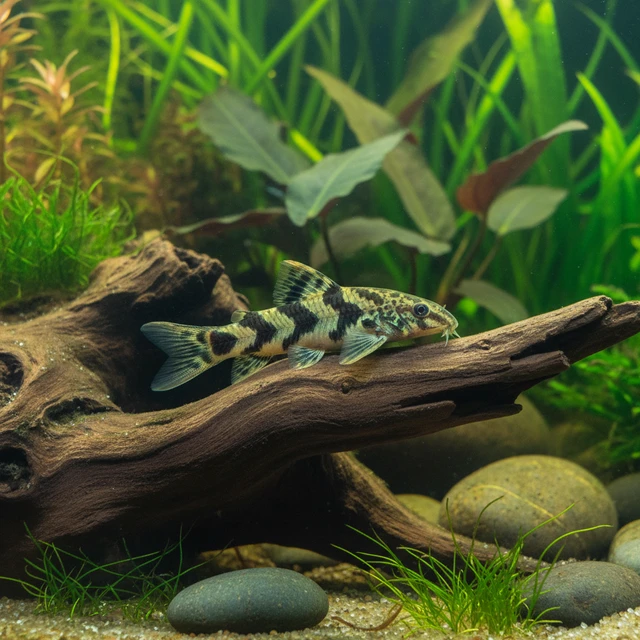
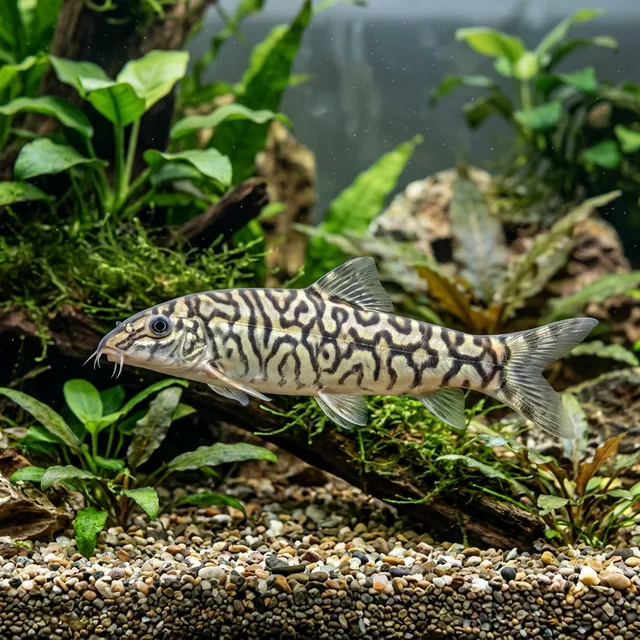
The Burmese Border Loach, Syncrossus berdmorei, exhibits a robust, laterally compressed body with a maximum adult size ranging from 6 to 12 inches. This species displays pronounced sexual dimorphism, with males typically being more slender and exhibiting more vibrant coloration compared to the broader, more subdued females. The loach is characterized by its striking coloration, featuring a complex pattern of stark, deeply intense black vertical tiger banding that overlays a background of densely packed, fine horizontal lines composed of millions of tiny black stipples. This unique pattern serves as a form of camouflage within its natural habitat. Additionally, the species possesses a well-developed lateral line system, which aids in detecting vibrations in the water, and its dentition is adapted for an omnivorous diet, featuring small, conical teeth suitable for grasping both plant material and small invertebrates. The presence of an adipose fin further enhances its streamlined appearance, while its pectoral and pelvic fins are well-developed, allowing for agile movement in the substrate.
Behavior & temperament
Syncrossus berdmorei is known for its aggressive temperament, often displaying territorial behavior, particularly among conspecifics. This species is not an obligate schooler; however, it can be found in small groups in the wild, where a loose social hierarchy may develop based on size and aggression levels. The loach primarily occupies the benthic zone of freshwater habitats, where it forages among rocks and substrate. Breeding behavior in this species remains largely undocumented in captivity, but it is presumed to be an egg scatterer, releasing fertilized eggs among vegetation. Its temperament can be described as bold and assertive, often challenging tank mates for territory and food.
Diet & feeding
In the wild, the Burmese Border Loach is an omnivore, feeding on a varied diet that includes small invertebrates, detritus, and plant matter. In captivity, it requires a balanced diet consisting of high-quality pellets, live or frozen foods such as bloodworms and brine shrimp, and occasional vegetable matter to meet its nutritional needs.
Behind the name
Syncrossus (from Greek, meaning 'together' or 'in union'); berdmorei (named in honor of the British naturalist, Thomas Berdmore).
Plan your tank
Check the numbers before you buy: tank volume, a stocking plan, cycle progress, water changes, and your ongoing care routine.
Keep reading

Choose compatible fish: school sizes, swimming zones, aggression, temperature and hardness matching, and honest bioload math for a peaceful community.
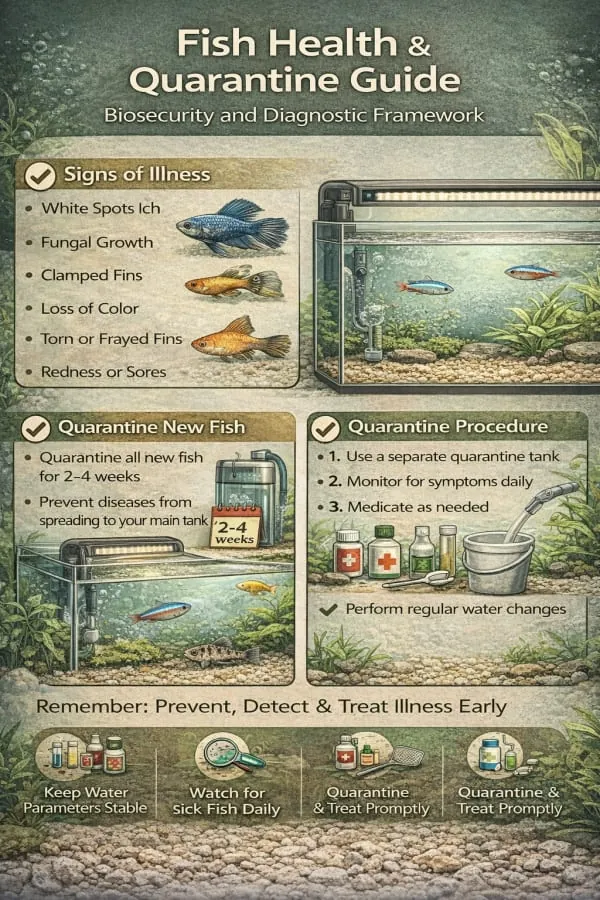
Quarantine new fish, spot the early warning signs, and treat disease without wrecking your tank. A practical freshwater fish health guide.

Acclimate new fish, shrimp, and coral safely: temperature floating, drip acclimation, plop-and-drop for shipped livestock, and the first 24 hours.
Keeping Burmese Border Loach?
AquaLens identifies your fish and plants from a photo, tracks water chemistry, and flags health issues early — free on iOS and Android.