Clown Loach Care Guide
Chromobotia macracanthus · Freshwater Fish
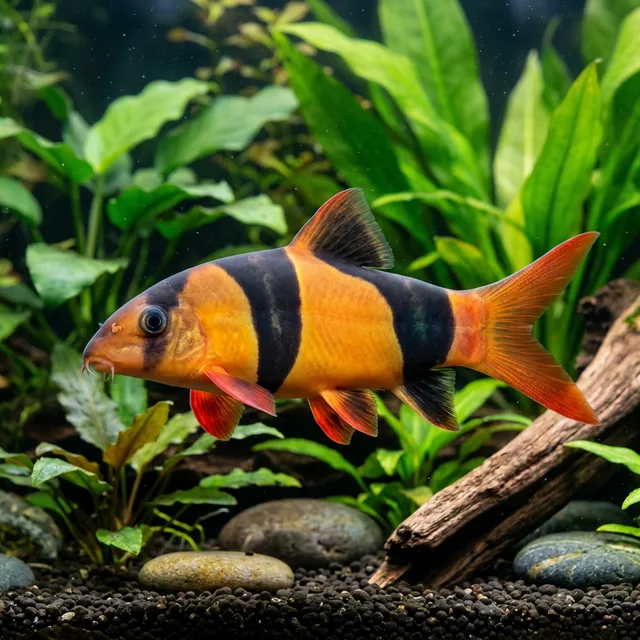
What Clown Loach look like
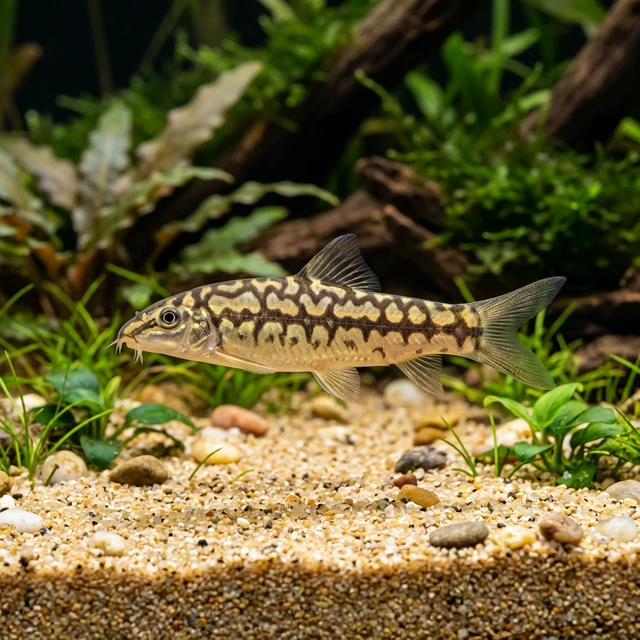
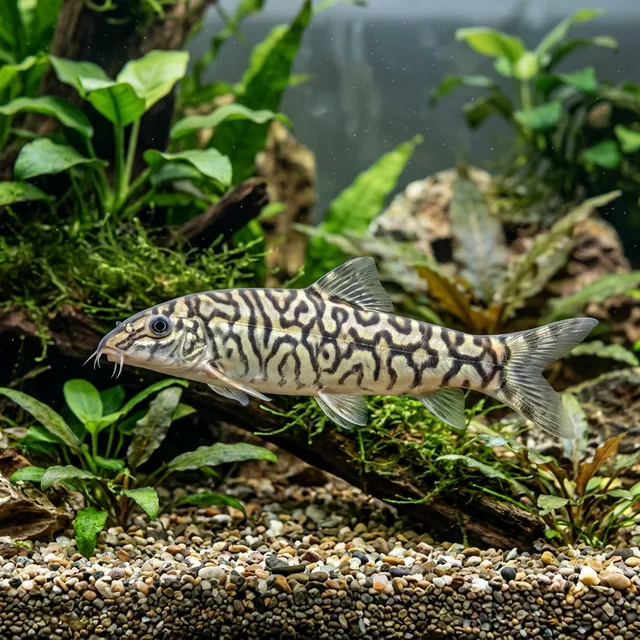
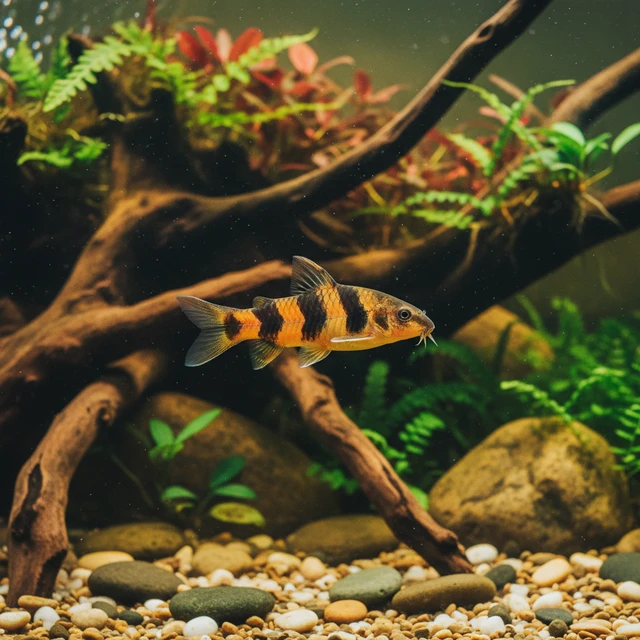
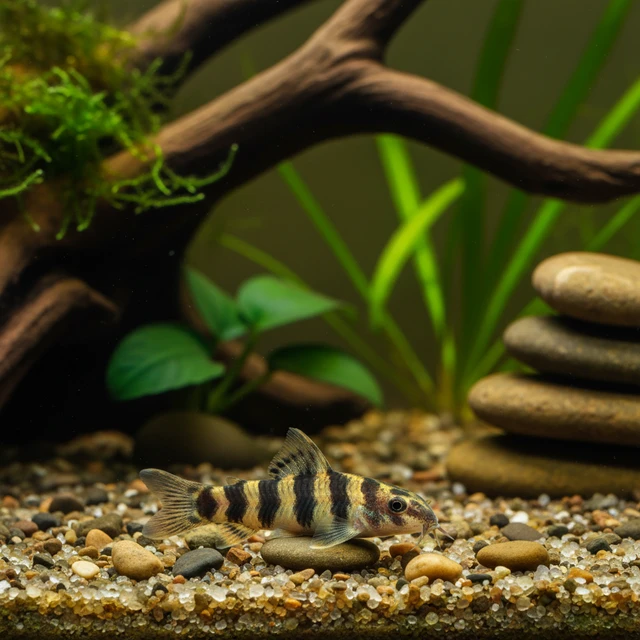
Chromobotia macracanthus, commonly known as the Clown Loach, exhibits a fusiform body shape that can reach a maximum adult size of approximately 5 to 15 inches (12.7 to 38.1 cm). This species is characterized by its striking coloration, featuring a vibrant orange to yellow body adorned with bold black vertical stripes that serve as a form of disruptive coloration. Sexual dimorphism is subtle; males tend to be slightly smaller and more slender than females, particularly during the breeding season when females exhibit a more rounded abdomen. The Clown Loach possesses unique morphological adaptations, including a series of sharp spines located on the pectoral fins and a prominent, elongated dorsal fin that can be raised as a defensive mechanism against predators. Additionally, they have a well-developed lateral line system that aids in navigation and detection of vibrations in their environment, while their dentition is adapted for an omnivorous diet, featuring small, conical teeth suitable for grazing on substrates and consuming a variety of food sources.
Behavior & temperament
Clown Loaches are social fish that thrive in groups, exhibiting a strong tendency to form schools, which provides safety in numbers. They are primarily benthic dwellers, often foraging along the substrate for food, but they can also be observed in the mid-water column during active periods. Their behavior is characterized by a playful and inquisitive nature, often engaging in activities such as hiding in crevices or interacting with tank mates. Breeding behavior in captivity has been observed to be complex, as they are egg scatterers, requiring specific environmental cues to trigger spawning. Clown Loaches are generally peaceful but can display territorial aggression during breeding or when kept in insufficient numbers, making it essential to maintain a suitable social structure within the aquarium.
Diet & feeding
In the wild, Clown Loaches are omnivorous, feeding on a varied diet that includes small invertebrates, plant matter, and detritus. In captivity, they require a balanced diet consisting of high-quality sinking pellets, live or frozen foods such as bloodworms and brine shrimp, along with occasional vegetable matter to ensure optimal health and coloration.
Behind the name
The genus name 'Chromobotia' derives from the Greek 'chroma' (color) and 'botia' (a type of fish), while the species name 'macracanthus' comes from the Greek 'makros' (long) and 'akantha' (thorn), referring to the long spines on the pectoral fins.
Plan your tank
Check the numbers before you buy: tank volume, a stocking plan, cycle progress, water changes, and your ongoing care routine.
Keep reading
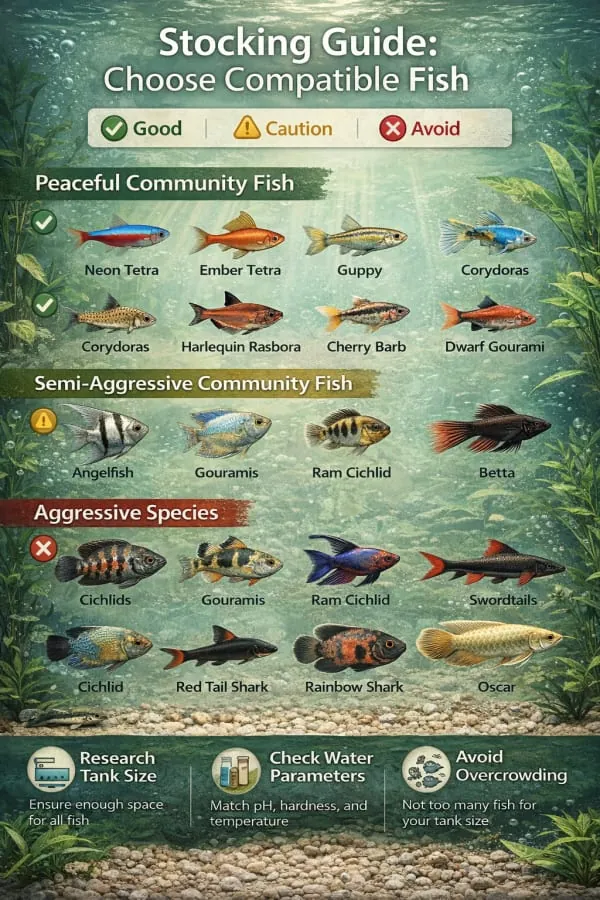
Choose compatible fish: school sizes, swimming zones, aggression, temperature and hardness matching, and honest bioload math for a peaceful community.
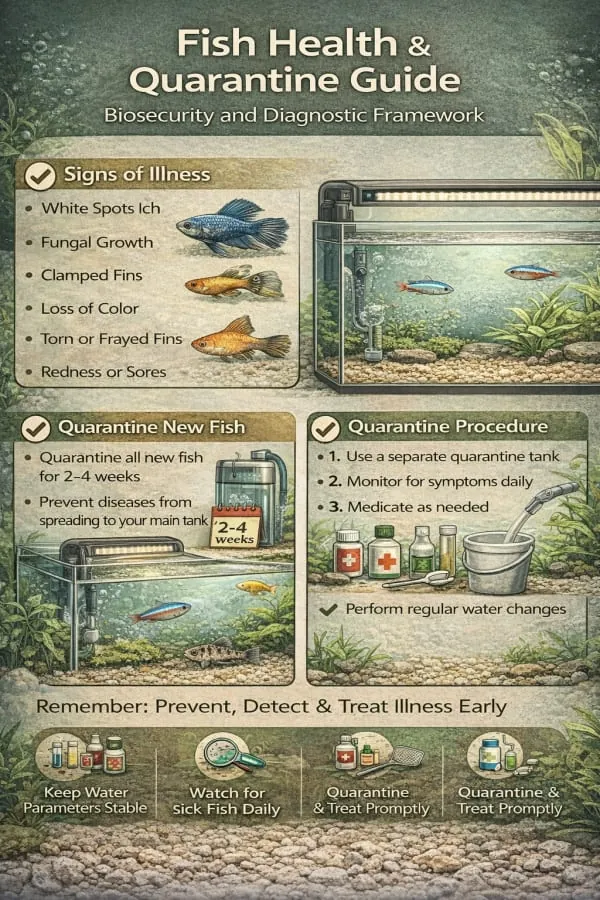
Quarantine new fish, spot the early warning signs, and treat disease without wrecking your tank. A practical freshwater fish health guide.
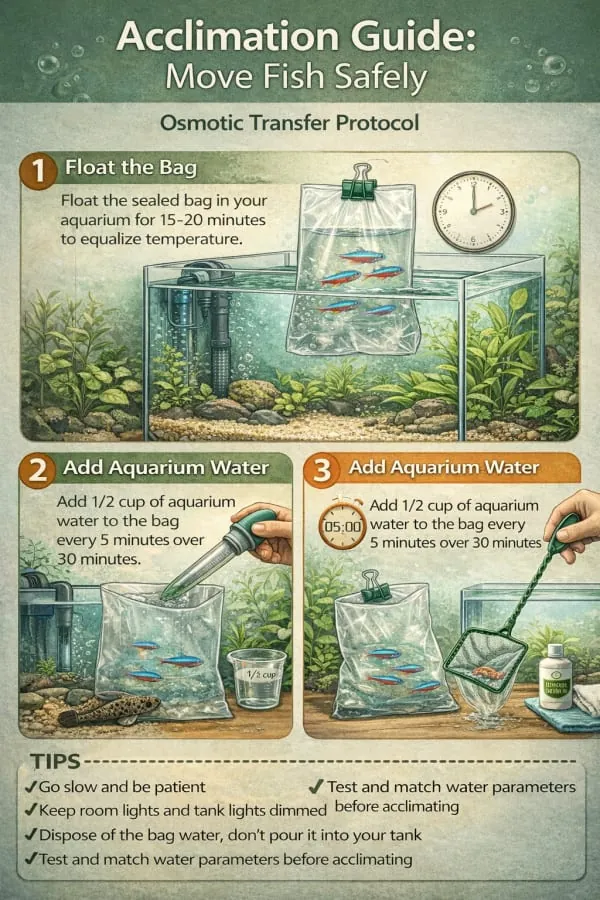
Acclimate new fish, shrimp, and coral safely: temperature floating, drip acclimation, plop-and-drop for shipped livestock, and the first 24 hours.
Keeping Clown Loach?
AquaLens identifies your fish and plants from a photo, tracks water chemistry, and flags health issues early — free on iOS and Android.