CPO (Mexican Dwarf) Care Guide
Cambarellus patzcuarensis · Freshwater Invert
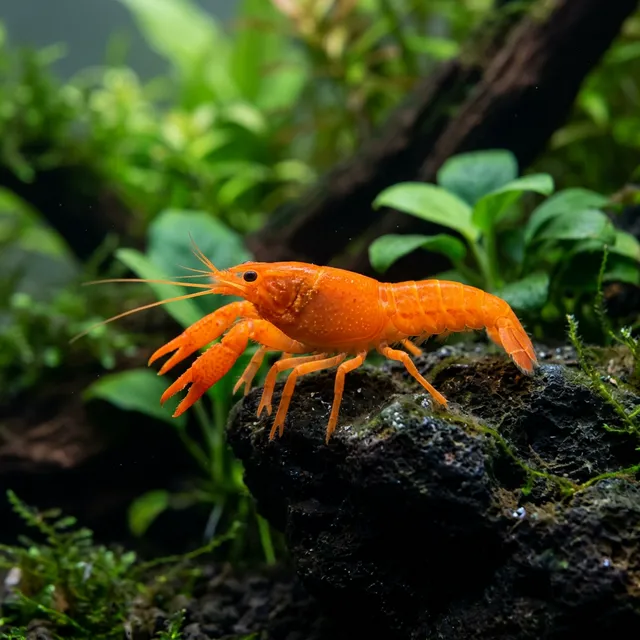
What CPO (Mexican Dwarf) look like
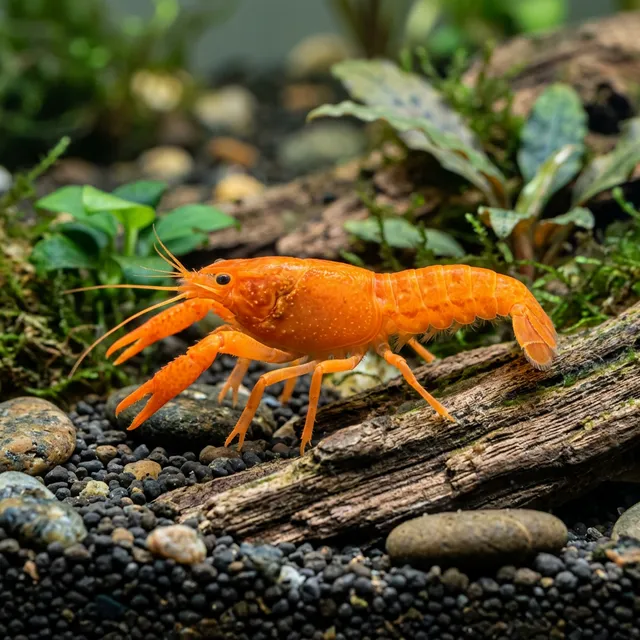
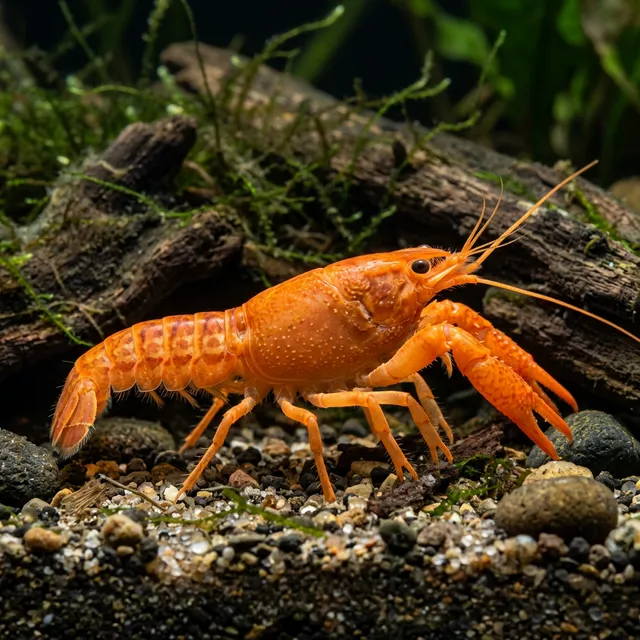
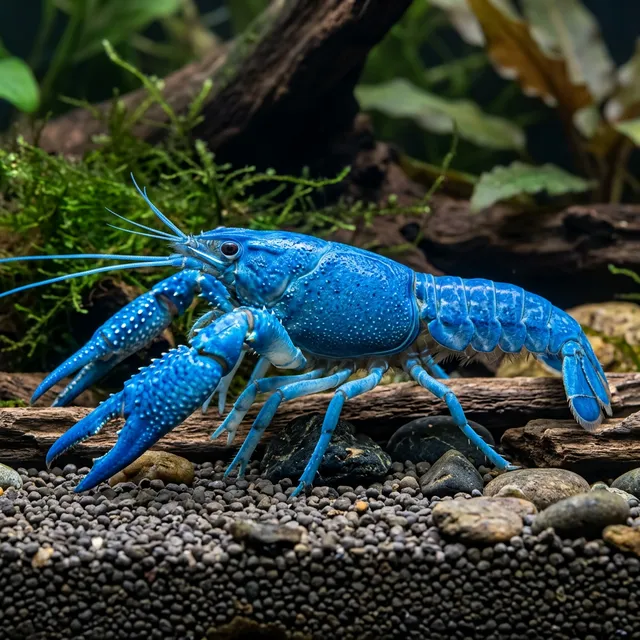
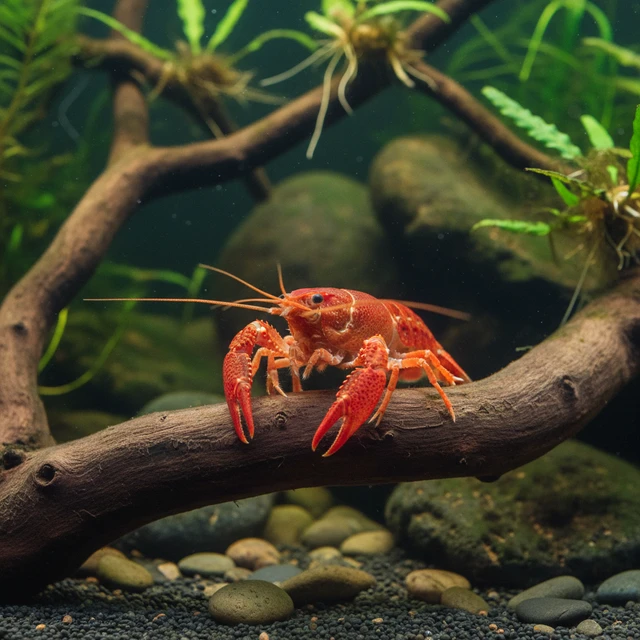
Cambarellus patzcuarensis, commonly known as the Mexican Dwarf Crayfish, exhibits a diminutive and robust body structure, typically reaching a maximum adult size of 1.5 inches (approximately 3.8 cm). This species is characterized by its striking, solid coloration, which ranges from a vibrant fiery orange to a deep red, providing excellent camouflage among aquatic vegetation. The crayfish possesses two small but distinct pinching claws, which are proportionate to its body size and serve as both defensive adaptations and tools for foraging. Morphologically, the body is laterally compressed with a smooth carapace, and the presence of a well-defined rostrum enhances its predatory capabilities. Notably, the Mexican Dwarf Crayfish lacks the extensive chelae found in larger crayfish species, making it less intimidating to potential threats. Its exoskeleton is equipped with a thin layer of protective chitin, which aids in defense against predators.
Behavior & temperament
Cambarellus patzcuarensis is primarily a solitary and territorial species, often establishing a hierarchy within confined spaces, such as crevices and under rocks in its natural habitat. This species typically dwells in the benthic zone of freshwater environments, where it forages among leaf litter and aquatic plants. During breeding, the Mexican Dwarf Crayfish exhibits a unique reproductive behavior, where females carry fertilized eggs under their tails until they hatch, a characteristic known as ovoviviparity. Their temperament is generally peaceful; however, males may display aggressive behaviors towards one another, especially during mating season or when competing for territory.
Diet & feeding
In the wild, Cambarellus patzcuarensis is an omnivorous scavenger, feeding on detritus, algae, and small invertebrates. In captivity, it requires a varied diet that includes high-quality sinking pellets, blanched vegetables, and occasional protein sources such as bloodworms or brine shrimp to ensure optimal health.
Behind the name
Cambarellus (from 'Cambarellus', a diminutive form of 'Cambarus', meaning 'crayfish'); patzcuarensis (from 'Pátzcuaro', the name of the lake in Mexico where this species is endemic).
Plan your tank
Check the numbers before you buy: tank volume, a stocking plan, cycle progress, water changes, and your ongoing care routine.
Keep reading

Choose compatible fish: school sizes, swimming zones, aggression, temperature and hardness matching, and honest bioload math for a peaceful community.
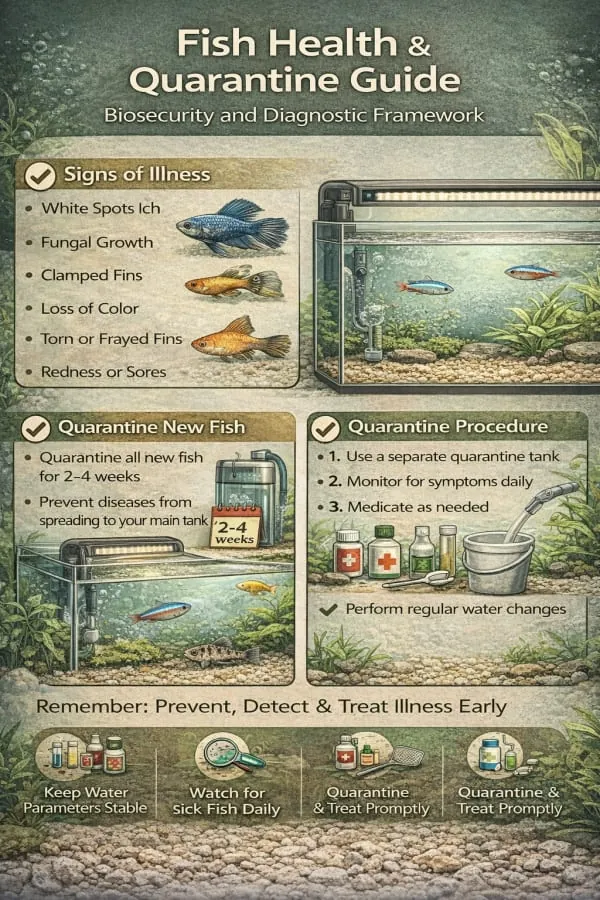
Quarantine new fish, spot the early warning signs, and treat disease without wrecking your tank. A practical freshwater fish health guide.
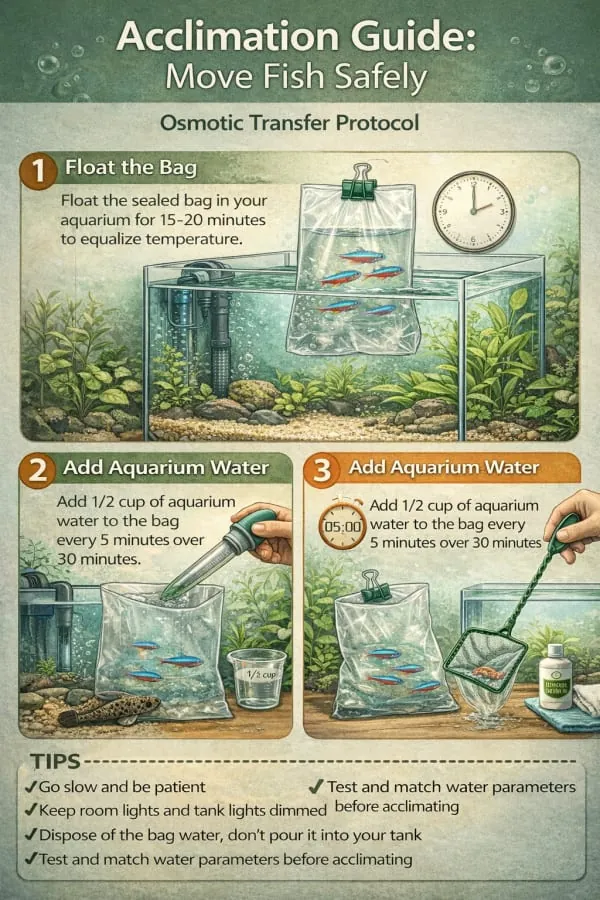
Acclimate new fish, shrimp, and coral safely: temperature floating, drip acclimation, plop-and-drop for shipped livestock, and the first 24 hours.
Keeping CPO (Mexican Dwarf)?
AquaLens identifies your fish and plants from a photo, tracks water chemistry, and flags health issues early — free on iOS and Android.