Red Swamp Crayfish Care Guide
Procambarus clarkii · Freshwater Invert
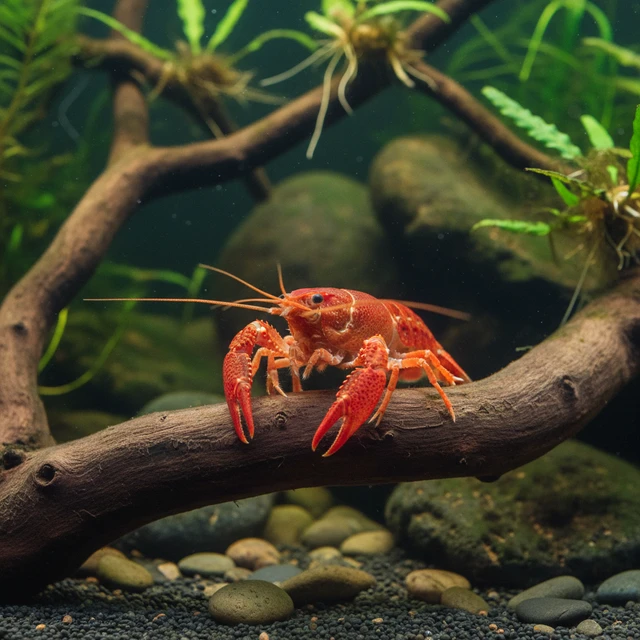
What Red Swamp Crayfish look like
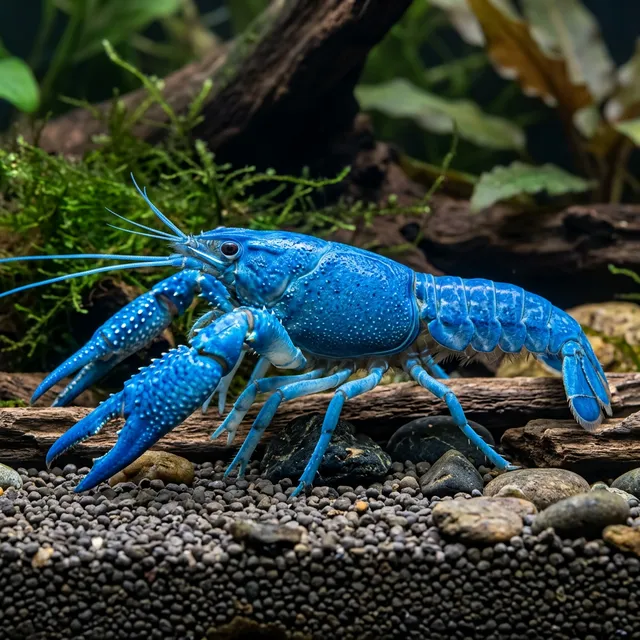
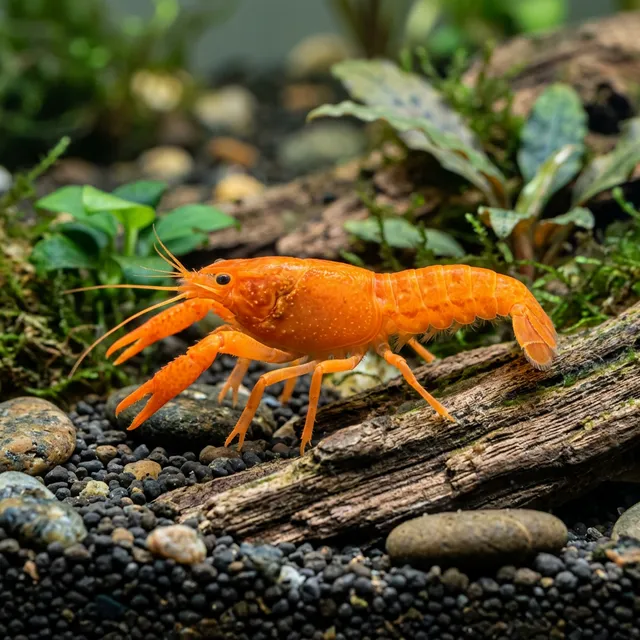
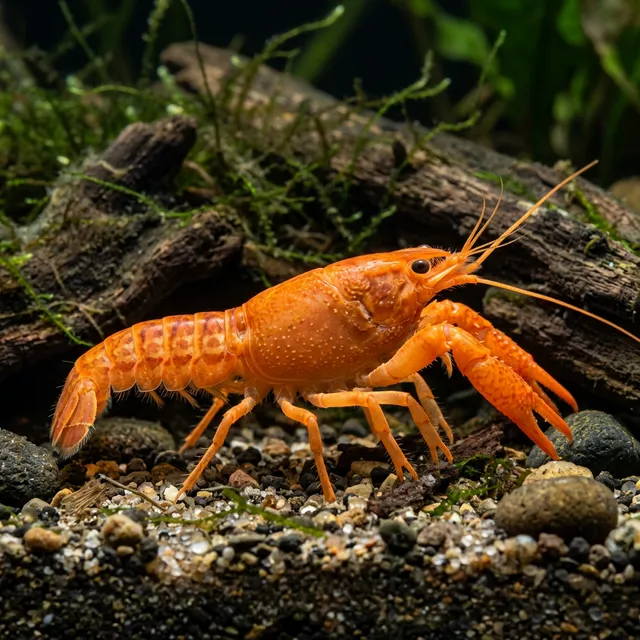
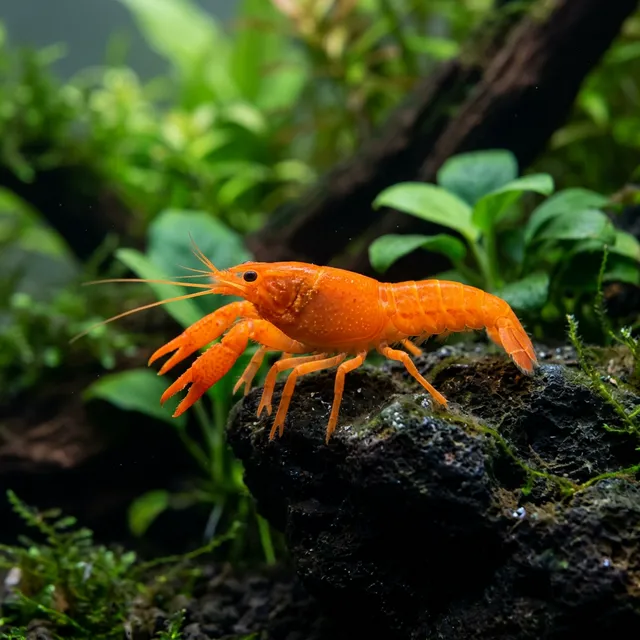
Procambarus clarkii, commonly known as the Red Swamp Crayfish, exhibits a robust and heavily armored body that typically ranges from 4 to 6 inches in length, with some individuals reaching up to 25 inches under optimal conditions. The exoskeleton is characterized by a vibrant red coloration, which serves both as a warning to potential predators and as a means of camouflage among aquatic vegetation. Sexual dimorphism is evident, with males generally possessing larger, more pronounced claws (chelae) than females, which are more slender. The body is laterally compressed, featuring a broad carapace and a segmented abdomen that aids in locomotion. Notable morphological adaptations include a well-developed rostrum and prominent antennae, which enhance sensory perception. The presence of a distinct lateral line system allows for detection of water movements, while the presence of an adipose fin contributes to stability during swimming. Defensive adaptations include the ability to burrow into substrate and a formidable claw pinch that deters predators.
Behavior & temperament
The Red Swamp Crayfish is primarily a benthic organism, often found dwelling in freshwater habitats such as swamps, marshes, and rivers. It exhibits a solitary lifestyle, although it may congregate in loose aggregations during breeding seasons. This species is known for its territorial behavior, particularly males, which establish dominance hierarchies through aggressive displays and claw posturing. Breeding occurs through a unique process where females carry fertilized eggs in a protective manner under their tails until they hatch, making them ovoviviparous. The temperament of Procambarus clarkii can vary; while it may display aggression towards conspecifics, it is generally less aggressive towards other species, making it a popular choice for aquarists.
Diet & feeding
In the wild, the Red Swamp Crayfish is an opportunistic omnivore, feeding on a diverse diet that includes detritus, aquatic plants, insects, and small fish. In captivity, it thrives on a varied diet of high-quality pellets, blanched vegetables, and occasional protein sources such as shrimp or fish.
Behind the name
Procambarus (from 'pro' meaning 'before' and 'cambarus' meaning 'crayfish' in Latin) refers to the genus of crayfish, while 'clarkii' honors the American naturalist William Clark.
Plan your tank
Check the numbers before you buy: tank volume, a stocking plan, cycle progress, water changes, and your ongoing care routine.
Keep reading
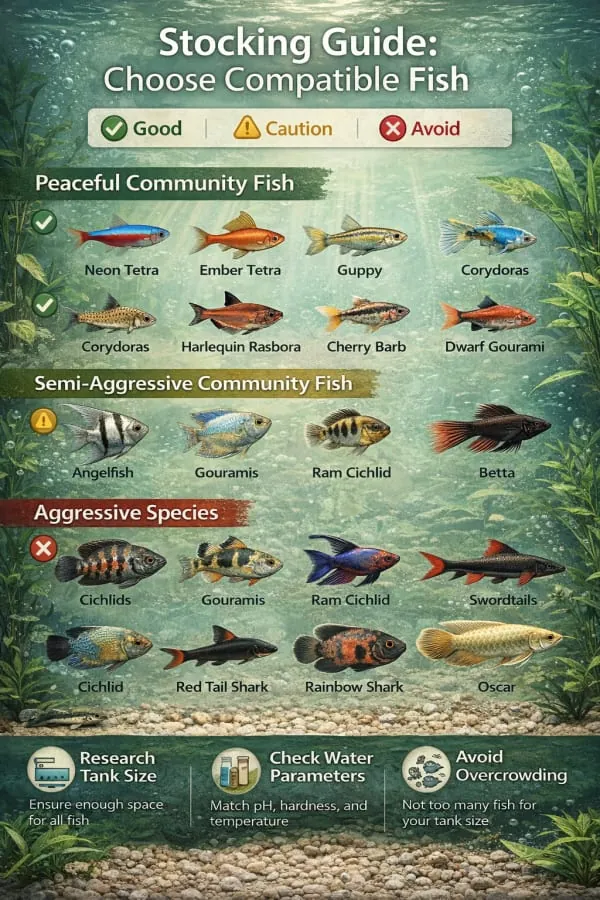
Choose compatible fish: school sizes, swimming zones, aggression, temperature and hardness matching, and honest bioload math for a peaceful community.
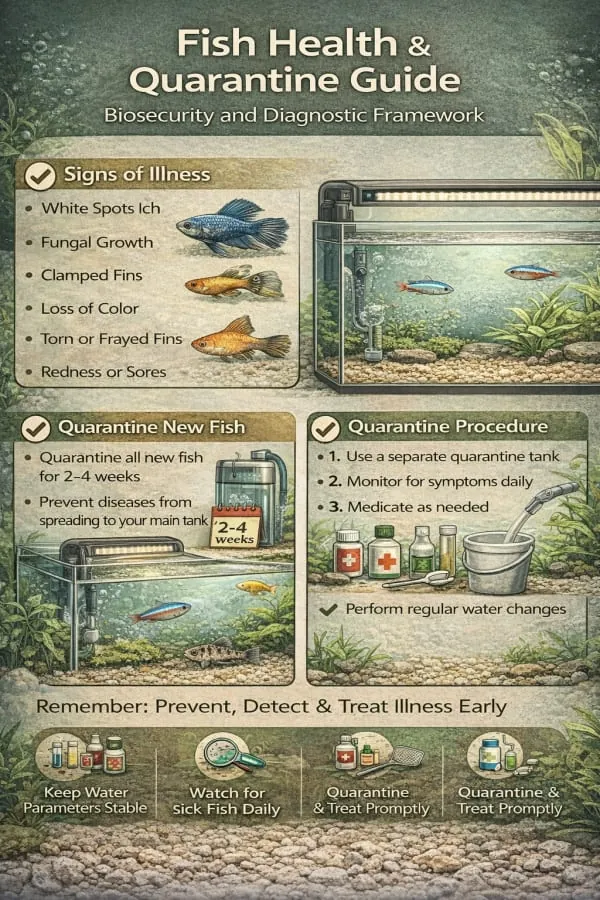
Quarantine new fish, spot the early warning signs, and treat disease without wrecking your tank. A practical freshwater fish health guide.
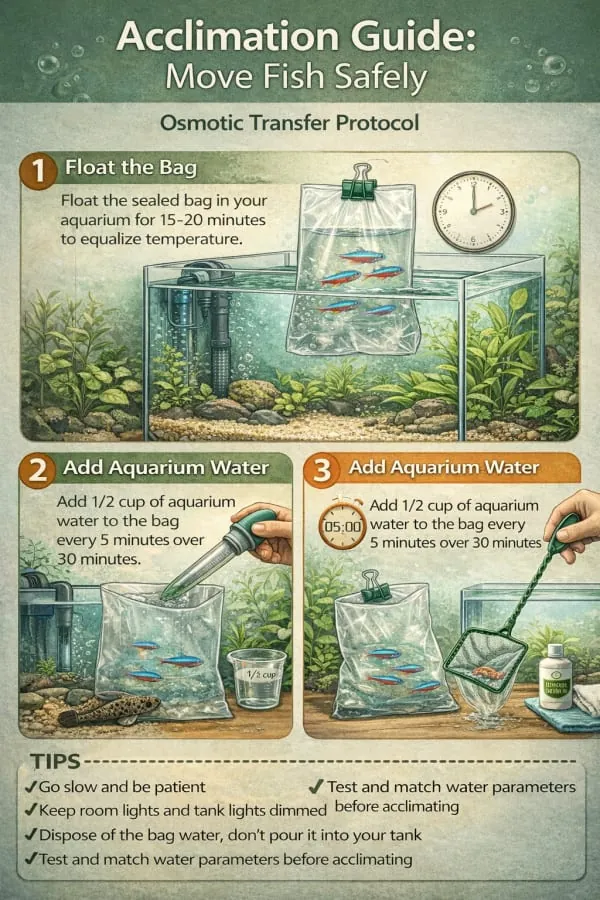
Acclimate new fish, shrimp, and coral safely: temperature floating, drip acclimation, plop-and-drop for shipped livestock, and the first 24 hours.
Keeping Red Swamp Crayfish?
AquaLens identifies your fish and plants from a photo, tracks water chemistry, and flags health issues early — free on iOS and Android.