Dwarf Orange Crayfish Care Guide
Cambarellus patzcuarensis var. Orange · Freshwater Invert
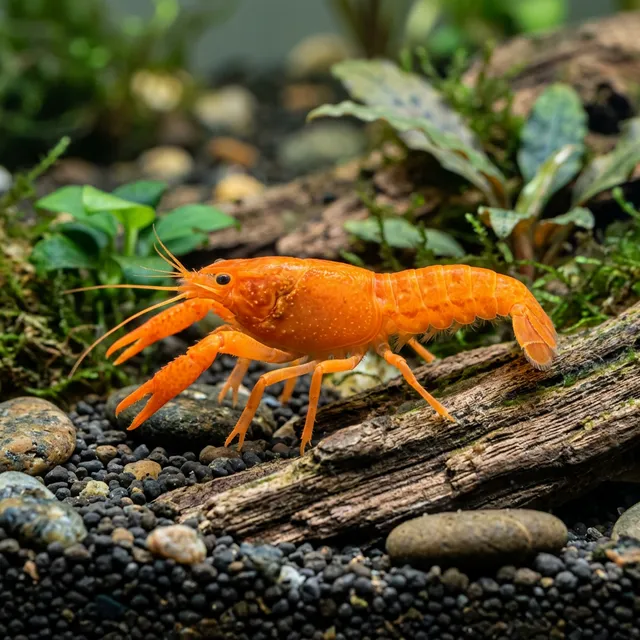
What Dwarf Orange Crayfish look like
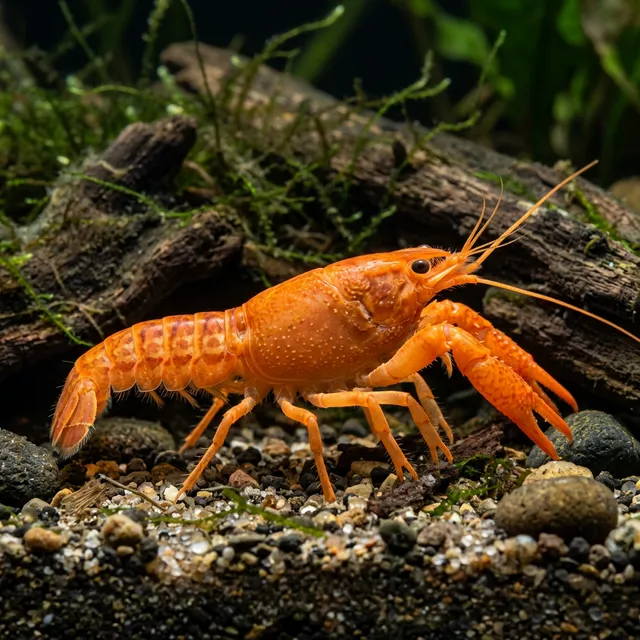
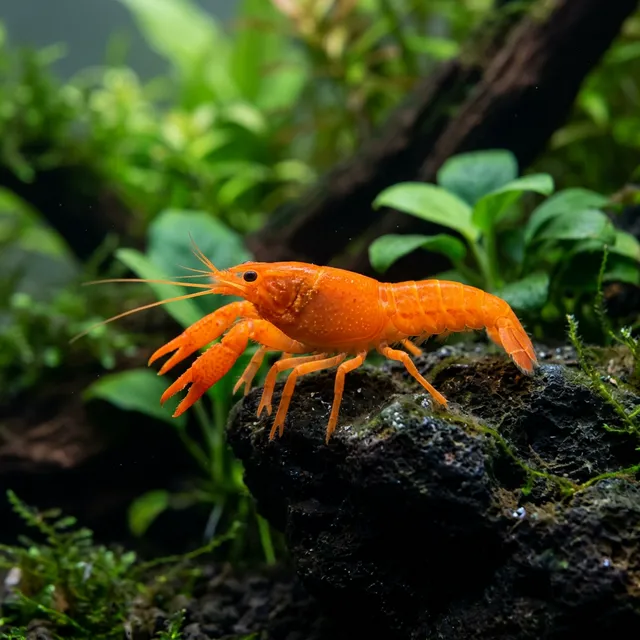
The Dwarf Orange Crayfish (Cambarellus patzcuarensis var. Orange) exhibits a diminutive, lobster-like morphology, reaching a maximum adult size of approximately 1.5 to 2 inches (3.8 to 5.1 cm). Its body is characterized by a robust, laterally compressed carapace that is entirely covered in a striking, vivid orange hue, providing both camouflage and a visual display during courtship. The species displays minimal sexual dimorphism, though females may be slightly larger and possess a broader abdomen for egg-carrying. Defensive adaptations include the presence of small but functional pincers, which can be used for both foraging and defense against predators. Unique morphological features include a segmented tail that aids in rapid backward movement and a pair of well-developed walking legs, which facilitate its benthic lifestyle. The crayfish also possesses a pair of prominent antennae that are crucial for sensory perception in its aquatic environment.
Behavior & temperament
Dwarf Orange Crayfish are primarily solitary but may exhibit social behaviors during breeding seasons. They are predominantly benthic dwellers, often found among leaf litter or rocky substrates where they can hide from potential threats. Their breeding behavior is characterized by the female carrying fertilized eggs under her tail until they hatch, a form of maternal care that enhances juvenile survival rates. These crayfish are generally non-aggressive towards their own kind but can display territorial behavior when competing for resources or shelter. Their temperament is typically calm, making them suitable for community tanks, provided they are housed with similarly sized or non-aggressive tank mates.
Diet & feeding
In the wild, Dwarf Orange Crayfish are omnivorous scavengers, feeding on detritus, plant matter, and small invertebrates. In captivity, they thrive on a varied diet that includes high-quality sinking pellets, blanched vegetables, and occasional protein sources such as bloodworms or brine shrimp.
Behind the name
Cambarellus (from Latin 'cambare', meaning to bend, referring to the shape of the body); patzcuarensis (derived from 'Pátzcuaro', the lake in Mexico where the species is found).
Plan your tank
Check the numbers before you buy: tank volume, a stocking plan, cycle progress, water changes, and your ongoing care routine.
Keep reading

Choose compatible fish: school sizes, swimming zones, aggression, temperature and hardness matching, and honest bioload math for a peaceful community.
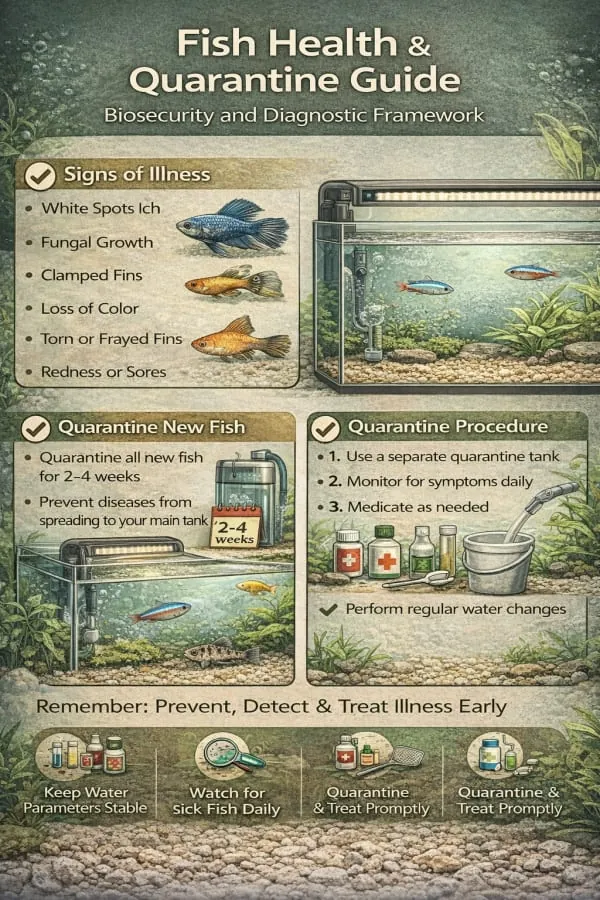
Quarantine new fish, spot the early warning signs, and treat disease without wrecking your tank. A practical freshwater fish health guide.
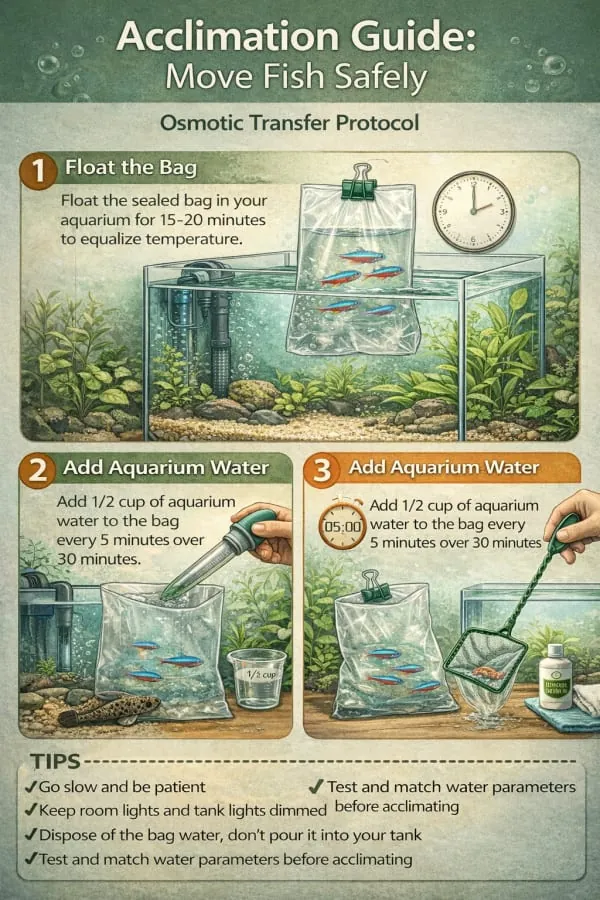
Acclimate new fish, shrimp, and coral safely: temperature floating, drip acclimation, plop-and-drop for shipped livestock, and the first 24 hours.
Keeping Dwarf Orange Crayfish?
AquaLens identifies your fish and plants from a photo, tracks water chemistry, and flags health issues early — free on iOS and Android.